Ship 42 returns to Starbase, Texas for the first-ever Starship tower catch during Flight 15! I have dreamt of creating this image for years... and today it became real.
Congrats, SpaceX team!
44 episódios. Nenhum deles escolhido para agradar ao algoritmo.
Publiquei 44 episódios do podcast Café Brasil este ano.
Falei de inteligência artificial, estoicismo, economia, política, filosofia, comportamento, literatura, cinema e até futebol. Teve Orwell, Machado de Assis, Kant, Ayn Rand, Hannah Arendt, Hayek, Aristóteles, Nietzsche, René Girard, Chaplin, Pink Floyd e Bezerra da Silva.
Uma salada, não é?
Nunca pauto o Café Brasil pelos assuntos que estão bombando no Google. Não corro atrás de tendências. Escolho aquilo que me intriga, incomoda e faz pensar. Um livro, uma cena de cinema, uma notícia, uma música, uma conversa...
E percebi uma coisa curiosa: por trás de assuntos tão diferentes, existe uma preocupação que atravessa praticamente tudo o que publiquei.
O que está acontecendo com a nossa capacidade de pensar, julgar e decidir por conta própria?
Em Idiocracy, investiguei o risco de deixarmos de pensar. Em O Teorema de Bayes, nossa dificuldade de abandonar certezas. Em O Décimo Homem, os perigos da unanimidade. Em Subnutrição Intelectual, o paradoxo de estarmos cercados de informação e intelectualmente mal alimentados. Em A Ditadura da Interpretação, quando fatos valem menos que narrativas. Em O Emigrante Interno, a tentação de calar diante do que sabemos estar errado. Em Os Dois Minutos de Ódio, a facilidade com que entregamos nossas emoções aos estímulos das telas.
E poderia continuar.
Passei boa parte do ano investigando as forças que disputam nossa atenção, moldam nossas crenças e nos fazem acreditar que estamos pensando quando apenas repetimos o pensamento dos outros.
Talvez seja essa a melhor descrição do Café Brasil.
Não é um podcast sobre os assuntos que estão em alta. É sobre o que considero importante para compreender a vida.
Se eu dependesse das tendências de busca, provavelmente não teria feito metade desses programas. Afinal, quantas pessoas acordam numa quarta-feira querendo saber o que o Teorema de Bayes tem a ver com suas convicções? Ou o que uma cena de Os Miseráveis ensina sobre nossa necessidade de encontrar culpados?
Mas quem escuta pode descobrir que precisava justamente daquela reflexão, embora nunca tivesse pensado em procurá-la.
É isso que me interessa.
Depois de mais de vinte anos produzindo o Café Brasil, continuo acreditando que uma das funções mais importantes de quem produz conteúdo é apresentar às pessoas ideias que elas ainda não sabem que precisam conhecer.
Olho para esses 44 episódios com orgulho, porque cada programa representa um esforço de compreender alguma coisa que merece ser examinada.
E a pergunta que parece ligar toda essa produção é bastante simples: Quanto daquilo que você pensa é realmente resultado do seu próprio pensamento?
Se essa pergunta também incomoda você, talvez encontre no Café Brasil algumas boas companhias para investigá-la.
https://t.co/fZjuyo3CuB
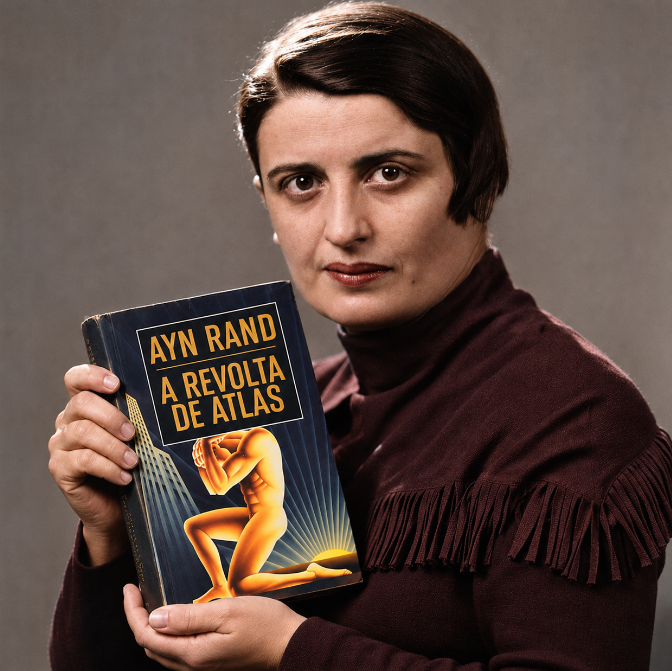
Em 1957, a escritora Ayn Rand publicou A Revolta de Atlas, livro em que empresários, inventores e profissionais brilhantes começam a desaparecer, abandonando seus negócios e deixando para trás uma sociedade que depende deles para funcionar.
Um desses personagens é Ellis Wyatt, um empresário do petróleo que desenvolveu uma tecnologia revolucionária, gerou empregos e prosperou. Mas seu sucesso atraiu a atenção de políticos e concorrentes interessados em controlar o que ele havia construído. Até que Wyatt se cansou, abandonou tudo e deixou suas instalações petrolíferas em chamas. Aquele incêndio ficou conhecido como a Tocha de Wyatt.
Lembrei dessa história ao ler um artigo do economista Ricardo Schweitzer sobre um fenômeno que começou a aparecer no Brasil depois das eleições de 2026.
Pequenos empresários, donos de padarias, sorveterias e estabelecimentos comerciais, começaram a anunciar que não participariam mais de campanhas beneficentes. Chega de distribuir cestas básicas, patrocinar o time do bairro, comprar rifas ou arrecadar brinquedos para o Natal. E por quê?
Porque se cansaram de ser tratados como inimigos.
Durante a campanha eleitoral, o discurso do “nós contra eles” colocou patrões e trabalhadores em lados opostos, como se todo empresário fosse um milionário explorador. Só que o dono da padaria não é aquele sujeito gordo, de fraque, cartola e charuto. É alguém que fecha o caixa à noite, paga funcionários, enfrenta impostos, burocracia, fornecedores e, muitas vezes, deixa de receber o próprio salário para manter o negócio funcionando.
E ainda encontra tempo e dinheiro para ajudar a comunidade.
Até que descobre que, para uma parcela da sociedade, tudo isso não importa. Ele continua sendo o vilão. Então resolve cuidar apenas das próprias obrigações.
Ora, ninguém é obrigado a fazer doações. A solidariedade que precisa ser arrancada à força deixa de ser solidariedade. E existe uma diferença enorme entre alguém que nunca quis ajudar e alguém que, depois de anos ajudando, chega ao ponto de dizer que não quer mais.
Ayn Rand imaginou o que aconteceria se aqueles que produzem riqueza resolvessem encolher os ombros. No Brasil, ninguém precisa incendiar uma refinaria. Basta deixar de contratar, desistir de investir, fechar uma loja ou suspender a cesta básica de dezembro.
E quem paga a conta dessas decisões? Frequentemente, as mesmas pessoas que o discurso político prometia proteger.
Esse é o assunto do Café Brasil desta semana, “A Tocha de Wyatt”. Um episódio sobre a fabricação de inimigos, a demonização de quem empreende e as consequências de transformar a economia numa guerra entre “nós e eles”.
Ouça o episódio completo no Café Brasil. Está disponível gratuitamente, inclusive com a segunda parte que normalmente seria exclusiva dos assinantes.
Acesse https://t.co/fZjuyo3CuB, procure por “ouça podcasts” e depois pelo episódio 1054, A Tocha de Wyatt.
Quando publicou A Revolta de Atlas, em 1957, Ayn Rand estava discutindo uma questão que conhecia de perto. Ela nasceu na Rússia, viveu a Revolução Bolchevique e emigrou para os Estados Unidos. Tinha profunda desconfiança de sistemas que tratam o indivíduo como um instrumento à disposição das necessidades definidas por outras pessoas. Para ela, trabalhar, criar, empreender e perseguir um projeto próprio não eram atividades pelas quais alguém devesse pedir desculpas.
No romance, a engenheira e executiva Dagny Taggart tenta manter uma ferrovia funcionando num país em que produzir se torna cada vez mais difícil. Hank Rearden desenvolve um metal extraordinário e descobre que, quanto mais útil sua invenção, maior o número de pessoas dispostas a decidir o que ele deve fazer com ela. E John Galt organiza a retirada daqueles que se recusam a continuar oferecendo seu talento a um sistema que os condena justamente por possuí-lo.
O livro tem mais de mil páginas e muita coisa nele é discutível, inclusive a maneira como Rand trata o egoísmo e o altruísmo. Mas existe uma percepção poderosa ali: a cooperação deixa de ser cooperação quando uma das partes passa a considerar a contribuição da outra uma dívida permanente, acompanhada de desprezo por quem a paga.
Você prestou atenção? Eu vou repetir:
A cooperação deixa de ser cooperação quando uma das partes passa a considerar a contribuição da outra uma dívida permanente, acompanhada de desprezo por quem a paga.
Viu? Isso está num livro de 1957...
CRUCIAL FACTS ON THE FLAVIO BOLSONARO MATTER:
It's not just Flavio Bolsonaro who fled Brazil to escape the tyrannical persecution of Alexandre de Moraes and the pro-Lula wing of the Supreme Court. There are dozens of Brazilian exiles who have done the same: dissident journalists, activists, bloggers, and politicians who all fled to avoid certain prison for political opposition.
In most of these cases, Moraes has demanded the extradition of those who fled and whom he wants to imprison back in Brazil. But Moraes' extradition requests have been repeatedly denied by multiple countries and institutions on the grounds that these prosecutions are politically motivated or otherwise corrupted. Among those concluing this: Spain, Italy, INTERPOL, and even the US under Biden.
Just today, Italy refused Brazil's demand to extradite a person named @edutagli, who was once a top aide to Moraes, but then fled to Italy after Moraes accused him of having been my source in a huge leak from Moraes' office that I obtained for reporting I did with @Folha in 2024. That massive leak enabled us to publish roughly 20 articles proving systemic abuses of power by Moraes against his political enemies: exactly the reason so many Brazilians, including Bolsonaro, know they can't get a fair trial in Brazil.
Italy today refused to extradite the person accused of being our source on the grounds that the proceedings would be a farce because Moraes — as he so often does — wants to act as the supposed victim, investigator, and judge, and thus his demand falls well outside of Italy's extradition standards. Again, multiple countries have concluded the same, showing what a farce Brazil's once-respected judicial system has become under the Lula/Moraes regime.
Moraes has overseen a system of political persecution masquerading as criminal justice that has been recognized as a sham by multiple countries that are not exactly Bolsonaro allies. Nobody in their right mind who is a political enemy of Moraes would remain in Brazil once if it is clear that he intends to imprison you, since he has proven that guilt is a foregone conclusion and he operates with no legal or constitutional limits of any kind.
That is why asylum under international law exists: to protect those who cannot obtain justice in their own country because the justice system has been corrupted and commandeered for political persecution. Many people, such as Julian Assange, have needed that protection (which Lula cheered). Now people need it from Moraes in Brazil. That is sadly one of the main legacies of both Lula and Moraes over the last six years.
Lula’s Supreme Court poolboy, Alexandre de Moraes, just seized Flavio Bolsonaro’s passport because of what his brother Eduardo said… on my show last Friday.
He suggested Flavio should leave the country if Lula won because he may be… wait for it… politically persecuted!
We all know it’s just the first step toward attempting to jail him like they did his father.
Expect silence from the “pro-democracy” left.
You can vote socialists into power, but you can’t vote them out.
Whether Lula won or lost, the procedures surrounding yesterday’s Brazilian election are highly questionable at best – and ought to remind everyone that Lula is one of the most corrupt figures in international politics. But no one on the Left cares about election integrity when it’s a Leftist figure screwing with it.
O mesmo método usado hoje por Zanin/PT de prorrogar a votação foi aplicado na Venezuela de Maduro há DEZ ANOS!!!
Em 2015 acompanhei como observador internacional a eleição legislativa na Venezuela e, lá, a Corte Eleitoral bolivariana prorrogou a votação em uma hora. Tudo isso pelo medo da derrota que sofreriam nas urnas.
Não adiantou.
A oposição fez dois terços das cadeiras no parlamento.
Porém, pouco tempo depois, Maduro usurpou para si os poderes do Congresso também e acabou com a vitória da oposição para consolidar ainda mais a ditadura no país.
Não por acaso, Lula é amigo de Maduro e, também não por acaso, Lula disse que na Venezuela há "excesso" de democracia.
É o mesmo, O MESMO, que o PT está querendo para o Brasil: poder total, DITADURA!
Acorda, Brasil!!!
You've probably seen the video. A young Frenchwoman in Paris, in tears, begging looters to stop. "Why are you doing this? That's not what we stand for."
Some accounts are mocking her. "She voted for it."
I won't. Because what you see on her face is not stupidity. It's a disease that has infected the entire West, and it has a name: suicidal empathy.
The term comes from Gad Saad, an evolutionary behavioral scientist at Concordia University in Montreal. A man who fled the Lebanese civil war as a child, and who knows what it looks like when a society falls apart. His new book, Suicidal Empathy: Dying to Be Kind, is the follow-up to The Parasitic Mind. Here is the thesis, and why it concerns every one of us.
Empathy is one of the best things about us. It evolved for a reason: to care for our children, our kin, our tribe. It was calibrated for a world where the people you felt for were the people around you, and where empathy always came paired with its counterweight: the instinct to protect your own and to recognize a threat.
Suicidal empathy is what happens when that mechanism misfires. When it fires at the wrong targets, in the wrong amounts, with no brake. When we feel more for the criminal than for his victim. More for the stranger who breaks the rules than for the citizen who follows them. More for how compassionate we look than for what our compassion actually produces.
Where does it come from? Four layers.
First, biology. Empathy is a spotlight, as the psychologist Paul Bloom put it. It lights up the one face in front of you and leaves everything else in the dark. The crying migrant on the boat is visible. The thousands of future victims of a broken system are statistics. A spotlight is a terrible tool for running a country.
Second, our own civilization. The West is the civilization that put the victim at the center of its morality. Christianity taught us to care for the stranger, the poor, the weak. It was one of the greatest moral revolutions in history. But cut off from its other half, justice, responsibility, the duty to protect your own, it turns into something else.
Third, ideology. In The Parasitic Mind, Saad described idea pathogens, ideas that hijack our reasoning. Suicidal empathy is the emotional counterpart: an ideology that hijacks our compassion. It sorts the world into oppressors and victims, then demands unlimited empathy for whoever ranks as the victim, whatever they do.
Fourth, status. In the age of social media, empathy has become a display. Posting "refugees welcome" costs nothing and earns applause. The bill goes to someone else: the working class, the suburbs, the women walking home at night.
The results are everywhere. Criminals treated as victims of society. Sexual assaults by migrants met with lenient sentences. Self-defense branded as aggression. Borders treated as cruelty. Saad's conclusion is simple: a society dies when it would rather display infinite tolerance than use its survival instinct.
Now the part I'll add myself, and that few people dare to say.
On average, women score higher than men on measures of empathy. It's one of the most consistent findings in psychology, across cultures, and it makes perfect evolutionary sense: for most of human history, the survival of children depended on it. It's a strength.
But it means an ideology that weaponizes empathy will hit women harder. And the data shows it: in country after country, young women have moved sharply to the left of young men, especially on immigration.
This is where men have a responsibility.
Not to mock. Not to lecture. Not to say "she deserved it." Empathy has always needed a counterweight, and that counterweight was the protective instinct: the one that draws lines, says no, and stands between the threat and the people it loves.
Men abandoned that role. They were told it was toxic, and many believed it. So they stayed silent at the dinner table, at work, with their partners, sisters, daughters and friends.
That has to end. Men have to have this conversation, honestly and with respect: compassion that cannot say no is not compassion. It's surrender. And the first to pay for it are women.
Many women already understand this better than anyone. Some of the bravest voices in this fight are women, precisely because they are the first to feel the danger in the street.
A civilization rests on a balance: compassion and strength, openness and borders, mercy and justice. When one side swallows the other, the foundations crack. What we are watching in Europe is what happens when empathy has no counterweight left.
Look at that young woman again. She isn't the enemy. She's what this ideology made of a generation that was told kindness would be enough.
Our job is to make sure she's the last generation that has to learn it this way.
E perdemos Margareth Hamilton, falecida aos 90 anos, um dos Ícones da Informática. Os tiktoks adoram postar a foto dizendo que ela escreveu todo esse software usado no Programa Apollo. Não, ela criou as METODOLOGIAS e gerenciou o desenvolvimento. Com mais de 130 papers publicados, ela criou a base de muito do que se usa até hoje, como man-in-the-loop, desenvolvimento distribuído e linguagens de modelagem.
Adeus, Mags, obrigado por tudo.
Aqui meu artigo contando parte da vida desse monstro sagrado.
https://t.co/fJ4xFcey7h
Cottonseed was a disposal problem.
Gins dumped it in rivers, until Procter & Gamble hardened the oil, called it Crisco and sold it as the modern answer to lard.
Whey was a disposal problem.
Cheesemakers poured it down drains and fed it to pigs, until somebody dried it, put it in a tub and sold it to gym members.
Skimmed milk was a disposal problem.
It was what remained when the cream went for butter.
It went to the pigs too, until it got a red top and a health claim.
Bran was a disposal problem.
Millers bagged it as animal feed, until Kellogg's boxed it in 1916 and sold it as regularity.
Rapeseed oil was a disposal problem.
Its market was lubricating ships' engines, and that died in 1945.
Canada bred out the worst of it, renamed it canola and called it heart-healthy.
Defatted soya was a disposal problem.
It was what the oil mills had left over, until it was textured, flavoured and sold as a burger.
Beet pulp, citrus peel and oat hulls were disposal problems.
They are now listed on the pack as added fibre.
Every item on that list has been sold to you as a health food.
Every item on that list began as something a factory was paying to get rid of.
Your great-grandmother knew exactly what to do with all of it.
She fed it to the pig and ate the pig.
It made the pig fat, incidentally. Nobody thought that needed a study.
Researchers spent 500 hours and $70,000 and found LG TVs logging plain text transcripts in standby, mapping every device in the house, and feeding it to LG's ad arm
Unplug the internet and it saves the files until you plug back in.
LG says its TVs don't record ambient conversations.
The evidence begs to differ.
216 million of these are sitting in living rooms.
Where are the regulators?
Writer: Daniel
This is what the “housing is a human right” and “people over profit” crowd thinks they want.
She’s completely lost in the socialist fantasy, so a DeLorean drops her off in 2050 to see how it worked out.
Free housing, but everyone lives in the same ugly gray box with no choices.
Coffee is available only if you brought your government-approved reusable mug. Black only.
The government grocery store has empty shelves and $40 eggs.
No police.
The trains are free, but they never run because the workers are on strike again.
Healthcare is free too. Your appointment is in 72 days.
By the end, she’s begging to go back.
Socialism always sounds wonderful when someone is promising you free things. It looks a little different once you’re actually forced to live in it.
Credit: Independent Women’s Voice
Classic SNL was so good. This is such an interesting skit comparing it to the show now, knowing how far left it is. What was once pure comedy has become their platform. Funny how things change. Phil Hartman was awesome!!!!!!! 🔥🤣