ولله الحمد
تم نشر دراستنا في إحدى أرقى المجلات العالمية Tobacco Prevention & Cessation حول التأثيرات الهضمية والنفسية لاستخدام أكياس النيكوتين بين البالغين في السعودية
📊 النتائج (بمشاركة 1214 شخص):
🩺 الأعراض الهضمية (ظهرت عند 8 من كل 10 مشاركين):
•انتفاخ 66.7%
•غثيان 47.9%
•حرقة معدة 46.7%
•ألم بطن 46.5%
•إمساك 45.3%
•إسهال 36.6%
🧠 الأعراض النفسية (عند 4 من كل 10 مشاركين):
•خفيفة: 19.9%
•متوسطة: 10.2%
•شديدة: 6.0%
•شديدة جدًا: 3.1%
🔎 تم رصد أعراض قلق، اكتئاب وتوتر باستخدام مقياس علمي (DASS-21).
📌 الخلاصة:
أكثر من 80% من مستخدمي أكياس النيكوتين أبلغوا عن أعراض هضمية، و40% عن أعراض نفسية.
للإطلاع على الدراسة كاملة والتفاصيل:
https://t.co/LOXGWhFCw5
الحمد لله على توفيقه وفضله
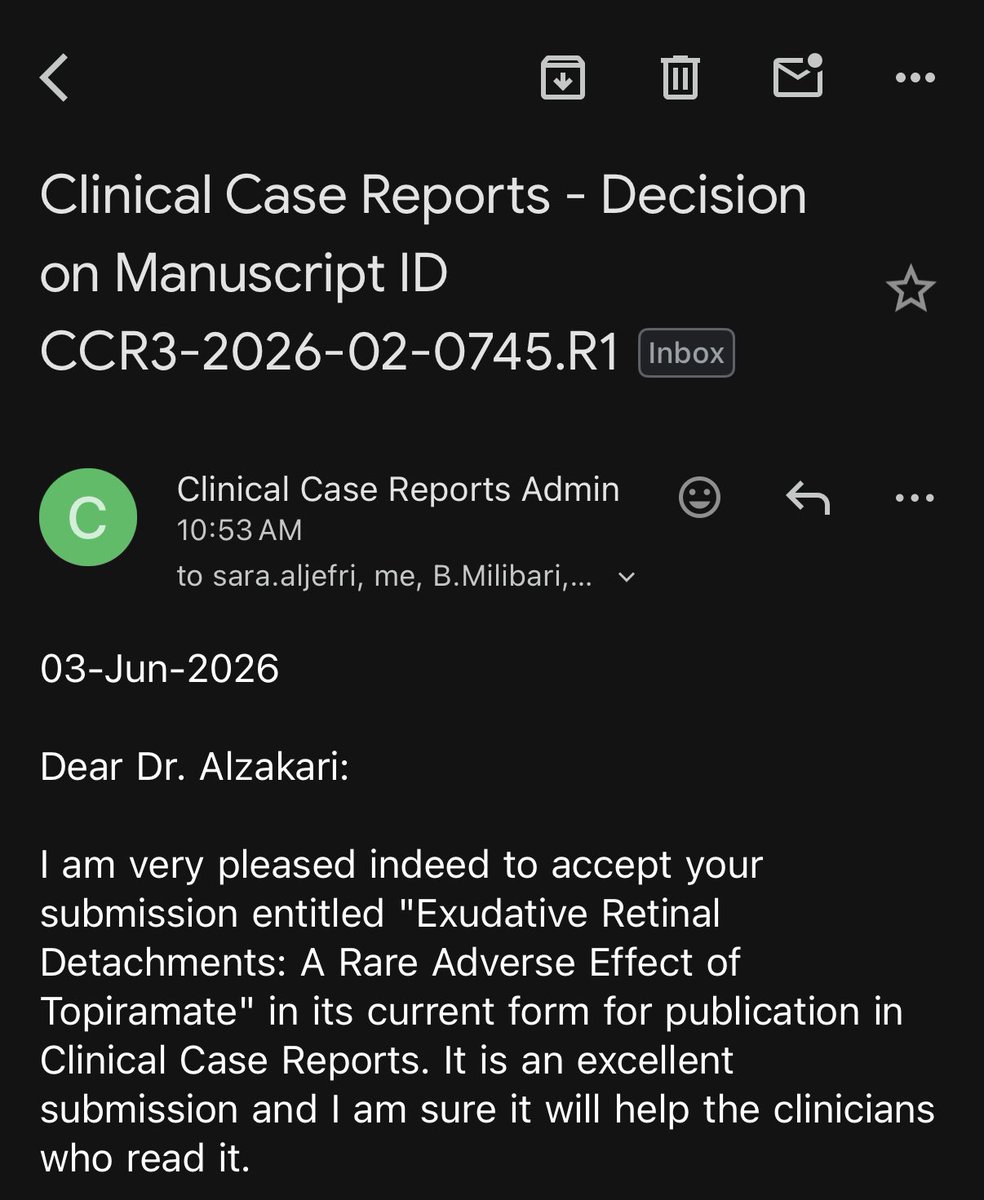
تم قبول بحثنا حول حالة سريرية نادرة.
بعنوان:
Exudative Retinal Detachments: A Rare Adverse Effect of Topiramate
للنشر في مجلة Clinical Case Reports، وذلك بعد اجتيازه مراحل التحكيم والمراجعة العلمية.
كل الشكر والتقدير للفريق البحثي على جهودهم وتعاونهم في إنجاز هذا العمل.
الحمد لله على توفيقه وفضله
تم قبول بحثنا حول حالة سريرية نادرة.
بعنوان:
Exudative Retinal Detachments: A Rare Adverse Effect of Topiramate
للنشر في مجلة Clinical Case Reports، وذلك بعد اجتيازه مراحل التحكيم والمراجعة العلمية.
كل الشكر والتقدير للفريق البحثي على جهودهم وتعاونهم في إنجاز هذا العمل.
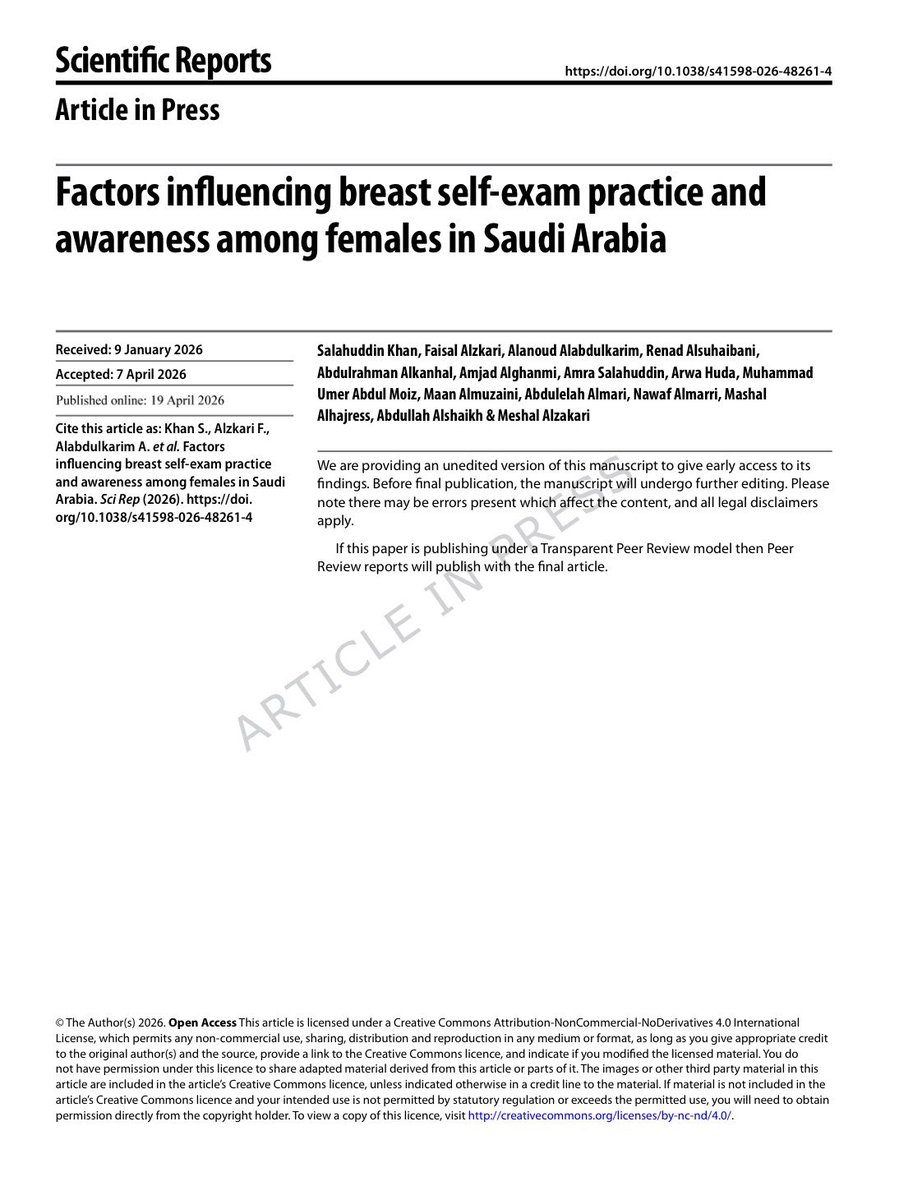
Our New Study Published in Scientific Reports!
Our nationwide study of 930 women in Saudi Arabia highlights important gaps in breast cancer awareness and breast self-examination (BSE) practices. While 79% of participants had heard about BSE, only 42.6% knew how to perform it correctly, and just 15.6% were aware of the recommended frequency for self-examination. Alarmingly, only 21.3% demonstrated good overall awareness of breast cancer and BSE.
The findings revealed that awareness and BSE practice were significantly higher among older, married, employed women and those with a personal or family history of breast cancer. In contrast, younger, single, less educated, and unemployed women showed lower awareness levels and were less likely to perform regular BSE. Notably, 50.1% of participants reported never performing breast self-examination.
These results emphasize the urgent need for targeted educational campaigns and community-based interventions to improve breast cancer literacy and promote early detection practices. Strengthening awareness through healthcare professionals, educational institutions, and digital platforms could help bridge existing knowledge gaps and encourage proactive breast health behaviors.
Early detection saves lives. Investing in awareness today can improve outcomes tomorrow. #BreastCancerAwareness #BreastSelfExamination #PublicHealth #SaudiArabia #WomenHealth #CancerPrevention #EarlyDetection
بفضل الله، ثم بجهود الفريق البحثي،
تم نشر دراستنا في مجلة Scientific Reports المصنفة ضمن الربع الأول (Q1).
هدفت الدراسة إلى تقييم مستوى الوعي بسرطان الثدي وممارسة الفحص الذاتي للثدي بين 930 امرأة في المملكة العربية السعودية. وأظهرت النتائج أن 79% من المشاركات سبق لهم السماع عن الفحص الذاتي للثدي، إلا أن 42.6% فقط يعرفوا الطريقة الصحيحة لإجرائه، بينما لم تتجاوز نسبة من يعرفوا التكرار الموصى به للفحص 15.6%. كما تبين أن 21.3% فقط لديهم مستوى جيد من الوعي العام بسرطان الثدي والفحص الذاتي.
وأوضحت النتائج أن الوعي وممارسة الفحص الذاتي كانت أعلى بين الأكبر عمرًا، والمتزوجات، والعاملات، ومن لديهم تاريخ شخصي أو عائلي للإصابة بسرطان الثدي. كما أفادت 50.1% من المشاركات أنهم لم يسبق لهم إجراء الفحص الذاتي للثدي.
تؤكد هذه النتائج أهمية تعزيز برامج التوعية الصحية وتكثيف الجهود إلى رفع مستوى المعرفة بسرطان الثدي وتشجيع ممارسات الكشف المبكر، بما يسهم في تحسين النتائج الصحية وجودة الحياة.
أتقدم بخالص الشكر والتقدير لجميع أعضاء الفريق البحثي على جهودهم وتعاونهم المثمر، كما أشكر كل من ساهم في إنجاز هذا العمل البحثي.
#سرطان_الثدي
نشكر المولى عز وجل أن شرّفنا بخدمة الحرمين الشريفين، ورعاية حجاج بيته الحرام، سائلين الله أن يتقبل من الحجاج حجهم ونسكهم وطاعاتهم.
ومع حلول عيد الأضحى المبارك، نهنئ شعبنا في هذا الوطن المبارك وأمتنا الإسلامية بهذه المناسبة، وندعوه سبحانه أن يجعله عيد خير وسلام واستقرار على أمتنا والعالم أجمع.
وكل عام وأنتم بخير.
تم نشر بحثنا حول العوامل الاجتماعية والسلوكية والغذائية المرتبطة باضطرابات الغدة الدرقية في المنطقة الوسطى من المملكة العربية السعودية، مع مقارنة بين الأفراد المصابين وغير المصابين، إضافة إلى تقييم مستوى الوعي الصحي والعوامل المرتبطة به.
أظهرت النتائج وجود تفاوت في الوعي بعوامل الخطورة والأعراض، مع ارتباط بعض العوامل الغذائية والسلوكية باضطرابات الغدة الدرقية.
رابط البحث:
https://t.co/xiCrqRC63i
كثير ما يعرفون أهمية موقع ORCID للباحثين.
ORCID يعطي كل باحث رقم تعريفي خاص فيه، يربط اسمه بجميع أبحاثه ومقالاته العلمية، بحيث تكون كل أعماله موثقة تحت هويته البحثية الصحيحة.
ومع كثرة تشابه الأسماء وتكرارها بين الباحثين، صار وجود ORCID مهم جدًا عشان ما تنسب الأبحاث لشخص ثاني بالخطأ، ولتسهيل الوصول لإنتاجك العلمي بشكل دقيق وموثوق.
حتى لو تغيّرت الجامعة أو جهة العمل، يبقى ORCID هو المعرّف الثابت المرتبط باسمك وإنجازاتك العلمي
تم نشر بحثنا حول العوامل الاجتماعية والسلوكية والغذائية المرتبطة باضطرابات الغدة الدرقية في المنطقة الوسطى من المملكة العربية السعودية، مع مقارنة بين الأفراد المصابين وغير المصابين، إضافة إلى تقييم مستوى الوعي الصحي والعوامل المرتبطة به.
أظهرت النتائج وجود تفاوت في الوعي بعوامل الخطورة والأعراض، مع ارتباط بعض العوامل الغذائية والسلوكية باضطرابات الغدة الدرقية.
رابط البحث:
https://t.co/xiCrqRC63i
أداة تساعد في تنظيم البحث العلمي من أول فكرة إلى كتابة الورقة ✨
تجمع المراجع، ترتّب الاقتباسات، وتسهّل عملية الكتابة بدون تشتّت
مفيدة خصوصًا للي يشتغلون على أبحاث أو مراجعات علمية
🔗https://t.co/RdQqfufvP1
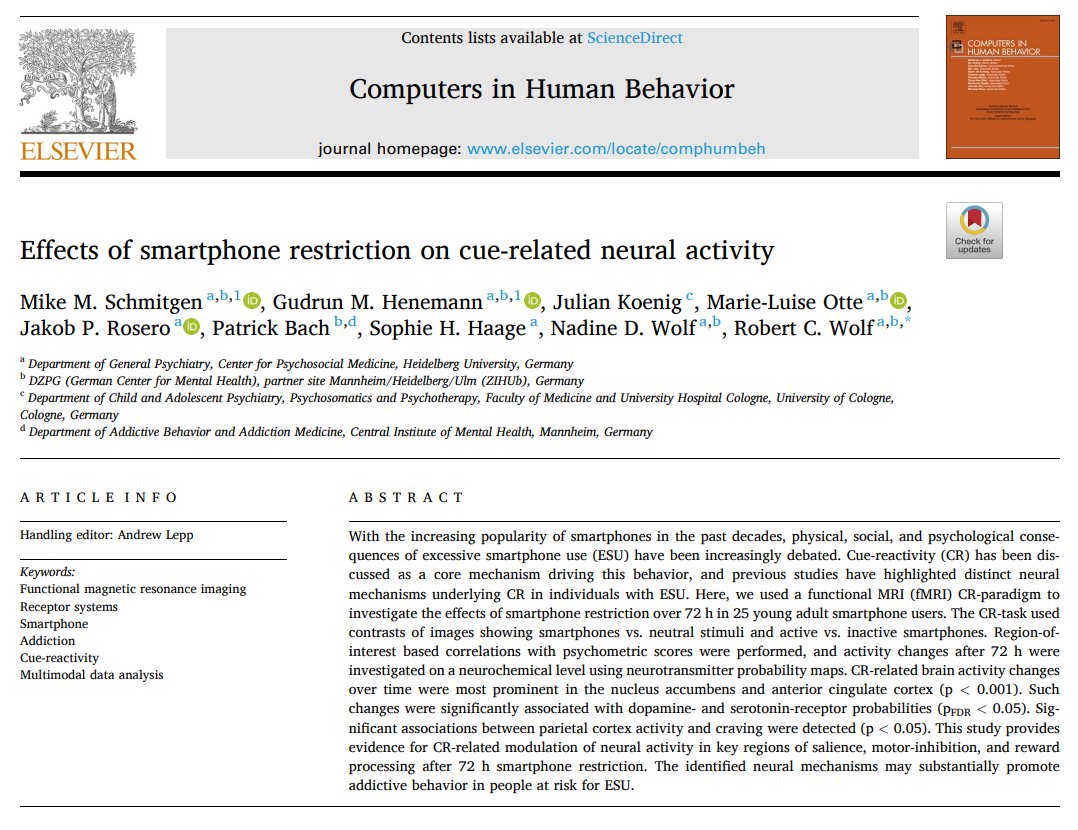
أظهرت دراسة أن ترك استخدام الهاتف الذكي لمدة 72 ساعة أدى إلى تغيرات في نشاط الدماغ داخل المناطق المرتبطة بالمكافأة والرغبة والانتباه للمحفزات، مع ارتباطات عصبية مشابهة لما يُلاحظ في أنماط الإدمان والانسحاب السلوكي، ما يشير إلى أن الإفراط في استخدام الهواتف قد يؤثر على دوائر الدماغ المرتبطة بالدوبامين والتحفيز.
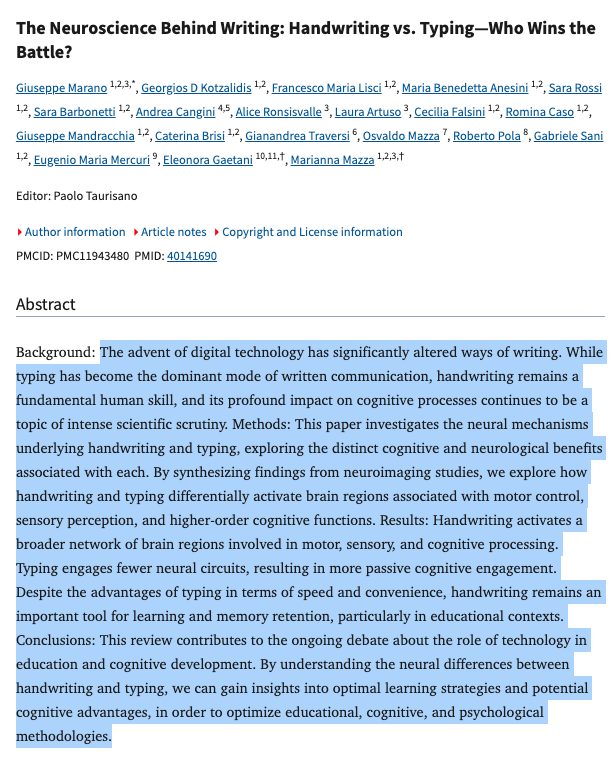
في أحد الدراسات وجدت أن الكتابة باليد تُشعل مناطق واسعة في الدماغ من القشرة الحسية الحركية إلى الـ hippocampus
بينما الكتابة عن طريق الكيبورد تكاد تكون صامتة.
كأن اليد تُحاور الذاكرة، والأصابع على الحروف تمر مرور الغرباء.
فاكتب بيدك.. فالدماغ يحب أن يلمس ما يتعلمه.
Your brain physically rewrites itself every time you pick up a pen.
Neuroscientists at Norwegian University scanned students' brains while they handwrote letters versus typing the same letters on a keyboard.
The results shattered decades of assumptions about how we process information.
Handwriting activated massive networks in the sensorimotor cortex, the visual processing centers, and the hippocampus simultaneously. Complex neural symphonies lit up across multiple brain regions, creating rich interconnected pathways between motor control, visual recognition, and memory formation.
Typing the same letters? The brain activity looked like someone had dimmed the lights across entire cognitive districts. The neural networks that flourished during handwriting simply went dark.
The difference?
When you form letters by hand, your brain constructs elaborate spatial maps of each character. The motor cortex learns the precise pressure, angle, and trajectory needed to create an 'A' versus a 'B.' Your visual system tracks the ink flowing from pen to paper in real time. Your parietal lobe integrates hand position with eye movement. Your hippocampus encodes not just what you wrote, but how the writing felt, where you paused, which words required more pressure.
Typing activates almost none of that circuitry. You press a key, a letter appears. The motor movement is binary. The visual feedback is uniform. The spatial relationship between thought and symbol gets mediated by a machine that standardizes every character into identical fonts and spacing.
Your brain treats these as fundamentally different cognitive tasks.
The evolutionary context makes this obvious once you see it. Human hands developed for manipulation, creation, and fine motor control over millions of years. We painted on cave walls, carved bone tools, and shaped clay vessels long before we invented written language. When writing emerged 5,000 years ago, it built on top of existing neural infrastructure that already connected hand movement with symbolic thinking.
Keyboards appeared 150 years ago. Touchscreen typing maybe 20 years ago. From an evolutionary timeline perspective, we started using them approximately yesterday. Our brains are still running ancient software that expects physical engagement with symbols.
That software produces dramatically different learning outcomes.
Students who take handwritten notes consistently outperform students who type the same information on memory tests, comprehension assessments, and creative applications of the material. The difference persists even when researchers account for typing speed, note length, and time spent studying.
The act of forming letters by hand forces deeper processing at the moment of information encounter. You cannot handwrite as fast as someone speaks, so your brain must actively filter, summarize, and prioritize information in real time. The motor effort required to form each word creates additional memory traces that typing does not generate.
Children who learn to write letters by hand develop reading skills faster than children who learn letters primarily through typing or screen interaction. The sensorimotor experience of creating letterforms helps their brains recognize those same letterforms when they encounter them in text.
Adults who handwrite shopping lists, daily schedules, or meeting notes remember the information better than adults who type identical lists into phones or computers. The spatial memory of where you wrote something on a page provides retrieval cues that digital text does not offer.
These findings collide directly with how education and work environments have evolved over the past two decades. Schools replaced handwriting instruction with typing classes. Offices converted from paper systems to fully digital workflows. Students take notes on laptops. Professionals draft documents on screens.
We optimized for speed and efficiency while accidentally severing the neural pathways that evolution spent millions of years developing.
The implications reach beyond memory and learning into fundamental questions about human cognition. If the physical act of forming symbols changes how your brain processes ideas, what happens to thinking itself when you remove the physical component?
Digital text is infinitely searchable, instantly editable, and perfectly shareable. But it may be creating brains that process information more superficially, store memories less durably, and connect ideas more weakly than brains that regularly engage in handwriting.
The neuroscience suggests we traded cognitive depth for technological convenience without realizing what we were giving up.
Some of the most innovative thinkers across history were obsessive handwriters. Darwin kept detailed handwritten journals. Einstein worked through complex theories in handwritten notebooks. Virginia Woolf wrote her novels by hand before transcribing them. Steve Jobs famously took handwritten notes during Apple meetings even as he was building the most advanced computers on Earth.
Perhaps they intuited something about the relationship between hand, brain, and insight that we measured in brain scanners but somehow forgot in practice.
Your pen is literally a cognitive enhancement device that activates neural networks digital keyboards cannot reach.
للمهتمين بالبحث العلمي 📚
هذه من أفضل الأوراق اللي قرأتها عن كتابة ونشر الأبحاث. 👌
3 محررين من مجلات طبية كبرى يشرحون بشكل عملي ماذا يريد المحرر فعلًا من الباحث، وأبرز الأخطاء اللي تسبب رفض الورقة.
مفيدة جدًا لأي شخص يبدأ بالنشر العلمي أو يطور طريقة كتابته للأبحاث.
للمهتمين بالبحث العلمي 📚
هذه من أفضل الأوراق اللي قرأتها عن كتابة ونشر الأبحاث. 👌
3 محررين من مجلات طبية كبرى يشرحون بشكل عملي ماذا يريد المحرر فعلًا من الباحث، وأبرز الأخطاء اللي تسبب رفض الورقة.
مفيدة جدًا لأي شخص يبدأ بالنشر العلمي أو يطور طريقة كتابته للأبحاث.
وجدت دراسة حديثة أن ممارسة النشاط البدني في الهواء الطلق تكون أكثر فائدة للوظائف الإدراكية من ممارسة النشاط البدني داخل الأماكن المغلقة.
وأظهرت النتائج تحسنًا أكبر في:
• الانتباه والتركيز
• سرعة الاستجابة الذهنية
• بعض الوظائف التنفيذية المرتبطة بالتفكير واتخاذ القرار
وتقترح الدراسة أن الجمع بين النشاط البدني والتعرض للبيئات الخارجية قد يعزز الأداء المعرفي بشكل أفضل من التمارين في الأماكن المغلقة.
وجدت دراسة حديثة أن ممارسة النشاط البدني في الهواء الطلق تكون أكثر فائدة للوظائف الإدراكية من ممارسة النشاط البدني داخل الأماكن المغلقة.
وأظهرت النتائج تحسنًا أكبر في:
• الانتباه والتركيز
• سرعة الاستجابة الذهنية
• بعض الوظائف التنفيذية المرتبطة بالتفكير واتخاذ القرار
وتقترح الدراسة أن الجمع بين النشاط البدني والتعرض للبيئات الخارجية قد يعزز الأداء المعرفي بشكل أفضل من التمارين في الأماكن المغلقة.