My research shows that competitive gaming (solo q ranked) burns on average 17% more energy compared to complete rest 🔥
Using the average caloric expenditure of ~1.45 Cals/min during gameplay, it would take a gamer roughly 12 hrs to burn 1,000 cals
Vs Walking = ~3.42 cal/min
We measured elite esports athletes during gameplay:
• Energy expenditure ↑ 17% (1.28 → 1.45 kcal/min)
• Heart rate ↑ 84 → 87 bpm
• HRV showed no major changes
These changes are small compared to physical activity, but they help us understand how to build healthier gamers!
Do any of the esports coaches or players who follow me use wearables to track health metrics? If so what do you do with the data?
Curious to hear what is being used in esports!
Examples: Apple Watches, WHOOP bands, Garmin, Oura rings, FitBits, etc. ⌚️🏥
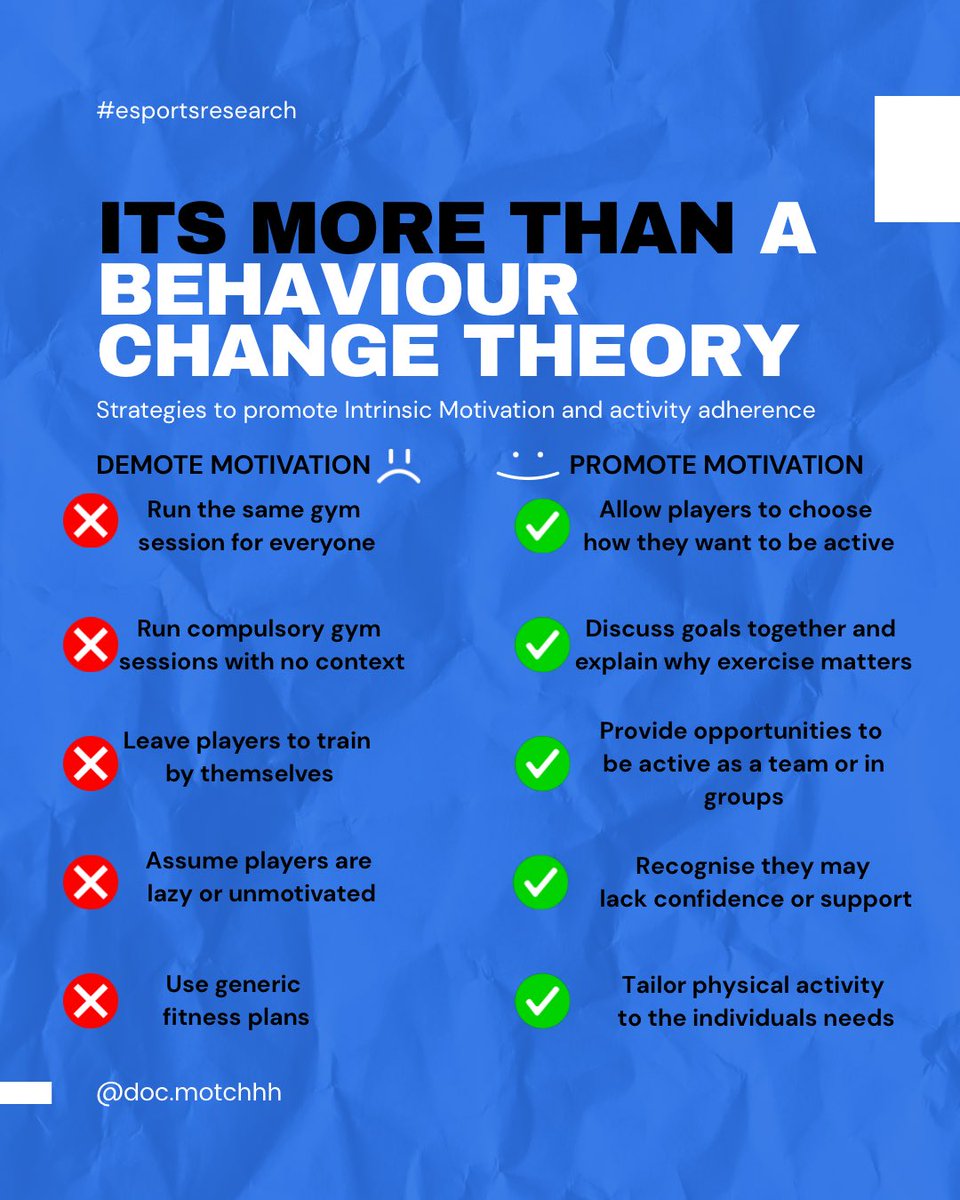
How does motivation affect physical activity in esports athletes?
Our latest study found that players with higher intrinsic motivation were significantly more active — regardless of rank.
Designing environments that support choice, confidence, and connection may be key.
Are E’athletes as active as they think?
We surveyed 800 esports athletes and then tracked some with wearables.
🟩 Self-reported: 33.2 mins/day
🟥 Tracked: 18.2 mins/day
That’s a big gap and a big opportunity to improve performance and wellbeing through movement.
Full study in bio.
Are E’athletes as active as they think?
We surveyed 800 esports athletes and then tracked some with wearables.
🟩 Self-reported: 33.2 mins/day
🟥 Tracked: 18.2 mins/day
That’s a big gap and a big opportunity to improve performance and wellbeing through movement.
Full study in bio.
How active are esports athletes?
We surveyed almost 800 players about how much physical activity they do each week, then tracked a smaller group using wearables.
Most players reported that they were meeting the recommended 150 minutes of moderate-to-vigorous physical activity per week. But wearable data showed they were actually getting around 18 minutes per day on average — which adds up to much less than expected.
There was also a 46% difference between what players reported and what was objectively recorded.
We need better health education in esports. Key stakeholders in esports, such as support staff, coaches, organisation, publishers and even streamers need to be promoting physical activity. Not to criticise, but to support performance and wellbeing through small, achievable steps.
You don’t need to hit 150 minutes a week straight away. Start with a walk, a gym session, or even movement breaks between matches. Over time, it all adds up.
This was part of my PhD on exercise and esports. The full study is now live. Link in bio if you want to dive deeper.
@DylanPoulus@VinceKellySport
Big shoutout to @DylanPoulus on leading the published protocol for the Esports Mental Health Guidelines project! 🙌🏻
Massive step forward for supporting mental health in esports. Honoured to be working on this with such a great team.
Can exercise actually make you a better gamer?
I spent 4 years testing that question. It led to a full PhD and a deeper understanding of esports health and performance than we’ve ever had before.
All three studies are now published and linked in my bio.
If you’re into esports wellbeing, physical activity science, mental health research, or applied sport science, follow along.