The unexamined healthcare story is not worth reading.
Every day, headlines distort modern medicine in two directions:
Manufactured Panic: Decades-old, life-saving therapies are branded as lethal threats, frightening patients into abandoning essential treatments and paralyzing clinicians.
Unbridled Hype: Early-phase surrogates and marginal endpoints are inflated into miraculous "cures," fueling unfounded optimism for patients, physicians, and biopharma investors.
The Mission of Docrates
We take a rigorous Socratic questioning approach to healthcare news. By cutting through narrative hype and institutional spin, we deliver perspectives strictly grounded in clinical pharmacology, regulatory history, and basic arithmetic.
What We Interrogate Daily:
The Absolute vs. Relative Risk: Translating sensational "50% surges" or "groundbreaking reductions" into real-world absolute event rates and restoring the missing denominator.
Mechanism vs. Malice: Distinguishing between standard, documented pharmacology and genuine, unexpected design defects.
The Regulatory Baseline: Auditing bold claims against FDA, EMA, and trial archives to determine whether a "discovery" is genuine clinical progress or repackaged historical data.
Net Clinical Benefit & Hard Endpoints: Balancing headline claims against the clinical realities of untreated disease, real toxicity, and health economics.
We don't do hype. We restore the arithmetic.
#EvidenceBasedMedicine #ClinicalPharmacology #Biopharma #Docrates
The Breakthrough Nobody Saw Coming: Why Continuous Cortisol, and Why Now?
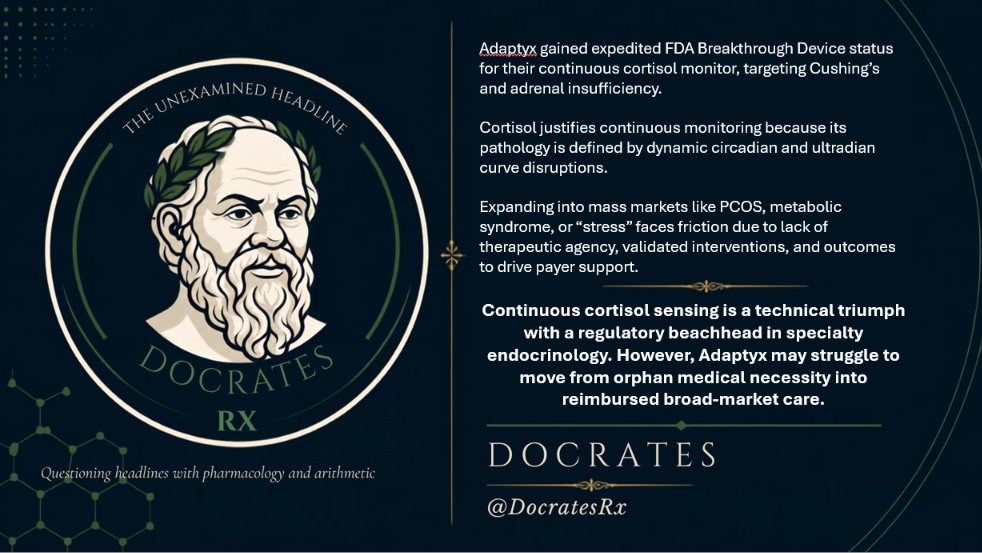
On 23rd September Adaptyx Biosciences secured FDA Breakthrough Device Designation and acceptance into the FDA’s Total Product Life Cycle Advisory Program (TAP) for its wearable continuous cortisol monitor (CCM). Developed out of Stanford, the patch swaps out enzymatic oxidation for reversible, structure-switching DNA aptamers to track unbound hormone in dermal interstitial fluid in real time.
At first glance, the clinical targets look commercially baffling: Cushing’s syndrome and adrenal insufficiency. Why pour 18 years of advanced biosensor engineering into orphan endocrinology instead of targeting massive wellness and cardiometabolic markets?
The answer lies in a masterclass of regulatory arbitrage and translational clinical pharmacology:
The Breakthrough Trojan Horse: The FDA does not award Breakthrough Designation for "stress optimization" or vague metabolic wellness. Adrenal crisis is fatal, and Cushing's diagnosis is notoriously fraught with false positives. By targeting severe unmet medical need in rare adrenal disease, Adaptyx unlocked prioritized FDA sprint reviews and early CMS reimbursement pathways that broad indications cannot access.
Analytical Validation Against Ground Truth: Cortisol operates at nanomolar concentrations—one million times lower than glucose. Validating a continuous molecular switch requires unambiguous pharmacological proof. Dosing 20 mg of oral hydrocortisone produces a deterministic spike and clearance curve that matches paired serum LC-MS/MS assays, establishing clinical truth that noisy lifestyle biomarkers cannot deliver.
Continuous Dynamics Are the Disease: Cushing’s is not just high cortisol; it is the specific loss of the midnight circadian nadir. Adrenal crisis stems from a blunted morning surge. Single-point blood or saliva tests miss the diurnal curve entirely. Cortisol is one of the rare non-glucose analytes where the time-resolved rhythm is the definitive diagnostic substrate.
The Commercial Pivot & The Friction Ahead
The orphan beachhead is merely the setup. Adaptyx is positioning continuous sensing for "occult hypercortisolism" (OH)—the estimated 10% to 15% of patients with treatment-resistant type 2 diabetes and hypertension whose metabolic dysfunction is driven by autonomous adrenal excess.
Yet transitioning from rare adrenal disease into cardiometabolic and lifestyle indications (OH, PCOS, chronic stress, burnout) faces three hurdles:
The Actionability Deficit: Unlike CGM, where a glucose spike corresponds to an immediate carbohydrate bolus or insulin dose, a midday cortisol rise is confounded by acute stress, poor sleep, caffeine, or systemic inflammation. Data without therapeutic agency breeds patient anxiety, not clinical outcomes.
The Therapeutic Gap: In conditions like OH, PCOS or metabolic syndrome, endocrinologists lack rapidly titratable selective glucocorticoid receptor antagonists to pair with a continuous feed.
Payer Scrutiny: Single-payer systems and US health plans will not reimburse continuous hormonal sensing for general wellness without hard, randomized outcome data demonstrating cardiovascular or glycemic control superiority over standard of care.
Continuous molecular sensing will redefine in vivo diagnostics—particularly for therapeutic drug monitoring and acute endocrine crisis. But until clinical pharmacotherapy catches up with real-time monitoring, continuous cortisol will find its strongest commercial moat in specialty medicine, not the wellness app store.
Key References
Ferguson, B. S. et al. (2013). Real-time, continuous, and in vivo monitoring of small molecules using electrochemical aptamer-based sensors. Science Translational Medicine, 5(213), 213ra165.
Nieman, L. K. et al. (2008). The Diagnosis of Cushing's Syndrome: An Endocrine Society Clinical Practice Guideline. The Journal of Clinical Endocrinology & Metabolism, 93(5), 1526–1540.
Bornstein, S. R. et al. (2016). Diagnosis and Treatment of Primary Adrenal Insufficiency: An Endocrine Society Clinical Practice Guideline. The Journal of Clinical Endocrinology & Metabolism, 101(2), 364–389.
The Orphanization of the Blockbuster: From Revatio to Sotatercept
In the late 1990s, inside the clinical development corridors of Pfizer Global Research and Development, Sandwich, Kent, a small team led by Dr Ian Osterloh was fighting an uphill battle.
Sildenafil had just exploded onto the global stage. It had rewritten the pharmaceutical playbook, shattered cultural taboos, and become one of the most lucrative commercial blockbusters in history. Yet Osterloh and a dedicated cadre of clinician-scientists looked past the corporate euphoria to a forgotten vascular bed: the pulmonary circulation. They knew that phosphodiesterase-5 was densely expressed in pulmonary vascular smooth muscle. More importantly, they saw patients—predominantly young, functional, yet facing a median life expectancy worse than many metastatic malignancies—who were suffocating from pulmonary arterial hypertension (PAH).
Convincing corporate Pfizer to risk its crown jewel was not an exercise in spreadsheet optimization. To commercial executives, running clinical trials in an ultra-rare, high-mortality cohort was a hazard. Why risk brand contamination or catastrophic liability on a tiny patient population when the primary indication was printing money?
It required clinical persistence, scientific integrity, and an authentic belief in the moral compact of orphan drug discovery. Osterloh, alongside academic partners across Europe, pushed through compassionate-use programs and delivered the 278-patient SUPER-1 trial.
When Revatio was approved in 2005, it felt like what orphan drug development was intended to be: a benevolent, high-risk endeavour to deliver an oral vasodilator to a community that medicine had largely abandoned.
Fast forward two decades.
The FDA’s recent label expansion for sotatercept (Winrevair)—marching the activin signalling inhibitor upstream into newly diagnosed PAH on the heels of the Phase 3 HYPERION trial—cements a starkly different reality.
PAH has transformed from a fragile orphan outpost into a fiercely contested, multi-tiered therapeutic empire dominated by mega-cap biopharma, multi-billion-dollar acquisitions, and astronomical commercial machinery.
Docrates looks at this trajectory and asks: When did rare disease research transition from clinical altruism into the ultimate blueprint for the modern commercial blockbuster?
The Moral Core: Real Gains and Heroic Advocacy
Before interrogating the commercial machinery, Docrates must establish an undeniable truth: the clinical progress achieved over the last thirty years in PAH is real, hard-won, and transformative.
In the pre-prostacyclin era, a diagnosis of primary pulmonary hypertension was virtually a rapid death sentence. The median survival from diagnosis was a harrowing 2.8 years, marked by progressive breathlessness, right-heart failure, and continuous intravenous infusions with cumbersome pumps. Today, thanks to successive waves of pharmacological innovation—from ERAs and PDE-5 inhibitors to sGC stimulators and now activin ligand traps—many patients survive for a decade or more, leading active personal and professional lives.
Crucially, this revolution was not driven by corporate altruism alone. It was forced into existence by the relentless courage of patients, their families, and patient advocacy groups.
Organizations like the Pulmonary Hypertension Association (PHA) in the US and the Pulmonary Hypertension Association UK (PHA UK) did what isolated clinical departments could never achieve. Founded by grieving families and determined clinicians around kitchen tables, these groups refused to let PAH remain invisible. They organized clinical registries, funded early-stage seed research when venture capital would not touch rare vascular disease, educated primary care physicians to catch subtle early symptoms, and held regulatory agencies' feet to the fire to create compassionate-use pathways.
Patient advocates did not design the drug-pricing architecture, nor did they invent regulatory loopholes. Their mandate was pure and righteous: to ensure that vulnerable, dying human beings had access to whatever science could throw at this ruthless disease.
For patients, demanding access to every emerging line of therapy is not a market strategy; it is a rational fight for survival.
The Architecture of the Stacking Trap
The commercial metamorphosis occurred when industry realized how to capitalize on that very clinical urgency. The commercial engine of modern PAH relies on an architecture unique to specialty medicine: permanent pathway stacking.
In traditional primary care cardiovascular disease, innovation follows a pattern of displacement. An ACE inhibitor replaced a non-selective beta-blocker; a direct-acting oral anticoagulant ousted warfarin; an SGLT2 inhibitor challenges existing diabetic baselines. If a therapy is demonstrably superior, it cannibalizes its predecessor.
In PAH, the pharmaceutical industry discovered something far more lucrative. Because the disease is relentlessly progressive, multifactorial, and backed by passionate clinical advocates who cannot afford to withdraw an established therapy, new mechanisms are rarely positioned to displace the old—they are layered on top. First came the prostacyclin analogues and endothelin receptor antagonists (ERAs). Then came Revatio and PDE-5 inhibition. Then soluble guanylate cyclase (sGC) stimulators. Now comes sotatercept, offering antiproliferative remodelling via activin receptor ligand traps.
Patients rarely transition off their generic baseline vasodilators; they simply add the next $200,000-to-$400,000-a-year biologic to the regimen. The noble goal of multimodal disease control has unintentionally created an annuity structure: lifetime cumulative polypharmacy where each new tier is priced not as a marginal add-on, but as an independent orphan monopoly.
The Upstream March: Trial Arithmetic and Surrogates
The second pillar of this transformation is the migration from rescue therapy to frontline maintenance.
Orphan designations are secured on the backs of refractory, late-stage patients where high mortality and therapeutic desperation lower the regulatory hurdle. Historically, demonstrating a modest hemodynamic shift or a 30-meter improvement in a 6-minute walk distance (6MWD) in a modest cohort of severe patients was sufficient to win orphan registration.
Yet the commercial ceiling of end-stage disease is limited: very sick patients progress rapidly, naturally terminating the revenue stream. The true commercial windfall unlocks when that same orphan asset moves upstream into earlier-stage cohorts.
By demonstrating incremental functional improvements in newly diagnosed or minimally symptomatic patients, sponsors can initiate treatment years earlier. The duration of therapy stretches from eighteen months of end-stage rescue to a decade or more of chronic biologic maintenance. Crucially, as sotatercept moves into newly diagnosed cohorts via HYPERION, it retains the premium orphan pricing established when it was targeted only at late-line rescue.
The clinical hook remains unproven: does blunting activin-mediated vascular proliferation in early-stage disease definitively prevent right-ventricular failure and save lives, or is biopharma merely monetizing hemodynamic surrogates earlier in the timeline?
The Moral Hazard of the Orphan Shield
The 1983 Orphan Drug Act was a brilliant piece of social legislation. It offered market exclusivity, tax subsidies, and regulatory breaks to coax industry into developing treatments for diseases that were fundamentally uncommercial.
Today, PAH has become the archetype of regulatory arbitrage. Biopharma no longer develops orphan drugs despite the economics; it develops them because of the economics.
By micro-slicing diseases into orphan subcategories, sponsors escape the brutal health economics of mass-market medicine. There are no 15,000-patient cardiovascular outcome trials to run, no mandatory demonstrations of all-cause mortality reduction against cheap generics, and virtually no initial payer resistance. The orphan label acts as a societal hall pass, granting immediate access to six-figure annual pricing under the assumption that the company is engaged in high-risk charity.
When Revatio crossed the finish line in 2005, Ian Osterloh and his colleagues—working hand-in-hand with dedicated physicians and brave patients—proved that rigorous pharmacology could carve out a lifeline for a forgotten group of patients. That was heroic medicine.
What has followed is financial engineering. When a rare disease becomes the staging ground for bidding wars, billion-dollar marketing engines, and lifetime polypharmacy regimes that cost health systems half a million dollars per patient every year, the industry is no longer operating under the spirit of the Orphan Drug Act. It has simply discovered how to build a blockbuster behind an orphan's shield—leaving health systems strained and patient advocacy groups navigating the fallout of an unsustainable pricing compact.
On September 21, 2026, Johnson & Johnson announced positive topline results from Study 451, the first of two pivotal Phase 3 trials evaluating Caplyta (lumateperone, 42 mg once daily) in adults with bipolar I mania [1]. In a 354-patient, 3-week study presented at the 2026 Psych Congress, Caplyta achieved a statistically significant 4.8-point reduction in the Young Mania Rating Scale (YMRS) over placebo (effect size -0.69 ; p< 0.0001 ), with symptom separation emerging as early as Day 3 and a 45.8% versus 20.9% clinical response rate [1].
On its surface, Study 451 is an operational triumph. Yet across the biopharma landscape, the readout was met not with unreserved celebration, but with intense scientific curiosity and lingering scepticism. The sister trial, Study 452, remains blinded and under analysis. For translational neuroscientists, this duplicate trial design is far more than a routine regulatory hurdle—it is an unsparing stress test of central nervous system (CNS) quantitative receptor pharmacology.
The Biophysics: A Known Quantitative Boundary
Drug development "above the neck" has long suffered from biological opacity, poor animal translation, and the unpredictable fog of psychiatric rating scales and surging placebo rates. Amidst that noise, however, CNS development achieved a monumental technical breakthrough: quantitative receptor pharmacology.
Through positron emission tomography (PET) neuroimaging and pharmacokinetic/ pharmacodynamic (PK/PD) modeling, we learned to measure target engagement directly in the living human brain. We ceased guessing whether compounds crossed the blood-brain barrier; we could quantify precisely what percentage of receptors were occupied at any given clinical dose.
For acute mania, decades of PET-calibrated clinical trials established a clear rule of thumb: suppressing acute manic excitement has historically required crossing a 65% to 75% striatal dopamine D2 receptor occupancy threshold. Classic neuroleptics—from haloperidol to olanzapine and risperidone—derive their antimanic efficacy by physically blunting hyperactive postsynaptic dopaminergic firing at that saturation level.
Now consider lumateperone’s receptor profile. At its therapeutic 42 mg dose, lumateperone saturates cortical serotonin 5-HT2A receptors (>80%), but plateaus at approximately 30% to 40% striatal D2 receptor occupancy.
This low D2 occupancy was deliberately engineered to avoid extrapyramidal symptoms, prolactin elevation, and metabolic weight gain. In bipolar depression—where 5-HT2A antagonism, downstream dopamine phosphoprotein modulation (DPPM), and cortical glutamate balance drive the clinical effect—this profile works as designed. But translating that same binding profile into acute mania places the asset well below the historical D2 threshold long considered mandatory to halt manic excitation.
The Commercial Driver: Chasing the Unified Label
If the pharmacological margin is that thin, why did development teams run twin Phase 3 studies in mania?
The answer lies in the commercial pressure for a unified Bipolar I label. In outpatient psychiatry, a medication approved exclusively for bipolar depression carries a distinct commercial liability. Prescribers often hesitate to use it as monotherapy for fear of diagnostic polarity switches or unaddressed manic breakthroughs. Capturing an acute mania claim creates an all-in-one, switch-free franchise covering both poles of the disease, providing key justification for the $14.6 billion acquisition of Intra-Cellular Therapies.
To pursue that broad label, sponsors rely on the hope that non-dopaminergic downstream pathways will compensate for modest primary receptor saturation, or that statistical power will overcome high placebo noise.
The Trial Design: Why Study 452 is the True Arbiter
Running two identical companion studies (Study 451 and Study 452) is standard practice to satisfy the FDA’s statutory requirement for duplicate, well-controlled evidence. Staggered reporting between sister trials is entirely normal—site initiation, enrolment pacing, and blinded data cleaning rarely finish on the same day, and SEC rules dictate prompt disclosure of material results once a database is unlocked.
Yet the staggered timeline leaves a critical pharmacological question hanging. Did Study 451 succeed because lumateperone’s unique pharmacology truly overrides the historical D2 rule, or was it an operational beneficiary of favorable trial dynamics? In Study 451, the placebo response rate was notably low (20.9%), widening the net drug separation. If Study 452 encounters the higher placebo response typical of acute mania trials, a drug operating at sub-threshold D2 occupancy has little pharmacological margin to fall back on.
The Two Paths for Quantitative CNS Science
The forthcoming readout of Study 452 will serve as a defining case study for translational neuroscience:
Scenario A: Study 452 Fails to Replicate. If the second trial misses statistical significance, the classical quantitative model is reaffirmed. It will demonstrate that single-trial success in acute mania can be an artifact of trial kinetics, and that attempting to control manic excitation without crossing the established 65% to 75% D2 occupancy threshold remains an unacceptable translational gamble.
Scenario B: Study 452 Replicates Study 451. If the second study confirms the antimanic effect, the quantitative PET measurements will not have been "wrong"—lumateperone will still occupy only 35% of D2 receptors. Instead, the historical paradigm will expand. It will prove that high postsynaptic D2 blockade is sufficient, but not strictly necessary, to treat mania. It will validate that presynaptic autoreceptor tuning, dense 5-HT2A saturation, and downstream glutamate modulation can terminate manic states through circuit-level network modulation, establishing a new, metabolically benign blueprint for neuropsychiatric drug design.
Quantitative receptor pharmacology brought scientific rigor to a field historically ruled by trial and error. Study 451 delivered an intriguing signal, but Study 452 will decide whether we are observing a genuine expansion of neurobiology or a reminder of why we measure target engagement in the first place.
Reference:
1. Johnson & Johnson. CAPLYTA® (lumateperone) shows significant and rapid improvement in bipolar mania in pivotal Phase 3 study (Study 451). Press Release. Published September 21, 2026.
#Caplyta #Lumateperone #BipolarMania
The Molecular Aristocracy: Why Great Anti-IgE Science Will Not Save the Average Lunchbox
Benjamin Franklin famously quipped that going early to bed and early to rise makes a man healthy, wealthy, and wise. In the evolving arena of pediatric food allergy, the modern healthcare apparatus has inverted Poor Richard’s aphorism into a stark triage: if you are sufficiently wealthy, your child can buy immunological health; if you are not, you had better remain remarkably wise.
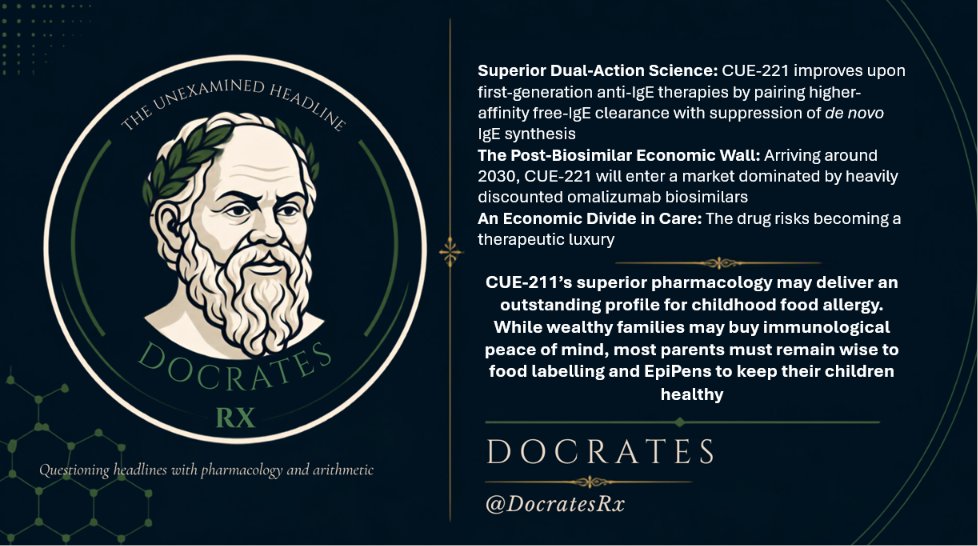
The recent clinical readout for CUE-221 (UB-221)—a dual-action anti-IgE monoclonal antibody—presents a masterclass in molecular pharmacology. In its Phase 2 chronic spontaneous urticaria (CSU) trial, CUE-221 demonstrated a complete hive clearance rate (HSS7=0) of 54% at 12 weeks, paired with an off-treatment complete response of 46% a full 12 weeks post-final dose—statistically outperforming omalizumab.
The biological reason for this durability is elegant. Unlike first-generation anti-IgE neutralizing antibodies that merely mop up circulating ligand, CUE-221 operates via an engineered dual mechanism: it boasts an eight-fold higher affinity for free IgE to block FcεRI docking on mast cells, while simultaneously engaging CD23 (FcεRII) to trigger negative feedback signaling in B cells, suppressing de novo IgE heavy-chain synthesis by over 70%. It does not simply bail water out of the immunological boat; it turns off the tap.
The Pediatric Food Allergy Dilemma
This pharmacology is precisely what makes CUE-221’s planned foray into food allergy so compelling. The fundamental limitation of standard omalizumab in multi-food allergy (as validated in the landmark OUtMATCH trial) is not its mechanism, but its logistical friction. Food-allergic children often possess staggering baseline IgE titers, requiring punitive injection regimens—frequently two to four large-volume subcutaneous injections every two to four weeks.
CUE-221’s dual action solves the arithmetic of exposure: by clearing free IgE while downregulating synthesis at the source, it could theoretically achieve a reliable buffer against accidental allergen exposure with a quarterly (Q12W) auto-injector.
Raising a child’s reactivity threshold from 5 milligrams of peanut protein (a speck of kitchen dust) to 1,000 milligrams (three whole peanuts) is not a lifestyle luxury. It is the clinical boundary between an inconvenient hive and life-threatening, biphasic anaphylaxis in a school hallway. Upstream blockade of mast cell degranulation is objectively superior medicine to waiting for airway compromise and plunging an intramuscular needle into an adrenaline-surging child.
The Biosimilar Wall and the Payer Triage
Yet, great clinical pharmacology cannot escape the cold balance sheets of health systems. By the time CUE-221 navigates registrational trials and approaches commercialization around 2030, the anti-IgE landscape will look drastically different. Multi-source, interchangeable omalizumab biosimilars will have eroded reference prices by 50% to 80% across the US and Europe.
In this landscape, how will payers handle a branded, next-generation biologic commanding an estimated $35,000 to $50,000 annual list price?
In the UK, Europe, and Canada, health technology assessment bodies (NICE, G-BA, CADTH) view anaphylaxis through the lens of Incremental Cost-Effectiveness Ratios (ICERs). Food avoidance and carrying two $50 autoinjectors cost the state virtually nothing. Payers will not reimburse an annual, premium-priced chronic biologic to protect against an event with a 10% annual incidence rate when generic rescue medications exist. For public health systems, CUE-221 in food allergy will be dead on arrival.
The American Formulary Labyrinth: In the US, commercial payers and pharmacy benefit managers (PBMs) will construct formidable utilization barriers. To access CUE-221, patients will face stringent prior authorizations: step therapy through multiple generic biosimilar omalizumab regimens (with all their attendant high injection volumes), extensive documentation of recurrent anaphylaxis despite adherence, and high co-insurance tiers.
The consequence of this health economics squeeze is inevitable. For families with premier commercial insurance plans, top-tier manufacturer co-pay assistance, or outright self-pay means, CUE-221 will represent the gold standard: an effortless quarterly injection that builds an invisible immunological shield around their child. They will purchase biological peace of mind.
For the vast majority of families reliant on standard managed care, Medicaid, or single-payer healthcare systems, this clinical innovation will remain out of reach. They will be turned away at the pharmacy counter by formulary design.
For them, the burden of protection remains purely behavioral. They must continue to spend their evenings deciphering ambiguous cross-contamination labels on supermarket boxes, negotiating rigid food policies with underfunded school boards, and ensuring that an unexpired, temperature-sensitive epinephrine autoinjector is always within arm's reach.
The science of CUE-221 demonstrates how molecular engineering can tame the immune response. But commercial architecture ensures that while the wealthy can outsource the vigilance of anaphylaxis to high-affinity monoclonal antibodies, everyone else must remain extraordinarily wise just to keep their children healthy.
When BridgeBio rolled out late-breaking Phase 3 PROPEL 3 complication data at the European Society for Paediatric Endocrinology (ESPE) in Marseille, they showed what constitutes meaningful differentiation for a child living with achondroplasia?
To answer that, you need to look past the centimetre chart and understand what daily life looks like for a five-year-old child and their family.
The Day in the Life: Beyond the Stadiometer
A child with achondroplasia does not wake up worried about their height standard deviation score.
They wake up navigating a physical environment fundamentally unsuited to their anatomy. Their challenges are tangible and structural: rhizomelic limb shortening means reaching the bathroom sink or managing personal hygiene independently is an everyday hurdle. Midface hypoplasia and narrowed craniofacial airways mean fitful sleep broken by obstructive apnea, leaving them exhausted before the school day begins. Recurrent Eustachian tube dysfunction brings chronic otitis media, fluid buildup, painful ear infections, and the risk of speech-delaying conductive hearing loss. In the background sits the parental terror of foramen magnum stenosis in infancy and progressive spinal canal narrowing later in childhood.
For years, the biopharma answer to this complex genetic dysplasia was measured almost exclusively in centimetres per year. But restoring height velocity does not automatically rebuild a skull base, open a spinal canal, or drain an Eustachian tube.
The Giant’s Shoulders: BioMarin and the Foundation of Care
Any honest evaluation of today’s pipeline must acknowledge BioMarin’s groundbreaking contribution. Before Voxzogo (vosoritide), families with achondroplasia had zero approved pharmacotherapies. BioMarin proved that endochondral growth plate biology could be altered, successfully delivering a C-type natriuretic peptide (CNP) analogue to bypass constitutive FGFR3 hyperactivation.
BioMarin opened the door, established the regulatory pathways, and validated the biology. Furthermore, none of this progress would exist without the international skeletal dysplasia community—including groups like Little People of America (LPA), Fundación ALPE, and global patient coalitions. These grassroots patient advocacy groups built the natural history registries, navigated the trial consent protocols, and educated investigators on real-world living.
Yet BioMarin’s initial development relied heavily on annualized growth velocity (AGV) as its primary regulatory currency. The patient community delivered a crucial critique: Stop medicalizing our bodies for the sake of cosmetic height. What families urgently needed were outcomes that mitigated surgical risk, improved functional reach, and relieved structural complications.
PROPEL 3 and the Case for Meaningful Differentiation
BridgeBio listened to that community critique, and the 52-week PROPEL 3 dataset reflects that shift:
Administration Burden: Voxzogo requires a daily subcutaneous injection throughout childhood—an ongoing ordeal of needles, skin irritation, and vasodilation monitoring. Infigratinib is a once-daily oral small molecule, eliminating daily injection anxiety and dramatically lowering the friction of adherence.
Linear Velocity and Proportionality: Infigratinib delivered a least-squares mean treatment difference of +1.74 cm/year and an observed difference of +2.10 cm/year over placebo. More crucially, it achieved the first statistically significant improvement in upper-to-lower body segment ratio in children under 8 years, improving bodily proportionality and functional reach rather than merely lengthening the torso.
Hard Complication Endpoints (ESPE 2026): PROPEL 3’s late-breaking data reported direct impacts on structural morbidities:
Sleep Apnea: Mean total apnea-hypopnea index (AHI) stabilized in the oral infigratinib group (a 10.4% shift vs. a 49.2% increase in placebo; unchanged in children under 8 years vs. a 63.2% worsening in placebo).
Ear Infections: A 38% lower annualized rate of otitis media compared to placebo, deepening to a 47% reduction in children under 8.
Body Composition: Significant improvements in lean body mass accrual and attenuation of visceral fat volume.
By proving that enzymatic FGFR3 inhibition stabilizes airway mechanics and middle ear ventilation while balancing skeletal proportions, BridgeBio has shifted the conversation from "how tall" to "how well."
The Socratic Caution: Pleiotropy and Off-Target Pharmacology
Before crowning an oral kinase inhibitor, clinical pharmacology demands a strict cautionary note.
Vosoritide operates as an extracellular peptide targeting the cell-surface NPR-B receptor, which inherently restricts its systemic footprint. Infigratinib is an orally bioavailable, systemic small-molecule enzymatic inhibitor of FGFR3. Tyrosine kinase inhibitors are intrinsically prone to pleiotropic effects and cross-reactive pharmacology.
FGFR signaling is not confined to the cartilaginous growth plate:
Phosphate Homeostasis: Fibroblast growth factors (notably FGF23) regulate renal phosphate handling via FGFR1. PROPEL 3 reported asymptomatic, transient hyperphosphatemia in ~4% of patients. In young children undergoing rapid skeletal mineralization and brain growth, long-term disruption of mineral homeostasis requires meticulous monitoring.
Off-Target Kinase Suppression: While designed for FGFR3 selectivity, small molecules risk subclinical inhibition of FGFR1, FGFR2, and FGFR4, which govern vascular tone, hepatic metabolism, and tissue repair.
Long-term Pediatric Exposure: Achondroplasia requires sustained administration for a decade or more until epiphyseal closure. While short-term oncologic toxicity profiles for infigratinib do not apply to pediatric micro-dosing, unmasking late vascular, metabolic, or ocular effects remains a real consideration that a clean 52-week readout cannot fully dismiss.
Restoring the Arithmetic
Infigratinib’s PROPEL 3 readout provides meaningful differentiation: an oral pill replacing daily needles, validated gains in body proportionality, and real-world reductions in ear infections and sleep apnea.
BioMarin paved the trail; the patient community forced biopharma to define what truly matters. An oral therapy that mitigates surgery and improves daily function is a major advancement, but as this regulatory package heads to the FDA, clinicians and parents must remember the central tenet of pharmacology: systemic small molecules carry broader biological ripples than localized peptides. The arithmetic of long-term off-target safety must be tracked as rigorously as the centimetres gained.
"Thank you for the thoughtful follow-up.
No pharmacologist argues that sertraline is a magic molecule that stops at the uterine wall or has zero fetal exposure. Fetal cord blood exhibits low-level SERT occupancy, which is precisely why Poor Neonatal Adaptation Syndrome (PNAS) exists: it is a documented, transient neonatal withdrawal/adaptation effect that resolves in 48–72 hours—not structural fetotoxicity or permanent organ dysmorphology.
Where the syllogism fails is equating biochemical receptor engagement with developmental toxicity. Thyroid hormone, glucose, and endogenous steroids are crucial for fetal ontogeny; pharmacologically altering their homeostatic set-points does not automatically constitute teratogenic destruction. Dose, placental transport kinetics (P-glycoprotein efflux), and exposure thresholds govern whether an interaction produces clinical harm. Flooding mice with 60 mg/kg/day cannot be extrapolated to prove human developmental pathology.
Regarding neonatal MRI studies: neuroimaging consistently demonstrates structural and functional connectivity shifts in infants exposed to untreated maternal depression and elevated gestational cortisol alone. Disentangling maternal disease severity, shared polygenic risk, and pharmacology is the central hurdle of observational neuroimaging.
Individualizing care is essential. But informed consent requires accurate denominators: distinguishing transient neonatal receptor clearance from structural damage, and balancing absolute pharmacological risk against the documented perinatal harms of untreated depression."
For a clinical discussion on distinguishing shared genetic risk and maternal disease severity from pharmacological exposure in neurodevelopmental research, see this Study on Pregnancy Antidepressants. This video addresses how accounting for parental mental health and confounding factors clarifies the real-world neurodevelopmental safety profile of prenatal SSRI exposure.
https://t.co/1Un5lW41fI
Docrates
The Missing Denominator: Why Genetics Beat Epidemiology on Lp(a), HDL, and LDL
When topline results from the Phase 3 Lp(a)HORIZON trial revealed that pelacarsen failed to achieve a statistically significant reduction in major adverse cardiovascular events (MACE), the reaction across the biopharma sector was shock. For over a decade, observational epidemiology insisted that elevated lipoprotein(a) was an independent driver of atherothrombotic risk. Phase 2 data confirmed that pelacarsen crushed circulating Lp(a) levels by 70% to 80%.
Yet on hard clinical outcomes, the trial hit a wall.
The immediate post-mortem will inevitably fall into predictable patterns: investigators will parse post-hoc subgroups, search for responder cohorts at extreme baseline thresholds, and blame short follow-up windows. But the real failure wasn't in trial execution or antisense pharmacology. It was a failure of clinical arithmetic.
Human genetics predicted this stumble years before the first patient was randomized. More importantly, it highlights a profound lesson that biopharma keeps learning the expensive way: observational epidemiology identifies correlations, but quantitative genetics dictates clinical trial success.
The Lp(a) Fallacy: Relative Percentages vs. Absolute Molar Math
The drug development thesis for Lp(a) was built on an intuitive epidemiological observation: people with high circulating Lp(a) suffer more heart attacks. When RNA-targeting modalities (antisense oligonucleotides and siRNAs) proved capable of dropping serum levels by 80%, phase 3 cardiovascular outcome trials (CVOTs) were greenlit on the assumption that an 80% relative drop in Lp(a) would rival the clinical efficacy of PCSK9 inhibitors.
Mendelian randomization told a vastly different, deeply inconvenient story.
Landmark genetic analyses—most notably Burgess et al. in JAMA Cardiology (2018)—evaluated the causal relationship between lifelong genetically determined Lp(a) concentrations and coronary heart disease. The genetics revealed an unforgiving physical reality: on a per-particle basis, an Lp(a) particle conveys roughly the same atherogenic potential as an LDL particle. Both carry a single molecule of Apolipoprotein B-100 (ApoB).
Because the circulating molar concentration of Lp(a) is far lower than that of LDL-C, genetics provided the exact conversion rate: to achieve the clinical risk reduction seen with a standard 1 mmol/L (~38.7 mg/dL) drop in LDL-C, a drug must produce an absolute Lp(a) reduction of roughly 100 mg/dL (~200 nmol/L).
Here is where biopharma’s slide decks diverged from the arithmetic:
•In a trial where patients entered with a median baseline Lp(a) around 70–90 mg/dL, an 80% drop delivers an absolute clearance of only 55–70 mg/dL.
•Over a typical 3- to 4-year secondary prevention trial, genetics predicted that an absolute reduction of this size would produce an event reduction in the modest single digits (8–12% at best)—a signal easily lost in modern standard-of-care background noise (high-potency statins, antiplatelet regimens, and revascularization).
•Genetics reflects a lifetime of exposure (50–70 years). Expecting a modest absolute particle clearance to reverse decades of established calcification and fibroatheroma in a brief secondary prevention trial was an unforced mathematical error.
The Precedent: The Multi-Billion-Dollar HDL Mirage
The Lp(a) experience is not an isolated misstep; it is a repeat of the greatest epidemiological trap in cardiovascular history: the pursuit of high-density lipoprotein cholesterol (HDL-C).
For decades, every observational cohort from Framingham onward demonstrated an inverse correlation between HDL-C and cardiovascular risk: high HDL appeared protective, low HDL appeared dangerous. Relying on this correlation, the industry poured billions into developing therapies to raise HDL-C, culminating in the niacin mega-trials (AIM-HIGH, HPS2-THRIVE) and the CETP inhibitor graveyard (torcetrapib, dalcetrapib, evacetrapib).
The drugs worked precisely as designed on surrogate biomarker charts:
•Niacin raised HDL-C by 20% while suppressing triglycerides.
•Merck’s CETP inhibitor, anacetrapib, doubled circulating HDL-C (+104%) in the massive REVEAL trial.
Yet the hard outcomes flatlined. Niacin produced zero reduction in vascular events while adding clinical toxicity. Anacetrapib did manage a modest 9% reduction in MACE, but detailed genetic and trial meta-regressions proved that 100% of that clinical benefit was accounted for by its minor, concomitant reduction in ApoB-containing LDL particles—with precisely 0% derived from doubling HDL-C.
Why did these trials fail? Because in 2012, Voight et al. (The Lancet) published the definitive Mendelian randomization study evaluating human genetic variants that raise HDL-C (such as LIPG Asn396Ser). The genetic outcome was unambiguous: lifelong, genetically elevated HDL-C produced zero reduction in myocardial infarction risk (OR 0.99; 95% CI 0.88–1.11).
Human genetics revealed what observational epidemiology could not: HDL-C is an epiphenomenon—a downstream marker of metabolic health, insulin sensitivity, and triglyceride clearance, not a causal vascular shield. Pumping up the cholesterol content of a bystander particle did not clear plaque. Genetics gave the industry the answer in 2012, yet trials rolled forward regardless.
Why Genetics Succeeded with LDL
Contrast the stumbles of HDL and Lp(a) with the unequivocal success of low-density lipoprotein (LDL) therapeutics.
When clinicians target the LDL pathway—whether via statins targeting HMGCR, ezetimibe targeting NPC1L1, or monoclonal antibodies targeting PCSK9—the clinical trials hit their endpoints with mathematical reproducibility. Every 38.7 mg/dL (1 mmol/L) drop in LDL-C yields a consistent ~21–22% relative reduction in major vascular events across multi-year follow-up.
Genetics predicted this without exception:
1.Lifetime Loss-of-Function: Natural human loss-of-function variants in PCSK9 or HMGCR showed lifelong reductions in LDL-C and dramatic, dose-dependent protection against coronary artery disease without physiological penalty.
2.Massive Absolute Molar Clearance: Unlike Lp(a), the absolute baseline pool of circulating LDL particles in high-risk patients is vast. Lowering LDL-C by 60% with an anti-PCSK9 mAb removes massive absolute quantities of atherogenic ApoB particles from circulation. The biology held because the absolute particle arithmetic held.
The Core Lesson for Therapeutics
The divergent fates of LDL, HDL, and Lp(a) provide a masterclass in modern drug development:
Observational epidemiology is an indispensable tool for generating hypotheses, but it is blind to causality and indifferent to the quantitative kinetics of drug intervention. It pointed at HDL and saw a false saviour; it looked at Lp(a) and mistook a low-concentration particle for an easily druggable silver bullet.
Human genetics consistently provided the correct answer. It proved that HDL was a bystander. It proved that LDL was a causal target capable of rapid clinical translation when cleared in massive absolute numbers. And it warned that while Lp(a) is an atherogenic particle, expecting short-term secondary prevention trials to succeed without massive absolute molar reductions was a mathematical gamble.
The biology was always in the literature; the arithmetic was always on the blackboard. If biopharma wants to avoid wasting billions on the next generation of cardiometabolic targets, it must stop designing multi-year trials around observational surrogate percentages and start respecting the quantitative genetics.
The Missing Denominator: Why Genetics Beat Epidemiology on Lp(a), HDL, and LDL
When topline results from the Phase 3 Lp(a)HORIZON trial revealed that pelacarsen failed to achieve a statistically significant reduction in major adverse cardiovascular events (MACE), the reaction across the biopharma sector was shock. For over a decade, observational epidemiology insisted that elevated lipoprotein(a) was an independent driver of atherothrombotic risk. Phase 2 data confirmed that pelacarsen crushed circulating Lp(a) levels by 70% to 80%.
Yet on hard clinical outcomes, the trial hit a wall.
The immediate post-mortem will inevitably fall into predictable patterns: investigators will parse post-hoc subgroups, search for responder cohorts at extreme baseline thresholds, and blame short follow-up windows. But the real failure wasn't in trial execution or antisense pharmacology. It was a failure of clinical arithmetic.
Human genetics predicted this stumble years before the first patient was randomized. More importantly, it highlights a profound lesson that biopharma keeps learning the expensive way: observational epidemiology identifies correlations, but quantitative genetics dictates clinical trial success.
The Lp(a) Fallacy: Relative Percentages vs. Absolute Molar Math
The drug development thesis for Lp(a) was built on an intuitive epidemiological observation: people with high circulating Lp(a) suffer more heart attacks. When RNA-targeting modalities (antisense oligonucleotides and siRNAs) proved capable of dropping serum levels by 80%, phase 3 cardiovascular outcome trials (CVOTs) were greenlit on the assumption that an 80% relative drop in Lp(a) would rival the clinical efficacy of PCSK9 inhibitors.
Mendelian randomization told a vastly different, deeply inconvenient story.
Landmark genetic analyses—most notably Burgess et al. in JAMA Cardiology (2018)—evaluated the causal relationship between lifelong genetically determined Lp(a) concentrations and coronary heart disease. The genetics revealed an unforgiving physical reality: on a per-particle basis, an Lp(a) particle conveys roughly the same atherogenic potential as an LDL particle. Both carry a single molecule of Apolipoprotein B-100 (ApoB).
Because the circulating molar concentration of Lp(a) is far lower than that of LDL-C, genetics provided the exact conversion rate: to achieve the clinical risk reduction seen with a standard 1 mmol/L (~38.7 mg/dL) drop in LDL-C, a drug must produce an absolute Lp(a) reduction of roughly 100 mg/dL (~200 nmol/L).
Here is where biopharma’s slide decks diverged from the arithmetic:
•In a trial where patients entered with a median baseline Lp(a) around 70–90 mg/dL, an 80% drop delivers an absolute clearance of only 55–70 mg/dL.
•Over a typical 3- to 4-year secondary prevention trial, genetics predicted that an absolute reduction of this size would produce an event reduction in the modest single digits (8–12% at best)—a signal easily lost in modern standard-of-care background noise (high-potency statins, antiplatelet regimens, and revascularization).
•Genetics reflects a lifetime of exposure (50–70 years). Expecting a modest absolute particle clearance to reverse decades of established calcification and fibroatheroma in a brief secondary prevention trial was an unforced mathematical error.
The Precedent: The Multi-Billion-Dollar HDL Mirage
The Lp(a) experience is not an isolated misstep; it is a repeat of the greatest epidemiological trap in cardiovascular history: the pursuit of high-density lipoprotein cholesterol (HDL-C).
For decades, every observational cohort from Framingham onward demonstrated an inverse correlation between HDL-C and cardiovascular risk: high HDL appeared protective, low HDL appeared dangerous. Relying on this correlation, the industry poured billions into developing therapies to raise HDL-C, culminating in the niacin mega-trials (AIM-HIGH, HPS2-THRIVE) and the CETP inhibitor graveyard (torcetrapib, dalcetrapib, evacetrapib).
The drugs worked precisely as designed on surrogate biomarker charts:
•Niacin raised HDL-C by 20% while suppressing triglycerides.
•Merck’s CETP inhibitor, anacetrapib, doubled circulating HDL-C (+104%) in the massive REVEAL trial.
Yet the hard outcomes flatlined. Niacin produced zero reduction in vascular events while adding clinical toxicity. Anacetrapib did manage a modest 9% reduction in MACE, but detailed genetic and trial meta-regressions proved that 100% of that clinical benefit was accounted for by its minor, concomitant reduction in ApoB-containing LDL particles—with precisely 0% derived from doubling HDL-C.
Why did these trials fail? Because in 2012, Voight et al. (The Lancet) published the definitive Mendelian randomization study evaluating human genetic variants that raise HDL-C (such as LIPG Asn396Ser). The genetic outcome was unambiguous: lifelong, genetically elevated HDL-C produced zero reduction in myocardial infarction risk (OR 0.99; 95% CI 0.88–1.11).
Human genetics revealed what observational epidemiology could not: HDL-C is an epiphenomenon—a downstream marker of metabolic health, insulin sensitivity, and triglyceride clearance, not a causal vascular shield. Pumping up the cholesterol content of a bystander particle did not clear plaque. Genetics gave the industry the answer in 2012, yet trials rolled forward regardless.
Why Genetics Succeeded with LDL
Contrast the stumbles of HDL and Lp(a) with the unequivocal success of low-density lipoprotein (LDL) therapeutics.
When clinicians target the LDL pathway—whether via statins targeting HMGCR, ezetimibe targeting NPC1L1, or monoclonal antibodies targeting PCSK9—the clinical trials hit their endpoints with mathematical reproducibility. Every 38.7 mg/dL (1 mmol/L) drop in LDL-C yields a consistent ~21–22% relative reduction in major vascular events across multi-year follow-up.
Genetics predicted this without exception:
1.Lifetime Loss-of-Function: Natural human loss-of-function variants in PCSK9 or HMGCR showed lifelong reductions in LDL-C and dramatic, dose-dependent protection against coronary artery disease without physiological penalty.
2.Massive Absolute Molar Clearance: Unlike Lp(a), the absolute baseline pool of circulating LDL particles in high-risk patients is vast. Lowering LDL-C by 60% with an anti-PCSK9 mAb removes massive absolute quantities of atherogenic ApoB particles from circulation. The biology held because the absolute particle arithmetic held.
The Core Lesson for Therapeutics
The divergent fates of LDL, HDL, and Lp(a) provide a masterclass in modern drug development:
Observational epidemiology is an indispensable tool for generating hypotheses, but it is blind to causality and indifferent to the quantitative kinetics of drug intervention. It pointed at HDL and saw a false saviour; it looked at Lp(a) and mistook a low-concentration particle for an easily druggable silver bullet.
Human genetics consistently provided the correct answer. It proved that HDL was a bystander. It proved that LDL was a causal target capable of rapid clinical translation when cleared in massive absolute numbers. And it warned that while Lp(a) is an atherogenic particle, expecting short-term secondary prevention trials to succeed without massive absolute molar reductions was a mathematical gamble.
The biology was always in the literature; the arithmetic was always on the blackboard. If biopharma wants to avoid wasting billions on the next generation of cardiometabolic targets, it must stop designing multi-year trials around observational surrogate percentages and start respecting the quantitative genetics.
The Folic Acid Panic Playbook
The viral pushback against UK flour fortification is textbook manufactured panic: confusing intermediate biochemistry with toxicity, ignoring 28 years of global safety data, and erasing the biological timeline of human gestation.
Let's restore the arithmetic:
1/ The Missing Denominator (The Day 28 Problem)The neural tube closes around post-conception day 28—frequently before a home pregnancy test turns positive, and well before prenatal visits begin. With roughly 50% of pregnancies unplanned, telling women to simply "take a 400 mcg supplement" is a failed public health strategy that guarantees socioeconomic disparities. Fortification elevates baseline red blood cell folate across the population, directly averting ~200 catastrophic neural tube defects annually.
2/ "Mass Medication" vs. ArithmeticMandating 250 mcg per 100g of non-wholemeal flour yields an average population intake increase of just ~100–140 mcg/day. The Upper Tolerable Limit is 1,000 mcg/day. At this conservative concentration, reaching excess levels is practically impossible without intentional, high-dose over-supplementation.
3/ The Cancer & B12 Bogeymen
Cancer Risk: Large-scale meta-analyses (including the B-Vitamin Treatment Trialists’ Collaboration covering >50,000 trial participants) confirm no increase in site-specific or overall cancer incidence. The late-90s US colorectal cancer "spike" was an observational artifact of an explosive surge in screening colonoscopies that coincided with the 1998 US mandate.
B12 Masking: The concern that folate masks B12 neuropathy stems from historic pharmacological megadoses (>1,000–5,000 mcg). Modern NHS diagnostic pathways rely on automated serum and active B12 assays, not peripheral blood smear macrocytosis alone.
4/ Old News as Breaking NewsOver 80 countries—including the US, Canada, and Australia—mandated folic acid fortification in the late 1990s and 2000s. The UK is not entering an uncharted biological frontier; it is adopting an intervention backed by nearly three decades of real-world epidemiological surveillance.
The unexamined health scare isn't worth reading. Biology runs on a strict timeline, and fortification is public health arithmetic overcoming a 28-day deadline.
@DocratesRx | Restoring the arithmetic.
@jemmm85517813 It is in many foods naturally! By all means call it a drug but then remember to think about the dosages you are mixing up. https://t.co/6VoIBhr62D
The Folic Acid Panic Playbook
The viral pushback against UK flour fortification is textbook manufactured panic: confusing intermediate biochemistry with toxicity, ignoring 28 years of global safety data, and erasing the biological timeline of human gestation.
Let's restore the arithmetic:
1/ The Missing Denominator (The Day 28 Problem)The neural tube closes around post-conception day 28—frequently before a home pregnancy test turns positive, and well before prenatal visits begin. With roughly 50% of pregnancies unplanned, telling women to simply "take a 400 mcg supplement" is a failed public health strategy that guarantees socioeconomic disparities. Fortification elevates baseline red blood cell folate across the population, directly averting ~200 catastrophic neural tube defects annually.
2/ "Mass Medication" vs. ArithmeticMandating 250 mcg per 100g of non-wholemeal flour yields an average population intake increase of just ~100–140 mcg/day. The Upper Tolerable Limit is 1,000 mcg/day. At this conservative concentration, reaching excess levels is practically impossible without intentional, high-dose over-supplementation.
3/ The Cancer & B12 Bogeymen
Cancer Risk: Large-scale meta-analyses (including the B-Vitamin Treatment Trialists’ Collaboration covering >50,000 trial participants) confirm no increase in site-specific or overall cancer incidence. The late-90s US colorectal cancer "spike" was an observational artifact of an explosive surge in screening colonoscopies that coincided with the 1998 US mandate.
B12 Masking: The concern that folate masks B12 neuropathy stems from historic pharmacological megadoses (>1,000–5,000 mcg). Modern NHS diagnostic pathways rely on automated serum and active B12 assays, not peripheral blood smear macrocytosis alone.
4/ Old News as Breaking NewsOver 80 countries—including the US, Canada, and Australia—mandated folic acid fortification in the late 1990s and 2000s. The UK is not entering an uncharted biological frontier; it is adopting an intervention backed by nearly three decades of real-world epidemiological surveillance.
The unexamined health scare isn't worth reading. Biology runs on a strict timeline, and fortification is public health arithmetic overcoming a 28-day deadline.
@DocratesRx | Restoring the arithmetic.
The Folic Acid Panic Playbook
The viral pushback against UK flour fortification is textbook manufactured panic: confusing intermediate biochemistry with toxicity, ignoring 28 years of global safety data, and erasing the biological timeline of human gestation.
Let's restore the arithmetic:
1/ The Missing Denominator (The Day 28 Problem)The neural tube closes around post-conception day 28—frequently before a home pregnancy test turns positive, and well before prenatal visits begin. With roughly 50% of pregnancies unplanned, telling women to simply "take a 400 mcg supplement" is a failed public health strategy that guarantees socioeconomic disparities. Fortification elevates baseline red blood cell folate across the population, directly averting ~200 catastrophic neural tube defects annually.
2/ "Mass Medication" vs. ArithmeticMandating 250 mcg per 100g of non-wholemeal flour yields an average population intake increase of just ~100–140 mcg/day. The Upper Tolerable Limit is 1,000 mcg/day. At this conservative concentration, reaching excess levels is practically impossible without intentional, high-dose over-supplementation.
3/ The Cancer & B12 Bogeymen
Cancer Risk: Large-scale meta-analyses (including the B-Vitamin Treatment Trialists’ Collaboration covering >50,000 trial participants) confirm no increase in site-specific or overall cancer incidence. The late-90s US colorectal cancer "spike" was an observational artifact of an explosive surge in screening colonoscopies that coincided with the 1998 US mandate.
B12 Masking: The concern that folate masks B12 neuropathy stems from historic pharmacological megadoses (>1,000–5,000 mcg). Modern NHS diagnostic pathways rely on automated serum and active B12 assays, not peripheral blood smear macrocytosis alone.
4/ Old News as Breaking NewsOver 80 countries—including the US, Canada, and Australia—mandated folic acid fortification in the late 1990s and 2000s. The UK is not entering an uncharted biological frontier; it is adopting an intervention backed by nearly three decades of real-world epidemiological surveillance.
The unexamined health scare isn't worth reading. Biology runs on a strict timeline, and fortification is public health arithmetic overcoming a 28-day deadline.
@DocratesRx | Restoring the arithmetic.
The Unexamined Miracle: Why Fenbendazole Cures Petri Dishes, Not 20 Human Cancers
Every few months, the identical script goes viral: a cheap veterinary dewormer is secretly curing dozens of terminal cancers, kept from the public by an all-powerful pharmaceutical cartel.
Desperation makes people vulnerable to certainty. But clinical pharmacology demands asking foundational Socratic questions:
1. The In Vitro Fallacy Killing a cancer cell in a culture well is remarkably easy; doing so in a living human body without fatal host toxicity is the central challenge of oncology. Microtubule disruption in an immortalized cancer cell line is standard pharmacology, but in vitro cytotoxicity is not clinical efficacy.
2. The Evidence Denominator A search across global regulatory registries (FDA, EMA, https://t.co/zMKtrjouun) reveals zero completed, peer-reviewed, randomized controlled trials evaluating fenbendazole as an efficacious cancer treatment in humans. Citing preclinical papers while asserting the drug is "treating 20 cancers right now" confuses laboratory screening with bedside medicine.
3. The "Unpatentable Generics" Myth The claim that oncology ignores unpatentable drugs collapses under real-world scrutiny. Hundreds of academic and publicly funded trials actively investigate generic repurposing: metformin in breast cancer, aspirin in colorectal cancer, and related human benzimidazoles (like mebendazole) in glioblastoma. When a compound shows clinical signal, the medical community runs the trials.
4. The Ignored Clinical Trade-Offs Promoting unverified veterinary anthelmintics carries real-world clinical damage:
Unmonitored, long-term exposure risks severe drug-induced liver injury.
Most critically, patients who substitute unregulated protocols for standard-of-care surgery, targeted therapy, or checkpoint inhibitors surrender their curative window during early disease stages.
Compassion requires truth in data. Biology does not yield to internet enthusiasm, and an unmonitored animal dewormer is not an oncology regimen.
@DocratesRx | Restoring the arithmetic.
#EvidenceBasedMedicine #Oncology #ClinicalPharmacology #Docrates
The Folic Acid Panic Playbook
The viral pushback against UK flour fortification is textbook manufactured panic: confusing intermediate biochemistry with toxicity, ignoring 28 years of global safety data, and erasing the biological timeline of human gestation.
Let's restore the arithmetic:
1/ The Missing Denominator (The Day 28 Problem)The neural tube closes around post-conception day 28—frequently before a home pregnancy test turns positive, and well before prenatal visits begin. With roughly 50% of pregnancies unplanned, telling women to simply "take a 400 mcg supplement" is a failed public health strategy that guarantees socioeconomic disparities. Fortification elevates baseline red blood cell folate across the population, directly averting ~200 catastrophic neural tube defects annually.
2/ "Mass Medication" vs. ArithmeticMandating 250 mcg per 100g of non-wholemeal flour yields an average population intake increase of just ~100–140 mcg/day. The Upper Tolerable Limit is 1,000 mcg/day. At this conservative concentration, reaching excess levels is practically impossible without intentional, high-dose over-supplementation.
3/ The Cancer & B12 Bogeymen
Cancer Risk: Large-scale meta-analyses (including the B-Vitamin Treatment Trialists’ Collaboration covering >50,000 trial participants) confirm no increase in site-specific or overall cancer incidence. The late-90s US colorectal cancer "spike" was an observational artifact of an explosive surge in screening colonoscopies that coincided with the 1998 US mandate.
B12 Masking: The concern that folate masks B12 neuropathy stems from historic pharmacological megadoses (>1,000–5,000 mcg). Modern NHS diagnostic pathways rely on automated serum and active B12 assays, not peripheral blood smear macrocytosis alone.
4/ Old News as Breaking NewsOver 80 countries—including the US, Canada, and Australia—mandated folic acid fortification in the late 1990s and 2000s. The UK is not entering an uncharted biological frontier; it is adopting an intervention backed by nearly three decades of real-world epidemiological surveillance.
The unexamined health scare isn't worth reading. Biology runs on a strict timeline, and fortification is public health arithmetic overcoming a 28-day deadline.
@DocratesRx | Restoring the arithmetic.
The Folic Acid Panic Playbook
The viral pushback against UK flour fortification is textbook manufactured panic: confusing intermediate biochemistry with toxicity, ignoring 28 years of global safety data, and erasing the biological timeline of human gestation.
Let's restore the arithmetic:
1/ The Missing Denominator (The Day 28 Problem)The neural tube closes around post-conception day 28—frequently before a home pregnancy test turns positive, and well before prenatal visits begin. With roughly 50% of pregnancies unplanned, telling women to simply "take a 400 mcg supplement" is a failed public health strategy that guarantees socioeconomic disparities. Fortification elevates baseline red blood cell folate across the population, directly averting ~200 catastrophic neural tube defects annually.
2/ "Mass Medication" vs. ArithmeticMandating 250 mcg per 100g of non-wholemeal flour yields an average population intake increase of just ~100–140 mcg/day. The Upper Tolerable Limit is 1,000 mcg/day. At this conservative concentration, reaching excess levels is practically impossible without intentional, high-dose over-supplementation.
3/ The Cancer & B12 Bogeymen
Cancer Risk: Large-scale meta-analyses (including the B-Vitamin Treatment Trialists’ Collaboration covering >50,000 trial participants) confirm no increase in site-specific or overall cancer incidence. The late-90s US colorectal cancer "spike" was an observational artifact of an explosive surge in screening colonoscopies that coincided with the 1998 US mandate.
B12 Masking: The concern that folate masks B12 neuropathy stems from historic pharmacological megadoses (>1,000–5,000 mcg). Modern NHS diagnostic pathways rely on automated serum and active B12 assays, not peripheral blood smear macrocytosis alone.
4/ Old News as Breaking NewsOver 80 countries—including the US, Canada, and Australia—mandated folic acid fortification in the late 1990s and 2000s. The UK is not entering an uncharted biological frontier; it is adopting an intervention backed by nearly three decades of real-world epidemiological surveillance.
The unexamined health scare isn't worth reading. Biology runs on a strict timeline, and fortification is public health arithmetic overcoming a 28-day deadline.
@DocratesRx | Restoring the arithmetic.
The ERS update confirms the mechanism—and the arithmetic divide.
With the full LUNA dataset (TITANIA, OBERON, MIRANDA) presented at ERS, tozorakimab’s dual-inhibition of reduced and oxidised IL-33 clearly separates it from itepekimab by showing broad exacerbation cuts across both former and current smokers.
Now look past the rate ratio:
The Absolute Delta: A ~25–30% relative reduction against standard inhaled triple therapy prevents roughly ~0.3 moderate-to-severe exacerbations per patient-year.
The Structural Void: As expected, baseline airflow FEV1 improvements remain negligible.
Blocking upstream alarmins successfully lowers episodic crashes, but it doesn't rebuild diseased lung architecture.
For payers, paying a biologic premium to avert a fractional steroid burst remains the real commercial obstacle.
#COPD #Pulmonology #ERS2026 #HealthEconomics #Docrates
AstraZeneca’s Phase III LUNA program (OBERON, TITANIA, MIRANDA) just gave tozorakimab a clean sweep in COPD.
Targeting the upstream alarmin IL-33, it delivered statistically significant exacerbation cuts across former smokers and the broader cohort—regardless of eosinophil count. It’s an engineering triumph. But let’s look at the clinical reality:
1/ The Post-Eosinophil Play:Dupilumab broke open COPD biologics by cherry-picking type-2 high patients. Tozorakimab takes aim at the broader majority by inhibiting both reduced and oxidised IL-33 to disrupt both downstream inflammation and mucus pathology. It worked where others stumbled.
2/ Exacerbations vs Baseline Breath: Clinical trials live on the negative binomial rate: avoiding a steroid burst or hospital bed is a win for payers. But preventing an episodic crash isn’t the same as restoring lung tissue. Fixed airflow obstruction and emphysema remain unchanged.
3/ The Functional Hurdle: At ERS, the real signal won’t be the exacerbation p-value. It will be whether upstream alarmin blockade delivered meaningful improvements in post-bronchodilator FEV1 and daily exercise tolerance. If patients can’t walk further, we’ve treated the chart, not the patient.
4/ The HTA Reckoning: A biomarker-agnostic biologic in a massive COPD population will hit a payer brick wall. Without hard survival gains or profound quality-of-life deltas, health economists will scrutinise the cost-per-exacerbation-avoided ruthlessly.A major win for epithelial biology. A reminder that modern medicine is far better at preventing acute crises than repairing chronic decay.
Socrates in the Charmides: "The part can never be well unless the whole is well."
Silencing an upstream alarmin averts the crisis on paper. Restoring the patient’s actual baseline lung function is the whole we have yet to solve.
Update: The primary prevention data is in—and it reinforces the acute-event mandate.
Fresh off the wire, late-breaking data from Amgen’s VESALIUS-CV trial (Circulation) reported a 20% relative reduction in all-cause mortality (7.9% vs 9.7%) over a median 4.6 years in high-risk patients without prior MI or stroke.
The headlines are already heralding this as justification to expand evolocumab broadly into primary prevention border zones. Let's restore the arithmetic:
1. The Missing Denominator
A "20% relative reduction" translates to an absolute risk difference of 1.8% over nearly 5 years. That is a Number Needed to Treat (NNT) of approximately 56 to prevent one death across half a decade.
2. The Latency Gap
The survival curves did not begin to separate until 18 months into therapy. In stable primary prevention cohorts, driving LDL-C to ultra-low levels requires years of compound treatment before a mortality signal emerges.
3. Observational Modeling vs. Acute Biology
Investigators noted that ~78% of the non-cardiovascular death reduction was mediated by preventing preceding nonfatal ischemic insults. While mechanistically intuitive, modeling is not prospective randomized proof. Long-term exposure in stable outpatients can bend the survival curve over 5 years.
But where does a rapid-clearing, high-affinity biologic deliver its sharpest pharmacological punch and justify mAb health economics?
At the bedside during the index event—crushing atherogenic lipoproteins by 60–70% in the first 48–72 hours of acute vascular crisis.
The biology is still waiting.
Run the definitive acute trial.
#Cardiology #PCSK9 #EvidenceBasedMedicine #ClinicalPharmacology #Docrates
The genetics told us the truth about PCSK9 twenty years ago: human loss-of-function variants don’t just lower LDL—they confer lifelong protection against atherosclerotic heart disease without biological downside. The biology is ironclad.
Yet every time cardiology conferences buzz with updated registry trends or open-label extension survival curves for evolocumab (Repatha), pharma falls back into the same observational trap: begging for a mortality crown without running the definitive, frontline trial to claim it.
Let’s examine the unexamined strategy:
1. The Real-World Sweet Spot: The Acute Vulnerable Period
Where does a potent, rapid-acting, expensive monoclonal antibody actually make clinical and economic sense? Not as a vague, delayed add-on after six months of outpatient statin titration fails. The clinical sweet spot is immediate secondary prevention—the critical 48-to-72-hour window following an acute coronary syndrome (ACS) or first major vascular event. When a patient is hospitalized post-MI, their recurrent ischemic risk is front-loaded, vascular inflammation is roaring, and plaque stabilization is urgent. Dropping LDL-C off a cliff by 60–70% within days—not months—is where a biologic delivers real, indisputable value. That is the clinical scenario that justifies mAb pricing.
2. Stop Hiding in the Extension Data
FOURIER gave us a clear 15% reduction in MACE, but over a median 2.2-year horizon, the hard survival curve hadn't separated yet. The response since then? Leaning on open-label extension analyses and retrospective registries to hint at an all-cause mortality inflection. Docrates rule: observational follow-ups and survivor-cohort extensions are hypothesis-generating, not regulatory gospel. They invite healthy-adherer confounding and survivorship bias.
3. If You Want the Crown, Do the Work
All the signs point to victory:
• Foundational human genetics validate the target.
• Acute-phase mechanistic data prove profound, rapid lipid clearance.
• Plaque stabilization trials confirm rapid atheroma regression.
If Amgen wants to establish Repatha as an unassailable standard of care post-event, they must stop trying to infer life-saving status through observational tea leaves.
Power and execute the definitive, randomized, hard-endpoint secondary prevention trial initiated bedside at the index event.
The biology is waiting. The math will hold. Now do the work.
#Cardiology #Pharmacology #EvidenceBasedMedicine #Docrates #Lipids #PCSK9
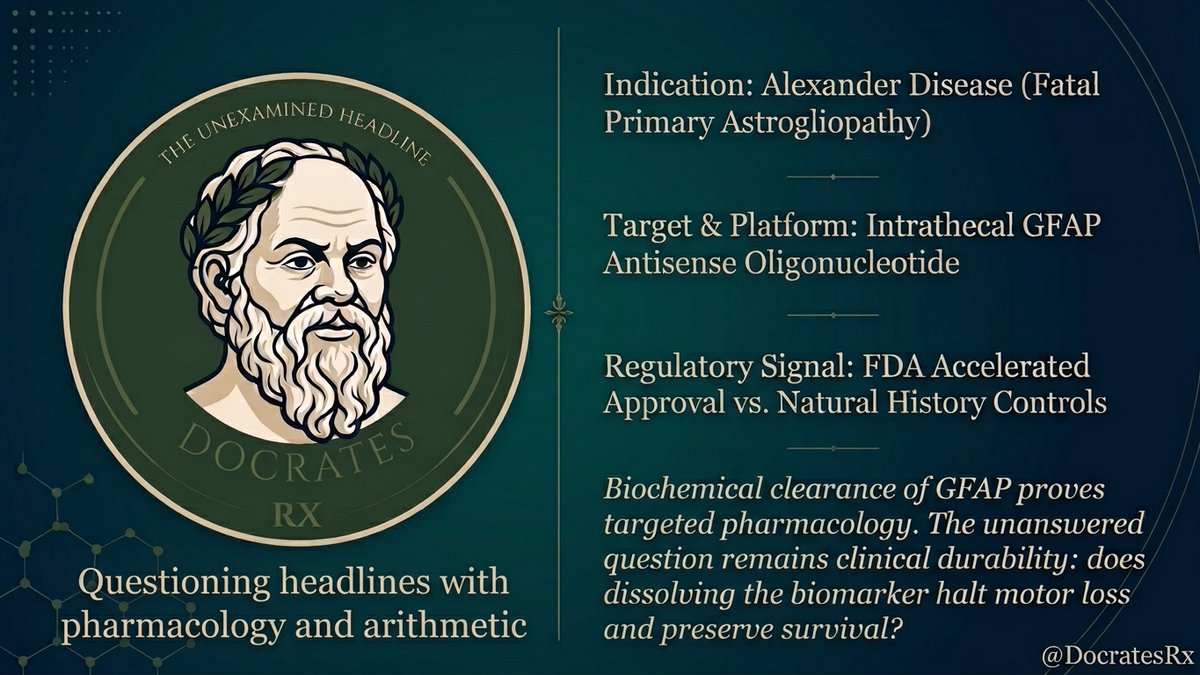
The FDA approval of Ionis’s Zanvastro (zilganersen) represents an undeniable triumph of antisense engineering, but the unexamined accelerated approval demands clear-eyed scrutiny.
Understanding Alexander Disease: The Primary Astrogliopathy. Unlike classic demyelinating leukodystrophies that primarily damage oligodendrocytes, Alexander disease (AxD) is fundamentally a disorder of astrocytes. Driven predominantly by gain-of-function de novo mutations in the GFAP (glial fibrillary acidic protein) gene, the disease causes toxic GFAP accumulation and intracellular inclusion bodies called Rosenthal fibers.
This astrocyte dysfunction triggers widespread secondary leukoencephalopathy, intractable seizures, megalencephaly, spasticity, and severe bulbar dysfunction (loss of swallowing, speaking, and respiratory control). In its early-onset form, it is inexorably progressive and frequently fatal in early childhood, leaving families with zero disease-modifying treatment options until now.
The Docrates Take: Surrogate Biomarkers vs. Functional Endpoints
Zanvastro suppresses GFAP expression via intrathecal antisense oligonucleotides, directly targeting the molecular root of the pathology. While the FDA’s green light delivers immense, hard-earned hope to a long-neglected community, clinical pharmacology requires asking the fundamental regulatory questions:
Biochemical vs. Clinical Clearance: Zanvastro secured accelerated approval primarily by driving substantial cerebrospinal fluid (CSF) GFAP biomarker reductions matched against natural history controls. GFAP clearing demonstrates biological activity, but does dissolving Rosenthal protein accumulation translate into preserved motor milestones, restored bulbar stability, or extended overall survival?
The Natural History Confounder: In an ultra-rare disease where prospective, double-blind trials are practically impossible and ethically challenging, historical control matching carries inherent reporting, selection, and lead-time biases.
The Post-Marketing Hurdle: The onus now falls on confirmatory post-marketing data to prove that halting neurofilament and GFAP release actually stops neurodegeneration, rather than merely treating the imaging signature of a declining nervous system.
The molecular biology is rational, but regulators and clinicians must not mistake biomarker suppression for a confirmed clinical cure.
The Patient Community: Essential Resources & Advocacy.
Behind this approval are tireless grassroots patient registries and family foundations that built the natural history databases making trial design viable:
End Alexander Disease Foundation (End AxD): Dedicated specifically to funding clinical research and building global patient registries (https://t.co/MEOVN5k20o).
Alex TLC (The Leukodystrophy Charity): Providing clinical navigation, condition management, and peer-to-peer support across leukodystrophies (https://t.co/NasgMfSlwi).
United Leukodystrophy Foundation (ULF): A veteran hub for rare neurodegenerative disease family networking and specialist referrals (https://t.co/HKSyjF4lUE).
The patient community deserves this milestone. Now, the math and real-world clinical tracking must prove the clinical durability behind the biomarker.
#AlexanderDisease #Neurodegenerative #ClinicalPharmacology



![DocratesRx's tweet photo. On September 21, 2026, Johnson & Johnson announced positive topline results from Study 451, the first of two pivotal Phase 3 trials evaluating Caplyta (lumateperone, 42 mg once daily) in adults with bipolar I mania [1]. In a 354-patient, 3-week study presented at the 2026 Psych Congress, Caplyta achieved a statistically significant 4.8-point reduction in the Young Mania Rating Scale (YMRS) over placebo (effect size -0.69 ; p< 0.0001 ), with symptom separation emerging as early as Day 3 and a 45.8% versus 20.9% clinical response rate [1].
On its surface, Study 451 is an operational triumph. Yet across the biopharma landscape, the readout was met not with unreserved celebration, but with intense scientific curiosity and lingering scepticism. The sister trial, Study 452, remains blinded and under analysis. For translational neuroscientists, this duplicate trial design is far more than a routine regulatory hurdle—it is an unsparing stress test of central nervous system (CNS) quantitative receptor pharmacology.
The Biophysics: A Known Quantitative Boundary
Drug development "above the neck" has long suffered from biological opacity, poor animal translation, and the unpredictable fog of psychiatric rating scales and surging placebo rates. Amidst that noise, however, CNS development achieved a monumental technical breakthrough: quantitative receptor pharmacology.
Through positron emission tomography (PET) neuroimaging and pharmacokinetic/ pharmacodynamic (PK/PD) modeling, we learned to measure target engagement directly in the living human brain. We ceased guessing whether compounds crossed the blood-brain barrier; we could quantify precisely what percentage of receptors were occupied at any given clinical dose.
For acute mania, decades of PET-calibrated clinical trials established a clear rule of thumb: suppressing acute manic excitement has historically required crossing a 65% to 75% striatal dopamine D2 receptor occupancy threshold. Classic neuroleptics—from haloperidol to olanzapine and risperidone—derive their antimanic efficacy by physically blunting hyperactive postsynaptic dopaminergic firing at that saturation level.
Now consider lumateperone’s receptor profile. At its therapeutic 42 mg dose, lumateperone saturates cortical serotonin 5-HT2A receptors (>80%), but plateaus at approximately 30% to 40% striatal D2 receptor occupancy.
This low D2 occupancy was deliberately engineered to avoid extrapyramidal symptoms, prolactin elevation, and metabolic weight gain. In bipolar depression—where 5-HT2A antagonism, downstream dopamine phosphoprotein modulation (DPPM), and cortical glutamate balance drive the clinical effect—this profile works as designed. But translating that same binding profile into acute mania places the asset well below the historical D2 threshold long considered mandatory to halt manic excitation.
The Commercial Driver: Chasing the Unified Label
If the pharmacological margin is that thin, why did development teams run twin Phase 3 studies in mania?
The answer lies in the commercial pressure for a unified Bipolar I label. In outpatient psychiatry, a medication approved exclusively for bipolar depression carries a distinct commercial liability. Prescribers often hesitate to use it as monotherapy for fear of diagnostic polarity switches or unaddressed manic breakthroughs. Capturing an acute mania claim creates an all-in-one, switch-free franchise covering both poles of the disease, providing key justification for the $14.6 billion acquisition of Intra-Cellular Therapies.
To pursue that broad label, sponsors rely on the hope that non-dopaminergic downstream pathways will compensate for modest primary receptor saturation, or that statistical power will overcome high placebo noise.
The Trial Design: Why Study 452 is the True Arbiter
Running two identical companion studies (Study 451 and Study 452) is standard practice to satisfy the FDA’s statutory requirement for duplicate, well-controlled evidence. Staggered reporting between sister trials is entirely normal—site initiation, enrolment pacing, and blinded data cleaning rarely finish on the same day, and SEC rules dictate prompt disclosure of material results once a database is unlocked.
Yet the staggered timeline leaves a critical pharmacological question hanging. Did Study 451 succeed because lumateperone’s unique pharmacology truly overrides the historical D2 rule, or was it an operational beneficiary of favorable trial dynamics? In Study 451, the placebo response rate was notably low (20.9%), widening the net drug separation. If Study 452 encounters the higher placebo response typical of acute mania trials, a drug operating at sub-threshold D2 occupancy has little pharmacological margin to fall back on.
The Two Paths for Quantitative CNS Science
The forthcoming readout of Study 452 will serve as a defining case study for translational neuroscience:
Scenario A: Study 452 Fails to Replicate. If the second trial misses statistical significance, the classical quantitative model is reaffirmed. It will demonstrate that single-trial success in acute mania can be an artifact of trial kinetics, and that attempting to control manic excitation without crossing the established 65% to 75% D2 occupancy threshold remains an unacceptable translational gamble.
Scenario B: Study 452 Replicates Study 451. If the second study confirms the antimanic effect, the quantitative PET measurements will not have been "wrong"—lumateperone will still occupy only 35% of D2 receptors. Instead, the historical paradigm will expand. It will prove that high postsynaptic D2 blockade is sufficient, but not strictly necessary, to treat mania. It will validate that presynaptic autoreceptor tuning, dense 5-HT2A saturation, and downstream glutamate modulation can terminate manic states through circuit-level network modulation, establishing a new, metabolically benign blueprint for neuropsychiatric drug design.
Quantitative receptor pharmacology brought scientific rigor to a field historically ruled by trial and error. Study 451 delivered an intriguing signal, but Study 452 will decide whether we are observing a genuine expansion of neurobiology or a reminder of why we measure target engagement in the first place.
Reference:
1. Johnson & Johnson. CAPLYTA® (lumateperone) shows significant and rapid improvement in bipolar mania in pivotal Phase 3 study (Study 451). Press Release. Published September 21, 2026.
#Caplyta #Lumateperone #BipolarMania](https://pbs.twimg.com/media/HSznFLDXAAAhp93.jpg)