I visited the southernmost tip of India.
I stood at Indira Point. I walked under trees that have stood for centuries. I dove into coral reefs among the most vibrant on earth.
And I sat with the people who live there. Tribal communities, whose land is being taken away by violating the Forest Rights Act. Settlers, many of them former soldiers, placed on these islands by the Indian government, who aren’t getting fair compensation.
The Modi government and BJP tells you Great Nicobar Project is about defence. It is not.
Expand INS Baaz - we will back the government fully. The Navy has been asking for expansion for five years - it has been ignored.
They tell you it is about a transhipment port. It is not. India is already building one in Kerala, which is on the mainland.
What it actually is: 1.5 crore trees felled. Coral reefs erased from official maps. Soldiers and tribals displaced - so one businessman can build hotels and casinos on India’s most irreplaceable ecological land.
Every young Indian I have spoken to understands this. You know that no amount of profit is worth destroying what can never be recovered.
I stand for ecologically balanced development. These islands can be the most extraordinary sustainable destination the world has ever seen. That is the India worth fighting for.
#GreenOverGreed
#NicobarMatters
#WorldEnvironmentDay
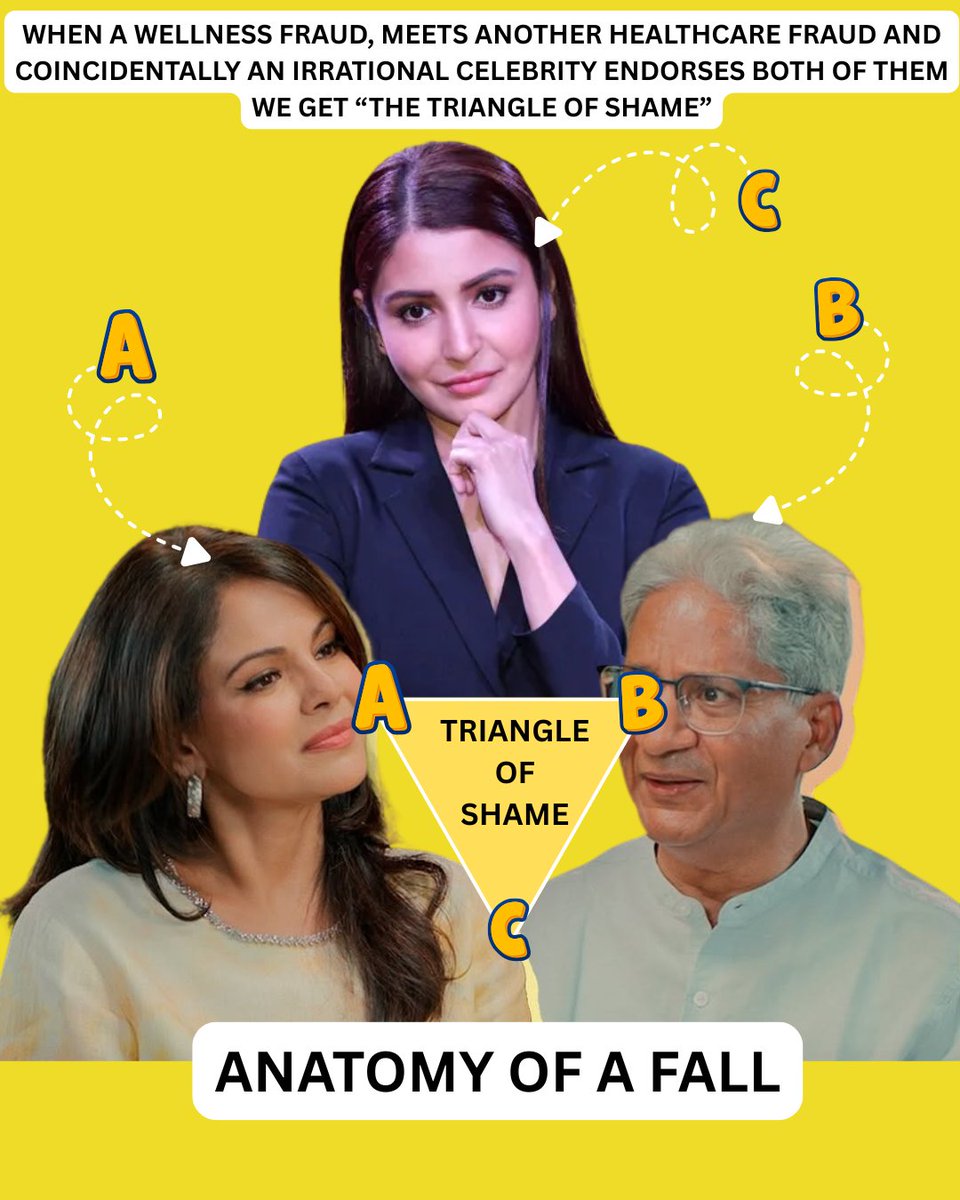
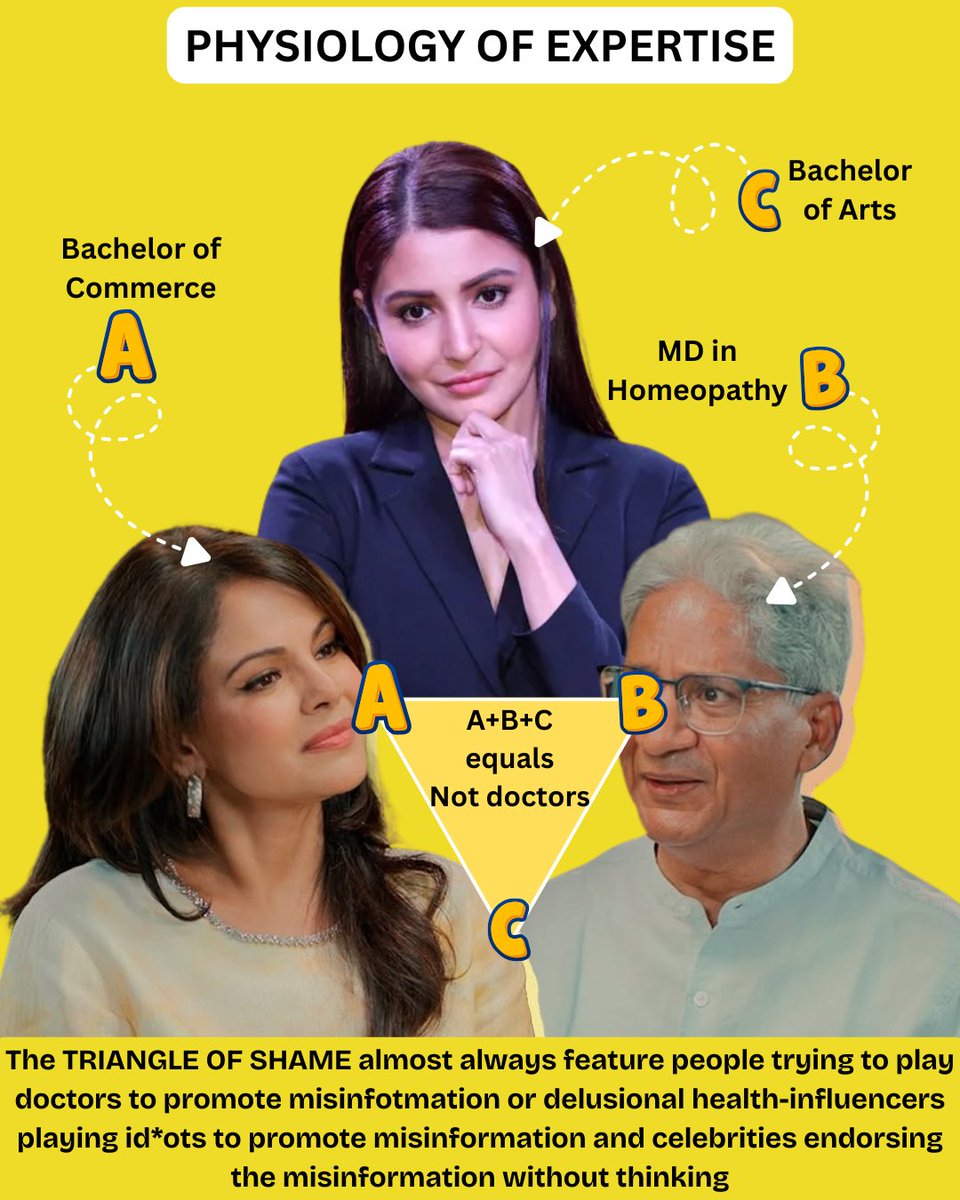
Triangle of shame.
Supplement Seller - Legalized Quack - Illiterate Celeb
https://t.co/6paIxUasCl (report this post)
Homeopathy is "medicine" made of water, alcohol, and sugar. So you're paying premium prices for fancy sugar pills containing precisely no medicine at all, all based on an 18th-century belief that "like cures like" and that shaken water somehow remembers things. Pathetic.
"But it worked for me!" Of course it did. Most illnesses fade on their own, and people reach for these pills right as they're about to recover anyway, so the sugar takes credit for timing it never controlled. Bonus: a long, caring chat with the homeopath makes you feel deeply heard while consuming absolutely nothing.
The rest of the world has caught on. The UK's NHS stopped funding it, France ended reimbursements, Germany is pushing to scrap state support, and both Spain and Australia reviewed the evidence and found a clean zero. India's bold contribution to this global reality check? Giving Melody to Meloni.
And then there's the "triangle of shame": a supplement seller with an agenda, a homeopath defending a lifetime of sugar pills, and a celebrity cheerfully endorsing both without a single critical thought between them. None of them are doctors.
So please, don't give your kids (or anyone for that matter) homeopathy, demand real science-based care, and force the government to stop funding the longest-running circus in human history.
Since 2023, Rinku Singh's strike rate in last 2 overs of T20 is 256.7. Best in the world for anyone who has faced minimum 75 balls. In 20th over alone, it climbs to 275.6. Again, best in the world, minimum 35 balls. These numbers are acts of violence against probability.
Since 2022, no one batting at 5 or lower has made more runs while carrying a better average & strike rate than his 40.5 & 150.2.(2553 runs) His strike rate is higher than likes of Miller, Pandya, Stubbs. Yet the conversation around him has never been about what he does. It has always been about what he costs.
13 crore. That is the shadow that follows him. The retention price that turned underdog into target. In 2024 & 2025, when the runs dried up & the caught dismissals piled up, the same timelines that once called him "Lord" turned forensic.
Excel sheets appeared. Graphs showed a 68% drop from his 2023 season. Wrist-spin was his kryptonite. He was a one season wonder. A fraud propped up by one over of 5 sixes. The experts did their work with the cold satisfaction of people who have never faced a yorker at 145 kph, let alone buried their father & returned to camp within days.
Khanchand Singh delivered LPG cylinders in Aligarh. Loaded them onto a tempo. Brought them to houses where people cooked dinner. Rinku was so close to taking a sweeper's job as a boy that the what-ifs still hurt to imagine.
His father watched him practice on such grounds that Mumbai kids would not warm up on. In February this year, Khanchand died of stag 4 liver cancer. Rinku was with India's T20 World Cup squad. He left. He performed the last rites. He carried the body. He came back.
"Farz sabse aage hai."; that's what his father taught to him. He posted after the World Cup win that his father's dream was fulfilled. Then he showed up for KKR as vice-captain.
Here is what the spreadsheets miss. In those quiet seasons, Rinku was batting at 6 or. And he is kind of batter who takes his time initially & then explode. The 2026 season gave him responsibility. Number 5. A top order that kept collapsing. A franchise that looked like it had forgotten how to win.
Against Rajasthan Royals, he walked in at 85 for 6. Needed 69 from 39. Scratched to 8. Got dropped. Reset. Took 16 off Bishnoi without swinging wildly. Broke Jofra Archer in the death.
7 days later, 31 for 4 against LSG, which became 93 for 7. Mohsin Khan was shredding them. Rinku made 83 not out. Absorbed pressure for 30 balls. Then 4 sixes in final over & 43 runs in last 2 overs. Took 5 catches in the field as well Including a grab of Markram that made no physical sense. Then hit the winning runs in Super Over.
The same accounts that wanted him dropped were writing apology threads by 26th April. Cricket forgets fast. But Rinku does not. He remembers Aligarh. He remembers the cylinders. He remembers the man who believed in him when there was no reason to.
And he keeps walking back to the middle, every single time, because that is what the job demands.
Coffee is one of the only drinks with strong evidence that benefits the liver. Here's what decades of research actually says about how to drink it right:
Coffee genuinely lowers liver disease risk.
Meta-analyses show regular drinkers have about 35% lower risk of significant liver fibrosis and nearly 50% lower risk of liver cancer compared with non-drinkers.
Aim for 2–3 cups a day, minimum.
The effect is dose-dependent. The Hepatology socities such as AASLD and EASL says 3 or more cups daily is reasonable for liver benefit, if you tolerate it.
Caffeinated works better than decaf.
But decaf still helps.
Caffeine blocks adenosine receptors that drive liver scarring. Decaf lowers chronic liver disease risk too, just by a smaller margin (UK Biobank, n=494,585).
The target dose: ~300 mg caffeine/day, or 3 cups.
Fibrosis protection kicks in around the 75th percentile of intake, roughly 308 mg caffeine, or 2.25 cup equivalents, per day - the AASLD 2023 advises 3+ cups for liver benefit.
What a "cup" actually means
One standard cup = 240 ml (8 oz), not a 60 ml tiny Indian "cup." A 240 ml filter coffee has ~95–165 mg caffeine. A single espresso shot (30 ml) has only ~60–75 mg.
Coffee-to-water ratio: 1:15 to 1:17.
For filter/drip/pour-over: 15 g of ground coffee to 250 ml water. This is the standard brewing ratio and gives clean extraction of chlorogenic acids and caffeine.
Choose medium roast, not dark.
Medium roast has significantly higher chlorogenic acid (CGAs) content than dark roast. Dark roasting thermally degrades CGAs, the main antioxidant doing liver work.
Arabica beats Robusta.
Arabica beans are richer in CGAs and polyphenols, the antioxidants doing most of the liver-protective work.
A note here:
Arabica for polyphenols, Robusta for caffeine.
Arabica (1.5% caffeine) has more CGAs and polyphenols. Robusta (2.7% caffeine) has more caffeine but a cruder phenolic profile. A 70:30 Arabica-Robusta blend is a reasonable compromise.
Water temperature: 92–96°C.
Just off a rolling boil. Too hot (>96°C) burns the grounds and extracts bitter compounds; too cool (<90°C) under-extracts CGAs and caffeine.
Grind size matters.
Medium grind (table-salt texture) for filter/drip. Coarse for French press. Fine for espresso. Brew time: 3–4 minutes for pour-over, 4 minutes for French press, 25–30 seconds for espresso.
Filtered coffee is the safest daily choice.
Paper filters trap cafestol and kahweol, naturally present plant diterpenes that raise LDL cholesterol if consumed daily in large amounts. Pour-over (V60, Kalita, Melitta) or drip machines with paper filters give you CGAs and caffeine without the cholesterol penalty.
Espresso and French press: fine, but not unlimited.
They retain more polyphenols but also more diterpenes (so more chances of increased lipids). Great occasionally; don't make them your 5-cups-a-day default if you have high cholesterol or heart disease.
South Indian filter coffee: acceptable, with caveats. The metal filter does not remove diterpenes as well as paper, so limit to 1–2 cups/day if you have dyslipidemia. The decoction itself is rich in CGAs. Use less sugar. Skip condensed milk.
BUT ULTIMATE: Drink it black. Or close to it.
Sugar, syrups, flavored creamers and whipped cream cancel the liver benefit, especially if you already have fatty liver, diabetes, or obesity. Skim milk or unsweetened plant milk is fine.
Instant coffee: still works.
UK Biobank (n=494,585) showed instant coffee drinkers had similar reductions in chronic liver disease as ground coffee drinkers. Not as potent, but far better than no coffee.
Cold brew: underrated for the liver.
Medium roast + coarse grind + 6–7 hours at room temperature extracts CGAs and caffeine efficiently with lower bitterness. pH and CGA content are comparable to hot brew.
Timing.
Spread across the day. one at breakfast, one mid-morning, one early afternoon. Stop by 2 pm if you have insomnia.
It helps across almost every major liver disease.
Evidence supports benefit in fatty liver (MASLD), alcohol-related liver disease, hepatitis B and C, cirrhosis, and liver cancer.
The mechanism isn't magic, it's chemistry.
Chlorogenic acid cuts oxidative stress and liver fat. Caffeine inhibits stellate cell activation (that promotes scarring or fibrosis). Melanoidins and polyphenols reduce inflammation.
Who should go easy.
Pregnancy, children, those with uncontrolled heart rate and rhythmn issues (arrhythmias), panic disorder, or insomnia.
And no, coffee does not undo a bad diet or bad choice - such as alcohol, herbal supplement or that Ayurvedic "liver tonic."
Sources: Modi et al., Hepatology 2010; Kennedy et al., BMC Public Health 2021 (UK Biobank); Fuller & Rao, Sci Rep 2017; AASLD MASLD Clinical Care Pathway 2023; EASL 2016 CPG, Frontiers in Nutrition 2026 (Italian coffee cohort).
The cost of your flight went up because you searched for it twice. Your rideshare costs more because your phone battery is dying.
This is surveillance pricing – corporations using your own data and behaviors against you.
In the US Senate, I’ve got a plan to ban it.
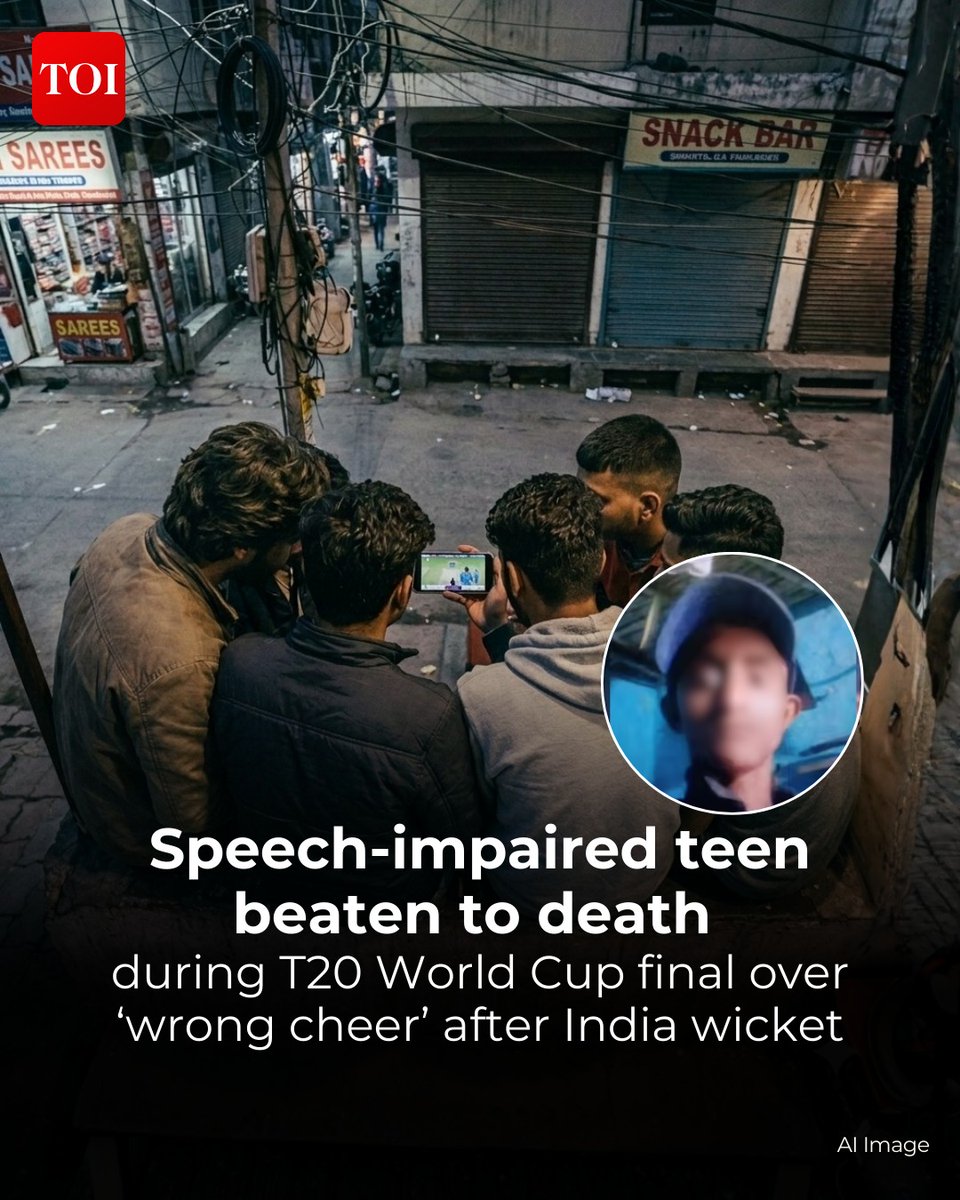
In a tragic twist of fate, Kundan Kumar, a speech-impaired #teenager in #Bihar's Vaishali district, lost his life over a cricket match misunderstanding. While caught up in the excitement of the India-New Zealand T20 World Cup final, a misunderstood cheer from Kundan triggered a violent confrontation with another #individual.
More details 🔗 https://t.co/KCcYf8L4BK
There is a line fans often repeat about Rinku Singh. Seventy per cent of the world is covered by water, they say, and the rest by Rinku.
But that line feels layered. To cover so much of the field is also to spend long stretches of it alone...
https://t.co/NbCAPskQhk
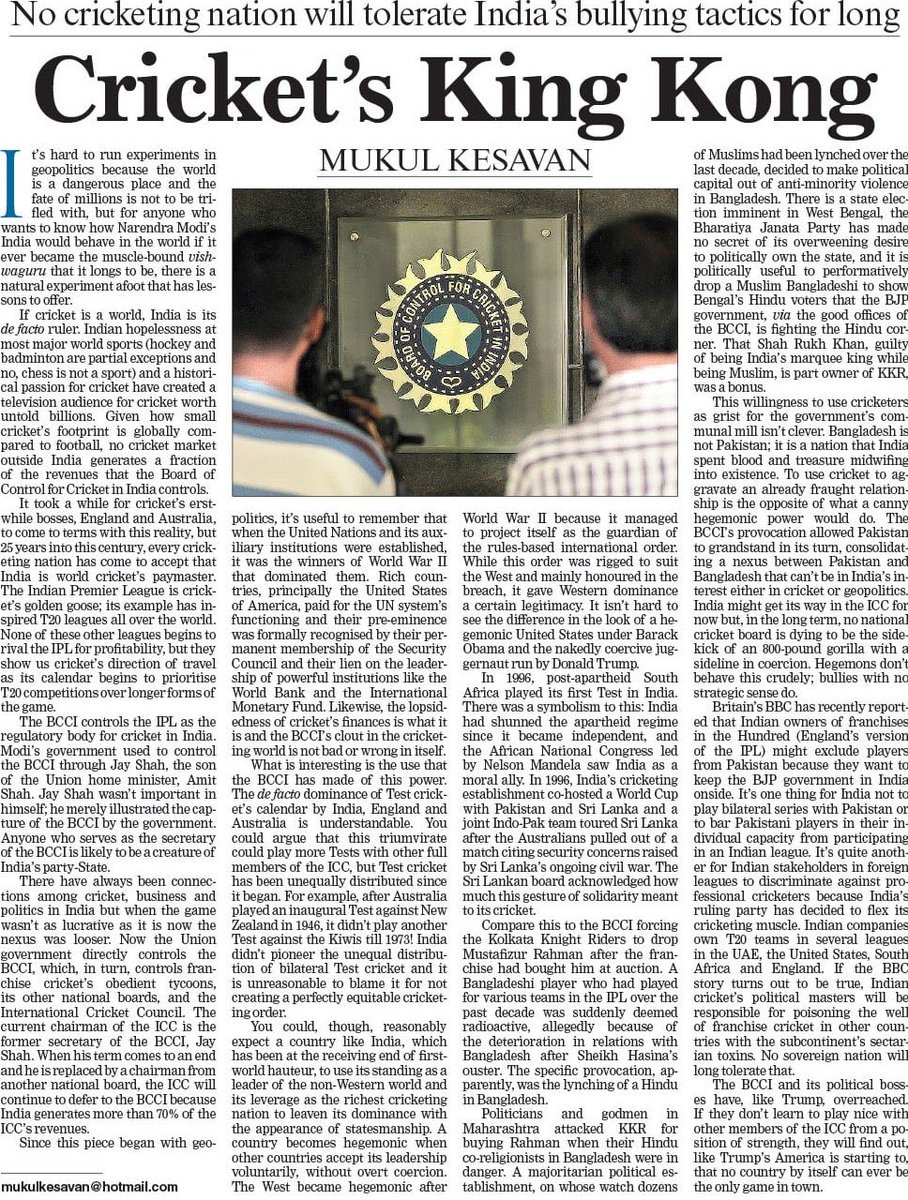
India's economic might in cricket and the cricket economy's proximity to India's ruling party means that India can export the worst aspects of its hate politics to other markets.
It's not new.
https://t.co/bcH1QUEEKY
A strike by 200,000 delivery workers has sparked a debate in India about the cost of expecting everything to arrive instantly, writes @andymukherjee70 (via @opinion) https://t.co/EaolqMKoFz
Never fun to write about but had to be done. To give an insight, having walked in those shoes, into why @Uz_Khawaja felt the need to let out all his emotions. He isn’t playing the race card or playing victim. He’s letting you know how it feels & so am I
https://t.co/qfCrqqDAjX
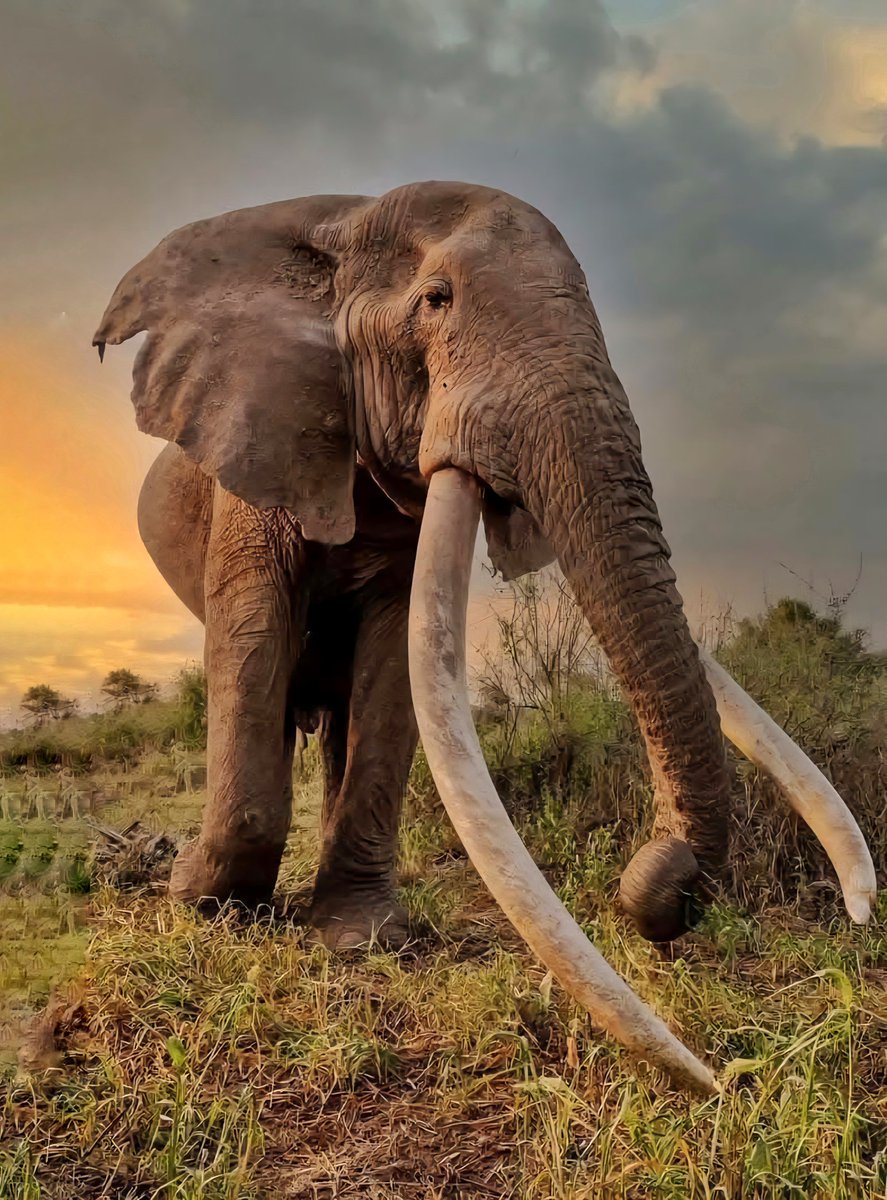
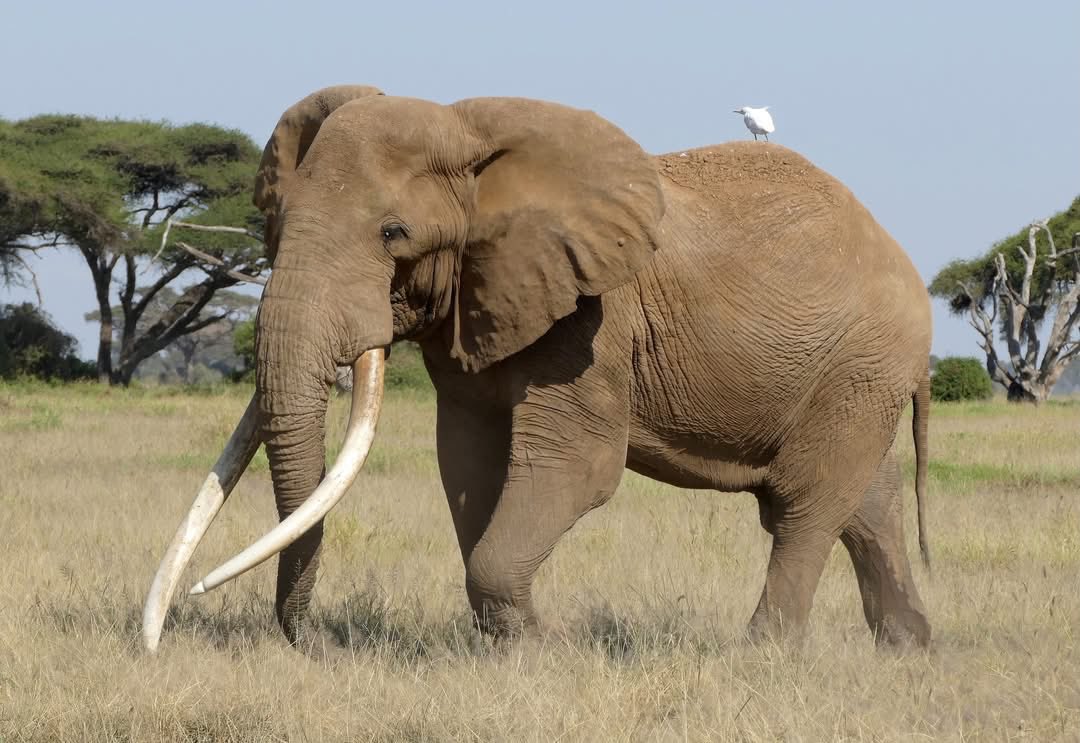
𝐅𝐚𝐫𝐞𝐰𝐞𝐥𝐥 𝐭𝐨 𝐂𝐫𝐚𝐢𝐠 – 𝐀 𝐆𝐞𝐧𝐭𝐥𝐞 𝐆𝐢𝐚𝐧𝐭 𝐚𝐧𝐝 𝐒𝐮𝐩𝐞𝐫 𝐓𝐮𝐬𝐤𝐞𝐫 𝐊𝐧𝐨𝐰𝐧 𝐭𝐨 𝐭𝐡𝐞 𝐖𝐨𝐫𝐥𝐝 🐘
Early this morning, Amboseli National Park, Kenya - and indeed the world - lost a true icon. Craig, the legendary super tusker famed for its immense, ground-sweeping tusks and calm, dignified presence, passed on at the age of 54.
Born in January 1972 to the great matriarch Cassandra of the CB family, Craig lived a life that few elephants ever do.
Craig was one of the last remaining super tuskers in Africa - a rare class of bull elephants whose two tusks weigh over 45 kilograms (100 lbs) each. Fewer than a handful remain today, making him a living monument to Africa’s natural heritage.
He fathered a number of calves, ensuring that his powerful bloodline and gentle character live on across generations.
Beyond its extraordinary tusks, Craig was deeply loved for its remarkably calm nature. He appeared to understand its place in the world - often pausing patiently as visitors photographed and filmed him. Widely documented and admired globally, he became a true ambassador of Amboseli and a symbol of what successful conservation looks like.
In 2021, Craig was proudly adopted by East African Breweries Limited (EABL) through the Tusker brand, reflecting his worldwide appeal. His long life and survival to such maturity were made possible through decades of dedicated protection by Kenya Wildlife Service (KWS), working in close collaboration with conservation partners and the local community.
Continuous monitoring, anti-poaching efforts, habitat protection, and community stewardship ensured that Craig lived freely and safely - demonstrating what collective commitment to wildlife conservation can achieve.
Drop a memory of Craig down below and let's celebrate its legacy. #TunzaMaliYako
Amboseli’s most well known elephant Craig has died of natural causes, he was 54 years old. We are thankful to everyone who protected him, allowing him to father many calves and live out his life naturally.