One thing I think people are massively missing in the GLP-1 / retatrutide debate:
The populations in these studies are usually:
-older
-severely overweight or obese
-metabolically unhealthy
-often sedentary
-low protein intake
-not resistance training
-on multiple cardiometabolic medications
Then people in the biohacker / fitness space who are already 12–20% body fat, resistance training 4–6x/week, eating high protein, optimized hormones, good sleep, etc try to directly apply those outcomes to themselves.
That’s where a lot of the confusion comes from.
People keep making blanket statements like:
“Look how much muscle loss happens on GLP-1s.”
But in my clinical experience, younger healthier metabolically optimized patients often preserve muscle VERY well especially when:
-protein is adequate
-resistance training is present
-weight loss is gradual
-hormones are optimized
-sleep/recovery are good
Taking a 40-year-old lifter from 20% body fat → 15% body fat is NOT the same physiological situation as taking a 72-year-old sedentary diabetic from 38% body fat → 25%.
Those are completely different humans with completely different metabolic environments.
This is why individualized medicine matters.
The real nuance isn’t:
“Tirzepatide vs Retatrutide”
or
“GLP-1s are good/bad”
The real nuance is:
-Who is the patient?
-What is their starting point?
-What are their goals?
-What are they doing with training, protein, hormones, sleep, and lifestyle while using these tools?
When economists were asked if Americans would be better off with more low skilled immigrants being allowed to legally enter the country, they said yes by a 6-1 ratio. On skilled immigration, it was 100%. But chuds disagree, they have their own indigenous ways of knowing.
Many things “Suppress Dopamine”
-BPC-157
-Magnesium, taurine, theanine, glycine, and other GABAergic compounds dampen excitatory tone.
-Meditation can reduce craving/reward-seeking circuitry.
-Sleep suppresses wake-promoting dopamine/catecholamine activity.
-Even caffeine, exercise, fasting, and stress all shift dopamine signaling depending on dose and context.
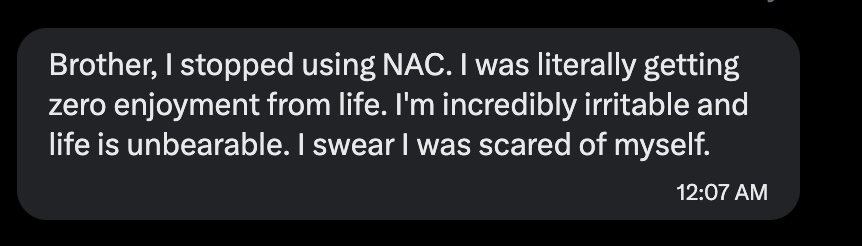
The question isn’t “does NAC affect dopamine?”
The question is: does NAC reliably suppress dopamine signaling enough to cause clinically meaningful anhedonia in humans?
you should definitely NOT use NAC daily
NAC suppresses dopamine receptor sensitivity through glutathione's effects on cystine/glutamate exchange
that means you're blunting the reward circuitry that makes life feel good.
anhedonia will creep in because you're constantly resetting dopamine signaling if you dose it daily
dose NAC at night on off-days from dopaminergic compounds. once or twice a week should be enough for most people.
if you're trying to fight depression or OCD, go weekly. but know that the goal is for you to feel less.
BREAKING: Ozempic / Wegovy linked to ~30% lower breast cancer risk in 111,000 women (new Penn Medicine study at ASCO 2026).
Even bigger: Women already diagnosed with breast cancer who took GLP-1s were 50% less likely to progress to Stage 4 (Cleveland Clinic data).
Prevention + slowed progression.
Here's what the studies actually show — and the caveats. 🧵
#GLP1 #Ozempic #Wegovy #BreastCancer #ASCO2026
I personally know of a house in Oceanside bought for $13k in 1981 that’s now worth $1.375 MILLION. Meanwhile the average first-time homebuyer is approaching 40 years old.
Boomers got cheap housing, pensions, lower tuition, Social Security, Medicare, and massive asset inflation. Younger generations get crushed by rent, debt, and 7% mortgages and will never see social security.
And we’re supposed to feel bad about property taxes on a $1.5M house bought for basically nothing?
Following a bit of the Protestant polemics against Orthodoxy recently, and I realize just how difficult it is to communicate the mind of the Church across these lines.
A simple example is seeing people confused about whether someone who is not baptised and participating in Orthodox communion can be "saved". Protestant are noticing that there are different answers in their estimation, and so are confused about them. The confusion comes from the belief that being "saved" or not is about "where you go after you die", when for the Orthodox "saved" means being made whole, being healed, being restored to the original purpose God had for us.
For this reason, when Protestants see declarations of how communion in the body of Christ is the only way to salvation, they immediately think this is a declaration that all the non-Orthodox are going to hell after they die. When Protestants then hear the very same person who just told them that salvation is in full participation to the body of Christ go on to intimate we have nothing to say about the eschatological finality of any specific soul, it is like a short circuit that many Protestants cannot compute. This is what I could see when @OrthodoxEthos and @Acts17David were discussing and it is what I have seen in @gavinortlund's videos.
In a similar vein, when a Protestant says he has the "assurance of his own personal salvation", this is confusing to the Orthodox. Orthodox also obviously have assurance of salvation, that assurance is Christ. He shows us what it means to be made whole and makes us participate in that wholeness. But how can I say that I am "saved" if I see that I am still a wretch, still prideful and arrogant and sinful? So the Orthodox, knowing they are are still sinning, though also knowing Christ has made them grow in the virtues will say something like: "I know that I am being saved." That is I can see that I am being healed, being made whole, being reformed to the resemblence of God. But again, this completely confuses the Protestant who just wants to know what will happen when you die. What side of the fence will you end up on?
I am not sure how to get accross these lines, and I feel that unless we can, we will perpetually be talking past each other.
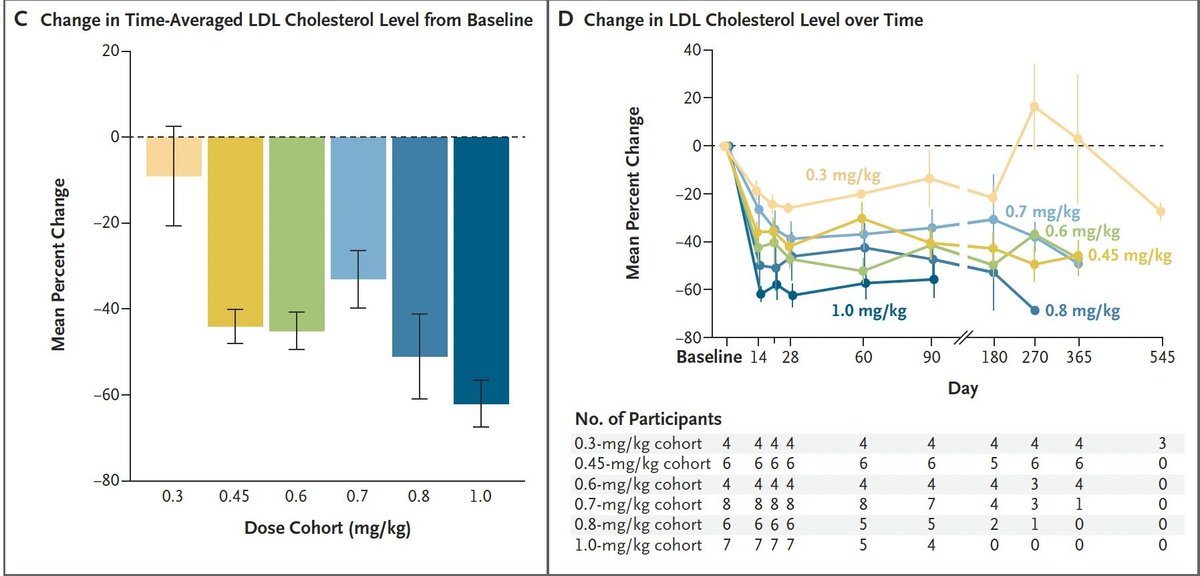
WUT!? I've seen several doctors say this!?!? Lowering LDL does NOT mean you solved heart disease!
Sure, one shot of "PCSK9 base editing" may reduce one major driver of atherosclerosis by lowering ApoB/LDL particle burden long term and that’s really cool and all, but heart disease isn’t just ‘LDL go up = heart attack.’
Existing plaque, calcification, Lp(a), endothelial dysfunction, hypertension, insulin resistance, inflammation, clotting risk, smoking history, metabolic disease, and lifestyle factors don’t magically disappear because you edited one gene.
So Reducing LDL DOES NOT curing cardiovascular disease. Cool technology? Absolutely. Potentially game changing for certain high-risk patients? Maybe.
Heck there maybe a chance it gives turbo cancer. We don't know yet.
So this whole "One shot and you’re protected from heart disease’ is just click bait.
@cremieuxrecueil Why eat healthy?
Why exercise?
Why even inject Repatha?
Just EDIT YOUR GENES bro 🥴
Yeah I know, diet and exercise don’t always fix cholesterol because of genetics…
Permanently rewriting your DNA is definitely the move. What could possibly go wrong?🥴
Why eat healthy?
Why exercise?
Why even inject Repatha?
Just EDIT YOUR GENES bro 🥴😂😂🥴
Yeah I know, diet and exercise don’t always fix cholesterol because of genetics…
Permanently rewriting your DNA is definitely the move.
What could possibly go wrong?
Eli Lilly has done it.
They've gone and made what seems to be a powerful, permanent gene therapy for LDL cholesterol.
That means they'll be able to effectively prevent most heart disease with a single infusion!
The health ignorance stuff has gone massively overboard. People walking around destroying their vital signs every second of the day like they're living in toxic soup straight out of a sci-fi movie. Eating ultra-processed food like it won't kill them if they look at it. Neglecting their sleep. Never counting their steps. It's possible to live a healthy life, but you have to be intentional and work hard at it the modern world is doing everything it can to make you sick. You're gonna die either way. In a few decades you can be strong, sharp, and showing up for the people you love, or you can be on four medications, metabolically wrecked, and wondering what happened. Take this seriously and live your healthiest life while you still can.
The health consciousness stuff has gone massively overboard. People walking around with bands tracking their vital signs every second of the day like they’re astronauts on the ISS. Treating alcohol or sugar like it’ll kill them if they look at it. Tracking their sleep. Counting their steps. It’s possible to live a healthy life without being an obsessive, paranoid lunatic. You’re gonna die either way. In a few decades you’ll be just as dead as the rest of us, if not sooner. Relax a little and live your life while you still can.
The health ignorance stuff has gone massively overboard. People walking around destroying their vital signs every second of the day like they're living in toxic soup straight out of a sci-fi movie. Eating ultra-processed food like it won't kill them if they look at it. Neglecting their sleep. Never counting their steps. It's possible to live a healthy life, but you have to be intentional and work hard at it the modern world is doing everything it can to make you sick. You're gonna die either way. In a few decades you can be strong, sharp, and showing up for the people you love, or you can be on four medications, metabolically wrecked, and wondering what happened. Take this seriously and live your healthiest life while you still can.
Ladies, Liquor, and Leverage the three "L's" that ruin men's lives. This take post takes is the fourth "L".
More men have had their lives, marriages, and families destroyed by alcohol than almost any other substance in human history. You've built a brand around calling men to be better. Steven Bartlett did that. He's not describing a weak constitution he's describing biochemistry.
Ethanol is a Group 1 carcinogen classified. When a young man does the research, recognizes he's been quietly poisoning himself, and makes a change that's not weakness thats "Based". That's exactly the discipline you normally tell men to have.
As a doctor I lean toward moderation, and plenty of my patients still have a few drinks a week without much pushback from me. I've cut back significantly myself mostly reserving it for celebrations. But let's be honest: alcohol is literal poison.
The "just toughen up and drink" take is the real soft position here.
7 years ago, a good friend of mine, 32 years old, working full-time while raising 2 special needs children, came to me with every symptom of low testosterone.
He told me: “Moe, I can either:
1) Work out in the morning
2) Show up great at work
3) Play with my special needs kids
4) Have energy for intimacy with my wife
Most days I can do two. Some days three. But I can never do all four.”
I told him to get tested.
His testosterone came back at 232 ng/dL.
Insurance required a second test.
It came back at 254 ng/dL.
He was told he was still in the “normal range” and denied treatment.
So he went to a cash-pay clinic. They optimized his testosterone to ~800 ng/dL.7 years later:
He’s in the best shape of his life
Thriving at work
Fully present for his children
His marriage is stronger than ever
He does all four now. Every day.
A number on a lab sheet almost robbed a family of their husband and father. Medicine should treat patients not just reference ranges.
A man with a testosterone level of 298 can qualify for TRT.
A man with a testosterone level of 312 often can't.
Same symptoms. Same risks. Completely different outcomes.
The problem isn't testosterone.
The problem is how we're diagnosing it.
In this video, I break down why current low testosterone guidelines may be failing millions of men, the ongoing decline in testosterone levels across the population, and why the future of hormone optimization could look very different than it does today.
Plus, I'm taking you inside the Enhanced Games to explore one of the most controversial questions in modern medicine:
What happens when we stop limiting human performance?
Watch the full video below 👇
#TRT #Testosterone #MensHealth #HormoneOptimization #LowTestosterone #Biohacking #EnhancedGames
I'm truly sorry you went through that, and I'm glad you're still here.
I have patients with depression and suicidal ideation whose lives were turned around by hormone and peptide optimization. Individual responses are real, in both directions.
That's exactly why patient-centered, monitored care matters. Not one-size-fits-all prescribing.
I hope you keep doing well.
It absolutely blows my mind that as a naturopathic doctor I’ve had to defend TWO things endlessly in my career:
1. Testosterone Replacement Therapy
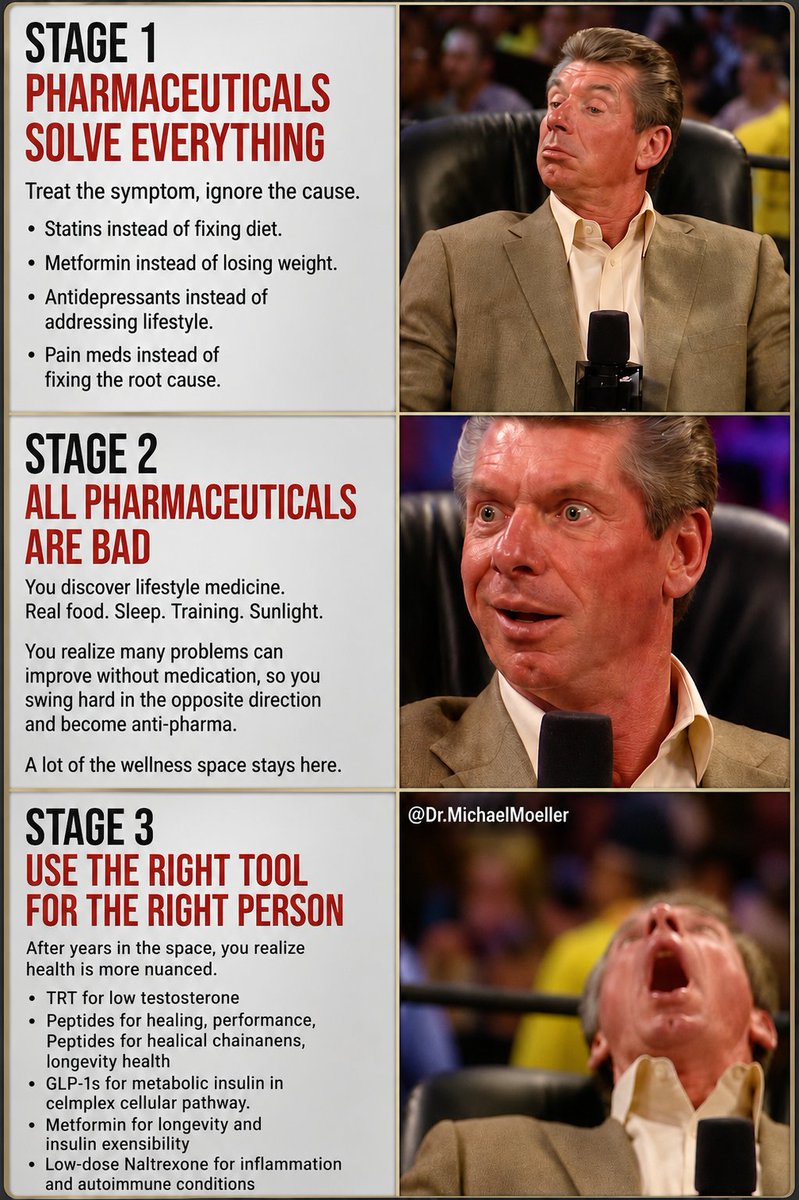
2. Now = GLP-1 meds and other peptides
Meanwhile America keeps getting sicker. Patients stacking meds likes it out of Pez dispenser.
I’d rather see the right patient on low-dose tirzepatide or retatrutide long-term than on:
-blood pressure meds
-diabetes drugs
-pain meds
and the list goes on.
Same with TRT. The evidence is clear for properly selected patients, yet people still act shocked a naturopathic doctor would use hormones.
Do I still think diet, lifestyle, sleep, exercise, stress reduction, and root-cause medicine matter? Absolutely.
But pretending severely metabolically unhealthy patients are all going to meditate, meal prep deadlift, and colon cleanse their way out of disease is not reality.
The GLP-1 data is still evolving and I’ll change my position if the evidence changes. But right now, the benefits for many patients appear to outweigh the risks by a long shot.
Medicine should be about outcomes, nuance, and risk vs risk.
I share many of your concerns and have seen similar things clinically.
The pancreatitis data cited comes from flawed observational studies. The SUSTAIN & LEADER trials actual RCTs showed no significant signal.
Thyroid cancer risk? Rodent C-cell data that hasn't translated to humans in any clinical trial.
Gallbladder issues are real. I tell every patient that.
Muscle loss is real and manageable with adequate protein, resistance training, and hormone optimization.
Nuance matters when patients are making treatment decisions.