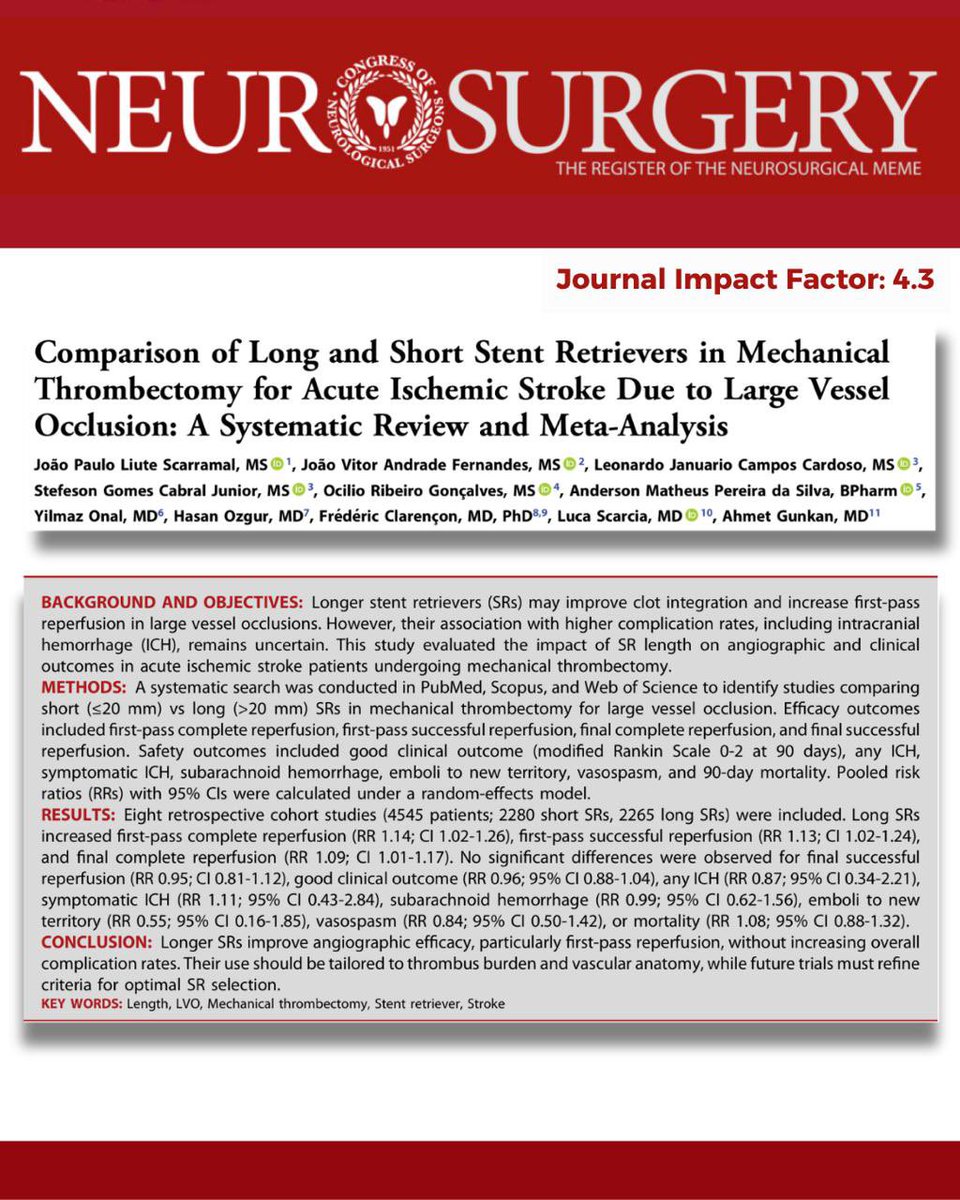
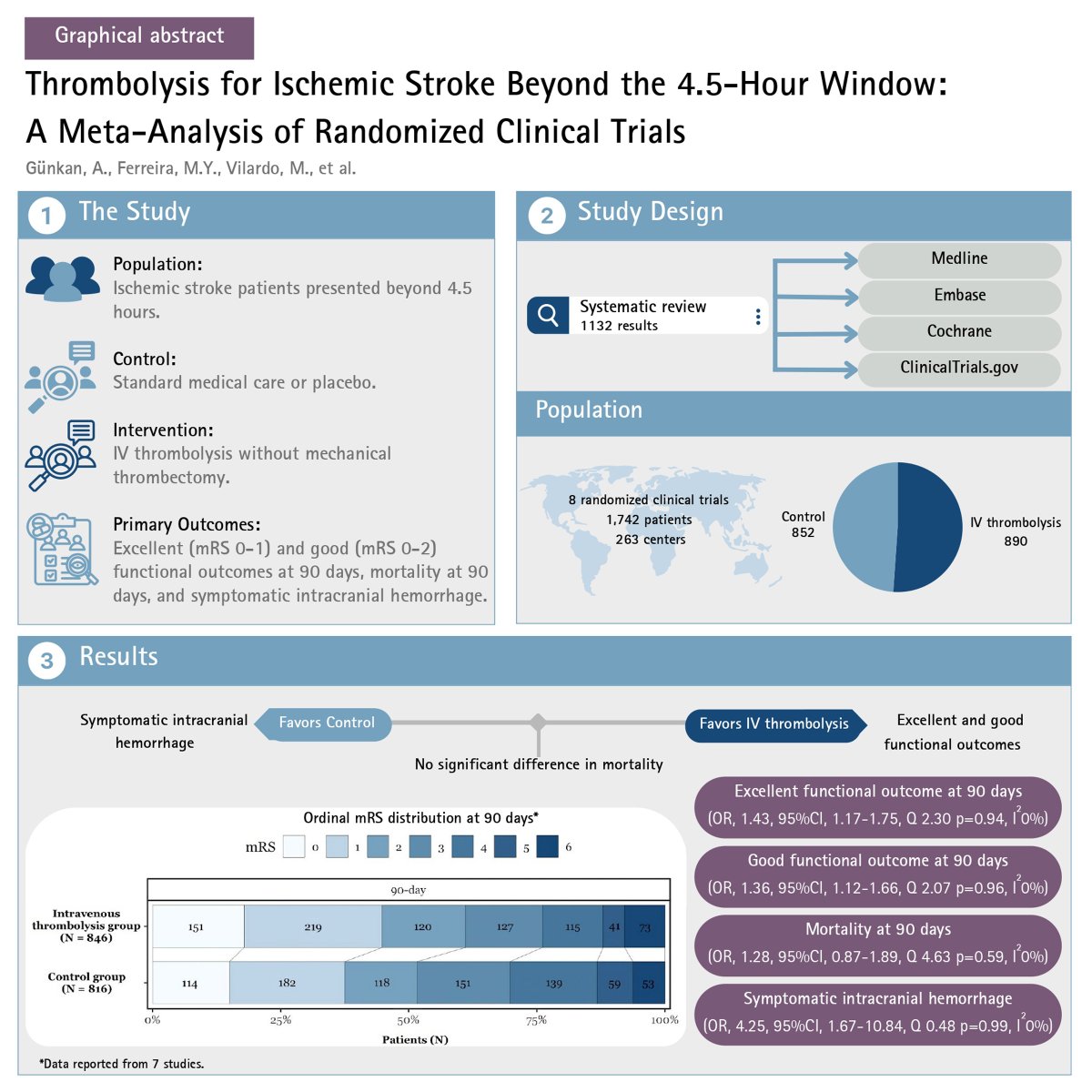
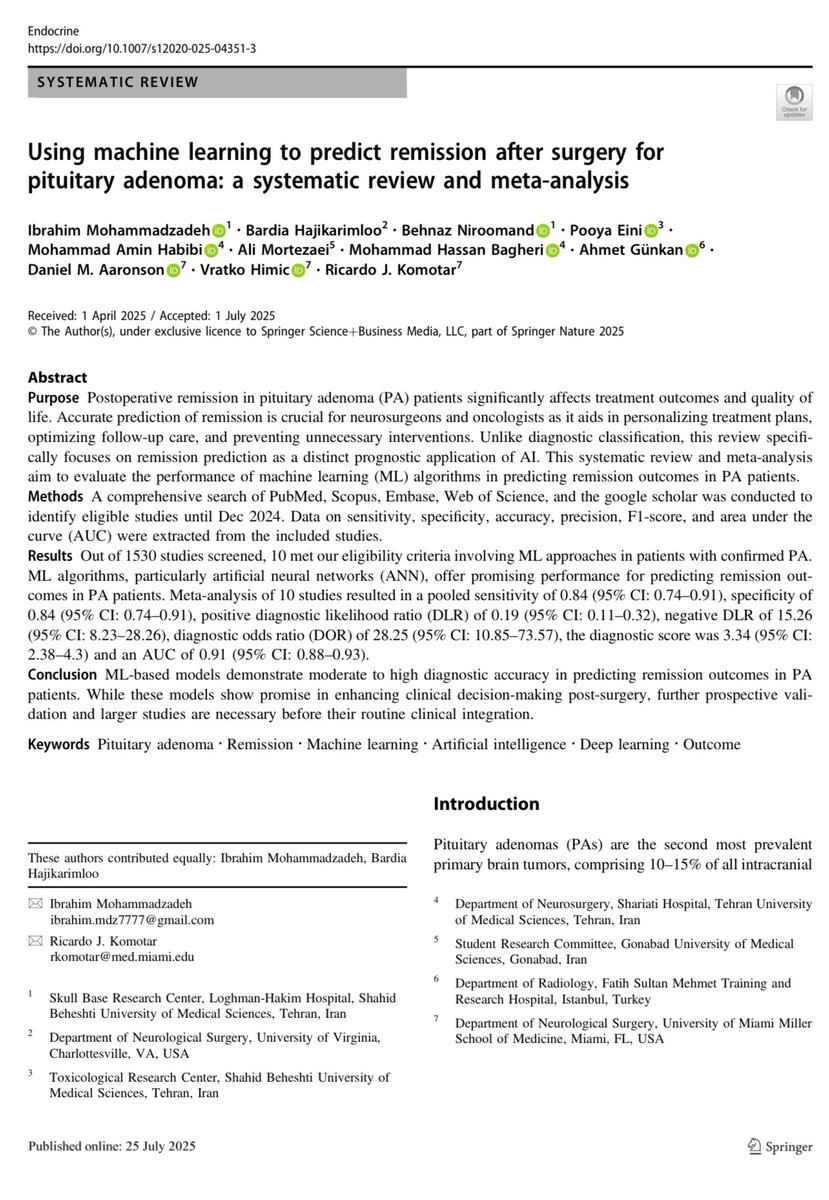
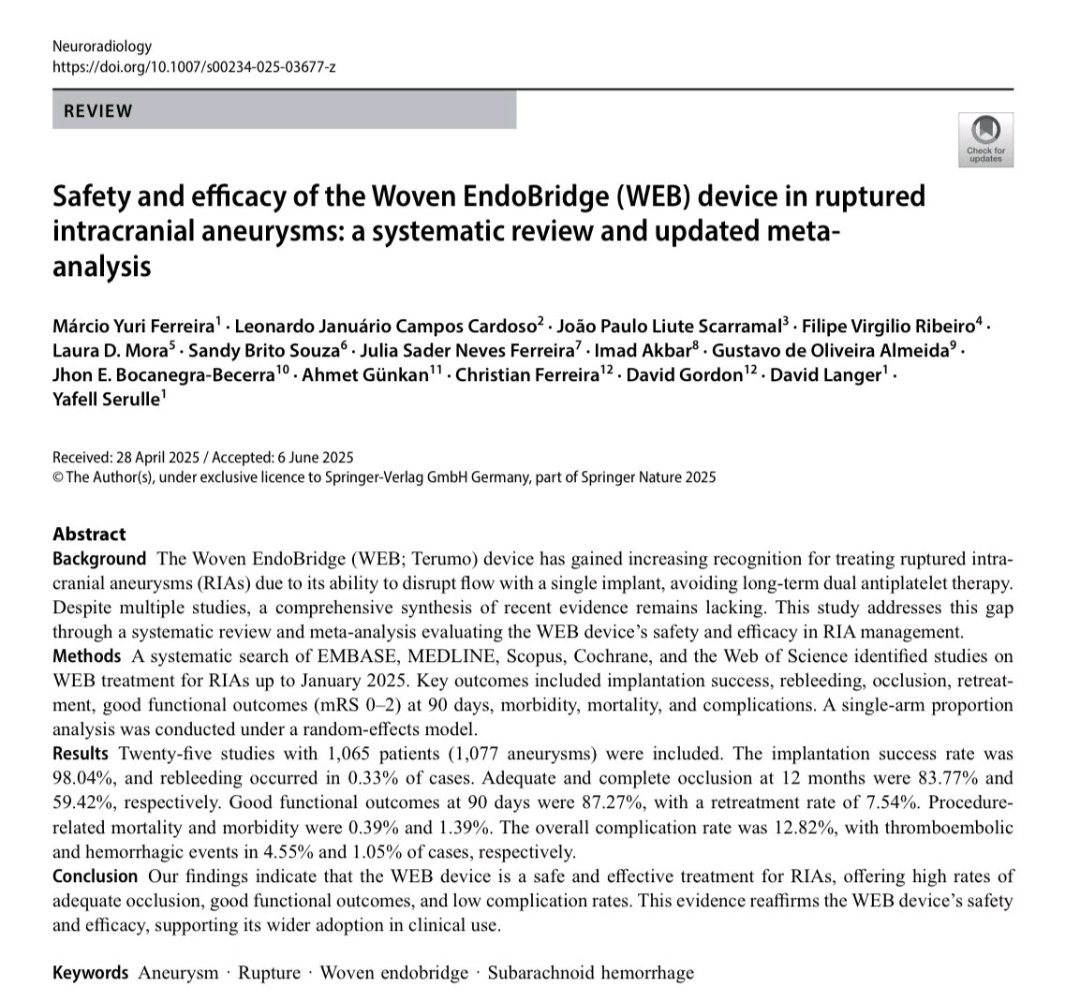
We strike again! Our latest study just published in Neurosurgery @CNS_Update
4,500+ patients: longer stent retrievers → better first-pass reperfusion, same complication rate.
Take-home: length matters — but let anatomy and clot guide the choice.
#neurosurgery#stroke#LVO
🧠 Mechanical thrombectomy (MT) is a well-established treatment for eligible patients with large-vessel occlusion acute ischemic stroke. However, its safety and efficacy in elderly patients remain a matter of debate.
In our recently published study in The Neuroradiology Journal, we analyzed data from 15 randomized clinical trials including elderly patients (≥70 years) treated with MT versus standard medical management. We also explored potential effect modifiers such as stroke severity, anterior versus posterior circulation, use of general anesthesia, time from onset to randomization, country socioeconomic status, infarct size, and imaging selection strategies.
💡Key findings:
↪ MT was associated with higher rates of functional independence and functional recovery at 90 days.
↪ Lower rates of severe disability were observed in the thrombectomy group.
↪ Mortality was reduced, particularly among patients over 80 years.
↪ Benefits were consistent across circulation territories and most subgroup analyses, including large infarcts.
We discuss how these findings integrate with the current literature and contemporary guideline recommendations, while also addressing remaining gaps and future research directions for this growing and clinically complex population.
I would like to sincerely thank all my coauthors, @doctorgunkan and @FerreiraMY_MD for their guidance, Professors Panagiotis Papanagiotou and Jean-Claude Baron for their supervision and insights, and Sávio Batista for the original study idea.
Full text link: https://t.co/CaJfB0ZzEA
#stroke #neurology #endovascular #thrombectomy #neurosurgery
@christiankfuku@OcilioRoch60949 @Andersonmhps
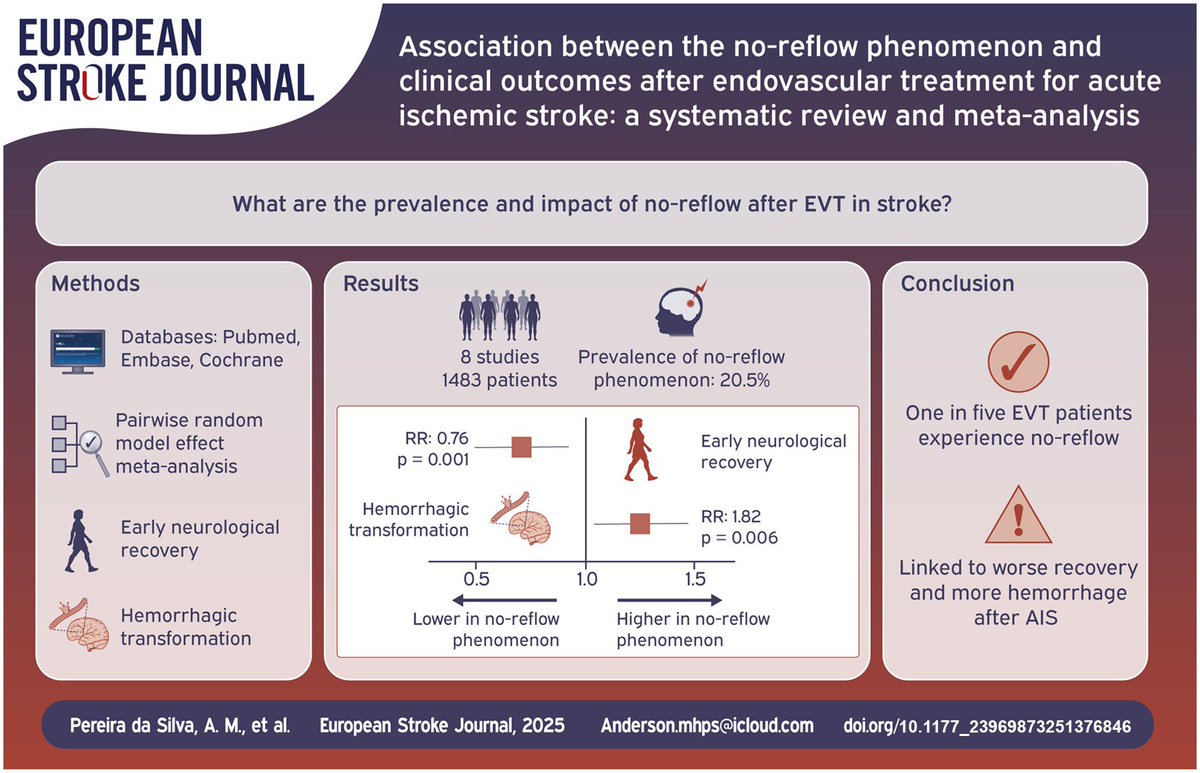
I am sharing another publication in the European Stroke Journal:
Association between the no-reflow phenomenon and clinical outcomes after endovascular treatment for acute ischemic stroke: A systematic review and meta-analysis https://t.co/W6SsWTjsyz
@ESOstroke@OcilioRoch60949
#Stroke #EndovascularTherapy #NoReflow #MetaAnalysis
I am deeply saddened by the news of Prof. Gazi Yaşargil’s passing, and so close to his 100th birthday and the @yasargil100 Symposium to honor him. I am presenting in Zürich in a few weeks and was greatly looking forward to meeting Dr. Yaşargil, and giving him this portrait. Truly one of the most remarkable neurosurgeons of all time. #Yasargil #RestInPeace
Dear @FedEx, many of us rely on accurate delivery estimates. There’s been a known strike in Campinas, Brazil since Nov 2024, delaying shipments by weeks. Yet your system still promises 2-day delivery. Please inform customers honestly.
Presented at #ESOC2025: Tirofiban, an IV antiplatelet, given as an adjunct to IVT, improved the odds of excellent functional outcome in patients with AIS, at the cost of an increased risk of intracranial bleeding in the ASSET-IT trial
#VoiceOfStroke
@chuksfranklin@Neuromed_ Hemorrhage secondary to intracranial venous thrombosis. Though it is a form
of hemorrhagic transformation (due to venous infarction)
.
A systematic review and meta-analysis published in @JNIS_BMJ has synthesised existing data on brain aneurysm treatments utilising @Stryker_NV's Contour neurovascular system, ultimately finding it to be safe and effective
@doctorgunkan@PascalJabbourMD
https://t.co/SZ5YtGm0e9