Blood culture stewardship
Clinical Situations Where Blood Cultures are Low Yield and Generally Not Recommended in the Absence of Severe Sepsis/Septic Shock
https://t.co/xwyZRKwV15
1/
A 30 yo woman p/w 2 days of worsening paraparesis, left arm paresthesias and urinary retention. No change in vision.
Exam: hyperreflexic in the legs bilaterally+ sensory level at T10.
MRI C/T Spine + MRI Brain. And you find this … what to do for this #continuumcase?
We hope that this educational video of ocular neuromyotonia (ON) will be useful for neurologists. ON is a rare but important cause of transient diplopia. Although sometimes seen after cranial irradiation, it may also have an inflammatory aetiology.
https://t.co/8GERYWh3jF
@jfdwolff@ShaunLintern And TBE virus - an emerging problem in the UK with fewer (i.e. zero) treatments.
A vaccine is available though.
Need to test (serum/CSF samples to RIPL) in lymphocytic meningitis cases with tick/forest exposure to understand the burden!
What is the best drug to treat Parkinson's disease. Susan Fox @UofTNeurology say it is unequivocally levodopa. The evidence just keeps piling up. @KBI_UHN#Parkinsons
Have MULTIPLE questions about MULTIPLE sclerosis?
Having trouble seeing neuromyelitis optica?
In a fog about MOG?
Here’s the cheat sheet you NEED to distinguish the demyelinating diseases!
Demyelinating diseases predominantly involve the optic nerves, brain, & spine.
The three main chronic demyelinating diseases are Multiple sclerosis (most common), neuromyelitis optica (NMO), & myelin oligodendrocyte glycoprotein (MOG) antibody associated disease or MOGAD
Each has its own features in the optic nerve, brain, & spine. Here’s how to remember them!
▶️MS
🔸Optic nerve:
--MS only has 2 letters, so MS involvement of the optic nerve tends to be short segment
🔸Brain:
--Letter M makes the shape of the perivascular distribution of lesions along the ventricles (Dawson’s fingers)
--Letter S makes the shape of the subcortical U fiber involvement
🔸Spine:
--MS is only 2 letters, so lesions are usually less than 2 vertebral bodies in length
▶️NMO
🔸Optic nerve:
--NMO is a longer abbreviation, three letters, so longer involvement
--NMO can stand for Near My Occiput. Occiput is posterior, so more posterior nerve involvement
🔸Brain:
--NMO can stand for Near My Ocean. What is your brain’s ocean? The ventricles. NMO lesions are all periventricular
🔸Spine:
--NMO is 3 letters, so lesions usually more than 3 vertebral bodies in length
▶️MOGAD
🔸Optic Nerve:
--Remember MO’ GAD-olinium. So things that cause more regions of enhancement. MOGAD lesions are commonly bilateral & long segment & enhancement can extend perineural
🔸Brain:
--Remember LO’ GAD. MOGAD typically involves the lower areas of the brain
🔸Spine:
--Remember MO’ PLAID. MOGAD can give a plaid-like H shape in the cord from predominantly gray matter involvement
Hopefully, this cheat sheet will help you remember how to distinguish the demyelinating diseases!
It ain’t lyin’ about diseases of myelin!
Delighted to have been involved in this comprehensive, up to date review of the management of Cryptococcal meningitis
just published in @PracticalNeurol
https://t.co/5QcGDVY3tx
Cervical (carotid and/or vertebral) artery dissection: some might benefit from anticoagulation over antiplatelets, but the bleeding risk means that this should be individualised. New systematic review and meta-analysis. @StrokeAHA_ASA
https://t.co/XQgCjLcKhz
This is the report of a novel autoimmune disorder, that causes specific deficiency of vitamin B12 in the cerebrospinal fluid (CSF)
It's caused by autoantibodies against a B12 receptor, CD320, which transports B12 from the blood into the CSF
What this means is that B12 levels in blood are high, but in the CSF are ~undetectable (as in case 1, here, vs. the controls):
This highlights a pitfall in the diagnosis of B12 deficiency: if only serum B12 is measured, the diagnosis might be missed
CD320 autoantibodies were also found in the CSF of ~20% of patients with neuropsychiatric lupus (a subset of lupus that affects the brain) suggesting that these patients may also benefit from high dose B12 supplementation
Really nice work from Pluvinage et al: https://t.co/UTICEBg2HO
This is the report of a novel autoimmune disorder, that causes specific deficiency of vitamin B12 in the cerebrospinal fluid (CSF)
It's caused by autoantibodies against a B12 receptor, CD320, which transports B12 from the blood into the CSF
What this means is that B12 levels in blood are high, but in the CSF are ~undetectable (as in case 1, here, vs. the controls):
This highlights a pitfall in the diagnosis of B12 deficiency: if only serum B12 is measured, the diagnosis might be missed
CD320 autoantibodies were also found in the CSF of ~20% of patients with neuropsychiatric lupus (a subset of lupus that affects the brain) suggesting that these patients may also benefit from high dose B12 supplementation
Really nice work from Pluvinage et al: https://t.co/UTICEBg2HO
If you are on iron - after taking a tablet you cannot absorb anymore iron for ~36 hours
Optimal dose =
one tablet
every day
or
every other day
Depending on tolerance & if short / long term treatment.
Higher doses are not absorbed & cause GI side effects.
#GastroTwearls
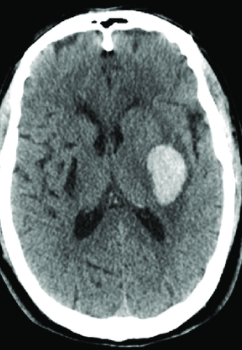
There are 3 life-threatening primary neurologic causes of sudden decreased LOC.. if you order the wrong test you might miss them 👇
1. Intracranial Bleed (SAH, ICH etc.)
2. Acute ischemic stroke (basilar / posterior)
3. Seizure
Any patient undergoing CT imaging for sudden decreased LOC should get a CT Angio
#medtwitter #foamed #neurotwitter #neurocrit
How on earth did I miss this review of pyroglutamate acidosis? Meticulous, which is no surprise from Prof Gordon Stewart, who I remember well from @UCLH. @Clin_Med
https://t.co/42DFLthAt1
1/As my attending once said, “If I’ve seen it once, I’ve seen it…well once.”
There are those once in career cases you never forget!
A thread about an interesting case that I’ve seen once in 15 years and never again!
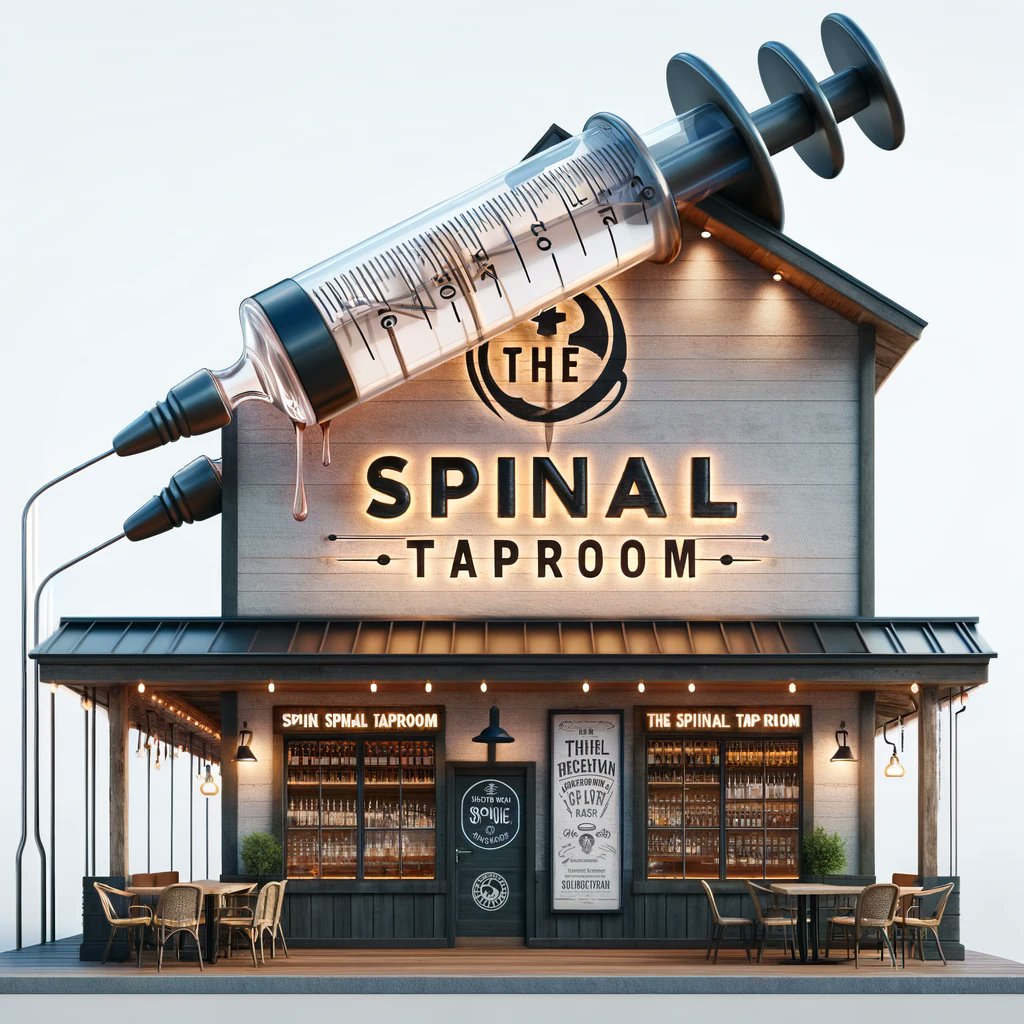
Thinking about opening a #neurology-themed bar, but I can't decide what to call it. Here are some of the options.
Having one of those days when you just want to curl up into a ball? Let's relieve some of that opening pressure. Hopefully, the experience won't be traumatic.
1/8