Thank you everyone for your support you have given. You know who you are . Much love. For the foreseeable future, y’all don’t have to deal with me anymore. Peace and God Bless
@JoeBiden How about you do something other than pander to 1% of the population… I know you are a corrupt politician, but you have screwed things up and our govt discriminates more than ever because of it. Act like you care about people… why does no one talk about Family Court…🖕
@TuckerCarlson Americas principles have been flushed down the toilet a long time ago. Try being a father in family court. When I grew up I believed in the constitution… It turned out to be much like Santa Claus
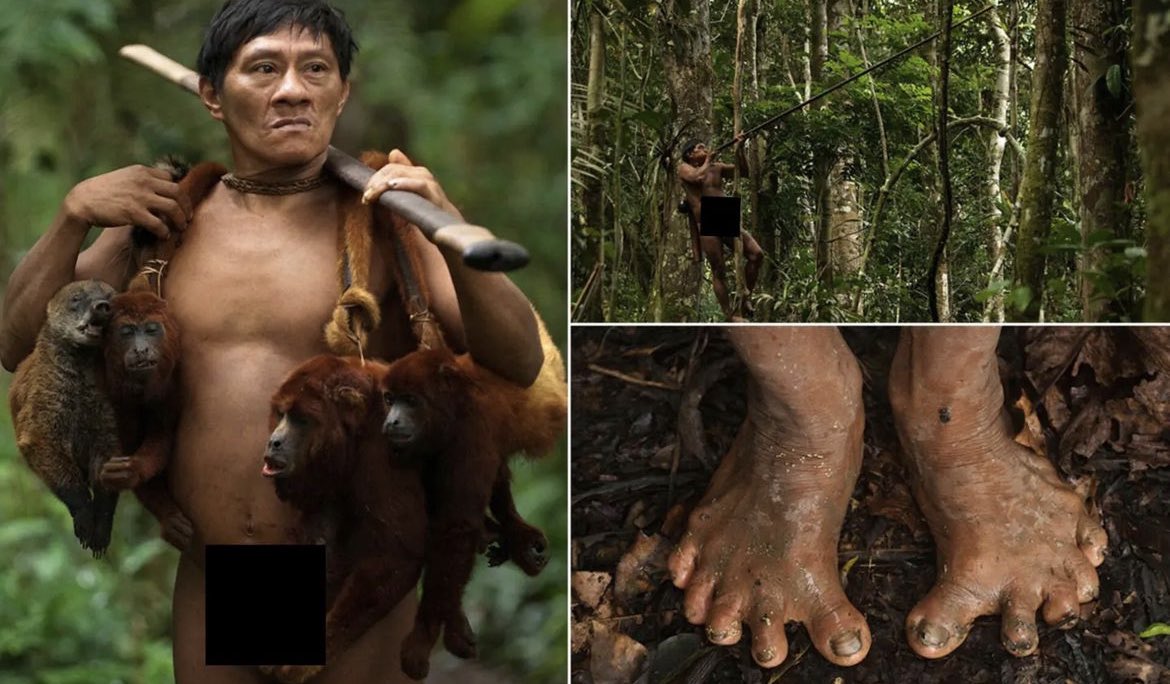
The Huaorani tribe, also known as Waorani or Waos, is an indigenous group residing in Eastern Ecuador within the Amazon rainforest. This isolated tribe, consisting of approximately 4,000 members, has a unique cultural and linguistic heritage. Their language is distinct and unrelated to any other known tongue, including Quechua, which is commonly spoken in Ecuador.
Due to their longstanding practice of tree climbing, a crucial skill for their way of life, the Huaorani people have experienced physical adaptations in their feet. The tribe primarily relies on hunting monkeys and other small game using spears and blow guns as a major food source. The combination of a limited gene pool, constant exposure to the challenging environment, and the necessity of climbing trees has resulted in the flattening of their feet. Some individuals within the tribe even exhibit the presence of six toes on each foot and six functional fingers on each hand. Interestingly, the structure of their feet undergoes changes over time, starting with straight toes at birth.
It is worth noting that the Huaorani tribe is not the sole example of human adaptation to specific environments. Certain tribes in Malaysia, for instance, have developed the ability to stay submerged underwater for extended periods to fish for pearls. Their lungs have evolved to process oxygen more efficiently in order to support this activity.
Moreover, the emergence of white skin in early humans who migrated to northern Europe can be attributed to the reduced sunlight in that region. White skin has a greater capacity to absorb vitamin D compared to dark skin, thus facilitating its production despite the limited sunlight.
In general, human feet may gradually become flatter over time when exposed to comparable environments, as the toes tend to spread out to provide enhanced grip and balance.