Canada's Leading Healthcare Platform. A patient-controlled, cross-provincial health data network enabling secure, compliant, and instant access to care.
Patient’s care plan lives in your clinic.
Their imaging is somewhere else. Their family doctor’s notes, somewhere else again.
Doktochain connects chiropractic and physio clinics to a shared, consent-based record. Less chasing. More treating.
#Chiropractors#Physiotherapy
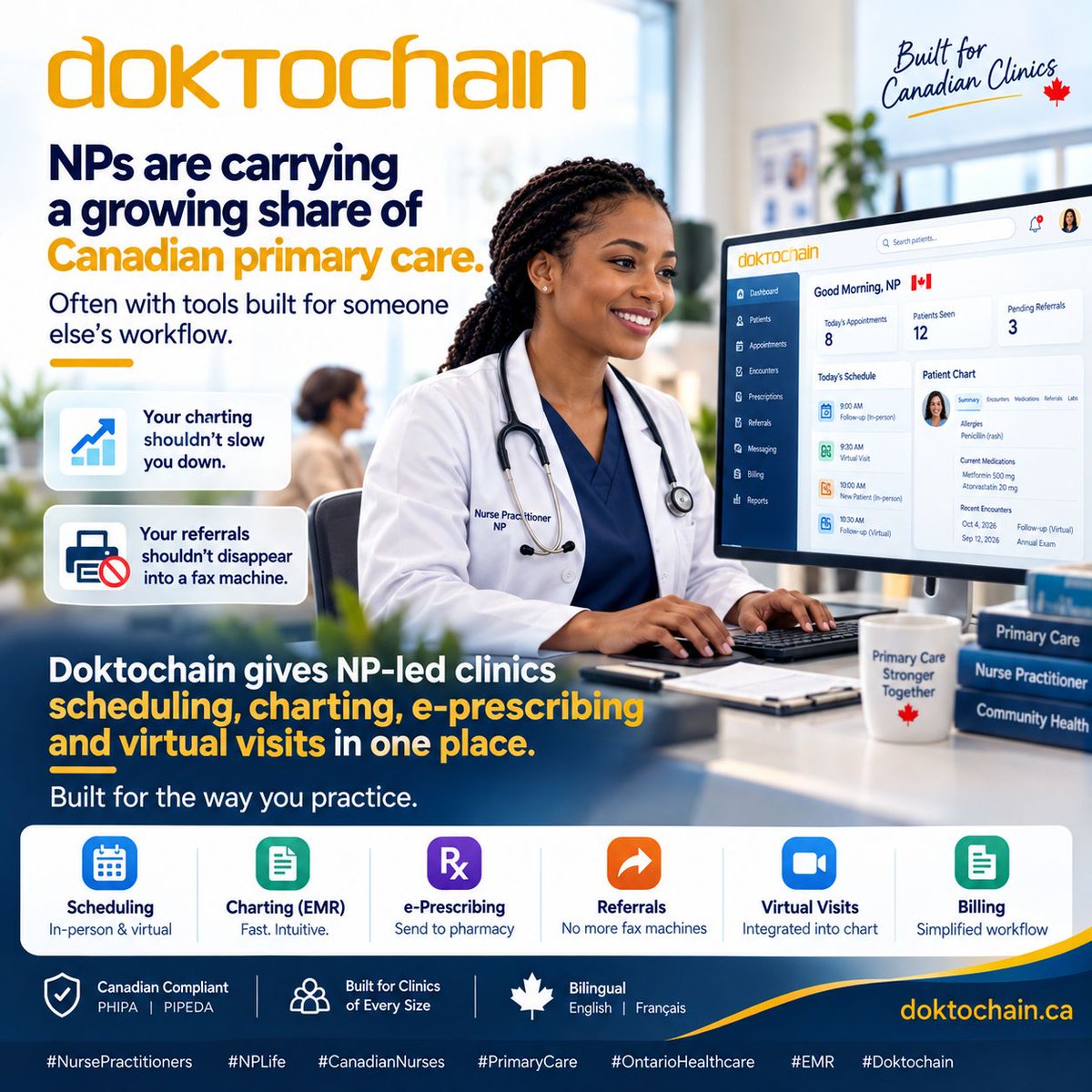
NPs are carrying a growing share of Canadian primary care.
Often with tools built for someone else’s workflow.
Your charting shouldn’t slow you down.
Your referrals shouldn’t disappear into a fax machine.
#NursePractitioners#NPLife#CanadianNurses#PrimaryCare#EMR#Doktochain
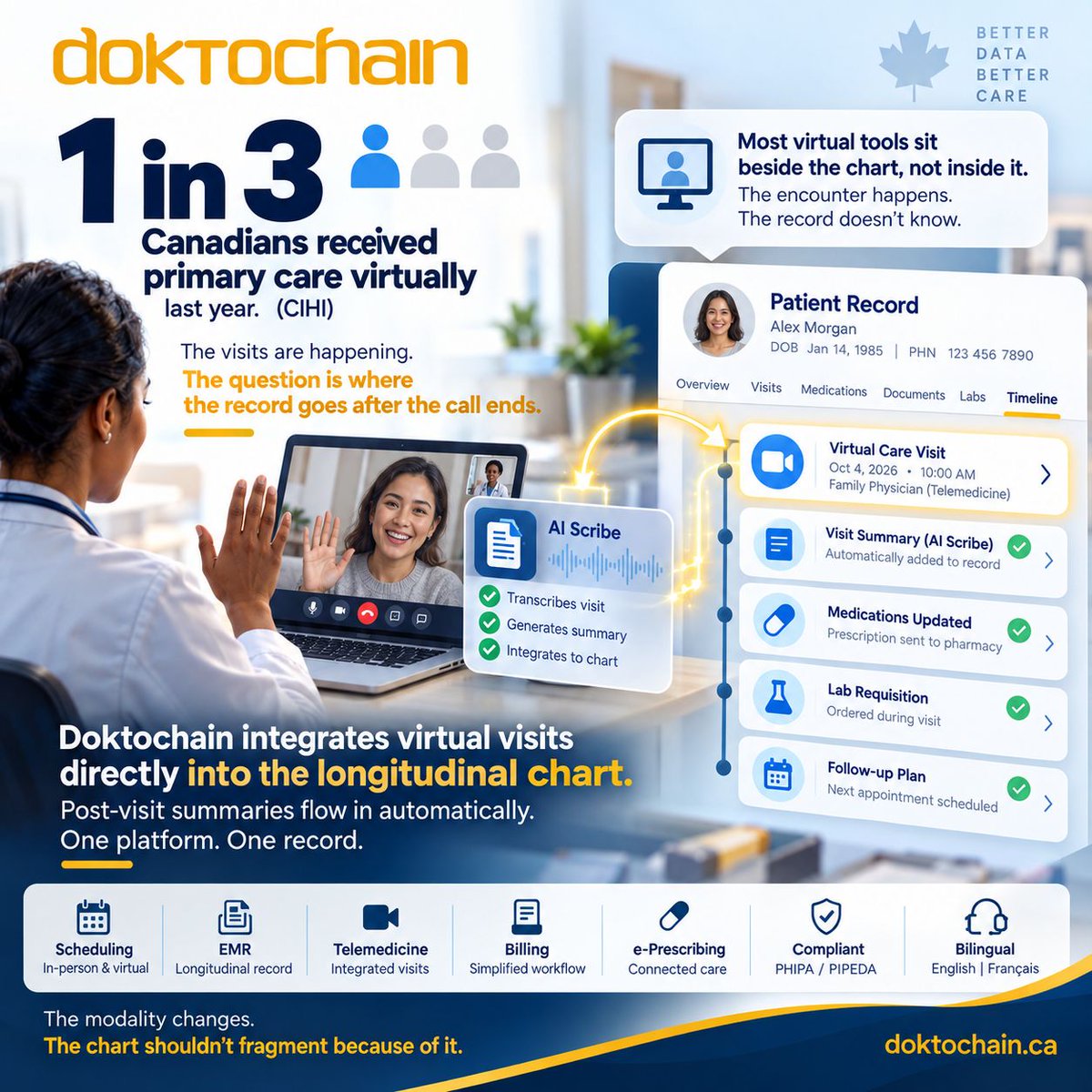
1 in 3 Canadians received virtual primary care last year. (CIHI)
Most of those visits live in a separate tool — not the chart.
Doktochain puts the virtual encounter and the longitudinal record in the same place.
9 in 10 Canadian physicians use an EMR. 70%+ of that data still isn't shared across providers. (Policy Options, 2026)
Adoption was never the gap. Intelligibility is.
Doktochain builds the record to be readable across systems from day one.
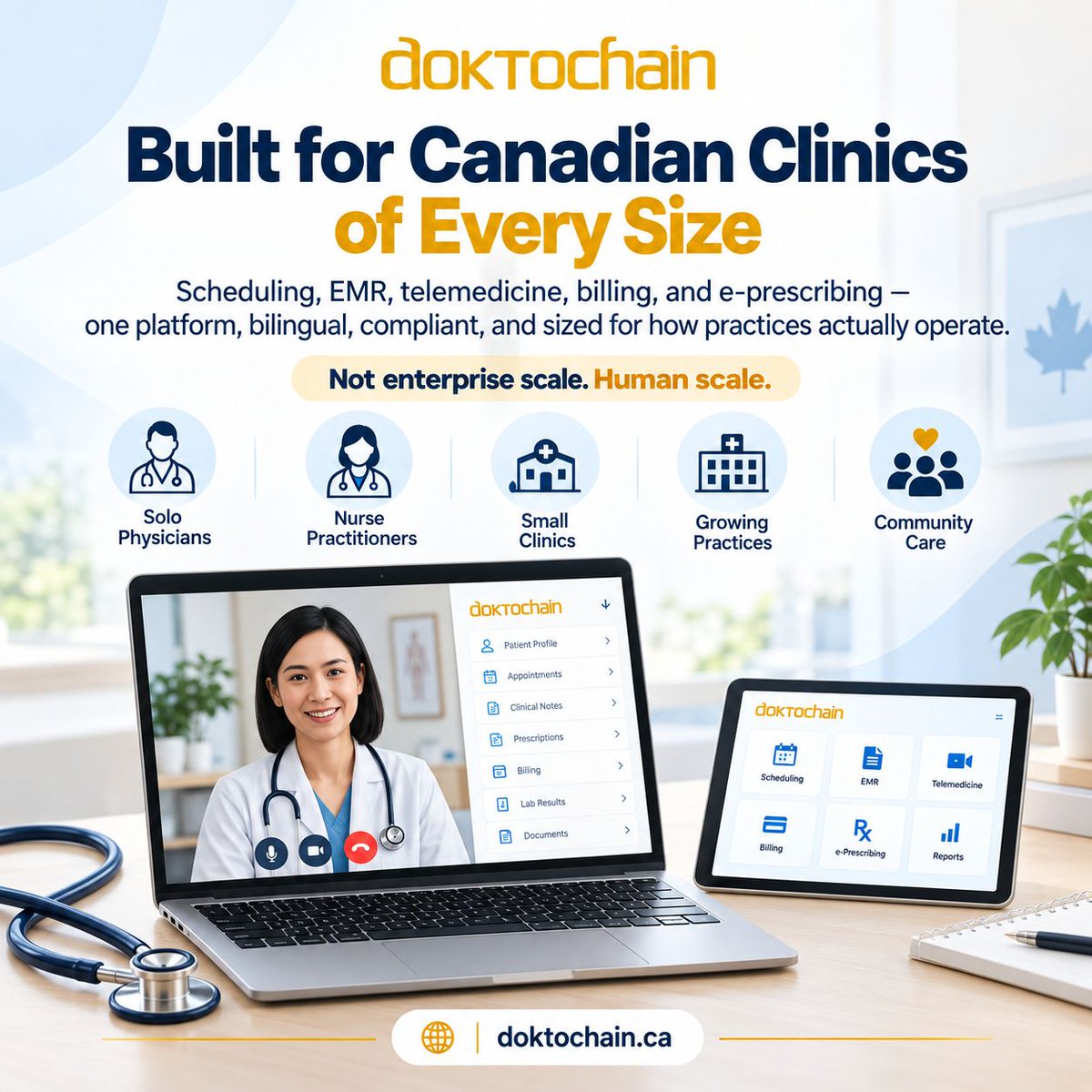
Most health platforms are built for hospitals.
Canada's primary care runs on small clinics. Doktochain is sized for them — bilingual, provincially compliant, complete on day one.
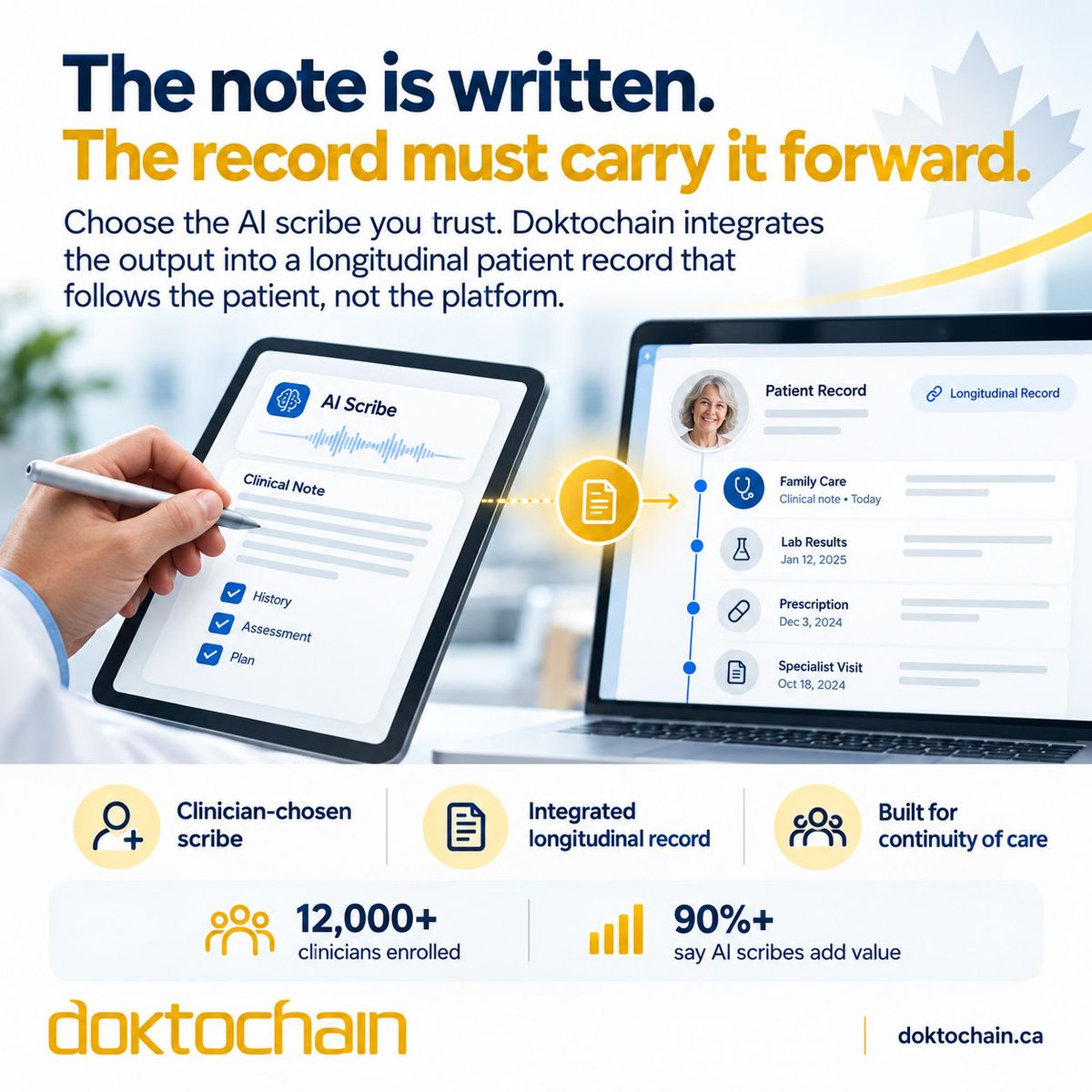
12,000+ Canadian clinicians now use AI scribes. (Infoway, 2026) The tools work.
The open question: where does the note go after the encounter?
Doktochain lets clinicians choose their scribe. The platform integrates it into the longitudinal record.
A log that can be overwritten is not an audit trail. It is a guess about the past.
Doktochain builds cryptographic, tamper-evident traceability into the record itself. PIPEDA-aligned. Data residency in Canada.
Fewer than half of Canadians can access their own health records. (CMA, 2026)
Access is one problem. Consent governance is another.
Doktochain builds the grant, the audit, and the revoke into the record itself. Not a policy. Not a separate log.
Records don't cross provincial borders. Patients do.
CIHI calls it plainly: health data generally stays put — even between clinics in the same city.
Doktochain builds the record to follow the patient. Across provinces. From the start.
Fewer than 1 in 4 Canadian family physicians share records electronically outside their own practice. (Bill S-5 Senate submission, 2026)
The Canada Health Act guarantees portability of coverage.
The record is a different problem. Doktochain solves it at the architecture level.
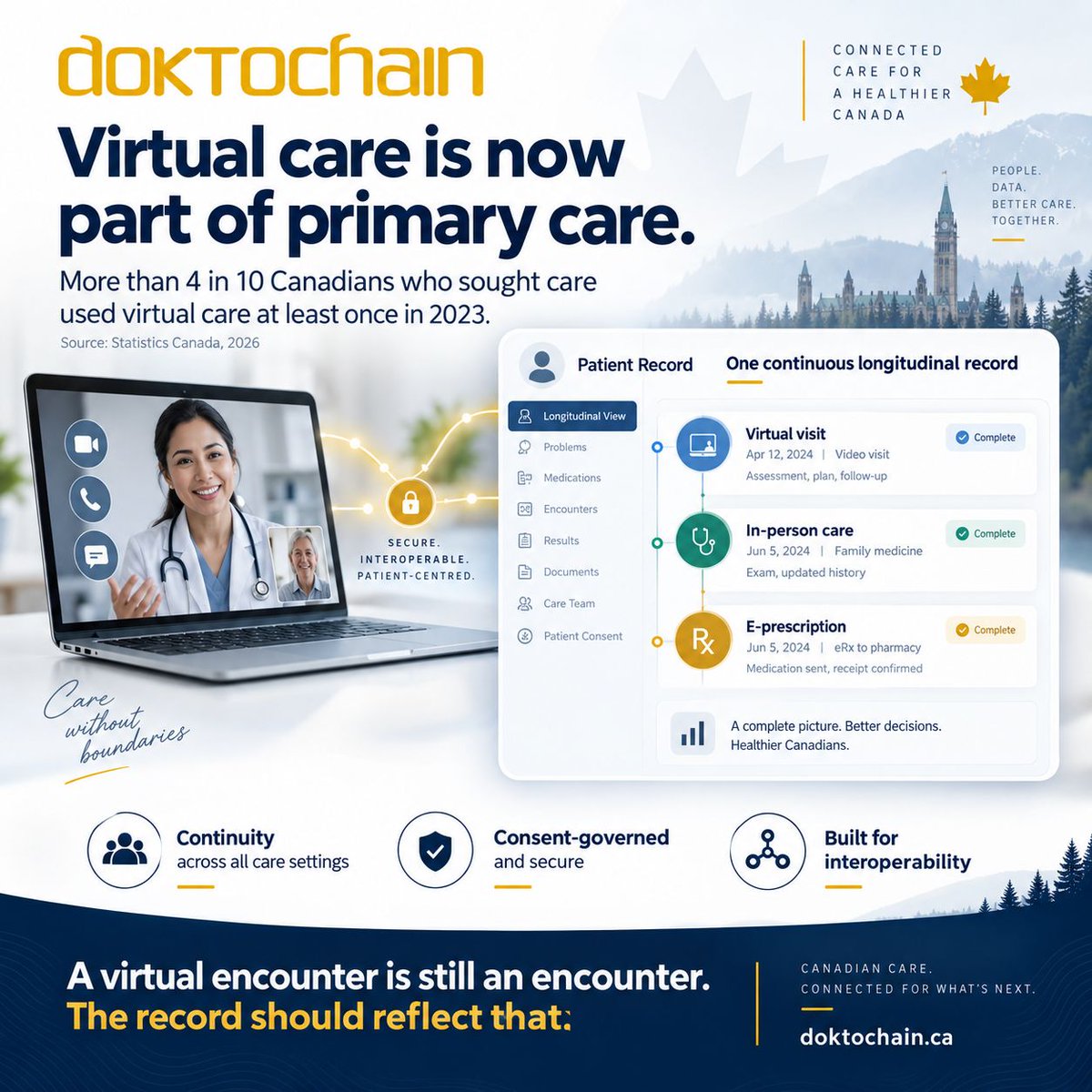
4 in 10 Canadians used virtual care in 2023. (Statistics Canada, 2026)
Most EMRs still treat that visit as a separate event from the record.
Doktochain integrates the virtual encounter into the longitudinal chart. One record. Every encounter.
Canada's CACDI v2 defines a common language for health data. (CIHI, 2026)
Storing a record and sharing it are not the same thing.
Doktochain builds interoperability into the record's structure. Not added later. From the start.
Canadian doctors spend 18.5 million hours a year on unnecessary admin. (CMA)
Part of that is using systems built for hospitals, not independent clinics.
Doktochain is sized for how Canadian practices actually work.
Canada: 10,000 clinicians signed up for AI scribe access in two weeks. (Canada Health Infoway, 2026)
Not every scribe fits every clinician.
Doktochain lets the clinician choose. The record stays coherent either way.
Most EMR audit logs are a separate document from the record. They can be edited. They can disappear in a transfer.
Doktochain makes the audit trail a cryptographic property of the record itself. Tamper-evident. From the start.
Canada: 90%+ EMR adoption. 70%+ of that health data still not shared across providers. (CMAJ, 2026)
The records exist. They were built to stay.
Doktochain builds them to travel.
Canadian law gives patients the right to consent, restrict, and revoke access to their health data. (PHIPA)
Most records have no mechanism to act on it.
Doktochain makes consent a property of the record. Grant it. Audit it. Revoke it.
Moving provinces in Canada? Your health card takes up to 3 months. Your medical record may never arrive. (HealthQuotes, 2026)
Doktochain builds the record to follow the patient. The provincial border is a governance line. It should not be a clinical one.
One in three Canadians now mixes virtual and in-person care in a single year. (Statistics Canada, 2025)
A virtual visit that doesn't reach the longitudinal record is a visit without a memory.
Doktochain unifies both. One chart. Every encounter.
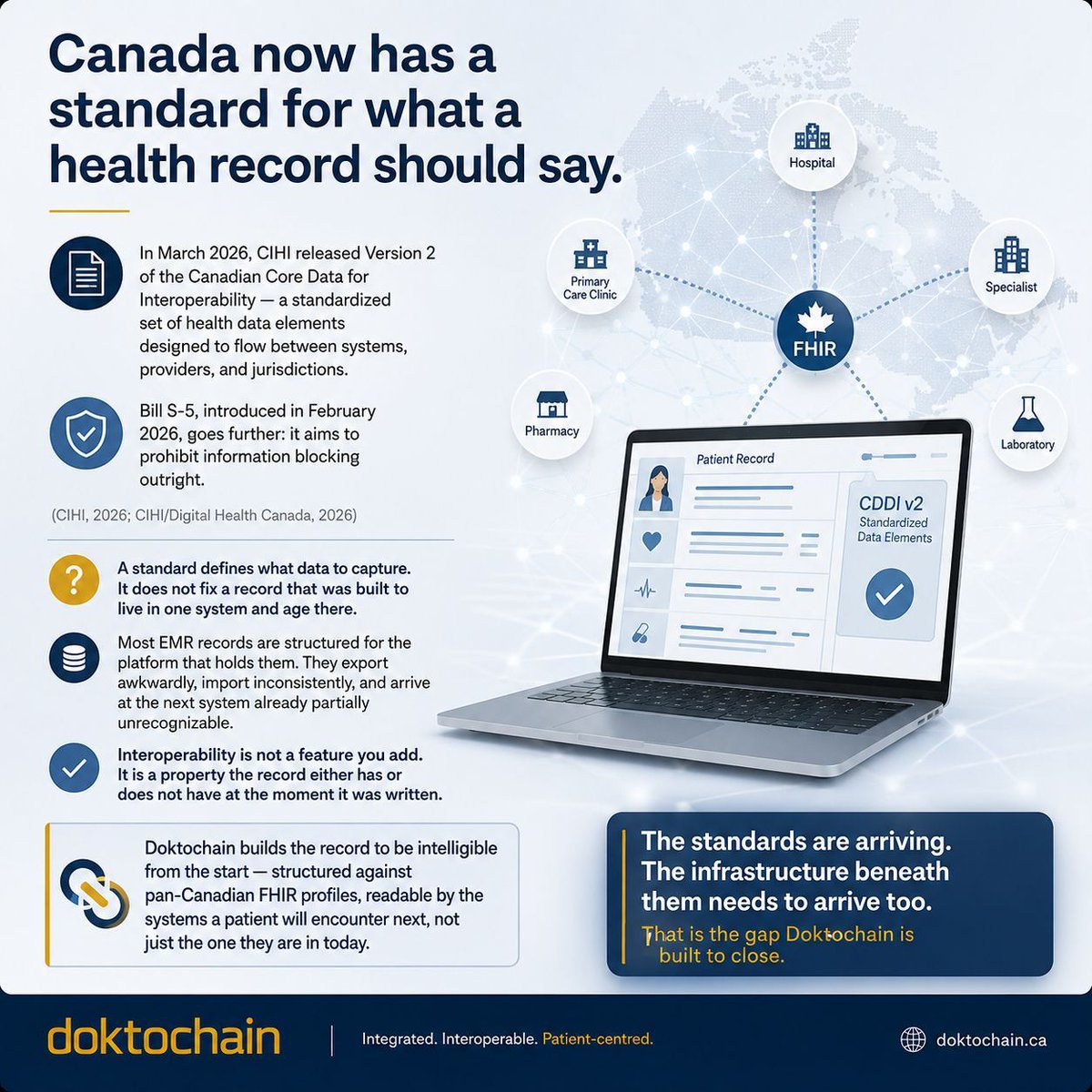
Canada's interoperability standard is here. Bill S-5 will prohibit information blocking. (CIHI, 2026)
A standard defines what to capture. It does not fix a record built to stay in one system.
Doktochain builds the record to travel.