Ten Thousand Foreign Criminals. Not One Deported. Instead, They're Releasing the Rapists.
From September, killers, rapists and sex offenders will walk free from British prisons ahead of schedule. David Lammy, the Justice Secretary, is implementing changes that will see criminals convicted of manslaughter, rape, GBH and sex offences released halfway through their sentences rather than at the two-thirds point they currently serve. A rapist jailed for fifteen years will be out in seven and a half. The Ministry of Justice declines to give a total figure, but it is understood that between five and seven thousand prisoners will be affected in the first year alone.
The Government's justification is prison overcrowding. It is the only justification they have, and they repeat it with the confidence of people who believe the question ends there. It does not.
There are 10,772 foreign nationals currently held in British prisons. They represent twelve per cent of the total prison population. The largest single group is Albanian, at 1,193 prisoners. Polish, Romanian, Irish and Lithuanian nationals follow. Under existing law, every foreign national sentenced to twelve months or more is subject to automatic deportation unless they fall within defined exceptions. Automatic. That is the word the statute uses. It is not the word that describes the reality.
Before a single British victim receives a letter informing them that the person who destroyed their life is being released years ahead of schedule, the Government owes the country an answer to a simple question. Why are ten thousand foreign nationals still here?
Deporting them requires no new legislation. It requires no sentencing reform. It does not require writing to rape victims to tell them their attacker is coming home. It requires the political will to enforce the law that Parliament already passed. Labour does not have it, and they would prefer you did not notice.
The President of the Prison Governors Association, Tom Wheatley, has been characteristically direct. Once the Ministry of Justice begins writing to victims, he said, there will inevitably be individuals who have suffered at the hands of an offender who will become very upset. They will have been expecting the person to be in prison for a much longer period. They are going to be out in weeks. He added the point that distinguishes this from previous early release schemes: this is a statutory change, so it does not matter what you have been sentenced for.
That last sentence deserves to sit in the open air for a moment. It does not matter what you have been sentenced for.
The shadow justice secretary Nick Timothy called the scheme reckless, an insult to victims and a threat to the public. He is right on all three counts. But the political opposition, however justified, risks obscuring the more fundamental charge. This is not a government that ran out of options. This is a government that looked at its options and chose the one that puts rapists back on the street rather than the one that puts foreign criminals on a plane.
Ministers will tell you that every prisoner freed early will be tagged, that sentence extensions are available for bad behaviour, that probation is being expanded. These are the arguments of people managing a catastrophe they created, not preventing one.
The victims who will receive those letters in the coming weeks did not create this catastrophe. They did not vote for it. They were not consulted. A rape victim who built her sense of safety around a release date will now be told, by letter, that the calculation has changed.
Labour inherited a prison overcrowding crisis. They had choices about how to solve it. Ten thousand foreign criminals sit in British jails, deportable under existing law, at a cost of over fifty thousand pounds each per year. Labour chose to free the rapists instead.
"This is a government that looked at its options and chose the one that puts rapists back on the street"
The BBC Fabricated Trump's Words. Starmer Wants It Boosted For Fighting Disinformation.
This week, the same government that announced it would ban under-16s from most social media platforms confirmed a second policy. Force Facebook, YouTube and every major platform to algorithmically boost content from the BBC, ITV and Channel 4. The stated reason is fighting disinformation. The timing makes that justification impossible to take at face value.
The BBC spliced together two separate parts of a Donald Trump speech, delivered an hour apart, to make it appear he had directly told his supporters to march on the Capitol and fight, while cutting the part where he told them to protest peacefully. This was not sloppy editing. It was a constructed sequence designed to produce a false impression of what was said. Trump is now suing the BBC for ten billion dollars. The corporation's own internal memo, leaked to the Telegraph last autumn, documented the edit alongside a pattern of other failures. Extensive uncritical airtime given to Hamas on BBC Arabic. A rogue unit of activist reporters censoring coverage of the trans debate to fit a predetermined narrative. A report calling car insurers racist that was found to be, in the BBC's own words, thoroughly wrong. This week it emerged the corporation sacked a presenter for criticising its Gaza coverage while taking no action against reporters who appeared to celebrate the October 7th attacks.
This is the organisation that Starmer wants boosted in the name of trusted information. Not a minor broadcaster with an isolated error. An institution funded by £3.7 billion a year in compulsory licence fees, facing a billion dollar lawsuit for fabricating a world leader's words, accused of one sided reporting on the most contested conflicts of our time, and now positioned by law to be placed ahead of every independent voice on every major platform in the country.
Put this alongside the under-16s ban and the pattern stops looking like coincidence. One policy restricts what young people can access. The other restructures what everyone sees first, adults included, engineering visibility in favour of the state broadcaster and against the independent platforms where this government's record, on Belfast, on Makerfield, on the asylum backlog and on every other documented failure, gets challenged daily by people it cannot easily silence. Bluesky escaped the social media ban despite its own documented child safety failures. The BBC gets promoted despite a documented record of fabrication. Both decisions share the same logic. Visibility for institutions the government finds comfortable. Restriction for the platforms where it does not.
Lord Young of Acton, the human rights lawyer who founded the Free Speech Union, put it with the right amount of contempt. The Prime Minister has apparently decided that censoring social media should be his legacy, which is strange territory for a former human rights lawyer to choose. It is strange only if you assume the goal was ever free expression rather than managed expression. Nothing in this government's conduct this month supports that assumption.
A government that needs to legislate prominence for its preferred broadcaster is not protecting the public from disinformation. It is admitting that its preferred broadcaster cannot earn that prominence on the evidence of its own reporting, and has decided to mandate by law what trust no longer provides voluntarily. That is not journalism policy. It is state media privilege written into platform regulation, arriving in the same fortnight as a ban on what sixteen year olds may read, from a government that is rapidly running out of ways to disguise what it is actually doing.
"The BBC spliced together two separate parts of a Donald Trump speech, delivered an hour apart, to make it appear he had directly told his supporters to march on the Capitol and fight"
The EU Acted. Hungary Acted. The US Acted. Britain Signed Hotel Contracts Until 2039.
Yesterday the European Parliament voted 418 to 218 to pass the strictest returns legislation in EU history. The lead negotiator described it as the final missing piece of Europe's migration system. After almost twenty years of standstill, he said, Europe finally has effective return measures. The vote followed the Chișinău Declaration of 15 May, signed by all 46 Council of Europe member states, pushing back against the European Court of Human Rights' increasingly expansive interpretation of migration law. Europe's governments, operating inside the ECHR framework, have decided they have had enough of judicial overreach. They are acting anyway.
Britain's removal rate for illegal arrivals stands at 4%. The EU's removal rate, the number so catastrophically low it triggered yesterday's emergency legislation, stands at 20%. Britain is removing at one fifth the rate of a system the EU itself just declared broken beyond tolerance. While announcing it wants to stop the boats, the Home Office has signed accommodation contracts for asylum seekers running until 2039. A government that intends to remove people does not contract for 15 years of housing them.
The standard explanation is the ECHR. Ministers have cited it for years as the primary obstacle to removal, the external constraint that ties Britain's hands regardless of political will. It is worth examining that claim against the Court's own published data. Of more than 430,000 applications processed by the ECHR in the past decade, fewer than 2% concerned immigration. Of those, over 92% were dismissed. Fewer than 450 cases, one in every thousand applications to the Court, resulted in a finding of human rights violation on immigration grounds.
The obstacle is not in Strasbourg. It is in Chancery Lane. The domestic immigration tribunal system, staffed in part by judges whose documented backgrounds lie in open-borders advocacy, produces rulings that no democratically elected parliament ever intended and that the ECHR itself would not require. And the institutional machinery surrounding it ensures that challenging any of this carries consequences. A new Islamophobia definition, opposed by the government's own former anti-extremism adviser and by the Equality and Human Rights Commission, is being embedded across every school, hospital, broadcaster and public body in the country. Two-tier policing, documented in Hampshire's own Race Action Plan and in the College of Policing's guidance, conditions officers to treat a racism accusation as the primary fact requiring response. The framework does not just permit the embedding of mass migration. It is designed to make objecting to it a disciplinary matter.
The EU has now demonstrated, within the ECHR framework, that effective returns legislation is achievable. Hungary has demonstrated that a 4% removal rate is a political choice, not a legal inevitability. The United States has demonstrated that border crossings can be reduced from 1.6 million to under 240,000 within months of a government deciding to act. Every external constraint Britain's government cites as the reason it cannot act has now been dismantled by other governments operating under comparable or identical legal obligations.
Mass immigration is not an act of nature managed by people smugglers. It is a policy choice sustained by successive governments across thirty years, maintained by an institutional framework that classifies concern about it as extremism, and defended by a legal excuse that the EU just voted 418 to 218 to stop hiding behind.
The smugglers did not build this system. The government did. Yesterday, 418 members of the European Parliament decided they had had enough of pretending otherwise. Britain's government has not.
"Mass immigration is not an act of nature managed by people smugglers. It is a policy choice sustained by successive governments across thirty years"
One of the craziest things about the UK rape gang scandal is that it's largely considered a 'right wing' concern.
In a sane, serious country, it would be completely bipartisan. In fact, it wouldn't even be seen as a political issue, but one of basic justice and morality.
We want to thank @JeremyClarkson for sharing his #ProstateCancer diagnosis and treatment in #ClarksonsFarm, raising vital awareness with the millions of men and families watching 💙
➡️ Check your risk in 30 seconds: https://t.co/jUwcPB0P6N
📸 (Image: Amazon Prime)
There is a moment when a government stops pretending to listen. David Lammy has reached that moment. The Justice Secretary is pressing ahead with judge-only trials despite opposition from his own MPs, the legal profession, former law officers and the review he himself commissioned. That tells you everything. The decision has already been made. The debate is now theatre.
The excuse is the court backlog. Victims are waiting years. Cases are piling up. Justice is delayed. All true. But what comes next is the tell. Instead of fixing the broken system, the government has chosen to remove the public from it. Instead of repairing justice, it is downgrading it. State failure has become the justification for shrinking liberty.
This is the inversion at the heart of the plan. The courts were starved of funding for decades. Courtrooms closed. Judges retired and were not replaced. Sitting days were cut. Barristers walked out because the system no longer paid them enough to survive. The backlog did not fall from the sky. It was created by political neglect. Now the same political class points to the chaos it allowed to grow and says the answer is to scrap jury trials. The arsonist now poses as the fireman and is asking to tear down the building.
The most revealing line is the quiet admission that focus groups are not reacting. Ministers believe the public is not paying attention. That is the green light. When a government reshapes the justice system because it thinks voters will not notice, consent has already been abandoned. This is power acting without fear.
Jury trial is not a quaint tradition. It is the moment when the state has to step out of its own system and persuade ordinary people that someone is guilty. Twelve citizens, not paid by the government and not part of the legal machine, must be convinced before the state can take a person's liberty away. That is the safeguard.
Take the jury away and that barrier disappears. The police investigate, the state prosecutes, and a judge working inside the same system decides the outcome. Accusation, judgment and punishment all happen within one closed loop. The public is no longer part of the process. The state no longer has to convince society. It only has to convince itself.
That is not a small procedural tweak. It is a fundamental shift in who holds power. Justice stops being something done in the name of the people and becomes something done to the people by the state. That is not efficiency. It is convenience for power.
The tragedy is that there was another path. The government could have funded more courtrooms and reopened the ones it closed. It could have hired more judges, clerks and prosecutors. It could have expanded sitting days, modernised case management and invested in the infrastructure that keeps justice moving. It could have treated the courts as essential national infrastructure rather than a budget line to be trimmed. That would have reduced delays without touching the rights of the accused. That would have fixed the system instead of hollowing it out.
But that path requires money, patience and humility. Scrapping juries requires only legislation and a majority. One path serves justice. The other serves government convenience. The choice tells you everything about the priorities of the people in charge.
The most damning fact is not that they are doing this. It is that they are doing it knowingly, against the warnings, against the opposition, and without fear of the public reaction. A government that no longer fears the people has already crossed a dangerous line. The removal of juries is not the end of the story. It is the proof that the relationship between citizen and state is being quietly rewritten in real time.
"David Lammy [...] is pressing ahead with judge-only trials despite opposition from his own MPs, the legal profession, former law officers and the review he himself commissioned."
I was surprised when Jeremy Clarkson texted me on Boxing Day to say how much he liked my @paddypower ad urging men to get tested for prostate cancer. Now I understand.
I wish my old sparring partner all the best with his treatment. Guys, have a PSA test, it may save your life.
Hungary Stopped It In Six Months. Britain's Government Chose Not To.
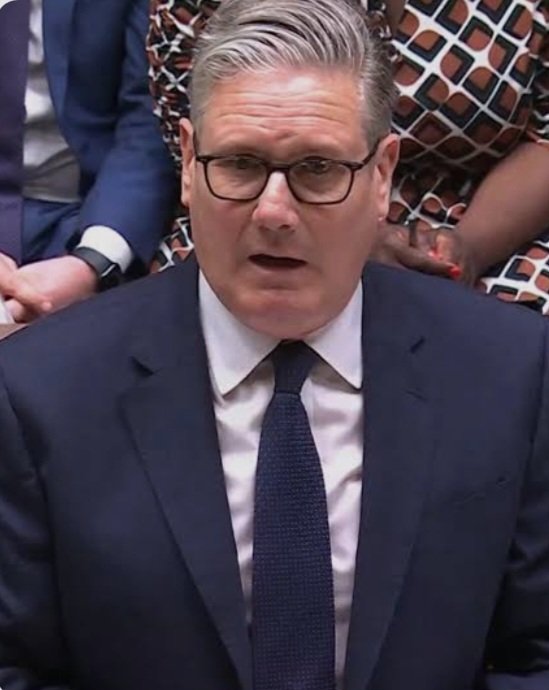
In May 2025, Keir Starmer stood in Downing Street and told the country, "The experiment is over." Six months earlier, he had already explained what it was. Of his predecessors, he said, "Policies were reformed deliberately to liberalise immigration. This happened by design, not accident." Both statements are true. The experiment was deliberate. But it is not over.
In the first six months of 2025, the same period Starmer declared it over, 47 people were permitted to lodge an asylum claim in Hungary, a country of 9.5 million. In the same period, Britain received roughly 50,000. Both countries answer to the same conventions and hold the same tools. The difference between 47 and 50,000 is not capacity. It is choice.
The United States made the same choice this year. Border Patrol apprehensions fell to their lowest level since 1970, down from 1.6 million in 2021 to under 240,000. Net migration to the United States turned negative for the first time in half a century. This was achieved within months of a government deciding to act. Britain's government has not made that decision.
This is not new. In 2013, Peter Mandelson admitted that in 2004, under a Labour government, "we were not only welcoming people to come into this country to work, we were sending out search parties for people." Andrew Neather, who wrote the 2000 speech opening Britain's borders, later said the policy was intended to "rub the Right's nose in diversity and render their arguments out of date." Six of eight references to that policy's social objectives were removed before publication.
More recently, Professor Alan Manning, former head of the government's own Migration Advisory Committee, admitted that mass migration was used to paper over economic failure. A substitute for reform. The trade-off was understood. The warnings were issued. The decision was taken anyway, by both parties, across three decades.
What is new is the second half of the choice. Having decided, repeatedly, to expand migration rather than confront the harder political work, the same state has built the machinery to manage the response.
The government's own project delivery guidance states that British equality, diversity and inclusion policy is governed by the UN's 2030 Agenda for Sustainable Development. Prevent's training classifies "cultural nationalism," the belief that mass migration threatens Western culture, alongside extremist ideology, broad enough to capture the Prime Minister's own warning that Britain risks becoming "an island of strangers." A new definition of Islamophobia was opposed jointly by Christian, Muslim, Hindu and Sikh leaders, by the Equality and Human Rights Commission, and by the government's own former anti-extremism adviser, who warned extremists would use it to deflect scrutiny. It was announced regardless.
The pattern repeats in how dissent is handled. After the 2024 riots, people were jailed for social media posts within days, sentences in the same range as those who set buildings alight. This year, the Technology Secretary Liz Kendall announced new powers to remove "incendiary" content during "times of crisis," definitions set by ministers, the same day the government's own terror reviewer revealed his questions about migration's national security implications had gone unanswered. One question produced legislation within forty-eight hours. The other, silence.
None of this is incompetence. Incompetence does not produce a 47 person asylum total in Hungary and a fifty-year low in US border crossings within months of two governments deciding to act, while Britain, holding the same tools, produces neither.
Choosing not to close a border is one decision. Branding concern about that choice as extremism is another. The two are not separate. The second protects the first.
"In May 2025, Keir Starmer stood in Downing Street and told the country, "The experiment is over.""
The Asylum Backlog Hit 87,450. The Terror Watchdog Warned of a Security Risk
87,450 people are in the asylum appeals backlog. That is roughly the population of Carlisle. Imagine every man, woman and child in that city, waiting in a queue that grows by the day, more than double the number of new asylum claims made in the same year.
The numbers published this week should stop a government in its tracks. The backlog is up 71.5 percent in a single year. 70 percent of rejected claimants now appeal. 40 percent of those rejected remain in Britain regardless. Of the more than 200,000 people who have crossed the Channel illegally since 2018, only around 4 percent have ever been removed. The system is not failing to cope with the numbers. The system is the numbers.
The Home Office describes this as progress, pointing to a 72 percent fall in the initial decision backlog since 2023. What it does not say is where those decisions went. They went into the appeals system, where the backlog has more than doubled. Speeding up the front door while leaving the back door unchanged relocates the queue and multiplies it, because every rejected claimant who appeals is entitled to taxpayer-funded accommodation while they wait. The National Audit Office puts the total cost at £4.9 billion for 2024-25, with £2.1 billion spent on hotels alone.
Shabana Mahmood's response is to legislate again, restricting Article 8 family life claims to immediate family, requiring judges to prioritise public safety, and setting a 28-week limit on appeals. That legislation implicitly admits the current framework has allowed dubious family connections to block removal, that judges have not been prioritising public safety, and that appeals have run indefinitely. These are not new problems Mahmood has discovered. They have been documented for years by anyone willing to look, while those who raised them were told they were exaggerating or that no evidence existed.
Then there is Jonathan Hall. Not a commentator. Not an activist. The government's own Independent Reviewer of Terrorism Legislation, a King's Counsel appointed specifically to provide neutral expert assessment of the law. This week, in the aftermath of the Belfast stabbing and the riots that followed, Hall said publicly that immigration must be assessed in national security terms, that certain nationalities present elevated risk profiles for serious violence, and that trauma among asylum seekers from conflict zones may compound that risk further. Foreign nationals accounted for one in seven sexual offence convictions in 2024. Hall is not speculating. He is the most senior independent legal authority on terrorism law in the country, and he has said the system as it stands is a security risk.
The government's response to Hall's intervention was silence. He raised it through proper channels. Nobody answered.
So here is where Britain stands. An appeals backlog larger than the population of an entire English city, growing at 71.5 percent a year. A removal rate of 4 percent for illegal arrivals. A National Audit Office report confirming the cost is disproportionately high and driven by delay. A Home Secretary legislating to fix problems that amount to an admission the system has been broken in exactly the ways critics described. And a terror watchdog, appointed by the government itself, warning that the entire framework constitutes a national security risk, met with silence from the department responsible for it.
This is not a system under strain. It is a system working exactly as designed. Faster removals, restricted appeals, leaving the ECHR, every lever has been available for years and none pulled with urgency. The backlog will keep growing. The removal rate will stay near zero. Somewhere in that queue of 87,450, the next Belfast is already waiting its turn.
"In the aftermath of the Belfast stabbing and the riots that followed, Hall said publicly that immigration must be assessed in national security terms"
🏴 Meet Craig Ferguson.
Craig has just completed a 3,200 walk - from Los Angeles to Boston - to watch Scotland play at a World Cup.
He set off with one aim - to make it in time for Scotland’s opener against Haiti and has raised over £1M for charity.
The Cheques Go Out. The Men Arrive. The Women Pay the Price.
The Foreign, Commonwealth and Development Office published its aid allocations without apology or embarrassment. Afghanistan receives £192 million. Somalia £143 million. Yemen £142 million. Sudan £141 million. Nigeria £138 million. The Treasury writes the cheques. The Foreign Secretary insists the money saves lives. Neither of them will say what the figures actually represent.
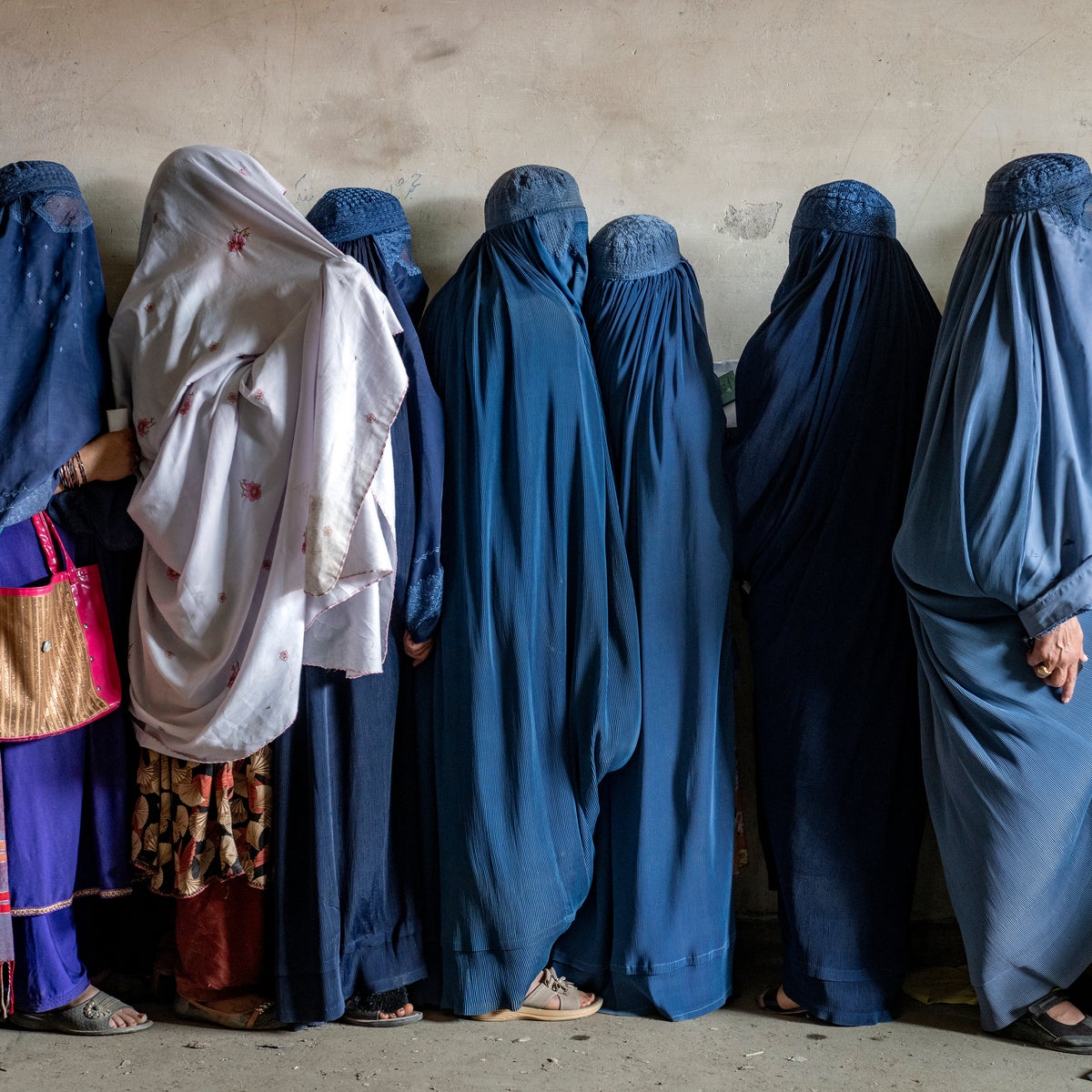
Afghanistan is governed by a regime that in April 2024 announced the enforcement of stoning and flogging for women accused of adultery. The UN's own Special Rapporteur describes a system of institutionalised discrimination amounting to gender apartheid. Girls are banned from secondary education. Women have been stripped from public life by decree. Britain sends £192 million a year, routed through NGOs the Taliban has simultaneously banned women from working for, which rather defeats the stated purpose.
Somalia ranks second on the Open Doors World Watch List for Christian persecution, behind only North Korea. Christians identified in the country face torture or death. Women and girls face forced marriage and sexual violence as instruments of social control. The Somali parliament has repeatedly failed to pass legislation on FGM and sexual violence. Britain sends £143 million.
Yemen, where FGM affects up to 84 percent of women and girls in some governorates, and where apostasy carries the death penalty, receives £142 million. Sudan, which has 15 million women and girls who have undergone FGM, receives £141 million. Nigeria, whose northern states operate sharia courts with apostasy laws punishable by death, and where 14 million women and girls have undergone FGM, receives £138 million. Five of the ten top recipients of British aid appear in the Open Doors top ten for Christian persecution. The government knows this. The figures are its own.
The same government presides over the Channel. Between 2018 and 2024, 147,568 people arrived illegally by small boat. Of those for whom data was recorded, 76 percent were males aged 18 to 39. In 2024, the leading nationalities were Afghans, Syrians and Iranians. In the first half of 2025, 70 percent of those crossing were young males from Afghanistan, Sudan and Iran. They arrive without verified documents. They arrive without verified ages. They are processed at Manston and dispersed into communities across Britain, often into hotels operating with minimal supervision.
The crime record is now a matter of parliamentary record. Louise Casey's report into rape gangs identified asylum seekers among those involved in the sexual exploitation of young British girls. The five nationalities most likely to cross the Channel saw a 110 percent increase in sexual offence convictions between 2021 and 2024. Foreign nationals account for one in seven sexual offence convictions while comprising one in ten of the population. In London, they account for over 40 percent of sexual assault charges while comprising 25 percent of the population. The Sun found 339 charges in six months across only half the asylum hotels in operation. The Mail on Sunday found 708 charges across a third.
A YouGov poll found 93 percent of Britons support the deportation of illegal migrants convicted of rape and violent crime. Ninety-three percent. The highest rate of support was in Scotland, at 97 percent. The British public has arrived at a verdict. The political class is still writing the briefing notes.
Britain is funding, at scale, some of the most repressive and misogynistic regimes on earth. Britain is simultaneously admitting, without adequate screening, large numbers of young men formed in those same societies. The connection is not complicated. The refusal to state it plainly is a political choice, made in the full knowledge of the consequences, and those consequences are being borne by British women.
"Britain is funding some of the most repressive and misogynistic regimes on earth."
The Defence of the Realm vs The Defence of the Majority
George Robertson has been a Labour man for sixty years. He served as Tony Blair's Defence Secretary. He ran NATO. When Keir Starmer needed someone to write his Strategic Defence Review, he turned to Robertson. That is the context in which Robertson's words this week must be understood.
Britain's national security, he said, is "in peril." The Treasury is committing "vandalism." The government is gripped by "corrosive complacency." His co-author, General Sir Richard Barrons, was equally precise: the British Army can currently "seize a small market town on a good day."
That verdict comes from the men Starmer himself commissioned. But Robertson said something else, something quieter, that explains everything. The reason Starmer will not act, he told the Guardian, is that everybody is "worried about votes." Left and right. Reactions. The political situation. He said it almost as an aside. It should have been the headline.
The Defence Investment Plan was due last October. It has still not appeared. The military faces a funding gap of £28 billion over four years. Defence chiefs are meeting this week to discuss cuts of £3.5 billion. The Treasury, it is widely reported in Whitehall, is simply refusing to release money. Meanwhile the welfare budget runs at five times what Britain spends on defence.
Robertson's remedy is direct: the welfare budget must be reduced to fund the armed forces. Within hours, Diane Abbott was on cue. Cutting welfare to spend on armaments, she said, was "appalling." Labour would lose votes to the Greens. That was the authentic voice of the constraint Robertson was describing.
Starmer cannot cut welfare. A backbench rebellion of over a hundred Labour MPs killed his welfare reform bill last year. He cannot borrow more without alarming markets. He cannot raise taxes without another political crisis. So the system deadlocks. The review sits on a shelf. The investment plan drifts toward June, then perhaps beyond. And the men who wrote the review go public.
Those who follow my work will know I have written at length about Starmer's paralysis on Iran. The inability to act decisively in the Gulf, the refusal to name what is actually driving his hesitation. The answer, in both cases, is the same. Starmer leads a coalition held together by Muslim communities whose votes he cannot afford to lose and whose instincts run directly against any muscular projection of British power abroad. That constraint does not stop at the water's edge. The same electoral arithmetic is now preventing him funding the armed forces. It is not a coincidence. It is a governing philosophy. When survival of the parliamentary party conflicts with the national interest, the parliamentary party wins. Every time.
The government's response to Robertson was to say Britain's armed forces are "among the best in the world" and that Starmer is "determined" the investment plan will be fit for purpose. Determined. Not funded. Not scheduled. Determined.
General Barrons put the timeline plainly. At the current pace, Britain needs ten years to reach genuine war readiness. British intelligence, alongside allied assessments, gives Russia three to five years before it tests European resolve directly. That is the gap. That is what "corrosive complacency" means in operational terms.
Lord Hutton, another former Labour Defence Secretary, has called this the defining moment of Starmer's premiership. He is right, though not in the way he intends. The defining moment has already passed. Starmer has chosen. Faced with a direct conflict between what the defence of this country requires and what his backbenchers will tolerate, he has chosen the backbenchers.
Robertson said he believes his country is in danger. He said he had to speak out even though it would be uncomfortable. A sixty-year Labour loyalist broke with his own government because he concluded the alternative was worse. And he was right.
The Border Stays Open. The State Will Close the Conversation.
Before the fires in Belfast had been extinguished, the government had identified the threat. Not the border. Not the system that granted Hadi Alodid legal residency in seven months without a verifiable European asylum history. Not the Albanian gangs advertising guaranteed passage to England on TikTok this morning. The threat, as defined by this government, was the conversation.
Liz Kendall announced on Wednesday that social media firms would face new legal curbs during times of crisis. Platforms would be required to remove incendiary content more quickly when tensions were heightened. The definition of crisis and the definition of incendiary would be set by ministers. On the same day, Jonathan Hall, the government's own terror watchdog, said he had raised the national security dimension of mass migration with the government and received no reply. One question got legislation within forty-eight hours. The other got silence. Stephen Ogilvie lost an eye on a Belfast street. The government's legislative response targets the people describing what happened.
This is not new. After the summer 2024 riots the same reflex operated. People were jailed for social media posts within days of the disorder. The sentences handed to those who wrote the posts sat in the same range as those who burned the buildings. The machinery of the state was directed at speech about disorder rather than the conditions producing it. Belfast is the same pattern at higher intensity. The border stays open. Discussion of what happens at the border will be suppressed more quickly next time.
The British asylum system did not malfunction in the case of Hadi Alodid. It performed. Sudan to Paris. Paris to Dublin. Dublin to Belfast by bus. Asylum claimed in February 2023. Refugee status granted by September. Legal right to remain until 2028. There is no French record of him as an asylum seeker. The Irish government will not say how he entered Ireland. None of that prevented the system from processing him correctly by its own rules. The rules are the problem. The government has no intention of changing them.
Albanian gangs are advertising the same route on TikTok today. Filmed inside Dublin airport. Guaranteed passage. Seven thousand pounds payable on arrival. Operation Gull has arrested more than 900 people using it in a year and the advertisements continue. Enforcement is cataloguing this. It is not closing it.
Jonathan Hall, the government's own independent reviewer of terror legislation, said immigration must be treated as a national security issue. He said he had raised whether migrants from certain countries presented elevated risks of serious violence. The government responded with silence. The terror watchdog, a King's Counsel appointed to scrutinise national security law, is recording not a political failure but an institutional one. The question was asked through proper channels. Nobody answered.
The pattern is coherent even if the government will not name it. The terror watchdog raises the national security dimension of mass migration and hears nothing. The gangs film themselves inside Dublin airport and advertise openly. The border operates as it always has. And ministers announce that posts about the consequences will be removed more quickly next time. That is not an oversight. That is a set of priorities.
A government that cannot close a border it knows is being exploited, cannot answer its own terror watchdog, and cannot explain how a man with no verifiable asylum history acquired British residency in seven months has chosen a fourth option. Control the account. Leave the causes intact.
"Liz Kendall announced on Wednesday that social media firms would face new legal curbs during times of crisis."
Belfast Tonight. Britain Tomorrow. The Trajectory Is Set.
On Monday night a man was pinned to a residential street in north Belfast and stabbed repeatedly in the face and neck. Members of the public intervened. One used a hurling stick. By Tuesday night three houses and a Middle Eastern supermarket were burning. Infants were carried from neighbouring properties. A police vehicle was set alight. Politicians called for calm.
Remember this night. Not because it is exceptional. Because it is not.
This is where the road leads. Not in twenty years. Now. Belfast has experienced serious immigration-related disorder for three consecutive years. The same cycle every time. Attack. Outrage. Disorder. Calls for calm. Nothing. The next incident. What is playing out in Belfast is not a malfunction. It is the destination. A state that cannot name the cause manages the consequence instead, and calls it governance.
Now project forward. Not with imagination. With arithmetic. Over 200,000 people have arrived by small boat since 2018. The majority are unvetted young men from countries with no cultural alignment with the host society. They are housed in communities without consent. Dispersed without warning. The removal rate is four percent. The government knows the other ninety-six percent are staying. It has decided to manage that fact rather than reverse it. Every year the number grows. Every year the concentration deepens. Every year the friction increases.
In ten years those concentrations will not be streets. They will be districts. In twenty years they will be cities within cities, governed by parallel authority, answering to parallel loyalties. We have watched this happen in France. The banlieues were built accommodation by accommodation, retreat by retreat, until the French state no longer entered them except in force. Britain is on the same road, travelling faster.
The trigger events will multiply. One policing incident. One foreign conflict landing on a British street. One court case, one arrest, one viral video. Any spark will do because the kindling has been laid by policy and left to dry by neglect. The riots will not be contained to one city for one night. They will spread, as they spread in France, as they spread across England last summer, because the grievance is not local. It is national. And the anger on both sides will harden with every cycle.
Public order will not hold at current trajectory. The police already negotiate where they once enforced. Investigations are quietly dropped. Reports go unfiled. The state keeps the peace by lowering the bar for what constitutes peace. That bar will keep falling because the alternative requires confronting what the political class has spent thirty years refusing to confront.
The political system will bend to the new demography. It already has. Candidates selected on foreign conflicts. Councils controlled by sectarian bloc voting. Representatives answering to communal leaderships rather than constituents. That process will accelerate as the demographic weight shifts.
And somewhere in this trajectory a trigger event will occur that cannot be managed. A mass casualty attack. A riot that becomes an insurrection. A video so barbaric it breaks the remaining political consensus around managed silence. After that the response will be less controlled, less proportionate and less reversible than anything a government could have delivered by acting fifteen years earlier when the choice still existed.
Britain is not sleepwalking into this. The eyes are wide open. The trajectory is known. The choices being made are deliberate. Every week that passes without a closed border, a functioning removal system and an honest political reckoning is a week in which the future described above becomes more certain and less avoidable.
Belfast on Monday night is not a warning. The warnings came years ago and were ignored. Belfast on Monday night is the bill beginning to arrive.
📆 Ten years ago, Pep Guardiola met Braydon, a young Manchester City fan who was excited to see how many trophies the club would win.
🩵🩵 And now, they've met again.
Today in 1990, Cube dropped AmeriKKKa's Most Wanted
After leaving NWA, there was doubt if he could make it solo. He teamed up w/ Sir Jinx & the Bomb Squad and dropped a classic 🔥
The storytelling mixed w/ social commentary influenced Kendrick, Nas, & more
Fav tracks?





![JChimirie66677's tweet photo. There is a moment when a government stops pretending to listen. David Lammy has reached that moment. The Justice Secretary is pressing ahead with judge-only trials despite opposition from his own MPs, the legal profession, former law officers and the review he himself commissioned. That tells you everything. The decision has already been made. The debate is now theatre.
The excuse is the court backlog. Victims are waiting years. Cases are piling up. Justice is delayed. All true. But what comes next is the tell. Instead of fixing the broken system, the government has chosen to remove the public from it. Instead of repairing justice, it is downgrading it. State failure has become the justification for shrinking liberty.
This is the inversion at the heart of the plan. The courts were starved of funding for decades. Courtrooms closed. Judges retired and were not replaced. Sitting days were cut. Barristers walked out because the system no longer paid them enough to survive. The backlog did not fall from the sky. It was created by political neglect. Now the same political class points to the chaos it allowed to grow and says the answer is to scrap jury trials. The arsonist now poses as the fireman and is asking to tear down the building.
The most revealing line is the quiet admission that focus groups are not reacting. Ministers believe the public is not paying attention. That is the green light. When a government reshapes the justice system because it thinks voters will not notice, consent has already been abandoned. This is power acting without fear.
Jury trial is not a quaint tradition. It is the moment when the state has to step out of its own system and persuade ordinary people that someone is guilty. Twelve citizens, not paid by the government and not part of the legal machine, must be convinced before the state can take a person's liberty away. That is the safeguard.
Take the jury away and that barrier disappears. The police investigate, the state prosecutes, and a judge working inside the same system decides the outcome. Accusation, judgment and punishment all happen within one closed loop. The public is no longer part of the process. The state no longer has to convince society. It only has to convince itself.
That is not a small procedural tweak. It is a fundamental shift in who holds power. Justice stops being something done in the name of the people and becomes something done to the people by the state. That is not efficiency. It is convenience for power.
The tragedy is that there was another path. The government could have funded more courtrooms and reopened the ones it closed. It could have hired more judges, clerks and prosecutors. It could have expanded sitting days, modernised case management and invested in the infrastructure that keeps justice moving. It could have treated the courts as essential national infrastructure rather than a budget line to be trimmed. That would have reduced delays without touching the rights of the accused. That would have fixed the system instead of hollowing it out.
But that path requires money, patience and humility. Scrapping juries requires only legislation and a majority. One path serves justice. The other serves government convenience. The choice tells you everything about the priorities of the people in charge.
The most damning fact is not that they are doing this. It is that they are doing it knowingly, against the warnings, against the opposition, and without fear of the public reaction. A government that no longer fears the people has already crossed a dangerous line. The removal of juries is not the end of the story. It is the proof that the relationship between citizen and state is being quietly rewritten in real time.
"David Lammy [...] is pressing ahead with judge-only trials despite opposition from his own MPs, the legal profession, former law officers and the review he himself commissioned."](https://pbs.twimg.com/media/HBshliLWoAAlwJ-.jpg)