Ray’s Rock - Omaha Beach
On the morning of June 6, 1944, 23 year old Staff Sergeant Arnold “Ray” Lambert came ashore with the first wave of the 1st Infantry Division on the eastern side of Omaha Beach. At this small patch of concrete he saved nearly 20 lives:
The division came under intense fire from several German bunkers surrounding the entrance to the Colville Draw (one of two exits off Omaha Beach). Ray, a medic, immediately went to work.
He was shot in the arm. Moments later he was hit by shrapnel in the leg, but Ray kept pulling men to safety. He pulled nearly 20 wounded soldiers to cover behind this 8ft wide obstacle, treating each soldier before going out in search of others.
After several hours under fire, while pulling a wounded soldier from the ocean, he was struck by a landing craft. It dropped its ramp on top of him, breaking his back. He fell face down in the water, drowning. The craft backed up and nearby soldiers pulled an unconscious Ray to safety, eventually evacuating him off the beach.
Remarkably, Ray had already earned two Silver Stars and three Purple Hearts in Sicily and North Africa, prior to landing in France. But here in Normandy his war would end.
He awoke in a hospital back in England a day later. In the next bed over was his brother, who had also been wounded at Omaha.
When asked about his work on D-Day, Ray simply said, “I did what I was called to do.”
Ray Lambert passed in 2021 at 100 years old. He exemplified the best of American grit and why remembering this day is so important.
In less than 18 months, MAGA has managed to bring back measles. They defunded the Ebola monitoring program that likely resulted in an what is an emergent pandemic. Now, they’ve allowed the food supply to be contaminated by a deadly parasite not seen in the U.S. since 1966.
So far the chance to see the Northern Lights early this evening looks like a dud. Current planetary K-index is around 1.8, & we need a value of 7+ to see the aurora in the Susquehanna Valley. It's still possible CME hits Earth later tonight, but it's possible it may not!
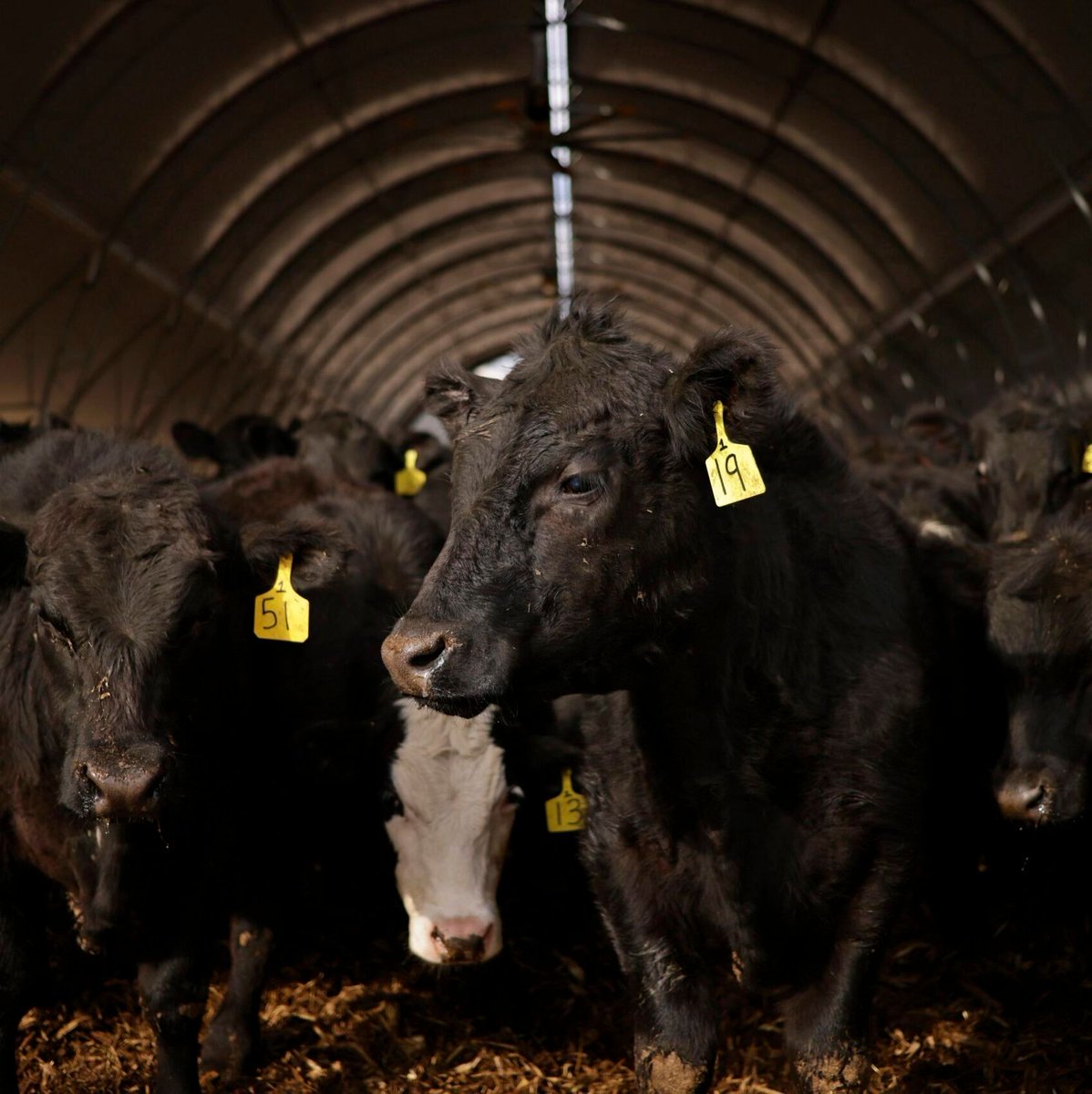
The New World Screwworm, a grave parasitic threat, has just been detected in US cattle for the first time since it was eradicated in 1966.
The parasite's revival comes after Trump and DOGE slashed funding for Screwworm monitoring programs.
Trump's Agriculture Secretary Brooke Rollins: "If we have a big screwworm infestation—which we will not, we're on top of it..."
The screwworm has returned to the US after 60 years after Trump and DOGE eliminated a program to contain the flesh-eating parasite.
Richard Gere on Trump: “We’re living in the darkest moment that I’ve experienced on this planet. Whoever thought America could turn like this? Whoever thought that a maniac like this would be president and dismantle all the good things? America’s never been a perfect place, but it has a perfect ideal. First day this guy dismantled almost everything that was good about the US government and people”
Trump on the war in Iran: "I'm very proud of that detour…Everybody's making a lot of money. Costs are coming down. You know, We took over the highest cost and the highest inflation in the history of our country. Costs are coming down. Everything's good."
Trump held an impromptu press conference to show off sketches of his Reflecting Pool renovation.
His plans for a resolution to his Iran War and the economic crisis it's created still TBD.
Cueva de las Manos (Cave of the Hands), Argentina.
Cueva de las Manos is one of the most significant rock art sites in Argentine Patagonia. It's located in the Río Pinturas Canyon, in the Santa Cruz province.
Although its name suggests a single cave, the site is actually a vast rock art complex extending across rock shelters, natural walls, and overhangs, alongside the cave itself.
The sequence of rock art here spans a long period, dating from about 9,300 to 1,300 years ago.
Most of the hand stencils at the site are left hands. That's because the people spraying the pigment would hold a tube or a hollow bone in their right hand while pressing their left hand against the rock.
Most of these hands were made using a negative stencil technique. In this method, the person places their hand against the rock and sprays mineral pigment around it; when the hand is pulled away, a hand-shaped, usually light-colored blank space is left on the wall.
The colors are really impressive.
But how did people back then get these colors?
Red and purple tones came from iron oxides, white from kaolin, yellow from natrojarosite, and black from manganese oxide. The pigments were ground up, mixed with a binder, and applied to the rock. So, these rock paintings are also a product of material knowledge and technical skill.
Thanks to factors like low humidity and a lack of water seepage, the rock paintings- except for the most exposed ones -have been preserved to this day.
Imagine if a woman president crashed the economy and started a war with no end in sight, and her biggest, seemingly ONLY concern was building a ballroom and redecorating the White House.
It's WILD, Kevin Hassett was asked about Americans delinquent on their credit card bills because they're paying for necessities, and his concern ISN'T for Americans: "It's OK, no threat to the credit card companies."
TONE. DEAF.
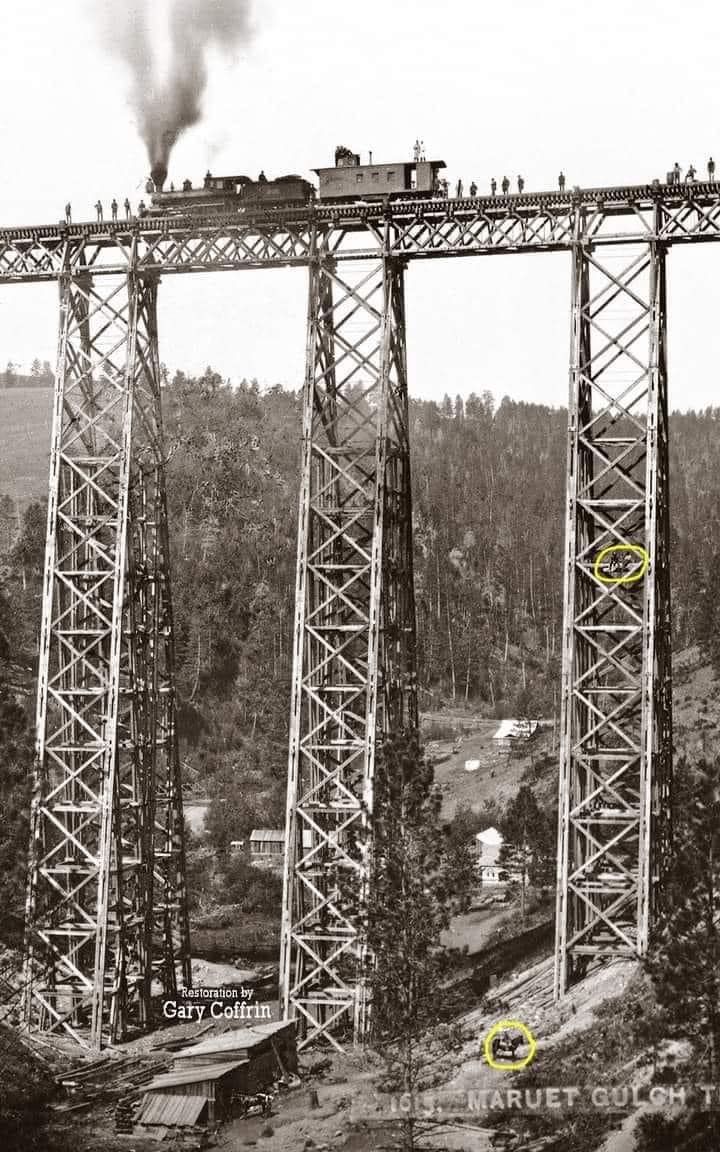
One of the tallest wooden railroad bridges ever built.
Wooden Railway Bridge. USA, Montana, 1883.
This is the original Marent Gulch Trestle in Montana, built for the Northern Pacific Railway in 1882–83. The wooden structure carried trains about 226 feet / 69 meters above the gulch, but its size also made it dangerously vulnerable to fire. By 1885, it had already been replaced with an iron bridge.
Look closely: the tiny figures on the trestle and near the base show just how enormous this 19th-century engineering feat really was.