@TR_3DdGmr@JollyRogerLures Ya but the power is at a much higher rpm. V8 makes enough power to tow at low rpms. Less heat and less wear. The v6's turbos add heat to the engine bay too
@AscentSolar@darleydefense $asti. This recent $35M award might have something to do with their partnership
Paul Warley has done interviews touting this exact use case for their cigs film: in-tow marine solar array
@AscentSolar@darleydefense $asti. Darley defense $1B+ in annual sales, securing a spot as a top 50 U.S. defense contractor.
Provide:
Uncrewed Systems
Counter-Uncrewed Aerial Systems (C-UAS)
Maritime Drones
Uncrewed Aerial Systems (UAS)
Uncrewed Ground Vehicles (UGV)
$FABC's next white paper with @kopin imagines how the copper wires inside AI data centers can be replaced with massively parallel MicroLED optical channels. The white paper is authored by $KOPN CEO @MiTknlg & $FABC Senior Strategic Advisor @jaltucher.
🔗 https://t.co/Eeg1zPN6Yj
$asti. Job posting update: filled their 1st and 2nd shift thin film technicians.
Still have their Manufacturing Operations & Application and the Supplier Quality Engineer positions open - roles needed when going from r&d/small scale to production
Exciting!
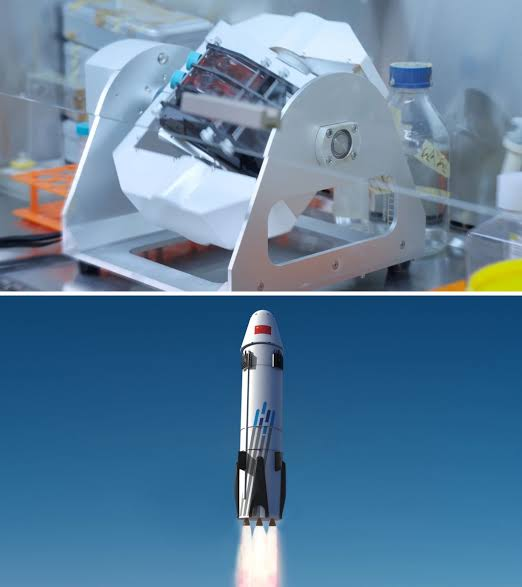
BREAKING: China is building a reusable spacecraft platform for manufacturing drugs in microgravity, with its first pharmaceutical payload scheduled to fly in early 2027.
CAS Space and Guangzhou Laboratory are developing experiments for the company’s reusable Lihong-2 vehicle that will grow protein and small-molecule drug crystals during a suborbital flight.
Microgravity can allow some proteins to form larger, higher-quality crystals, potentially giving researchers better structural data for designing drugs.
The 2027 mission is only the first step. CAS Space says its larger Lihong-3 spacecraft is targeted for 2028 and is being designed to carry at least 300 kg of space-manufacturing payloads for missions lasting as long as a year.
China is effectively building its own reusable transportation platform for an emerging space-manufacturing market that U.S. companies such as Varda are also racing to commercialize.