L’Italia riaccende la luce.
Meglio tardi che mai.
Dopo anni di mancette e omissioni, e finalmente contro il furore irrazionale, antiscientifico e pelosamente filo-russo di chi voleva condannare il Paese all’eterna dipendenza dal gas di Putin, il Parlamento fa la cosa giusta.
Ora bando agli indugi e mano agli investimenti pubblici e privati.
Non c’è un giorno da perdere. Senza energia, stabile e sostenibile, non c’è libertà.
A great example of how simplistic thinking can go astray. Solar panels on car parks have to be elevated, specific sizes, structurally strong, withstand strong winds, safe for people to be under, strong fire safety standards, and so on. Out in the middle of nowhere close to ground level can be a lot cheaper. Land is not necessarily the scarce resource.
Il degrado del dibattito pubblico italiano dipende soprattutto dalla sua élite. Qui abbiamo un rettore universitario che, oltre a quasi dimezzare la popolazione della Corea del Sud (sono 52 milioni di abitanti), paragona i piani di investimenti privati pluriennali a Seul (500 miliardi) alla legge di Bilancio a Roma (17,8 miliardi), come se questa non fosse la variazione rispetto al bilancio precedente (da oltre 1.000 miliardi) ma l’intero ammontare delle risorse impiegate dallo Stato italiano.
È un paragone così insensato su così tanti livelli che non si sa neppure da dove cominciare. Un esempio banale: lo stato italiano ha speso in pochi anni circa 500 miliardi solo tra bonus edilizi e Pnrr. Sono stati investimenti più produttivi e innovativi degli investimenti di Samsung e altri chaebol coreani?
We're told FDR's leadership ended the Great Depression.
It's a myth.
FDR passed dumb rules. He raised farm prices by buying and often destroying crops.
Economist Don Boudreaux: "People were hungry and they were destroying food. How was that good? ... People can't eat prices!”
A few key revelations related to Gaza coverage in last few days:
- Almost all of the media in Gaza were in a Hamas-run WhatsApp group that dictated and coordinated coverage. Including contributors to major western news organizations.
- Al Jazeera fired 24 of their media members from Gaza for direct ties to terror groups
- Admission that anyone in Gaza who reported anything contrary to Hamas claims was likely to be killed by Hamas.
Almost all of the information that came out of Gaza was part of a coordinated disinformation campaign by the very people who started the war.
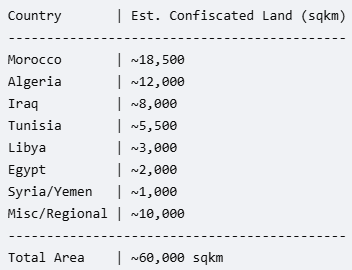
Arab and Muslim countries not only expelled ~1M Jews, but also confiscated ~60,000 sqkm of their land.
This is more than double the entire area of Israel, Judea & Samaria, and the Golan Heights combined.
This historic theft is backed by a vast archive of verified legal deeds and property records.
BOMBSHELL: Motaz Azaiza admits he filmed Israeli hostages being beaten in the streets of Gaza on October 7, and deliberately never published it, to protect the identities of the people beating them.
He did post other October 7 footage that day, celebrating the attack. He quietly deleted it later.
Azaiza is an influential "photojournalist" from Ghazza. TIME named him to the TIME 100. He was nominated for the 2024 Nobel Peace Prize. CNN, the Guardian and Sky all interviewed him.
Ms. Rachel Griffin-Accurso, who has 16 million subscribers, made a video for preschoolers introducing "my friend Motaz." She deleted it later.
Two weeks ago, he did a 3 hour and 38 minute interview in Arabic.
He made a number of EXTRAORDINARY admissions.
🧵
“Inflation is made in Washington because only Washington can create money... What produces it is too much government spending and too much government creation of money and nothing else.”
— Milton Friedman
More Jews were murdered in the past year by pro-Palestinians in Australia alone than Palestinians killed by ‘settlers’ in the West Bank.
Will the UK be placing sanctions?
If you don't name the ideology that led to this (without qualifiers), you are dishonouring every single individual who died on that day. Be courageous. Fight those who wish to enslave us.
👇👇👇👇👇👇
Franca D. Alster
COMUNICATO DEL PORTAVOCE DELL'IDF RELATIVO AL FILM NAZA
Risposta del portavoce dell’IDF in seguito alla pubblicazione del film “NAZA”
11.09.2026
Portavoce dell’IDF
A seguito della pubblicazione del film “NAZA”, il portavoce dell’IDF dichiara:
L’IDF respinge categoricamente queste accuse.
Secondo quanto riportato nelle pubblicazioni, il film si basa su testimonianze anonime di persone la cui identità non può essere verificata, compreso se abbiano effettivamente prestato servizio nell’IDF, in quale ruolo o se siano state coinvolte nelle questioni alle quali si riferiscono le accuse.
Gli estratti citati comprendono affermazioni riguardanti strategie nazionali e militari che sono chiaramente al di là delle conoscenze di soldati di livello junior. Vi sono riferimenti a situazioni nelle quali soldati del Direttorato dell’Intelligence dell’IDF, che secondo quanto affermato sarebbero stati intervistati per il film, per definizione non sarebbero stati coinvolti. Vi è inoltre un uso errato della terminologia giuridica da parte di persone che non sono professionisti del diritto, nonché contraddizioni interne e assurde, come l’affermazione secondo cui i danni involontari derivanti da attacchi legittimi sarebbero stati compiuti deliberatamente o costituirebbero parte di un “genocidio”, senza comprendere il significato di tali termini.
L’IDF opera nella Striscia di Gaza al fine di proteggere i civili israeliani e indirizza la propria attività militare contro le organizzazioni terroristiche, in primo luogo Hamas, nel rispetto del diritto internazionale e delle leggi che regolano i conflitti armati. In questo contesto, l’IDF colpisce obiettivi militari e compie sforzi senza precedenti per ridurre al minimo i danni ai civili. Hamas continua a operare sistematicamente all’interno dell’ambiente civile, inserendo i propri operativi e le proprie infrastrutture militari tra la popolazione e sfruttando le aree civili per finalità terroristiche.
Quando emergono specifici sospetti di violazioni della legge da parte di un soldato dell’IDF, l’IDF è pienamente impegnato a indagare su tali violazioni e a perseguire i responsabili attraverso meccanismi di applicazione della legge indipendenti. Un soldato che assiste a una violazione della legge è tenuto, in base agli ordini militari, a segnalarla affinché possa essere valutata la necessità di aprire un’indagine. Ciò vale anche per le persone che sono state intervistate per il film.
Per quanto riguarda le accuse relative all’utilizzo dell’intelligenza artificiale, le decisioni riguardanti la selezione e l’approvazione degli attacchi nell’IDF vengono prese esclusivamente da personale umano, in conformità con le direttive dell’IDF, e non dall’intelligenza artificiale.
Spokesperson’s Response Following the Publication of the Movie “NAZA"
11.09.26
IDF Spokesperson
Following the publication of the movie “NAZA", the IDF Spokesperson’s Response:
The IDF categorically rejects these allegations.
According to the publications, the film relies on anonymous testimonies from individuals whose identity cannot be verified, including whether they served in the IDF, in what capacity, or whether they were involved in the matters about which the allegations are being made.
The excerpts cited include claims regarding national and military strategy that are clearly beyond the knowledge of junior-level soldiers. There are references to situations in which IDF Intelligence Directorate soldiers, who were allegedly interviewed for the film, by definition would not have been involved. There is also an incorrect use of legal terminology by individuals who are not legal professionals, as well as internal and absurd contradictions, such as the claim that unintended harm resulting from lawful attacks was carried out deliberately or constituted part of “genocide,” without understanding the meaning of these terms.
The IDF operates in the Gaza Strip in order to protect Israeli civilians and directs its
Miliband Found Sarin Gas Ambiguous. He Finds Planning Permission Obvious.
In August 2013, Bashar al-Assad's forces fired sarin-filled rockets into the suburbs of Damascus. American estimates put the dead at 1,429, more than 400 of them children. British, American and French intelligence agreed on who was responsible within days. Ed Miliband, then Labour leader, stood in the Commons and demanded "compelling evidence." The evidence already existed. He voted the motion down anyway, and took much of Parliament with him.
Assad drew the obvious lesson: nothing would happen. He gassed Khan Sheikhoun in 2017, killing close to ninety. He gassed Douma in 2018, killing close to fifty more. Only when Britain, France and America finally struck his chemical facilities did the gassing stop. Every attack between 2013 and that strike happened in the space Miliband's vote helped create.
The Telegraph's own reporting this week shows what that space cost. A woman who tried to take her own life earlier this year, still carrying the sound of her children choking beside her. A boy, born hours after the Ghouta attack, whose understanding at nearly thirteen remains that of a six-year-old. A father who says he sees dead bodies every time he walks his own street. Thirteen years on, and the nightmare, in the survivors' own words, has never ended.
None of this required speed from Miliband. It took years, a change of American president, and combined US, British and French air strikes to finally stop a dictator gassing children in their basements.
Contrast that with the pace he found this month. Within days of an Israeli housing tender, Miliband declared the occupation "unlawful," described settler activity as "ethnic cleansing," and announced coordinated sanctions with eight other nations. No demand for compelling evidence. No hesitation while intelligence agencies compared notes. No waiting for a body count that might force his hand. The moral clarity that took years to summon against actual nerve gas took him a matter of days against a planning dispute.
This isn't a case of a man who simply got Syria wrong and Israel wrong too. It's a pattern in which the speed of his conviction moves with the political convenience of the target, not the scale of what's actually happening. Assad's rockets killed up to 1,729 people in a single night. Settler violence has killed 25 Palestinians in the West Bank this entire year. Miliband found the sarin attack too complicated to act on. He found Israel simple enough to sanction before the ink on the tender was dry.
His own critics once made this argument better than I can. When Burnham appointed him, the Telegraph's David Blair called his promotion unacceptable, noting that Britain's Gulf allies would be dismayed and that his record on Syria left him with no moral authority to run British foreign policy at all. Nothing since has answered that charge. If anything, the speed of his response to Israel compared to the years he spent finding reasons not to act on Syria answers it more damningly than his critics could have predicted.
Miliband has never recanted the vote that helped Assad keep gassing his own people for another five years. He has also never explained why a housing tender earned the resolve that sarin nerve agent did not. Until he does, the survivors in Zamalka and Jobar remain the clearest verdict on what his caution actually costs, and the speed of his outrage over Israel remains the clearest evidence of what that caution was never really about.
Ed Miliband, then Labour leader, blocked British action against the Assad regime in 2013. These are some of the children his party's vote helped leave undefended.
È morto Raffaele Costa, uno degli ultimi grandi esponenti della tradizione liberale piemontese che ha attraversato la Prima Repubblica.
Aveva compiuto 90 anni pochi giorni fa, l’8 settembre, ed era malato da tempo.
Avvocato, giornalista, laureato in Giurisprudenza e Scienze politiche, Costa era entrato alla Camera nel 1976 e vi era restato fino al 2006.
Trent’anni in Parlamento durante i quali la sua storia si intreccia con quella del Partito Liberale Italiano, di cui è prima vicesegretario e poi segretario fino allo scioglimento del 1994.
Raffaele é stato un liberale vero: laico, garantista, non incline alle mode e allergico alla burocrazia, agli sprechi, ai privilegi e a quel proliferare di norme, paletti e leggi contro cui ha condotto battaglie continue.
È stato più volte sottosegretario, alla Giustizia, agli Esteri, all’Interno e ai Lavori pubblici, prima di diventare ministro per le Politiche comunitarie e gli Affari regionali nel governo Amato, ministro dei Trasporti con Ciampi e infine ministro della Sanità nel primo governo Berlusconi. Nel secondo governo Berlusconi, invece, dice no all'ingresso nell'esecutivo come viceministro.
Alla Sanità aveva avuto un approccio innovativo: i blitz negli ospedali, visite a sorpresa per verificare di persona le attese, i disservizi e il funzionamento delle strutture. Lo stesso approccio con cui per anni ha messo nel mirino sprechi della macchina pubblica, privilegi e complicazioni burocratiche.
Quando il Pli scompare, Costa non esce di scena. Fonda l’Unione di Centro, si avvicina al nascente centrodestra e quindi a Forza Italia, portandovi un pezzo della tradizione liberale della Prima Repubblica. Nel 1999 viene eletto al Parlamento europeo, dove continua soprattutto le sue battaglie contro l’eccesso di burocrazia e di produzione normativa.
Nel 1997 sfida Valentino Castellani per la guida di Torino e arriva a un passo da Palazzo Civico: viene sconfitto per appena lo 0,8 per cento, uno dei risultati più significativi ottenuti dal centrodestra torinese in quella stagione.
Nel 2004 torna a Cuneo, su mia richiesta, e viene eletto al primo turno presidente della Provincia, incarico che mantiene fino al 2009.
In quegli anni abbiamo lavorato molto insieme impegnandoci per il raddoppio dell’autostrada Torino-Savona, per infrastrutture come la tangenziale di Cuneo e Mondovì, l’Asti-Cuneo e molte altre opere, come gli ospedali di Mondovì ed Alba. Anche iniziando il percorso che porterà al riconoscimento Unesco di Langhe e Roero.
C’è un altro tema che lo ha accompagnato per anni: la sicurezza stradale. Una battaglia nata anche sull’onda di una tragedia che lo aveva coinvolto professionalmente: una studentessa diciassettenne viene uccisa vicino a casa da un automobilista che aveva trascorso la giornata bevendo.
Dall’anno successivo inizia a pubblicare un dossier annuale sugli incidenti stradali, costruito raccogliendo dati da Istat, forze dell’ordine e organi di informazione.
Da presidente della Provincia quella campagna aveva preso forma con le “sagome anti-incidenti”, collocate dal 2009 lungo una ventina delle strade più pericolose della provincia. Dovevano ricordare agli automobilisti che dietro le statistiche non ci sono numeri, ma vite e famiglie spezzate.
Raffaele Costa é stato tutto ciò e tanto altro.
Per me é stato un grande amico, una persona con cui ho fatto un pezzo importante ed indimenticabile di vita.
Da anni non era più presente ma non ha mai lasciato casa sua e la sua famiglia, Gabriella, sua moglie, Enrico e Maria Paola. A loro tre il mio cordoglio. Ad Enrico il mio fraterno abbraccio. A te, Lello, un ultimo saluto: addio, amico mio.
A mom shared this clip with me. It stems from her daughter's 8th grade lesson. Apparently, what the Jews experienced during the Holocaust is akin to what Muslims are experiencing in the United States post 9/11. You read that correctly.