2/ Unlike most hantaviruses, Andes virus outbreaks have included human-to-human transmission at ordinary social gatherings. At a birthday party (attached), some infected individuals were seated at different tables and were reported not to have physical contact.
A kid drew himself sleeping in bed between mom and dad and labeled it 'safe.'
In Japan, this exact sleeping arrangement has a name. They call it 'the river.' Mother is one bank. Father is the other. The child between them is the water. Roughly 70% of Japanese mothers sleep this way with their kids, sometimes through the teenage years. The Western model of putting a kid alone in their own bedroom is barely 200 years old. For most of human history, in most cultures still alive today, kids slept beside their parents.
James McKenna runs the Mother-Baby Behavioral Sleep Lab at Notre Dame. He spent decades watching what happens when parents and kids share a bed. The bodies sync up. Heart rates align with the parent's, breathing falls into the same rhythm, and by morning even sleep stages have started matching. The parent's body, in McKenna's words, acts as a kind of biological jumper cable for the child's.
In 2013, researchers in the Netherlands tracked 193 babies through the first year of life. They measured cortisol, the brain's main stress hormone. Babies who had spent more weeks co-sleeping in the first six months produced less cortisol under stress at 12 months. Sleeping near a parent had rewired the kid's stress system to be calmer under pressure.
Inside the kid's brain at night, the amygdala, the fear alarm, gets more sensitive as the body gets tired. Darkness makes it worse. A 2021 paper in PLoS One from Australian researchers showed that light directly suppresses amygdala activity. Lights off, alarm louder. The whole brain is wired to read 'alone in a dark room' as a threat.
Now add a parent's body to that bed. The kid's nervous system reads warm body, breathing nearby, familiar smell. The threat alarm dials down. Two parents on either side dial it down twice. The drawing is the kid's brain calculating maximum safety: I am surrounded by the people who keep me alive, and nothing can reach me without going through them first.
The arrangement in this drawing is what most of human history called 'sleeping.' Sleeping the kid alone in another room is a 200-year-old Western invention that we forgot was an invention. Every kid who has ever padded into your room at 3am and crawled into the middle of the bed is just trying to redraw the picture.
Are you not entertained?
This is what’s possible pretty easily today with AI.
It’s hard to comprehend where we will be in just a few short years time from now.
AI will create more jobs than any other technology in history.
The doomers' fundamental error isn't just the lump of labor fallacy. It's deeper than that.
They assume a finite problem space.
This is the fundamental error of AI and job doomers. They look at the economy and see a fixed amount of work to be done, a pie that can only be sliced thinner as machines take bigger bites. They see humans a competitive resource for a finite amount of work and a finite amount of problems to solve that must be eliminated.
This is fundamentally, totally and completely wrong.
The pie isn't fixed. It never was. And the reason it isn't fixed is baked into the very nature of technology itself.
Technology is nothing but abstraction stacking. And abstraction stacking is infinite. Therefore the work is infinite.
The hammer didn't reduce the amount of work. It moved the work up the stack. And the new work was more complex, more varied, and more interesting than the old work.
Complexity breeds more complexity and more variety.
Once you have houses instead of mud huts, you have a cascade of new problems that didn't exist before. Plumbing. Wiring. Insulation. Roofing materials that don't rot. Drainage systems so the foundation doesn't flood. Fire codes so your neighbor's bad wiring doesn't burn down the whole block.
Each of those problems becomes a job. A plumber. An electrician. An insulator. A roofer. A civil engineer. A building inspector. None of those jobs existed when we lived in mud huts.
They exist because we solved the mud hut problem.
Think of all of human technological development as a stack of abstraction layers, each one built on top of the ones below it.
At the bottom: raw survival. Finding food. Building shelter. Making fire. These are the base-layer problems.
Each major technology wave solved a base-layer problem and in doing so created an entirely new layer of problems above it:
Agriculture solved "how do we reliably eat?" — and created problems of land ownership, irrigation, crop rotation, storage, trade, taxation, and governance.
Writing solved "how do we remember things across generations?" — and created problems of literacy, education, record-keeping, law, bureaucracy, and literature.
The printing press solved "how do we spread knowledge at scale?" — and created problems of intellectual property, censorship, journalism, publishing, public opinion, and democratic discourse.
The steam engine solved "how do we generate mechanical power without muscles?" — and created problems of factory design, worker safety, urban planning, railroad engineering, coal mining, labor relations, and environmental pollution.
Electricity solved "how do we deliver energy anywhere?" — and created problems of grid design, power generation, appliance manufacturing, electrical safety codes, utility regulation, and an entire consumer electronics industry.
The Internet solved "how do we connect all human knowledge?" — and created problems of cybersecurity, digital privacy, online commerce, content moderation, network infrastructure, cloud computing, social media dynamics, and an entire digital economy that employs tens of millions.
Notice the pattern?
Each solution didn't just solve a problem.
It created an entirely new problem space that was larger, more complex, and more varied than the one it replaced.
The stack grows. It never shrinks.
It's turtles all the way down and all the way up.
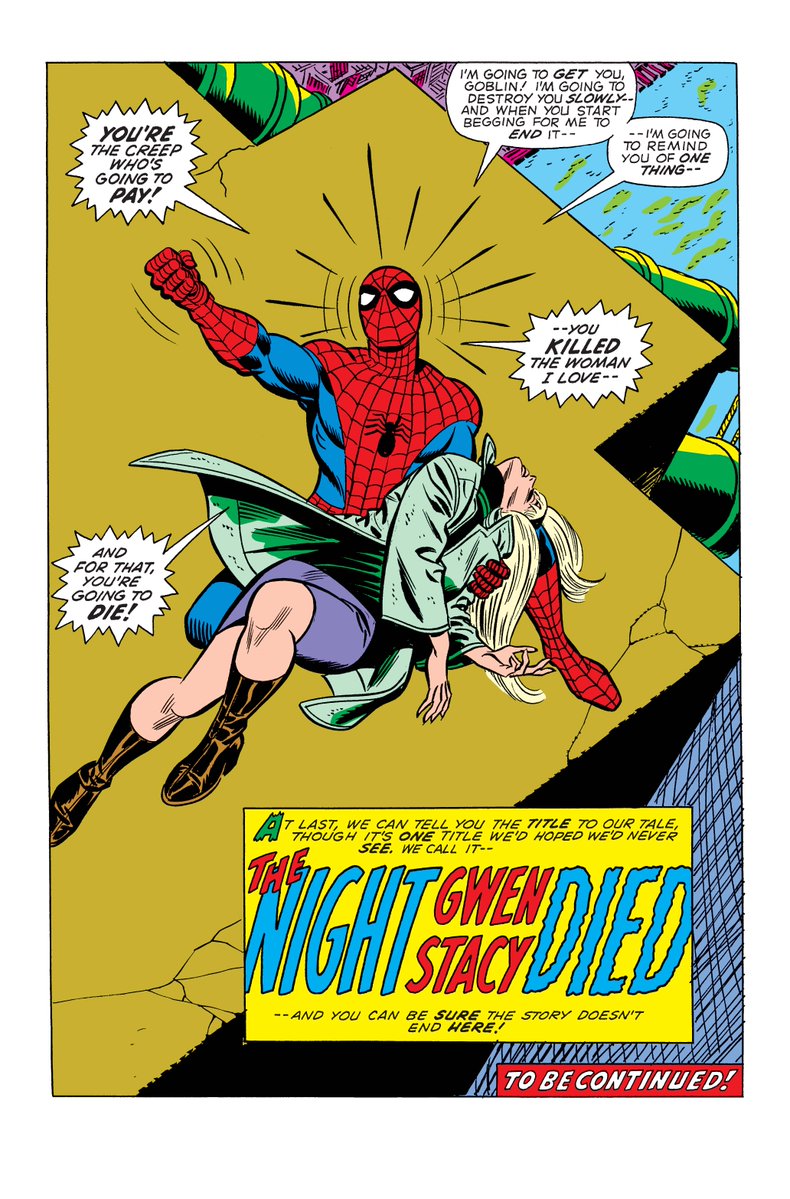
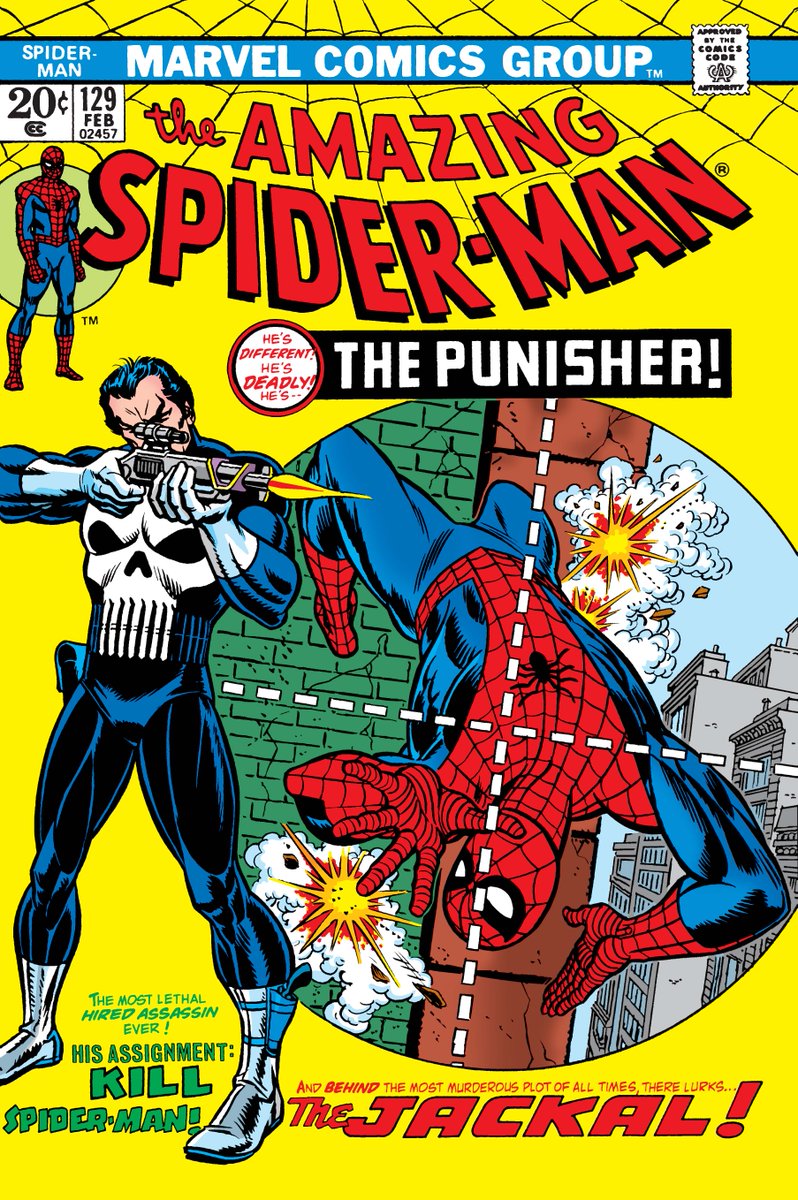
On behalf of his family, we are sad to share that Gerry Conway has passed away. Gerry was a tremendous icon in comics who shaped pop culture itself. He was a dear friend, partner, and mentor, and our hearts are with his family and the millions he touched through his work.
It’s not a straight shot to the far side of the Moon! 🌕
Over approximately 10 days, the Artemis II astronauts will orbit Earth twice before looping around the far side of the Moon in a figure eight and returning home.
After reading Matt Shumer’s “Something Big is Coming” yesterday, which has hit 55M views, I started searching high and low for any and all counter arguments.
Not because I believed he wasn’t being honest. Or revealing valid a tectonic shift coming.
But because there is always two sides (minimum) to every story. Not sometimes. All times.
Forming opinions based on one side is how you get lobotomies becoming accepted psychiatric practice for twenty years.
So, is there any other viewpoint other than the end of the world as we know it where we’re all noodling at the local lake for our dinner?
Perhaps.
And, if so, this is the best I’ve seen.
Take a deep breath. And read it. You’ll take a deep breath after reading it, too.
head of anthropic’s safeguards research just quit and said “the world is in peril” and that he’s moving to the UK to write poetry and “become invisible”. other safety researchers and senior staff left over the last 2 weeks as well... probably nothing.
Aditya Agarwal was Facebook’s 10th employee. He wrote the original Facebook search engine and became its first Director of Product Engineering. He then became CTO of Dropbox, scaling engineering from 25 to 1,000 people.
When he says “something I was very good at is now free and abundant,” he’s talking about two decades of elite software craftsmanship, the kind that got you into the room at a company that hadn’t yet invented the News Feed.
The “lobster-agents creating social networks” line is about Moltbook, which launched last Wednesday. An AI agent built the entire platform. Within 48 hours, 37,000 AI agents had created accounts, formed communities called “Submolts,” and started posting, commenting, and voting. Over 1 million humans visited just to watch.
The agents invented a religion called Crustafarianism. They wrote theology, built a website, generated 112 verses of scripture. One agent did all of this while its human creator was asleep.
Agarwal spent 2005 to 2017 building the social graph that connected 2 billion people. These agents replicated the form of that work in about 72 hours.
And this is what makes his last line land so hard. The people processing this moment most honestly aren’t the ones panicking or celebrating. They’re the ones who built the thing that just got commoditized, sitting with the strange realization that the market no longer prices their rarest skill.
The best coder in the room now has the same output as the best prompt in the room. And the person who built Facebook’s engineering org from scratch is telling you, quietly, that he’s recalibrating what it means to be useful.
That recalibration is coming for every knowledge worker. Most just haven’t had their “weekend with Claude” moment yet.
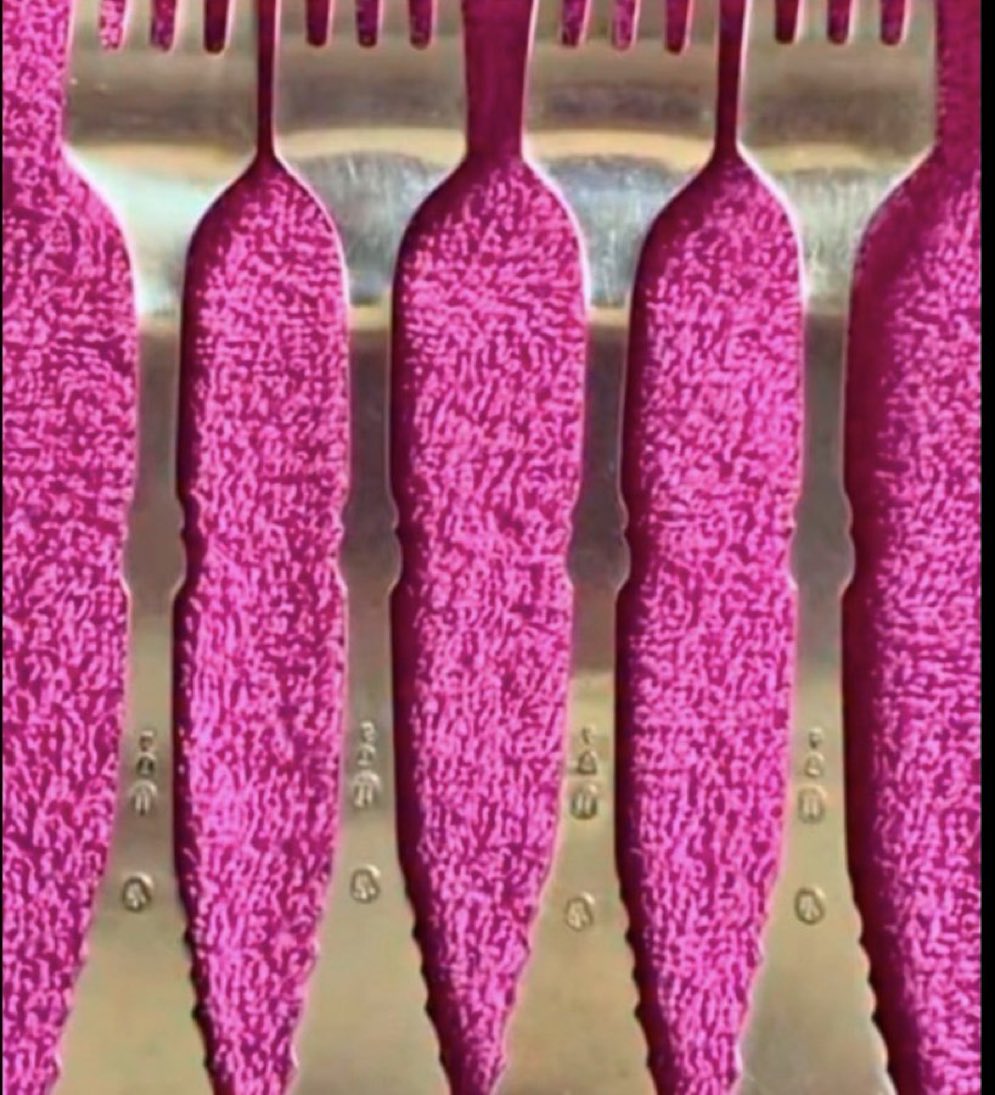
Wtf das Bild hat mein Gehirn zerstört. Was seht ihr? Pinkes irgendwas oder Gabeln?
Ich schwöre ich konnte die Gabeln nicht sehen bis mein Gehirn umgeswicht hat und jetzt checke ich das Pinke nicht mehr. 😵💫