🔔 Monday Mindfulness:
The future of AI shouldn't be measured by how much technology can do, but by how responsibly we choose to use it.
Let innovation advance without compromising human dignity, privacy, or trust.
Progress with purpose, always.
Who do you think should be accountable when AI causes harm?
1. The developers who build it
2. The companies deploying it
3. The people using it
4. Everyone involved
🔔 Monday Mindfulness:
You can teach AI to speak, create, and make decisions. But remember, just because we can build something doesn't mean we should do so without responsibility.
Let innovation serve humanity, with ethics, dignity, and privacy at its core.
Ethical AI always.
According to you, what should be the top priority when building AI?
1. Human dignity and rights
2. Transparency and accountability
3. Privacy and data protection
4. Fairness and equal access
Meaningful change takes more than individual voices. It takes influential minds coming together, sharing perspectives, and working towards a common purpose.
The conversations we have today can help shape the world we build tomorrow.
The true measure of technological progress is not how powerful we make our systems but how responsibly we use that power to serve humanity.
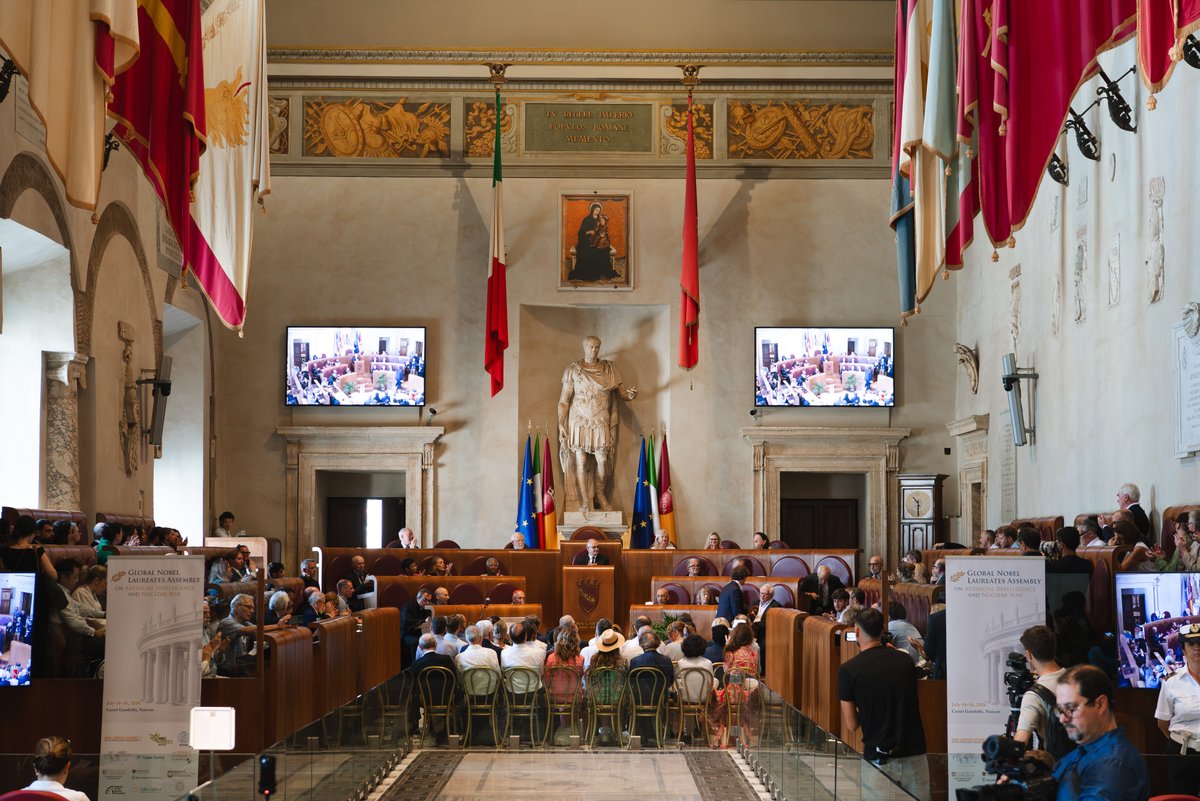
Reflection from the Global Nobel Laureates Assembly on AI & Nuclear War at the Vatican, where ethics, faith & governance took centre stage.
As AI becomes more powerful, what should be the top priority for building an ethical AI future?
1. Human Dignity & Rights
2. Transparency & Accountability
3. Privacy & Data Protection
4. Fairness & Equal Access
Progress means little if we lose sight of our humanity.
When leaders come together, the goal should be to build a future where innovation serves people, dignity is protected, and ethics guide every step forward.
What principles should guide Europe as AI reshapes our world?
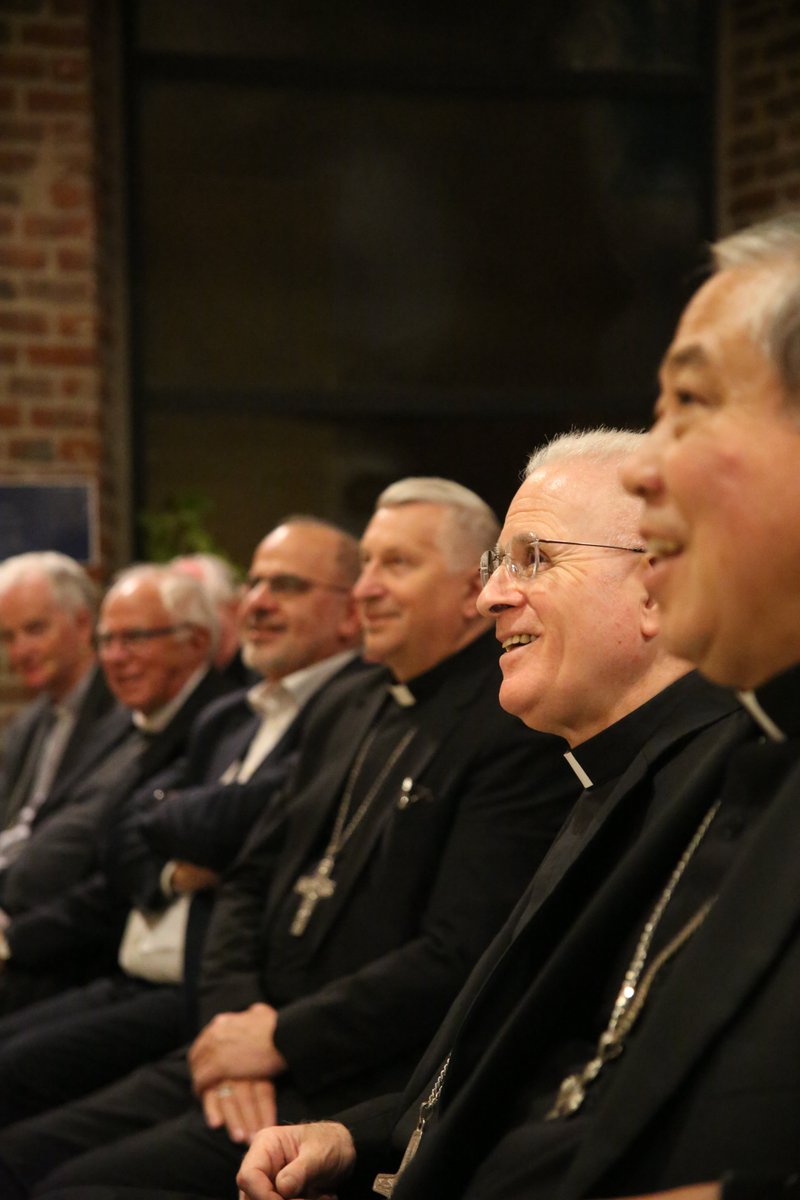
At the COMECE Autumn Assembly, Pope Leo XIV’s Magnifica Humanitas inspired discussions on human dignity, ethical values, and responsible innovation.
How can Europe shape the future of AI while keeping human dignity at its heart?
At the COMECE Autumn Assembly, the presentation of Pope Leo XIV’s encyclical Magnifica Humanitas sparked dialogue on ethical AI and responsible innovation.
So, does AI progress truly serve humanity?
Pope Leo XIV's doctors announced on Saturday morning that Pope Leo XIV is fit to be discharged from Gemelli Hospital.
In a statement from the Holy See Press Office, Dr. Luigi Carbone and Professor Stefano Margaritora said the Pope underwent blood tests and a chest X-ray in the morning, which confirm that his clinical condition allows for him to leave hospital.
The Holy See Press Office said he will return to the Vatican on Saturday afternoon and pray the Angelus on Sunday from the window of the papal apartment.
When the brightest minds from around the world come together to pledge a future shaped by ethical and responsible AI, something truly divine takes shape.
At the Global Nobel Laureates Assembly on AI and Nuclear War at the Vatican, global voices explored how faith, ethics, and responsible governance can help shape technology around human dignity and the common good.
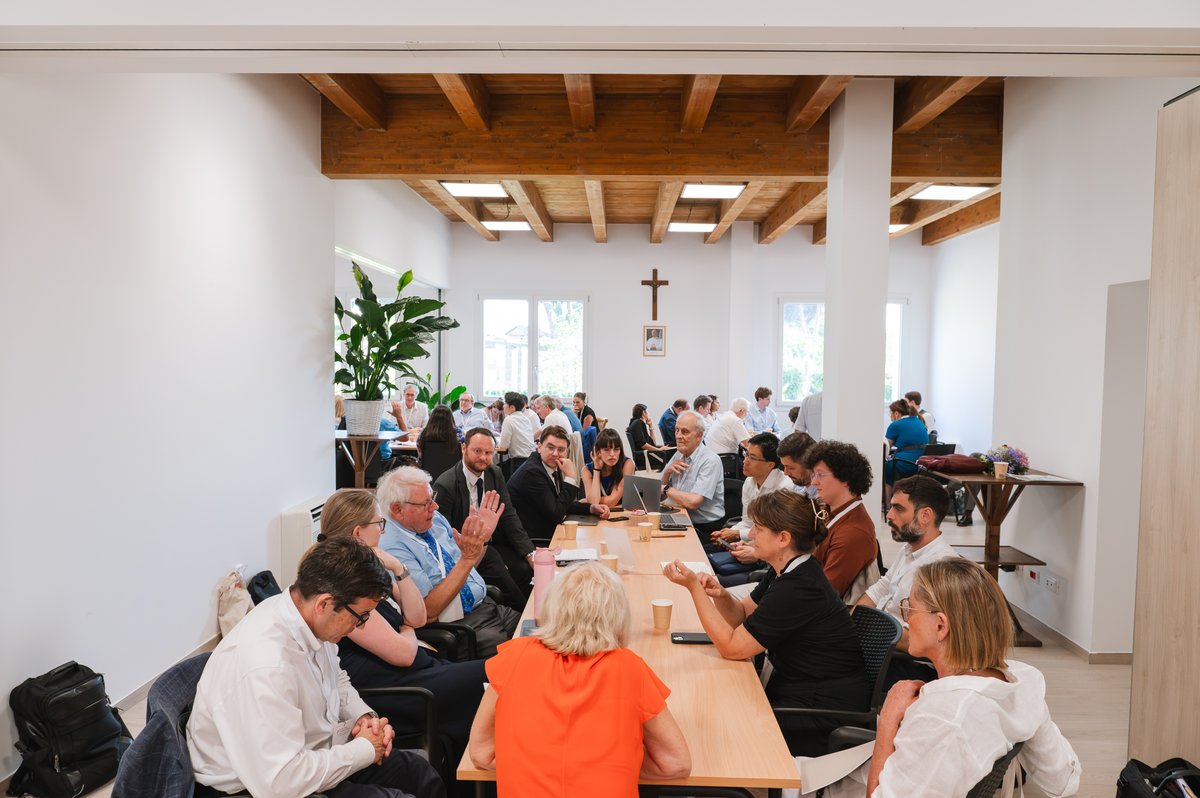
On May 24, voices from around the world came together to reflect on how faith, dialogue, and shared responsibility can help build a more human-centered future.
True progress goes beyond innovation.
It requires values, connection, and a commitment to the common good.
As AI reshapes our world, progress must be measured not only by what we create, but by how we protect human dignity and serve the common good.
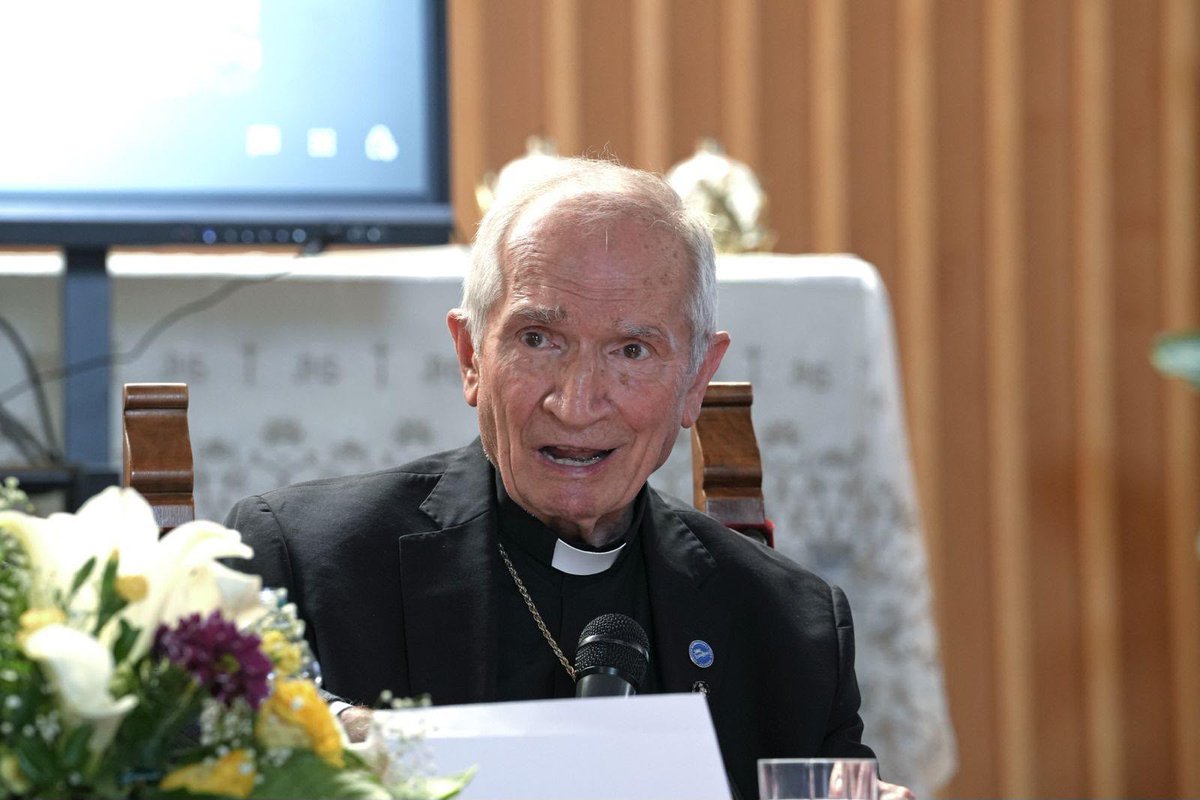
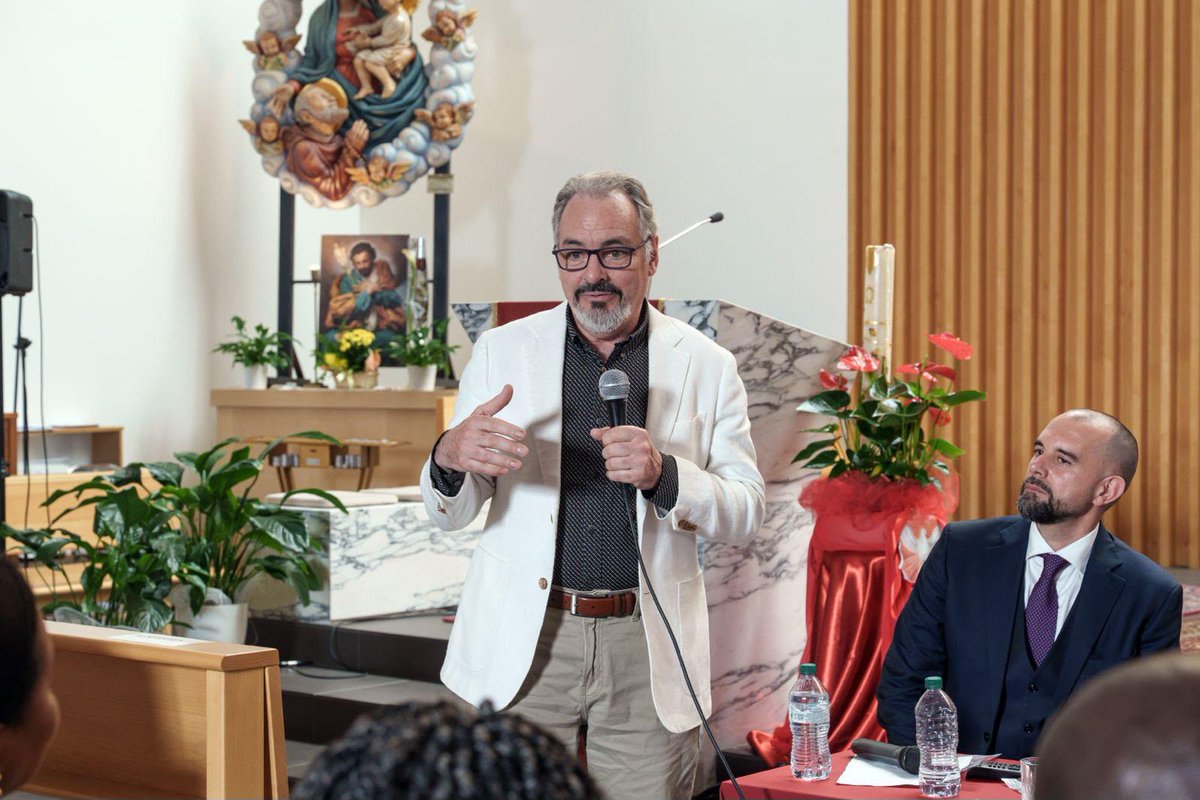
A reflection from the May 7 International Parish Conference.
La necessità di dare seguito all’Enciclica “Magnificat Humanitas”, di riflettere di più sull’importanza dell’etica nell’ambito dell’IA, riscoprire la vocazione cristiana come un programma di vita sociale sono stati temi al centro dell’incontro con Alessio Pecorario @domuscommunis
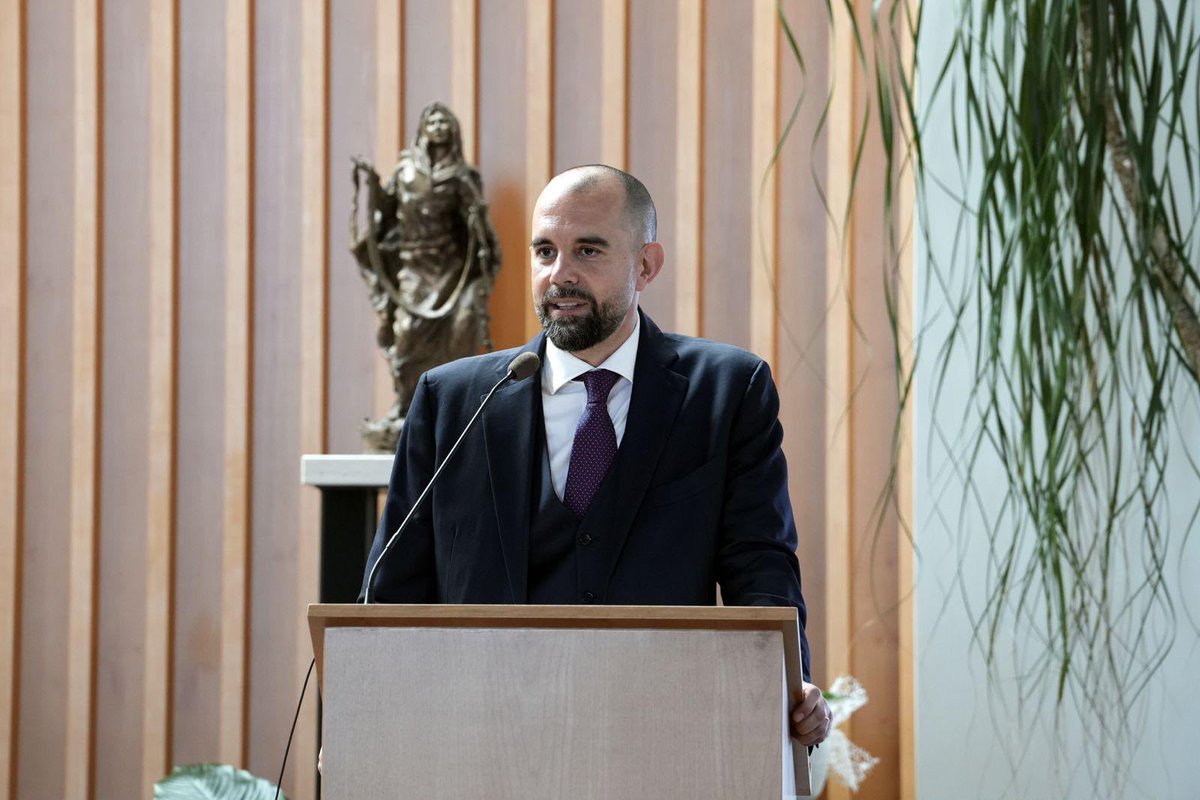
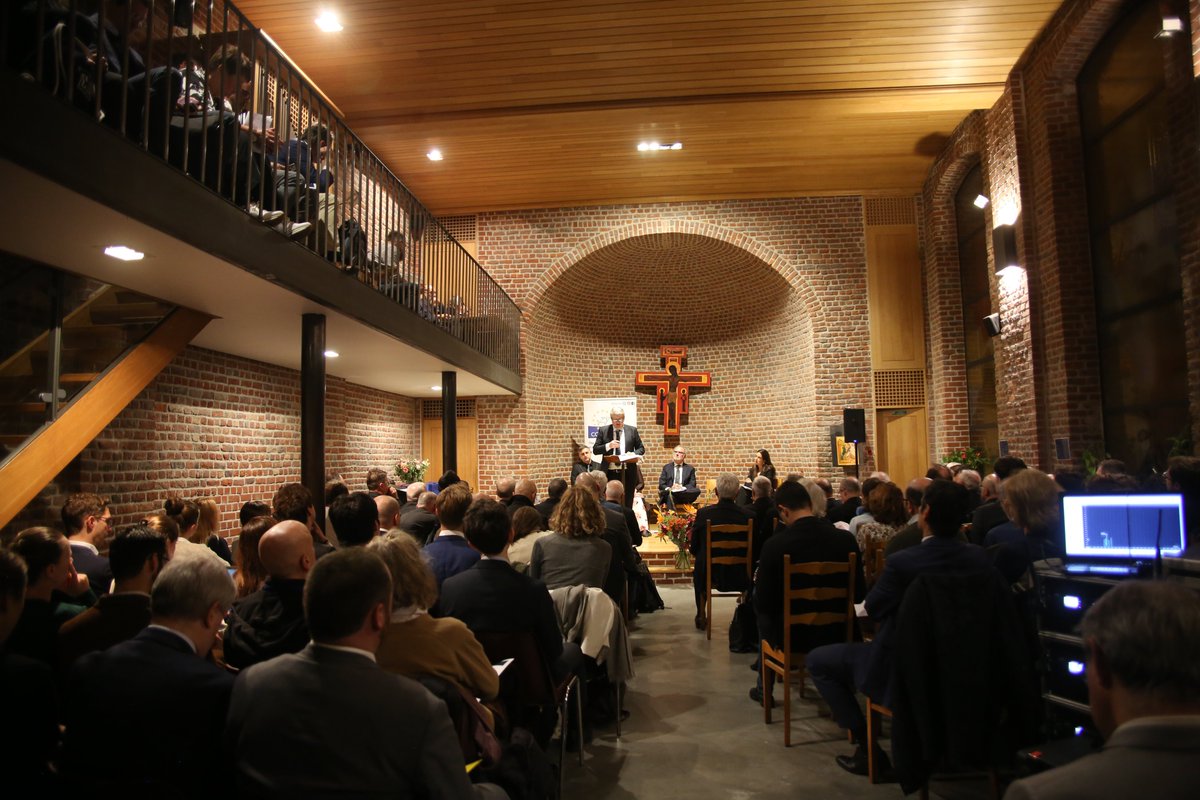
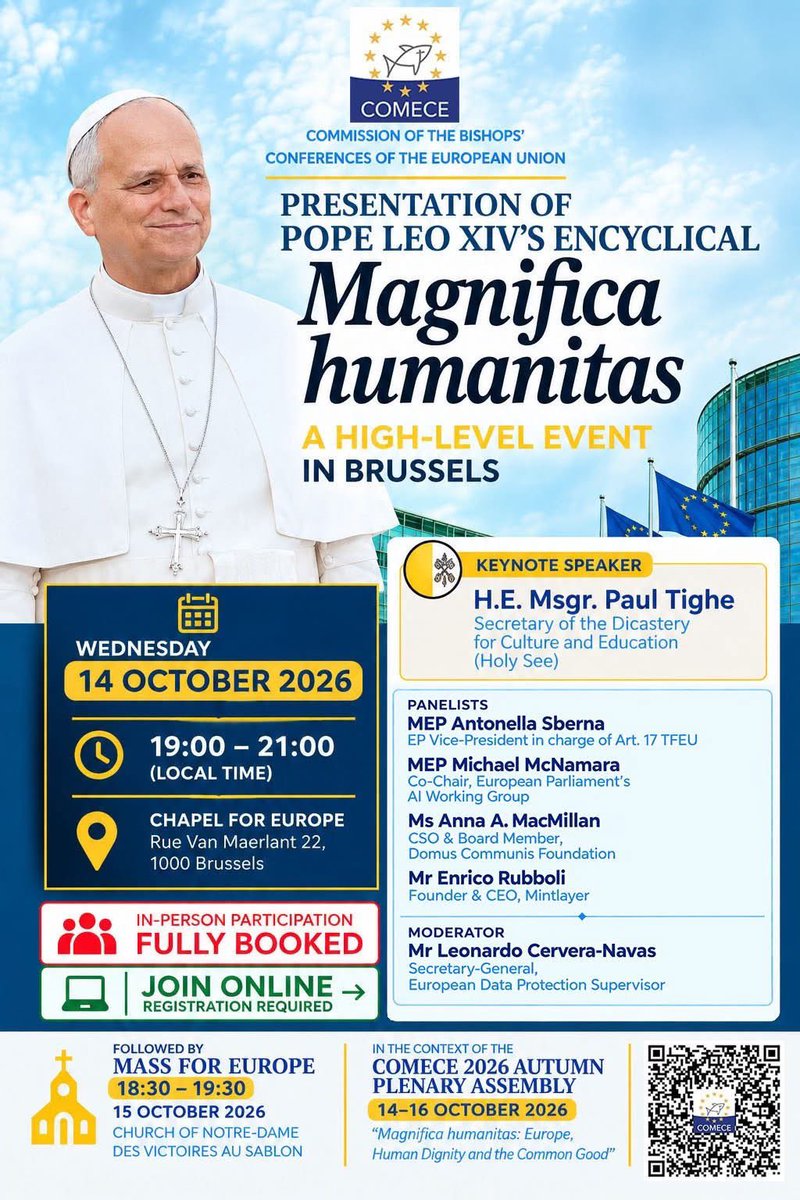
As the Founding Executive Director of the Magnifica Humanitas Initiative, I’m honoured to join the panel in Brussels on 14 October for the presentation of Pope Leo XIV’s Magnifica humanitas, at the Chapel for Europe.
Keynote by H.E. Msgr. Paul Tighe, Secretary of the Dicastery for Culture and Education. With MEP Antonella Sberna, Vice-President of the European Parliament, and MEP Michael McNamara, Co-Chair of the European Parliament’s AI Working Group, alongside Enrico Rubboli, Founder and CEO of Mintlayer. Moderated by Leonardo Cervera-Navas, Secretary-General of the European Data Protection Supervisor.
The encyclical sets the measure plainly. Technology is never neutral, and no system, however capable, may displace the person. Dignity, work, truth and the common good are the standard.
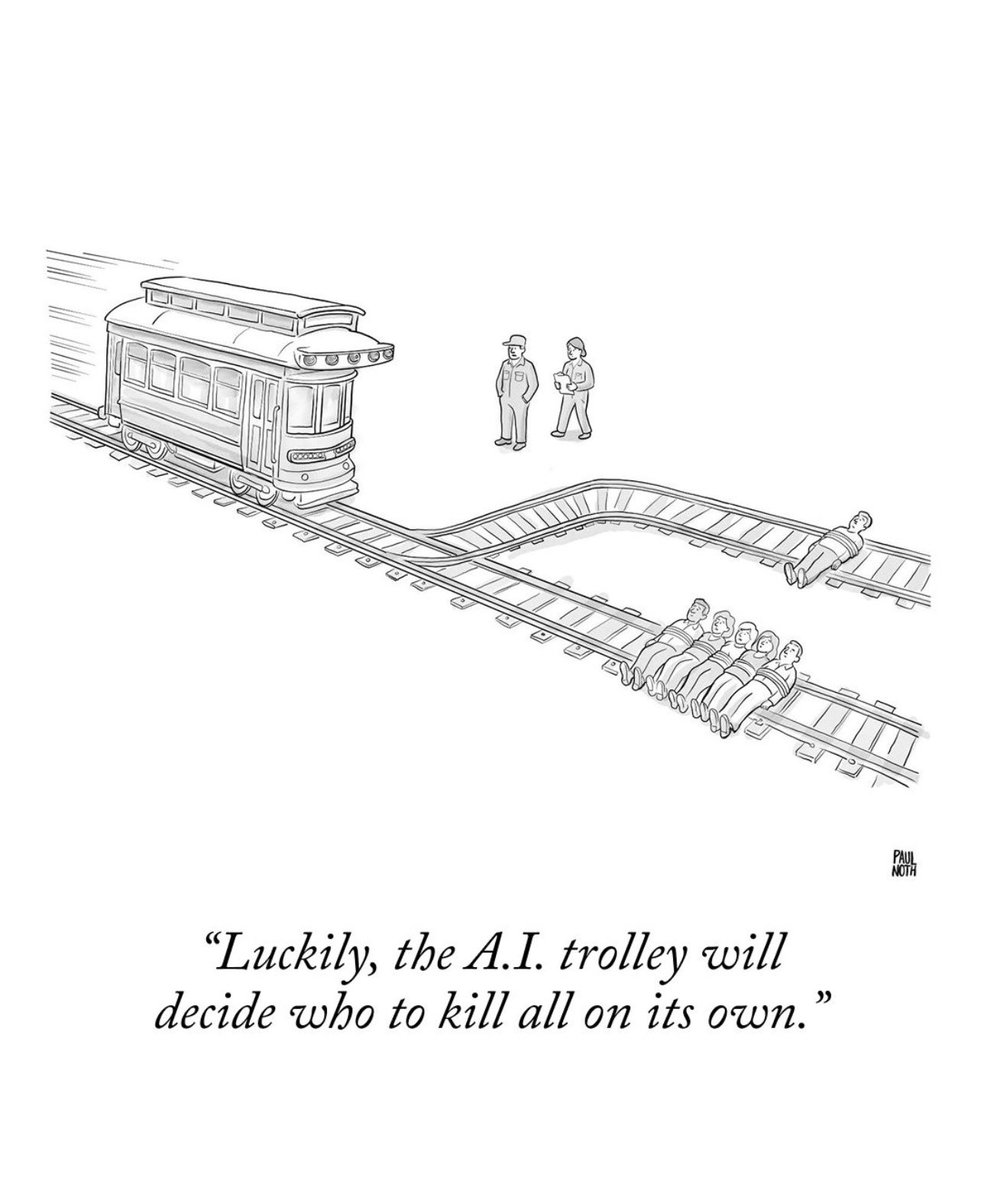
The trolley problem used to force a human choice, but we are at a point where one treats the absence of a decision as luck.
Most people are not yet daily AI users. Policy still has to name what it is regulating, who remains accountable when the system “decides,” and what “ethical and responsible” actually binds, before the definition is written by deployment rather than by design.
📷 Credit: Paul Noth / The New Yorker, 25 Aug 2026.