These findings indicate that written language requires children to comprehend and produce emotion words that are rare in everyday conversations, which may have implications for emotional development.
📣New preprint!! Do you know that book language contains a greater diversity of emotion words? Check out this preprint with @ReadOxford
https://t.co/M2kFWCNbRo
As the targeted age of books increased through mid-childhood and early adolescence, the frequency and diversity of emotion words increased further. This pattern was also seen in children’s own writing, with more unique and diverse emotion words being used by older children.
Feeling super inspired to hear so many interesting talks and posters at my intellectual home #CogSci2024. Thank you @cogsci_soc for such wonderful programs!
New preprint with @ReadOxford and @vmurphyox! We tested a semantic fluency task for author names (an "Author Fluency Task" or AFT) and found it out-performed an Author Recognition Test (ART) as predictor of L2 formulaic language. https://t.co/QP9EOXBcQf
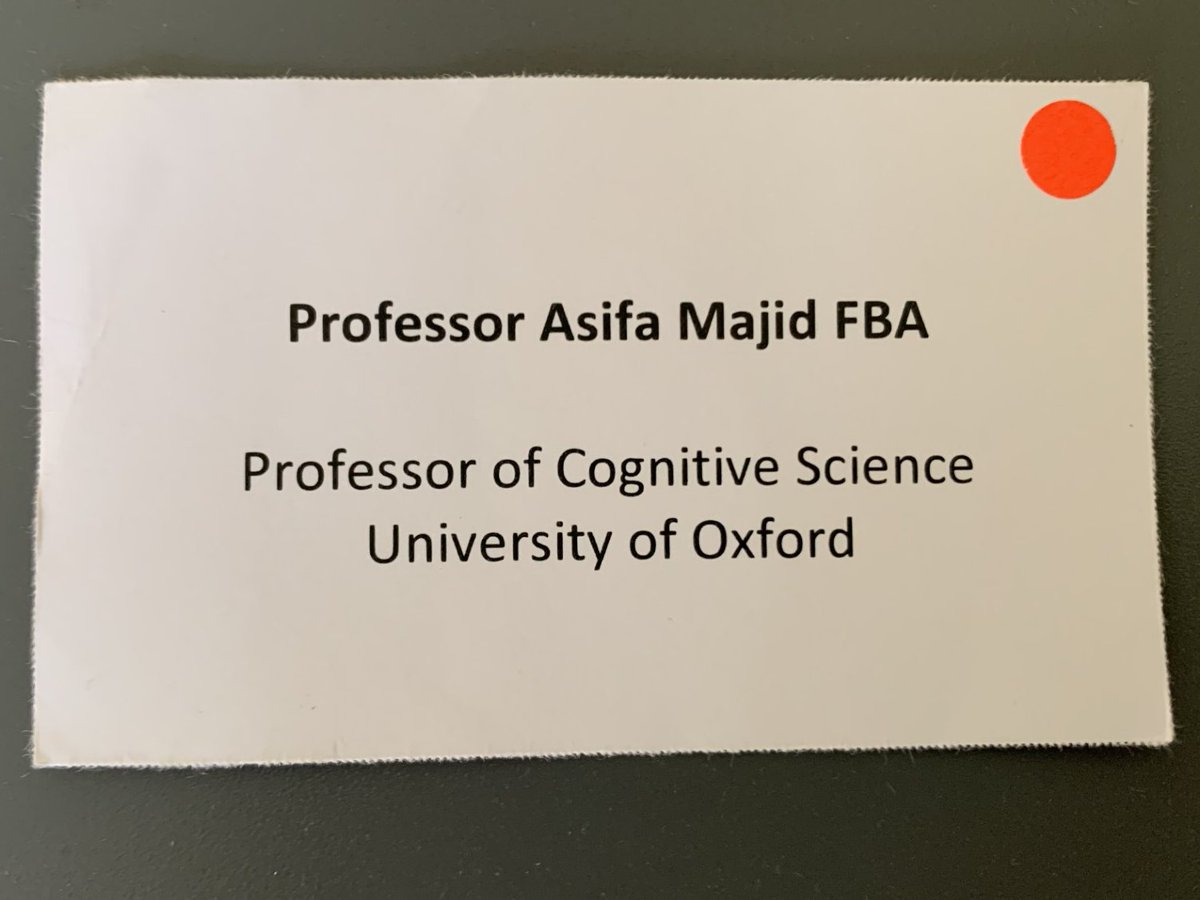
So this happened yesterday. Thrilled and honoured to be elected a fellow of @BritishAcademy_ Congratulations to all the other fellows, including the wonderful Eve Clark @Stanford and Catherine Snow @Harvard! @OxExpPsy@StHughsCollege
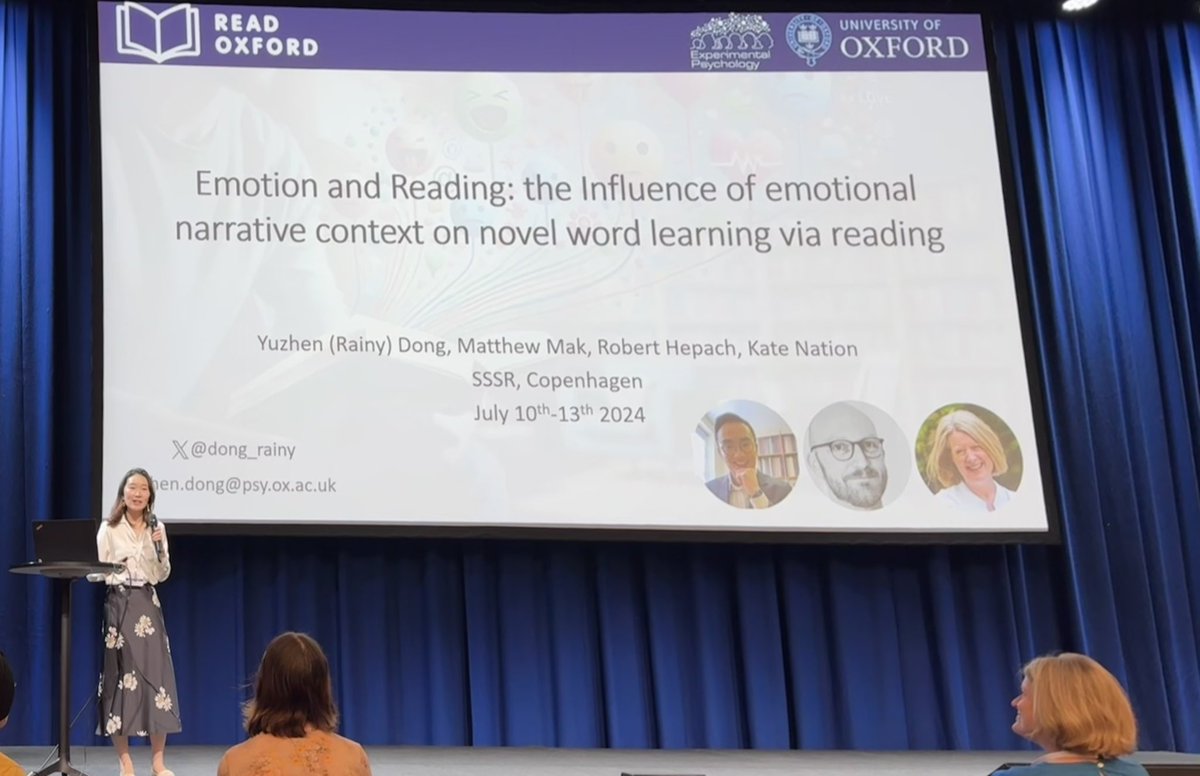
Had an amazing time at #sssr2024 in Copenhagen! Enjoyed the talks, discussions and reconnecting with friends. Big thanks to everyone who attended my talk as part of the symposium on Emotions and Reading chaired by @JaneOakhill28 and @ReadOxford
In this paper, we analysed the sentiment of a large corpus of stories written by children (7-13 y/o). We found decreasing positive sentiments in children’s stories as they get older, and girls write more positively than boys.
🔔 New preprint alert ‼️
In this pre-registered experiment with @matthewmakpsy, Robert Hepach & @ReadOxford, we investigated how emotional narrative context influences novel adjectives learning.
https://t.co/EAs3wtv5cw
We found that emotional contexts support learning better than neutral contexts, and that word valence can be inferred from the valence of the contexts.
#CogSci2024 is hosting a one-time Mentoring Event free and open to all #CogSci Society members, whether they intend to attend the conference or not.
Visit https://t.co/zOvt4MyclQ and sign up to participate as a mentor, a mentee… or both!
What words do children encounter when they read independently? Read our new @SageQJEP paper analysing the language in children's books (https://t.co/YduVDzFhwE); and for an accessible blog post (https://t.co/N3IozRNTyY). Congrats to lead author Maria Korochkina!
Hi language researchers, I would like some advice on measures of English print exposure. Does anyone know of an up-to-date children’s author recognition test or title recognition test in the UK context?
Thank you!