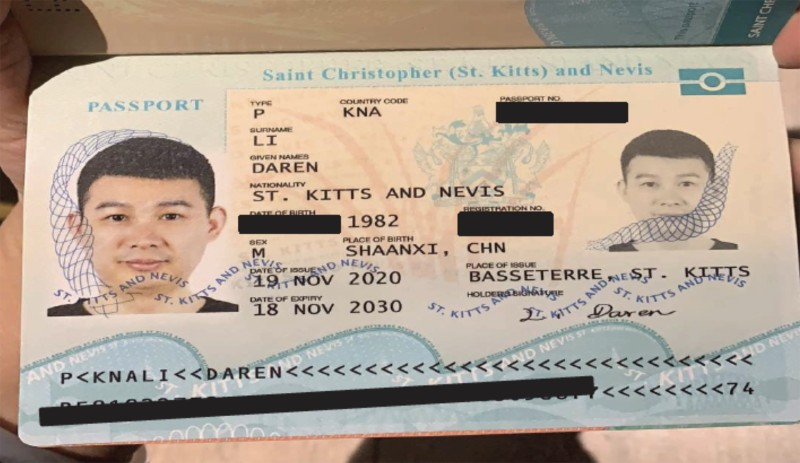
Daren Li is a dual citizen of China and St. Kitts and Nevis with multiple homes around the world. One in Cambodia, one in Dubai, and of course mainland China.
He ran the money laundering arm of a pig butchering operation based out of Southeast Asia. The group stole $73.6 million from at least 174 Americans. His crew would spend weeks texting victims through dating apps and messaging platforms, building real relationships, gaining trust, then steering them toward a fake crypto trading platform that was a near-perfect copy of a real exchange called CoinZoom.
Victims watched their balances on the platform “grow”. All fake returns designed to entice them to deposit more. The platform was entirely fake, but some deposited their entire life savings. One person lost $1.5 million. Every dollar went straight to Daren.
He set up 74 shell companies across the U.S. with legit-sounding names, tax IDs, and business bank accounts. The money got wired from those accounts to an offshore bank in the Bahamas called Deltec, converted into Tether, and pushed into crypto wallets he controlled.
The Secret Service had been building a case against him since 2022. They grabbed him at the Atlanta airport in April 2024. Investigators pulled chat logs off seized phones showing Daren personally directing which shell companies to use, laying out commission structures for his team, and managing every dollar that moved through the system.
Daren pleaded guilty in November 2024. He was looking at 20 years. His court date was delayed and he was granted house arrest in the mean time. While home, he cut his ankle monitor off in December 2025 and vanished. He’s still out there.
Full story on the podcast. Link in bio.
@Appyg99 This exactly! Everyone is talking past each other jumping to the extremes. One side acting like any callout on the program is racism or cope, and the other side is full of troll bots spouting low effort racist slop. The consultant industry is the main issue.
@PaulHerzog3 Well, Palmer equated abuse of the H-1B program with slave labor, not the H-1B program itself. I’m sure you know the distinction, but instead of addressing my actual question, you skipped to the emotionally loaded claim that “Palmer also uses slave labor.” Let’s be serious pls
Traditional security awareness training and phishing simulations aren’t delivering the results companies expect. It seems that bombarding employees with fake phishing emails and then hitting them with a “gotcha” training module mostly creates fatigue, resentment, and a fear of looking stupid when they fail.
A University of Chicago study tracked more than 19,000 employees over eight months and found that annual training had basically zero connection to whether people actually avoided real phishing attacks. Whats interesting is that research from the Chicago Booth School of Business shows that people learn MORE from other people’s failures than from their own. Getting caught by a simulation triggers a defensive reaction.
To protect their ego, employees dismiss the training entirely. They make excuses (“There’s no way to know,” “It’s designed to trick you”). This in turn creates an adversarial relationship with security. NOT GOOD.
BUT, if you flip the focus to someone else’s mistake, the personal threat to the ego disappears. Using the 2023 MGM breach as example: hackers used a simple voice-phishing call to the IT help desk and talked their way into admin access. That breach ended up causing more than $100 million in losses.
Because the failure belongs to someone else, employees can look at it objectively. They naturally start connecting the dots to their own habits. Storytelling like this moves people from passive compliance to genuine curiosity and ends up teaching a lot more than another gamified test or generic PowerPoint.
"But one weak link can break the chain of a mighty dynasty."
I think about this quote from The Prince of Egypt so much. Especially considering human security risk.
Companies spend millions on security tools but security breaches keep climbing due to human error.
Back in July of 2025, Sharon Brightwell lost $15,000 in an AI voice clone scam. She picked up the phone and heard what sounded like her daughter crying hysterically.
Only it wasn't her daughter. The voice was a clone built from audio taken from social media.
A man took over the call claiming to be her daughter's attorney. He said they needed $15,000 in cash to post bail.
Sharon quickly withdrew the cash, put it in a box, and handed it to a courier at her door. Easy $15,000 win for the bad guys.
Through the sobbing, Sharon heard her daughter say that she hit a pregnant woman while texting and driving and now she's sitting in police custody.
Sharon said, "There is nobody that could convince me that it wasn't her"; "I know my daughter's cry."
@jh0co@paulg Slop is slop, whether AI generated or human blabbering. If people need a middleman to tell them what’s valuable and what’s slop, they’re already cooked.
@brendantully00@levelsio That’s true, but that’s not what I was talking about. I was talking about the AI clone video instead of him actually recording himself. He wrote the content I’m assuming. So it’s original work. But the delivery is artificial, which I don’t like
Verizon's DBIR stated that Roughly 62% of breaches involve the "human element", meaning somebody in the company messed up. For the most part, tooling isn't the problem. People are. #dontgetgot