@wanderertj1@EbnHussein1424 The ignorant person among those who are originally disbelievers is to be dealt with as a disbeliever according to shar‘i rulings in this world, and in the hereafter his fate will be decided by Allah. The correct view is that he will be tested (in the hereafter).”
@wanderertj1@EbnHussein1424 or try to seek it. In all these cases, the individual is not excused according to the Shaykh (may Allah have mercy on him). An exception is made, with regard to having fallen short, if it did not occur to a person that this action could be haraam…
@shahmir69420 Does this mean other madhahib allow the sale of a product/service that is permissible by default if they know it will be used in an impermissible manner?
"Were it not for trials and tribulations, the diseases of arrogance, self-admiration, and tyranny would overtake the servant. Therefore, among the greatest forms of God's mercy is that He tests His servants."
Ibn Qayyim
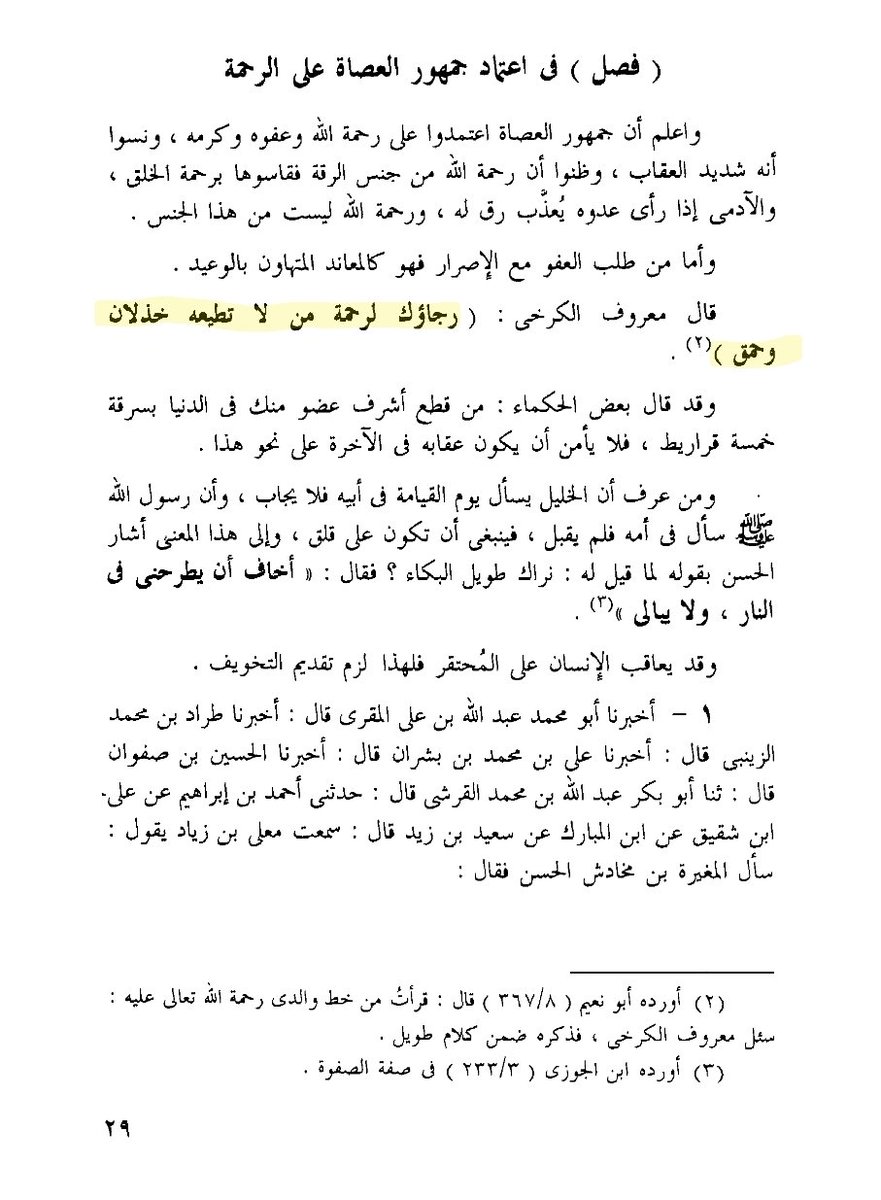
Ma’ruf al-Karkhi رحمه الله
رجاؤك لرحمة من لا تطيعه خذلان وحمق
"Your hope in the mercy of the One you refuse to obey is nothing but delusion and foolishness!"
@Jonloe9@FullmetalTheist@theobserver2021 Yes, Jesus’ appeal to Psalm 82 does not make sense if his claim is not similar to what Psalm 82 is saying (according to the understanding of the Pharisees).
@Jonloe9@FullmetalTheist@theobserver2021 As for the Christology of the Gospel of John, Logos Theology is clearly referenced in John 1:1, and Logos Theology viewed the Logos not as consubstantial and coequal with God, but subordinate and lower in ontology.
@Jonloe9@FullmetalTheist@theobserver2021 Also, the response that Jesus gives in defence of himself wouldn’t be a good defence if he was actually claiming to be consubstantial with the Father.
@Jonloe9@FullmetalTheist@theobserver2021 There is a recurring theme across the Gospel of John where Jesus’ opponents keep on misunderstanding/misrepresenting him (See John 2:19-21, 3:1-10, 4:7-15, 7:33-36, 8:21-27, 8:42-43, 8:52-53, 9:39-40, 10:1-6, 12:32-34).