@TateTheTalisman I’d try to make a fight league simulator game, like an absolute badass one. Where you create your own league, and are basically Dana White.
North America’s Oldest Known Mine Discovered in Wyoming
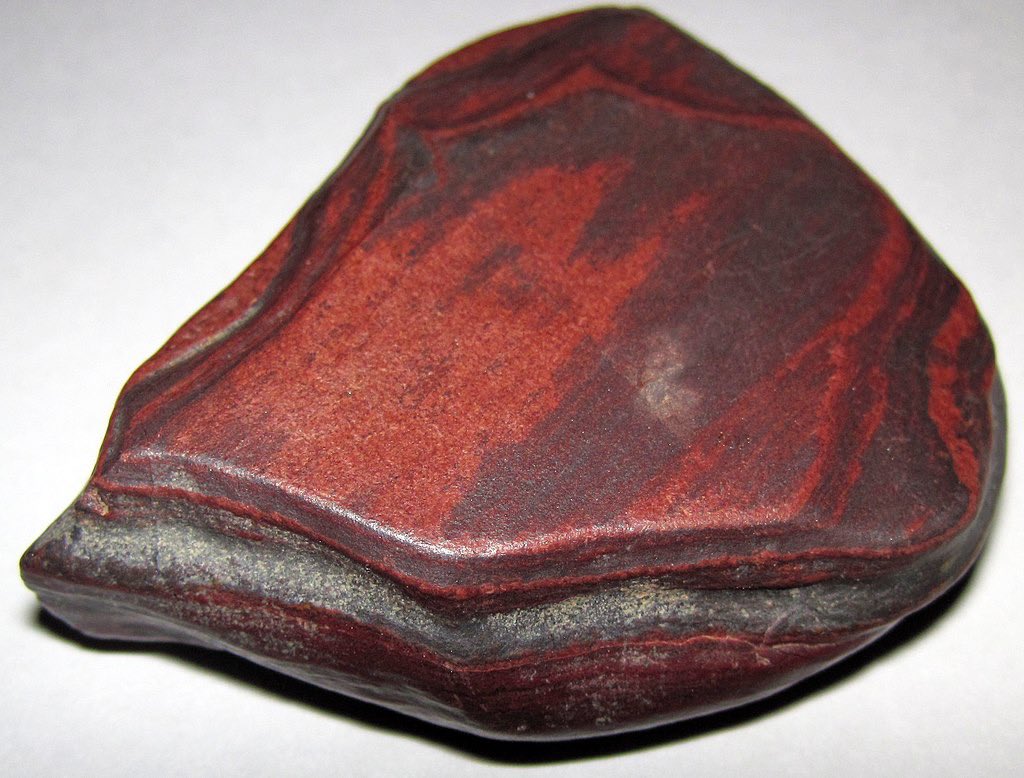
Archaeologists have confirmed that the Powars II site in Wyoming is home to the oldest known mine in North America, dating back approximately 13,000 years. This site, used by some of the earliest inhabitants of the continent, was a major source of red ochre, a pigment with deep cultural and ritual significance.
Key Findings:
The site provides evidence of early mining practices, reshaping our understanding of resource use in ancient North America.
Red ochre, widely used in burials, rock art, and ceremonial contexts, highlights the symbolic and technological sophistication of early cultures.
Artifacts, including Clovis-era tools, suggest a well-established tradition of ochre extraction and trade.
This discovery offers a rare glimpse into the ingenuity and spiritual traditions of some of the first peoples of North America.
First 2 pictures are from the Wyoming site and the third is an example is the use of red ochre by the artists of Barrier Canyon Style rock art in Canyonlands National Park, Utah
Folsom Culture:
Precision, Adaptation, and the Bison Hunt
Who were they?
A highly skilled bison-hunting society (~10,900–10,200 years ago) that thrived in the Great Plains. They crafted fluted projectile points sharper and more refined than Clovis, optimized for hunting Bison antiquus—a massive ancestor of today’s bison.
What came next?
As climates shifted and megafauna populations declined, human survival strategies evolved:
Plano Cultures – Continued bison hunting with unfluted projectile points, adapting to regional changes.
Cody Complex – Innovated with new projectile point designs such as Scottsbluff and Eden, reflecting advancements in hunting technology.
Early Archaic Societies – Transitioned toward broader subsistence strategies, incorporating smaller game, plant gathering, and more diverse toolkits.
The legacy of the Folsom culture highlights early North American societies’ ability to innovate, adapt, and thrive in a changing environment.
The Holloman Gravel Pit:
A Challenge to the Clovis-First Model
Discovered in 1926 near Frederick, Oklahoma, the Holloman Gravel Pit yielded stone tools and metates embedded within Pleistocene-era deposits, alongside fossils of extinct megafauna. If these artifacts are verified as human-made, they could indicate a human presence in North America at least 150,000 years ago—radically predating the widely accepted Clovis culture (11,500) years ago.
Despite its historical significance, the Holloman site remains unexamined by contemporary archaeological methods.
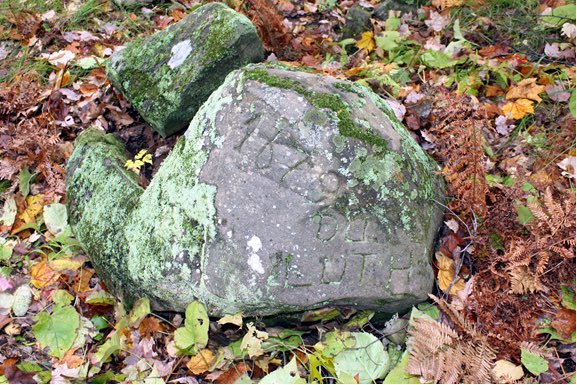
Academia finally agrees with me that an out of place inscription is “More likely authentic than not.” This is a big deal! The Du Luth Stone was carved by Daniel Du Luth in 1679 and is located on a watershed divide just like the Kensington Rune Stone and another mysteries carving dated 1612. The answer is no if you want to know where the 1612 inscription is.
Read all about it here:
https://t.co/KVJrQ109Qr
The reconstruction of a 3-year-old Neanderthal child was based on the remains found at Roc de Marsal in 1961. The reconstruction was created by sculptor Elisabeth Daynes.
Roc de Marsal, a prehistoric site from Middle Paleolithic, located in Campagne, in Dordogne (France 🇫🇷). Roc de Marsal opens out at top of cliffs in a south-west orientation, at an altitude of 180m that is to say 140m above the level of the Vézère. It is a small cave, 9m deep, 5.50m wide and 3m high. In addition to this shelter, there is a smaller cavity and another large blocked cave. According to J. Bouchereau (1967), the small cavity was probably connected to the first before it was blocked. Its ceiling is marked by a fault oriented southwest/northeast. According to Assassi, shelter was formed from the widening of this fault.
This rock shelter notably yielded in 1961, the fossil remains of a Neanderthal child (in an exceptional state of preservation), during excavations carried out by Jean Lafille, an amateur archaeologist. The body seems to have been deposited in a natural depression in the ground, and has been apparently forced into the form of an arc of a circle, lying on its stomach, with a hand to its head and legs bent at 90°, and then immediately covered with soil. Recent excavations suggest a date of around 70,000 years BP which makes Roc de Marsal one of the oldest burials of the Perigord.
The first excavations on the site were carried out in 1953 by Jean Lafille, a schoolteacher in Le Bugue and an amateur archaeologist. He continued them until 1971, the year of his death. He carried out these excavations alone, square by square, over a total surface area of 27 m2 , uncovering Mousterian industries. August 15, 1961, he unearths the remains of a child's skull. The scientific authorities are notified and the excavations of the following weeks allow the skeleton of a Neanderthal child to be unearthed. After Jean Lafille's death, site remained as it was for about thirty years, until, between 2004-2010, a team from several research centers, including the University of Pennsylvania, Max Planck Institute for Evolutionary Anthropology and the National Museum of Prehistory of Les Eyzies-de-Tayac, carried out new excavation campaigns.
The prehistoric site of Roc de Marsal is listed as a historic monument on November 28, 1989. It is also part of the classified site (departmental level) of the Vézère valley. In 2016, this part of the Vézère Valley became the largest of major sites in Aquitaine. The aim is to register it as a UNESCO World Heritage Site.
#archaeohistories
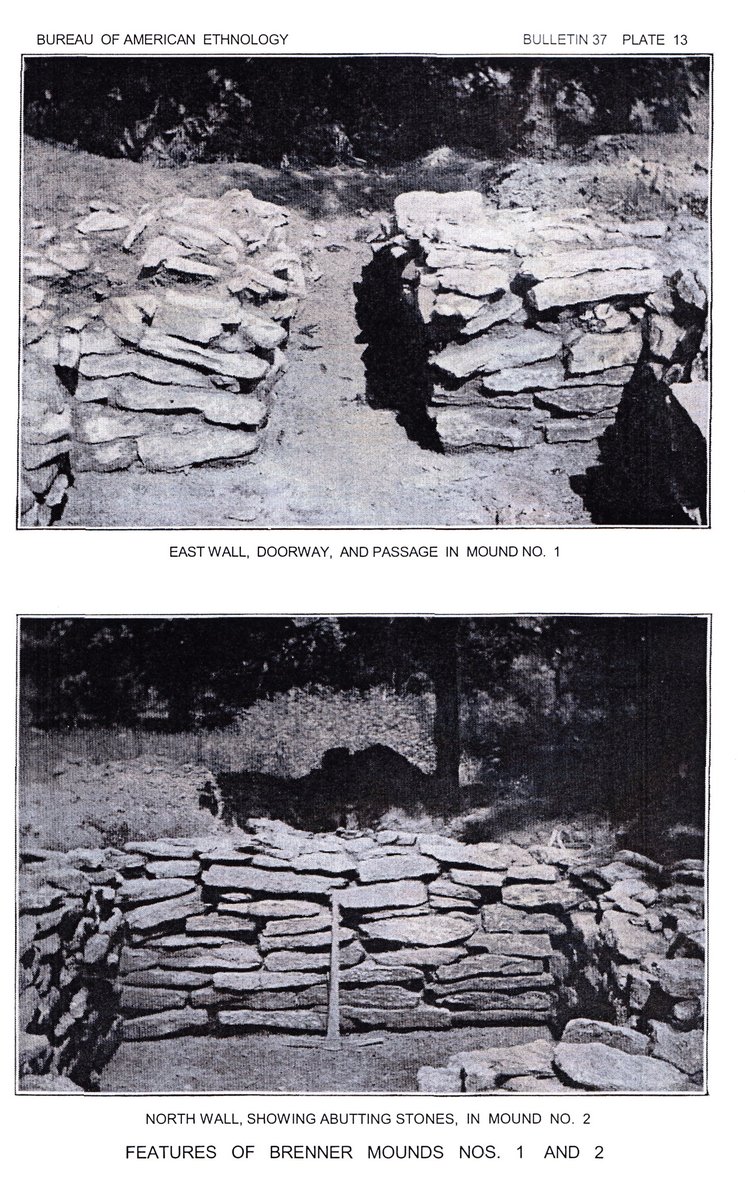
Stacked stone chambers inside totally excavated mounds in Missouri. Most people don't realize that many mounds have or had stone chambers at their base. These were excavated by a Smithsonian crew in the very early 1900s.
58-foot tall "Chief's Mound" at the 29 mound complex in Moundville, Alabama. The person on the long ramp gives one a perspective on the size of the mound.