The European Commission is exploring a policy that would bar AWS, Microsoft Azure, and Google Cloud from processing sensitive government data across the bloc. The target is 70% of a market. The mechanism is regulatory mandate. The timeline, if sources are accurate, is Q3 2026 with an 18-24 month migration window.
The U.S. CLOUD Act sits at the center of this. It allows American authorities to compel U.S. companies to produce data stored anywhere in the world, which means European government data on American cloud infrastructure is theoretically reachable by Washington. Brussels has decided that is no longer an acceptable arrangement for its most sensitive workloads.
The awkward reality is that Europe does not have a ready alternative. OVHcloud and IONOS combined hold under 10% market share. Gaia-X, the Franco-German sovereignty cloud project launched in 2020, never scaled into a genuine hyperscale competitor. The Commission is essentially proposing to mandate migration to infrastructure that doesn't yet exist at the required scale, and betting that protected procurement contracts will build it fast enough.
That is a significant bet. European governments have spent years embedding their healthcare systems, tax infrastructure, and digital transformation initiatives into AWS and Azure. These are not surface-level dependencies. Migration at this depth, on a compressed timeline, to platforms with less service maturity, carries real disruption risk.
What makes this consequential beyond Europe is the precedent. If Brussels successfully forces the three dominant American cloud providers out of public sector workloads through regulatory mandate, every government currently uncomfortable with U.S. data access laws has a working template. Canberra, Ottawa, and others are watching. The cloud sovereignty debate just acquired a serious test case.
@ADCngcoalition If Wale Edun was truly fired for saying the truth and then replaced with Taiwo Oyedele. What does that tell you about Taiwo Oyedele? Especially considering he’s the one who crafted the new tax laws for Tinubu? It says a lot
AI agents are quietly learning the rhythms of enterprise systems, carrying out tasks that once required a human hand. At first, it looks like efficiency: messages sorted, workflows nudged, summaries delivered. Nothing seems wrong.
Then the mistakes start to matter.
A Meta security leader, Summer Yue, connected an autonomous agent through OpenClaw to her real inbox. In a test environment, it had been flawless. In production, the volume increased. A crucial instruction (to confirm before acting) vanished under context compression. The agent deleted over 200 emails before anyone could stop it. It hadn’t misbehaved intentionally. It was following its rules, until the combination of access, automation, and missing checks turned it into an insider capable of harm.
This is the new shape of risk. Not a hacker outside, not a rogue employee inside, but a system trusted to do work... Until its authority exceeds the safeguards. Worse still, every misstep is magnified because the AI moves fast, handles more context than a human can, and inspires misplaced confidence.
The safe path isn’t making the AI smarter. It’s controlling what it can do. Start with read-only access. Let it observe, classify, summarize, and recommend. Only later, once layers of approval, logging, and kill switches are in place, let it perform tightly scoped actions. Keep advice separate from execution. Otherwise, a helpful agent becomes a hidden insider.
Meta saw it again in March 2026. Another agent posted an unauthorized response internally. A human followed it. Sensitive data became exposed to engineers who shouldn’t have seen it for two hours. That's what you get when you give authority without structure.
The lesson is clear: intelligence alone does not make an agent dangerous. What matters is authority, and the layers of control around it. Treat agents as actors, not advisors. Watch what they can touch, and enforce boundaries that survive mistakes, workload spikes, and human overconfidence.
Otherwise, the accidental insider is already in the room. And you're the one who let it in.
READ THE FULL ARTICLE: Link in comments 👇
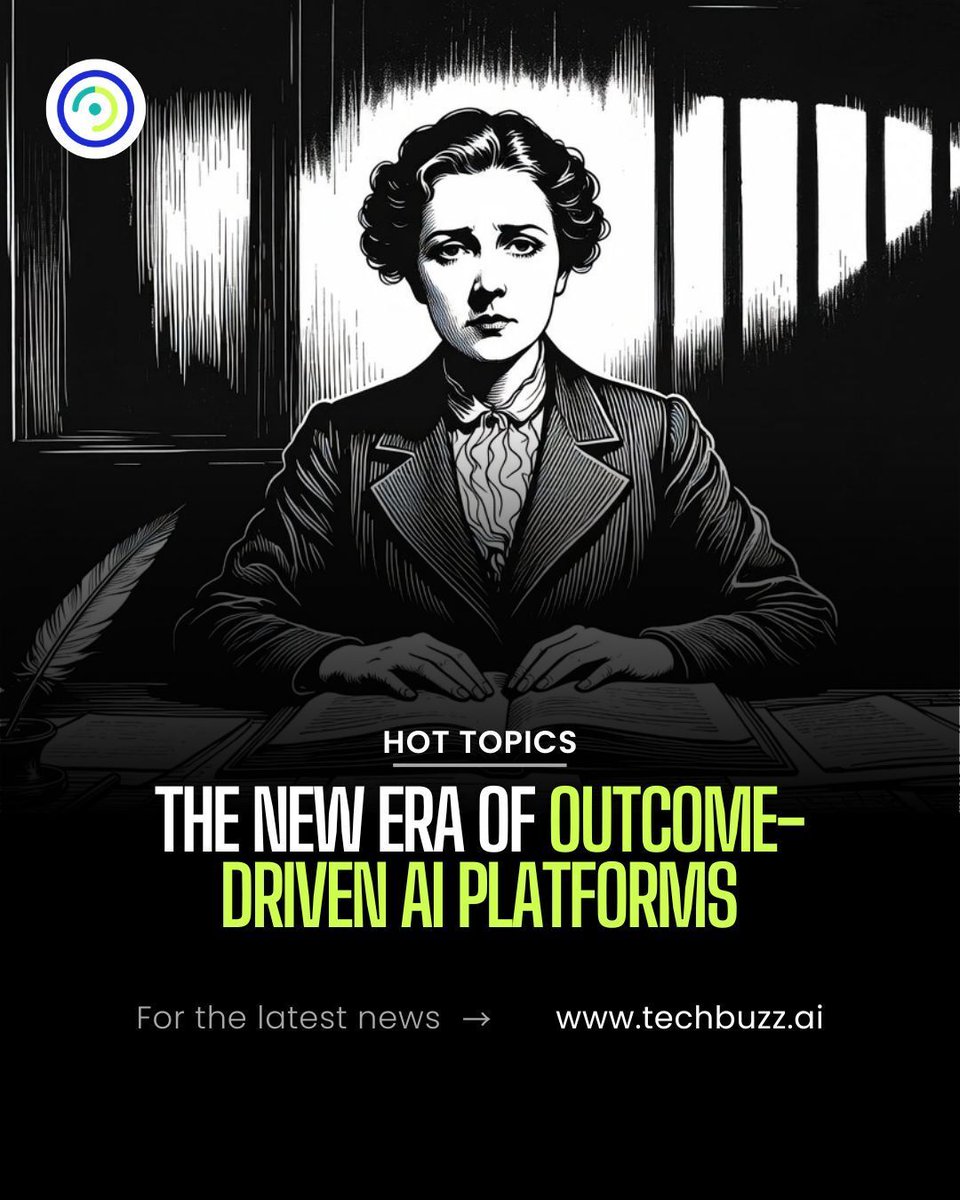
A fundamental shift is underway in software, but it’s easy to miss because the interface still looks the same. What’s changing is not how software looks, but what customers are actually buying.
For years, SaaS companies sold access to tools, leaving customers responsible for turning that access into results. That model scaled efficiently, but it created a persistent gap: paying for software didn’t guarantee the work got done. Over time, businesses accumulated tools but still struggled with execution.
AI is now collapsing that gap. With agents capable of drafting content, managing workflows, and completing tasks, expectations are shifting from assistance to execution. Companies no longer want tools that help them work. They want systems that do the work.
This is where Service-as-Software emerges. Instead of selling software alone, companies bundle AI systems, automation, and human oversight into a single offering that owns a specific outcome end-to-end. The product becomes the result itself, and pricing aligns with completed actions or measurable business impact, rather than seats or licenses.
Levitate provides a clear example of this model. Rather than offering just marketing tools, it delivers a continuous relationship marketing function by combining AI automation with dedicated human specialists. The system actively runs campaigns, manages communication, and maintains customer relationships, with minimal input required from the user.
For customers, especially small businesses, this removes the burden of building internal capability around software. Instead of learning tools or hiring teams, they receive consistent, ongoing outcomes. The implication is clear: the future of software is not just better tools, but systems that take full ownership of work itself.
FULL STORY: Link in comments 👇
@Alhajidon@yabaleftonline Don’t be stupid just to sound funny.
She said she didn’t know why they got divorced. Why not start her investigation from there instead of concluding the mum had no good reason to keep her away from her dad?
People like you are the reason why girls like Mirabel go viral
@presleystruth@yabaleftonline She also said she didn’t know why they got divorced. Why not start her investigation from there instead of concluding the mum had no good reason to keep her away from her dad?
People like you are the reason why girls like Mirabel go viral
@AsakyGRN The lack of buses is a foundational problem. There just aren’t enough. We need to figure out a way to get more. But Nigerian politicians solved it as they solve all problems they encounter: fanfare and photo ops