Welcome to Dopamine Devs.
We’re not here to flood your feed. We’re here to filter it. This is where builders, creatives, and curious minds come to swap doomscrolling for signal. Expect quick, clean rundowns on startup and AI moves, tools that actually help you ship faster, and spotlights on devs and creators doing dope things, not because they paid to be here but because they’re worth knowing about.
No BS. No fake urgency. Just stuff we’d want in our own group chats. Useful drops, smart recaps, and ideas that make you want to open your laptop. This isn’t about a personal brand or selling courses. It’s about showing up, building together, and staying sharp in a world that’s getting noisy fast.
We’re just getting started. If you’re working on something, you’re one of us.
More to come soon, stay tuned and hit that follow button!
if you're using claude to edit videos, you can give it a library of 5.2M+ audio files for $0
sound effects, ambience, music. openverse has a free api. no key needed.
give it https://t.co/QJSEKMT2FE and ask:
“whenever you need sound effects search Openverse to find the best options and use them for tasteful sound design within my video”
no more using your browser to download random clips or trying to generate the audio itself
Google × Kaggle just dropped a farming sim where your Al agent competes head-to-head.
720 turns per match. Your bot manages crops, animals, and trades on a dynamic market.
$5OK in prizes across 10 spots. Deadline is September 23, 2026. https://t.co/kch8EA8MLf
I’m starting to realize these Fable 5 and Claude Code rate limit extensions aren’t just random acts of kindness.
Anthropic says Fables uncertain availability is caused by limited compute. Sure I believe that, but at the same time every extension also gives users more time to build it into their workflows. Understandings its depth, and becoming familiar with an output that Claudes weaker models cannot fully replicate.
That matters because Anthropic is not operating without alternatives. GLM, Kimi, DeepSeek, and other cheaper models are closing the gap. I have not personally compared all of them so I can’t claim they match fables across the board. But they do not necessarily need to. They only need to become good enough for enough tasks, at a lower cost, to weaken its hold on users.
If fable disappeared from the $20/m plan tomorrow, I probably would not abandon Claude. I actually respect their R&D and consider it one of the strongest AI teams in the market. However, I would move part of my workflow elsewhere because no single company offers the best tool for everything.
No one glove fits all.
This is where the strategy becomes interesting. Anthropic is intentionally giving users enough access to appreciate how capable Fable is. Once people reorganize their work around that quality, removing it creates a much greater willingness to pay extra for the same output.
At the same time, Anthropic may have accidentally made itself dependent on Fable because it has become one of the biggest reasons customers remain subscribed.
With Anthropic moving toward public markets and AI’s underlying economics becoming more expensive than many expected, these temporary extensions may be about more than access. They may also be about protecting habits, retaining users, and buying time before the business model becomes less generous.
Fable may be Anthropic’s greatest moat right now. It may also be the product Anthropic can least afford to remove.
Would you continue paying for Claude without Fable, or would that push more of your workflow elsewhere?
We’ve agreed to a partnership with @SpaceX that will substantially increase our compute capacity.
This, along with our other recent compute deals, means that we’ve been able to increase our usage limits for Claude Code and the Claude API.
Meet Codex for Students.
We're offering college students in the U.S. and Canada $100 in Codex credits.
Our goal is to support students to learn by building, breaking, and fixing things.
https://t.co/WrOtW8E8Lk
To the builders: we heard you. We're welcoming back everyone who recently had their Google Antigravity accounts restricted for use of third-party tools. Moving forward, we’ll have clear steps for users to restore their account if it’s restricted.
To maintain the integrity of Antigravity and ensure a great user experience for everyone, using third-party tools with your Antigravity login remains against our terms. We love seeing innovation and boundary-pushing in this community, and the Antigravity team is hyper-focused on building what you need to accelerate product development.
Can’t wait to see what you build!
I'm joining @OpenAI to bring agents to everyone. @OpenClaw is becoming a foundation: open, independent, and just getting started.🦞
https://t.co/XOc7X4jOxq
Introducing Claude Opus 4.6. Our smartest model got an upgrade.
Opus 4.6 plans more carefully, sustains agentic tasks for longer, operates reliably in massive codebases, and catches its own mistakes.
It’s also our first Opus-class model with 1M token context in beta.
Introducing Claude Opus 4.6. Our smartest model got an upgrade.
Opus 4.6 plans more carefully, sustains agentic tasks for longer, operates reliably in massive codebases, and catches its own mistakes.
It’s also our first Opus-class model with 1M token context in beta.
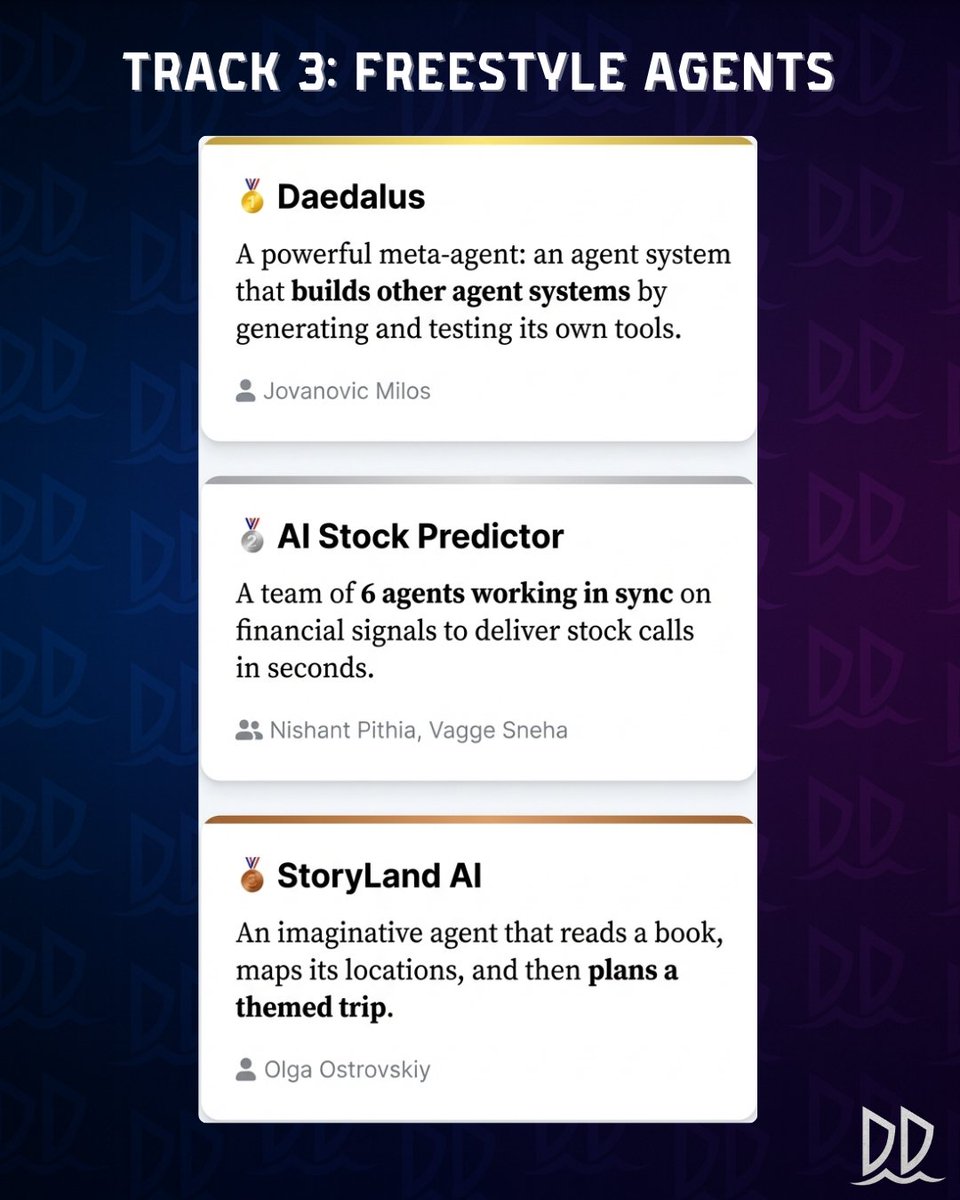
Google × Kaggle ran a 5-day intensive course where the goal was simple:
build agents that actually work.
Full list of winners + code here:
https://t.co/UxYyv1zqoo
#aiagents#agenticai#developers#buildinpublic#kaggle
Software Engineering Expectations for 2026
- The majority of your code should be written by AI now
- Cursor/Codex/Claude Code/Gemini/etc
- You should try all the tooling and switch between them, as each one gets an edge over the others depending on the release cycle.
- You should be using AI to check the code that is written by AI
- Have AI write tests
- Have AI read logs
- Have AI navigate your browser
- I don't do this every time because sometimes it's simple enough to check it myself
- You should still skim code changes
- This can be a lighter skim on internal tools and a heavier read through on customer facing code
- Use AI to help you define specs