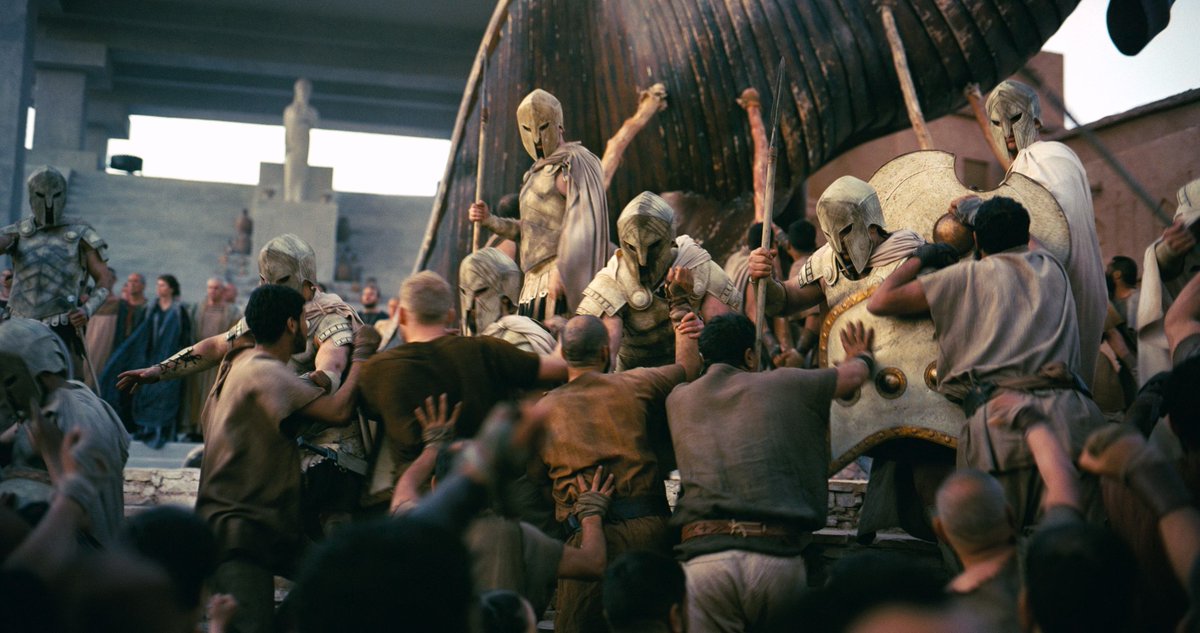
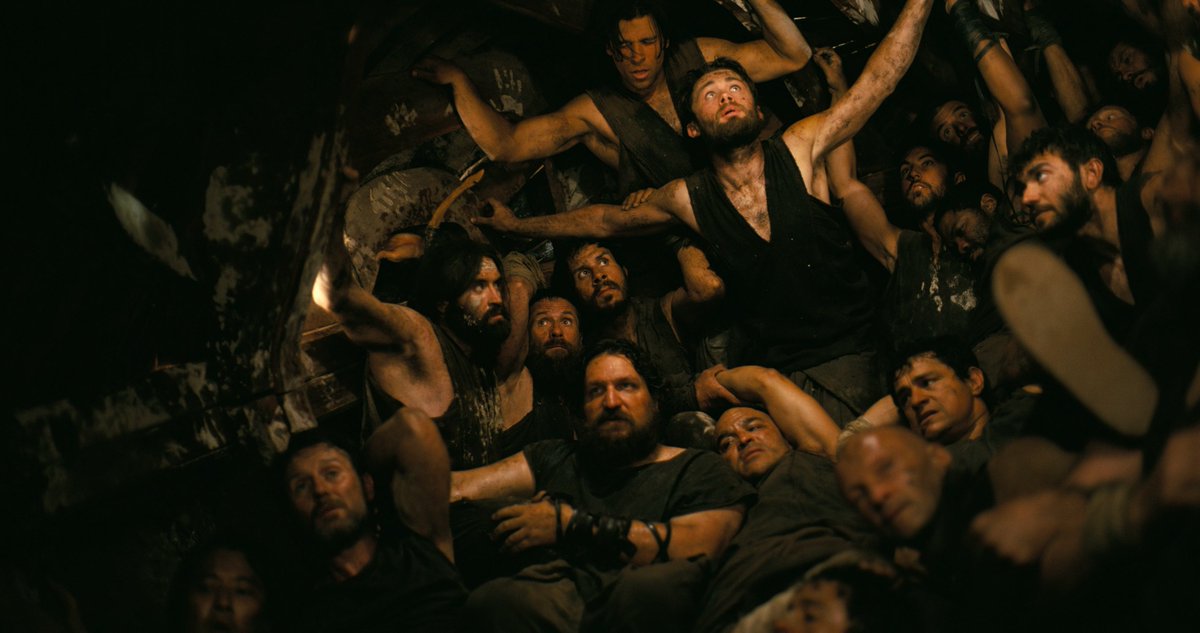
Nolan's The Odyssey isn't Homer's, it's Nolan's. It doesn't bend but breaks the foundation of who Odysseus is. By Nolan taking away Odysseus's hubris and pride, he rewrites the entire moral landscape of the tale.
In Homer's poem, Odysseus is suffering from a lethal dose of vanity. The gods, particularly Poseidon, are putting a check on his arrogance. He's a man who much needs learn humility before he can touch his home soil again.
Nolan's version is a man broken by a meat grinder war and gets tossed around a cold universe. His story is of endurance. He's just trying to survive. He's a man who believes his own soul is too corrupted to return to civilization. This all flips the entire architecture of Homer's Odyssey.
Odysseus greatest triumph, the use of the Trojan Horse, is now his greatest shame in Nolan's Odyssey. It less about the gods punishing him, and his psychological inability to reach Ithaca.
This is exactly why Nolan's Odysseus is humorless beyond belief. He can't stand that he can deceive so many so well. Every lie he conjures takes him further away from Ithaca.
By centering guilt and unworthiness on Odysseus, Nolan dilutes the character to singular symbol of the guilt-ridden soldier.
This characterization of Nolan's Odysseus actually ruins his third act. What did Odysseus learn from being a guilt-ridden, deceitful soldier? Well, it's best to kill 'em all and lie to them before I do it.
The ending to Nolan's Odyssey is a relapse, not a resolution. His Odysseus has learned nothing on his journey. Now it's time for him and Penelope to abandon their posts. Cue the Dark Knight Rises theme. Michael Caine nods at the two of them. Roll credits.
Homer's Odyssey: Hubris —> Nobody —> Memory —> Home
Nolan's Odyssey: Sin —> Memory —> Guilt —> Exile
In Homer, memory is restorative. Odysseus remembers who he is—recognizing his limitations—and reclaims his home. Memory generates civilization.
In Nolan, memory is condemnatory. Guilt severs him from his home. Memory judges and destroys civilization.
A depressingly modern reinterpretation.
My problem with Nolan's interpretation isn't that it misreads or overreads the psychology of an Ancient Greek, but that it conveys that psychology through a modern talky confessional form (Calypso, Penelope, "Athena" as Odysseus's shrinks/ priests), rather than dramatizing it /4.
You can even read the obstacles on his journey as symbolic punishments of the self--he is pressing the bruise; he is the great deceiver, deceiving himself. Compare Oedipus's self-blinding--is that a confession of guilt or is it guilt made manifest in its all-punishing agony? /3
In moral terms, the Odyssey is a post-Catholic film (Nolan was raised Catholic and attended Catholic school). Odysseus is haunted by guilt and dons a monk’s cowl. The climax of the film is a confession scene in which he details his sins through a screen.