For added info: spaylater ≠ credit card so be careful nalang when using spaylater kasi every purchase = 1 loan 😵💫 so if may 3 items kang chineckout using spay bali 3 loans na agad sya and it will affect your credit score
💉The 2026 Anaphylaxis Guidelines highlight something uncomfortable for all of us in acute care:
we do not fail because we lack knowledge, but because we fail to act on what we already know.
Across 12 international guidelines, there is almost perfect agreement on one point:
intramuscular epinephrine is the first and most important intervention⚠️. Yet in real practice, it remains significantly underused, often replaced or delayed by antihistamines or corticosteroids, therapies with no evidence for acute life saving benefit
This gap between evidence and behavior is the central clinical problem.
From a bedside perspective, three insights are particularly relevant:
First, diagnosis remains the main bottleneck, not treatment.
The guidelines clearly show that variability in diagnostic criteria, especially in patients without skin manifestations or in infants, leads to hesitation. Clinically, this reinforces a key principle:
-> anaphylaxis is a clinical diagnosis driven by physiology, not by complete textbook criteria. Waiting for skin signs or full multisystem involvement delays epinephrine and worsens outcomes.
Second, the document reframes management from a pharmacologic problem to a systems and education problem.
Underrecognition by clinicians, lack of training in schools and community settings, and poor patient education all contribute to undertreatment. In reality, the success of anaphylaxis management depends less on ICU level interventions and more on early recognition and immediate action in prehospital environments.
Third, there is a clear shift toward proactive risk management rather than reactive treatment.
Modern guidelines emphasize emergency action plans, patient carried epinephrine, and structured education programs. This aligns with a broader trend in critical care: outcomes improve when interventions occur before physiological collapse, not after.
An important nuance for critical care physicians is the role of adjunctive therapies.
Antihistamines and corticosteroids are consistently positioned as SECONDARY, non life saving treatments. Their continued overuse reflects a cognitive bias toward treating visible symptoms rather than addressing the underlying hemodynamic and airway threat. Clinically, this is equivalent to treating hypotension in septic shock with paracetamol.
🤓Bottom line:
Anaphylaxis is one of the clearest examples in medicine where the evidence is simple, but implementation fails.
The priority is not new drugs or devices, but closing the gap between recognition and immediate epinephrine administration.
📃Reference
Wallace DV, Immunol Allergy Clin N Am ▪ (2026) https://t.co/VoarNwD7v7
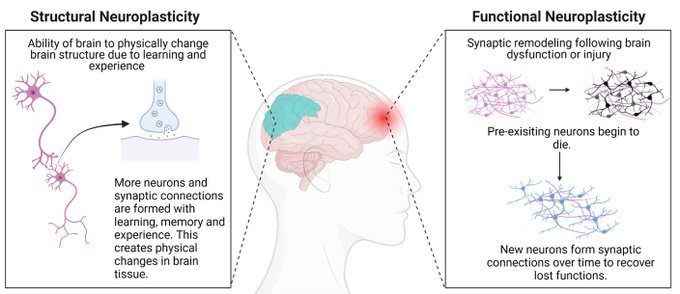
Repetition rewires the brain.
Repetition rewires the brain.
Repetition rewires the brain.
Repetition rewires the brain.
Repetition rewires the brain.
Repetition rewires the brain.
Repetition rewires the brain.
Repetition rewires the brain.
Repetition rewires the brain.
Kids who grew up "academically gifted" are now socially anxious adults who have thousands of abandoned hobbies, struggling to make minor decisions on their own and develop a highly unfunny trait or they are doctors
"𝗛𝘆𝗽𝗲𝗿𝘁𝗲𝗻𝘀𝗶𝗼𝗻 𝗥𝗲𝗱𝗲𝗳𝗶𝗻𝗲𝗱: 𝗡𝗲𝘄 𝗚𝘂𝗶𝗱𝗲𝗹𝗶𝗻𝗲𝘀 - 𝗘𝗮𝗿𝗹𝗶𝗲𝗿. 𝗦𝗺𝗮𝗿𝘁𝗲𝗿. 𝗣𝗲𝗿𝘀𝗼𝗻𝗮𝗹𝗶𝘀𝗲𝗱."-
The new #Hypertension guideline released by the American Heart Association (AHA) and the American College of Cardiology (ACC) reinforces a powerful message: prevent early, treat early, and personalize care to reduce cardiovascular disease (CVD) risk.
Hypertension remains the leading modifiable risk factor for heart attack, stroke, heart failure, kidney disease, and even cognitive decline. The updated recommendations continue to define blood pressure (BP) categories as:
Normal: <120/80 mm Hg
Elevated: 120–129/<80 mm Hg
Stage 1 Hypertension: 130–139/80–89 mm Hg
Stage 2 Hypertension: ≥140/90 mm Hg
For most adults with hypertension, the treatment goal remains below 130/80 mm Hg, as evidence shows this significantly lowers cardiovascular events and mortality.
A major highlight of the guideline is its strong emphasis on prevention and lifestyle modification as the foundation of management. Recommended measures include reducing sodium intake (ideally around 1,500 mg/day), following the DASH dietary pattern, engaging in regular physical activity (at least 150 minutes per week of moderate exercise), maintaining healthy body weight, limiting alcohol intake, managing stress, and quitting tobacco. Home blood pressure monitoring is encouraged to improve accuracy and long-term control.
Another important update is the integration of a personalized risk-based approach using the PREVENT™ cardiovascular risk calculator. Instead of relying solely on BP numbers, clinicians are encouraged to assess overall 10-year cardiovascular risk before initiating medications. This ensures that treatment decisions reflect the patient’s total risk burden, including diabetes, kidney disease, age, and other comorbidities.
For patients with stage 2 hypertension or those at high cardiovascular risk, the guideline supports starting two antihypertensive medications simultaneously, preferably as a single-pill combination to improve adherence and faster BP control.
Special attention is given to kidney protection, recommending routine assessment of urine albumin and kidney function in all hypertensive individuals. Early BP control is also linked to reduced risk of cognitive decline and dementia. Additionally, updated guidance addresses blood pressure management during pregnancy and the postpartum period.
Overall, the new guideline shifts focus from reactive treatment to lifelong cardiovascular risk reduction, highlighting that early detection, individualized therapy, and sustained lifestyle changes are key to preventing complications and improving population health.
#MedTwitter #MedEd #MedX
#HealthTech @IhabFathiSulima@ajaykraina@drkeithsiau
Dengue is DONE
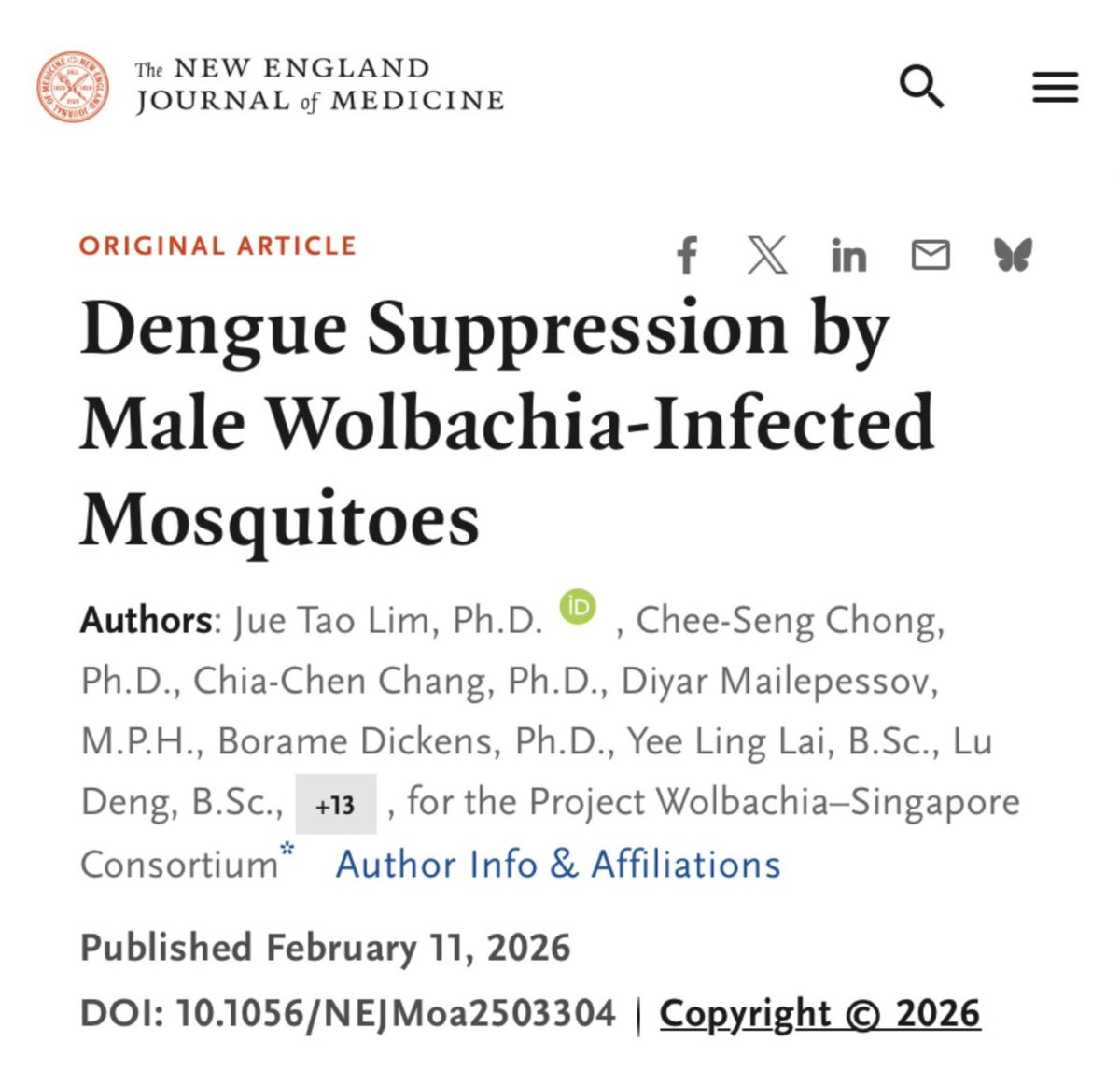
Singapore just released a study that might end mosquito-borne disease as we know it. No drugs. No vaccines. Just mosquitoes fighting mosquitoes.
> infected male Aedes aegypti with Wolbachia bacteria
> released them into the wild to mate with normal females
> every single offspring from those matings was dead on arrival
> wild mosquito population practically vanished in treated areas
This isn’t some lab experiment btw.
24 month randomized trial. 15 geographic clusters. Nearly 400,000 residents. Published in the New England Journal of Medicine.
The results are insane:
> mosquito abundance in treated areas dropped from 0.18 to 0.041
> control areas went the other direction to 0.277
> 6% dengue positivity in treated zones vs 21% in control zones
> protective efficacy of 72%
No drug. No vaccine. No chemical spray. Just evolutionary biology weaponized against the most dangerous mosquito species on earth.
For context we’ve been fighting Aedes aegypti the same way for decades. Fogging. Larviciding. Nets. Awareness campaigns. And dengue kept spreading. More cities. More countries. More deaths. 400 million infections a year.
The problem was never effort. We were trying to kill mosquitoes after they already existed. Singapore said what if we just make sure they’re never born.
Cytoplasmic incompatibility. That’s the mechanism. Wolbachia infected males mate with wild type females and the eggs never develop. Do it at scale and the entire population collapses from the inside. Generation after generation.
They didn’t fight the mosquito. They turned reproduction into a weapon against it.
No pharmaceutical intervention for dengue has ever come close to 72% efficacy at this scale in a real world setting.
And this is just Singapore. Imagine this deployed across Southeast Asia. South Asia. Sub Saharan Africa. Latin America
If you’re still thinking about dengue control as fogging trucks and awareness posters you’re looking at the wrong decade.
This is the most important vector control breakthrough in years and nothing else we have even competes.
@aibytekat “Don’t look where you don’t want to go, because that’s where you’ll end up”
It doesn’t only apply to motocross or snowmobiling, it applies to life in general
Medicine has a strange culture: we shame learners for not knowing instead of teaching them how to learn.
Curiosity grows in safety, not humiliation.
If your teaching needs humiliation, it isn't teaching — it's insecurity.