Masters Student at UoN| BA, UoN| Diploma in Journalism, KIMC| Journalist, KBC| Thank you Jesus for this far you have brought me.| Birthday 29th January
@ItsMainaKageni Quite thoughtful. I wonder who mine is, I actually have none. First Borns never have Mikel Arteta's in their lives, they just get by on their own.
A Dutch couple spent four months birdwatching across Chile, Uruguay, and Argentina. On April 1, they boarded the MV Hondius, a luxury expedition cruise, in Ushuaia bound for the most remote islands in the South Atlantic. No symptoms were detected at embarkation. The virus was already inside them. By May, the ship had become a floating quarantine zone rejected by every port it approached.
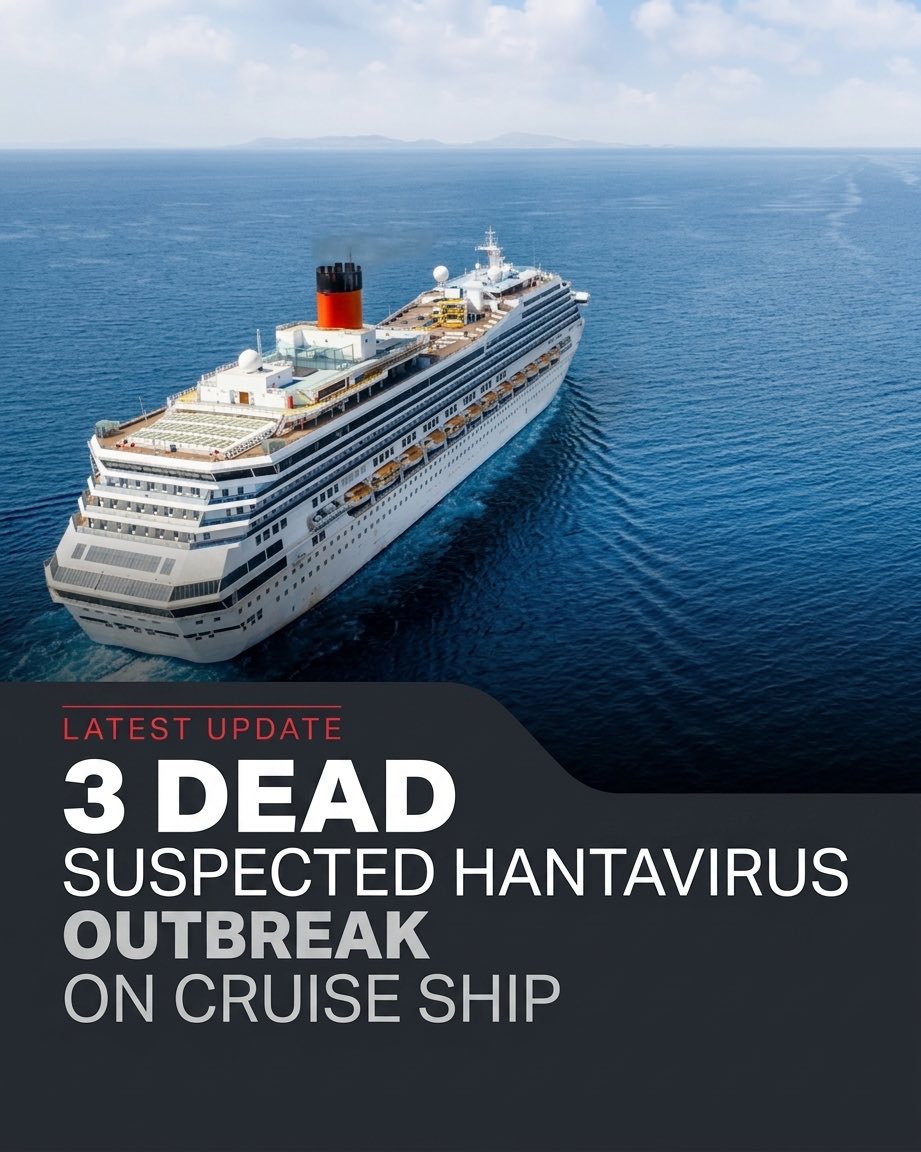
The MV Hondius is now en route to Tenerife carrying 146 remaining people from 23 countries. Three passengers are dead. Eight are confirmed or suspected infected. The pathogen is the Andes strain of hantavirus, the only known hantavirus capable of human-to-human transmission, confirmed by WHO sequencing on May 6.
The timeline tells the story the health systems missed. The Dutch couple arrived in South America on November 27, 2025, spending four months in regions where Andes hantavirus circulates in rodent populations. Argentina has reported 101 hantavirus cases since June 2025, double the prior year, signaling expanding reservoir pressure. In mid-March, Argentine investigators believe the couple inhaled aerosolized rodent droppings at a landfill near Ushuaia during a birdwatching tour. On April 1, they boarded the MV Hondius with 147 people, 88 passengers and 59 crew from 23 nations, showing no symptoms. Hantavirus incubates for one to six weeks. The embarkation screening checked for symptoms. The virus was incubating beneath the threshold. The surface said cleared. The substrate said infected.
On April 11, the Dutch man died on board. His wife was flown to Johannesburg with the body and died there on April 26. On April 24, before anyone understood what was happening, up to 40 passengers disembarked at Saint Helena and scattered across at least 12 countries. WHO has since contacted authorities in the United States, Canada, Germany, the Netherlands, New Zealand, Singapore, Sweden, Switzerland, Turkey, the United Kingdom, Denmark, and Saint Kitts and Nevis. The virus had already left the ship before the ship knew it was infected. A British passenger was evacuated to a South African ICU on April 27. A German national died on board May 2. On May 6, Swiss authorities confirmed a former passenger was being treated in Zurich, bringing the Andes strain to a country that had never seen it.
The ship arrived off Cape Verde on May 3. It planned to continue to Tenerife, but the Canary Islands president Fernando Clavijo refused to allow docking, citing COVID-era experience and insufficient data. Spain’s national government overruled him.
The MV Hondius visited Tristan da Cunha, Saint Helena, and Ascension Island with the virus already aboard. Before anyone connected the first death to a pathogen, 40 passengers had scattered to 12 countries. The ship is now heading to a port whose own regional president tried to block it. One hundred and forty-six people face 40 days of monitoring after arrival.
A couple went birdwatching near a landfill. They boarded a ship feeling fine. The screening said cleared. The virus said otherwise. Three people are dead and a rare strain is confirmed on three continents because the only barrier between the pathogen and the world was a symptom check that cannot see what is still incubating. The WHO said risk was low. The Canary Islands president refused to accept the ship. One position was informed by epidemiology. The other was informed by coffins.