Anthropic, Claude Ship'i beta olarak duyurdu. Aslında üç agent'tan oluşan bir set olarak öne çıkıyor: Code Review PR'ı inceliyor, PR Steward fail olan check'leri, merge conflict'leri ve review yorumlarını düzeltiyor, Claude Approvals da takımın yazdığı policy izin veriyorsa PR'ı onaylıyor.
Claude Code'da /ship yazınca commit, push, PR açma ve review tek akışta ilerliyor. Agent'lar şimdilik Team ve Enterprise planlarda ve GitHub repolarında var, neyin merge edileceğine ise yine sizin ayarlarınız ve branch kurallarınız karar veriyor.
İşin güzel tarafı, biz @Volobox'ta bu akışı daha bu sabah kendi içimizde kurduk (zaten varolan sistemi uçtan uca ayarlayıp, kullanmaya başladık).
Kod yazılınca PR oluşuyor, AI review ve UI review yapılıyor, bir yorum gelirse otomatik fix atılabiliyor ve PR'ın önemine ve kritikliğine göre merge de edilebiliyor. Hepsi Volobox'taki workflow'lar ve takım sistemi üzerinden uçtan uca ilerliyor.
Claude'un beta olarak duyurduğu yapıyı aynı gün kendi işlerimizde birebir kullanıyor olmamız ve bu konuda bir nevi öncülük/deneyim edebilmemiz bence harika.
Alexandr Wang'ın yazısında "many physicists would agree that the discovery of the atomic bomb is a homework problem compared to the Riemann Hypothesis" diye bir cümle geçiyor. Bu hipotezin ispatının bu büyüklükte bir kırılım yaratacağını açıkçası tahmin etmiyordum ve Claude ile birlikte bu ispatı çıkaran @__alpoge__ 'ye saygım daha da arttı. Nature, Science ve Scientific American gibi dergilerin görüştüğü matematikçilerin çoğu da ispatın doğru çıkacağını düşünüyor okumalarıma göre.
Wang, Meta'nın Scale AI'a 14,3 milyar dolar yatırım yaparak Superintelligence Labs'in başına getirdiği ve Yann LeCun'un bile bir dönem kendisine raporladığı isim. Superintelligence konusundaki görüşleri bana şimdilik biraz erken geliyor ama oraya doğru hızla yol aldığımız da bir gerçek, o yüzden yazının tamamını okumanızı tavsiye ederim 👇
On weekends and after work hours, @berkansasmazz and I have been building something together, and it's almost ready to go live.
Building a product with AI got a lot faster, but telling people about it didn't. Every new feature still needs an announcement post, a few social posts, a short video and a visual, and in most teams nobody really owns that work. The tools are scattered too, one gives you ideas, another writes, another makes videos, and none of them actually know your brand.
So we built one workspace that takes over the whole content process. It reads your website, along with any extra material you upload, and builds a brand profile where every field has to point to a real source, so nothing gets made up. From there it turns what's being discussed in your space into ideas that fit your brand, writes articles and platform-specific posts in your voice, and a separate critic model scores every draft and flags anything off-brand.
It also creates product videos, visuals and infographics from your own product screens, with voiceover and music, in landscape, square and vertical formats. A weekly plan and calendar keeps the whole team on the same page, and you can share drafts for review with people outside the team.
Everything runs on your own keys. You pick the models for writing (Gemini, OpenAI, Anthropic and more), use ElevenLabs for narration, and connect Higgsfield over MCP for visuals, and if one provider stops responding, another one takes over.
We've already tried it on a few of our own projects, and it handles the flow end to end in a way we really like, so now we use it ourselves. It runs on "web and mobile", and campaign planning is coming next.
Follow along if you want to see it first, I'll share more very soon.
If your app is a few days away from Play Store production, one more compliance pass is worth the time.
My mobile game is in closed testing right now. I had already automated most of the store work with repos like aso-skills and checked the Play policies with a couple of skills.
"app-store-compliance" by @MirzaJhanzaib still caught an AdMob issue they all missed, explained which Play policy it broke and how to fix it, so the fix went in before the review instead of after a rejection 👇
If you let one model plan, code and review everything in the same session, try giving those jobs to different agents instead. A lot of people, me included, use a "/conductor" setup for this, and I reach for it most with models like Fable 5.2.
Here's the skill I wrote and use 👇
"You're the conductor. You do the thinking: the plan, the architecture, the strategy, and the marketing research if I ask for it.
- Break the work into tasks and assign each one to its own Opus 5.5 sub-agent.
- Keep restarting each sub-agent until its task is done.
- While they're working, wait for them to notify you. Don't do their work for them, that's their responsibility.
- When a sub-agent finishes, check its work, then start a new sub-agent and give it the next task with a short, clear brief.
- Handle everything that doesn't need my input. Only stop if you need me to make a decision or you'd have to make assumptions on critical points."
🧠 The conductor only does the thinking, which means the plan, the architecture and the strategy. Every actual task goes to its own Opus 5.5 sub-agent, and the conductor waits for it to finish, checks the work and briefs the next one.
The line I'd never drop is "don't do their work for them", because it keeps the conductor on planning and reviewing instead of quietly picking up the tasks itself.
@EngincanVeske I believe Gemini models are really behind of other labs and as you pointed out, there is a clear mentality in model selections Claude for coding and Chatgpt for assisting purposes or polishing. I don't see that Gemini models are closing the gap in the near future at least
A new Claude Code feature that felt very familiar to me today is "Code Mode".
Normally Claude calls a tool, waits, reads the result, and only then picks the next call. With Code Mode, Claude writes JavaScript that makes several tool calls in one step, runs the independent ones in parallel and returns only what it needs, so most of that back and forth disappears.
We've had the same idea running in @Volobox for a while as code-based workflows. The workflow body is server-side JavaScript that calls workspace tools directly, and the model only steps in through ai.generate when a step needs language or judgment. That's what keeps our runs fast and predictable.
Honestly, I'm starting to wonder if Claude checks our product periodically or secretly reads our team's prompts :)
Jensen Huang just said he'd be honored to return as NVIDIA CEO if the board wants him back, only five days after resigning.
The first thing that came to my mind was Steve Jobs and Apple, and I can't stop wondering if we're about to watch that story again 👇
Anthropic recently added mods to Claude Code, a new kind of plugin that can draw its own panel in the interface. I built one called "leftovers", and it keeps a note for every project.
At the end of the day, I write where I stopped and what I'll pick up next. Type /leftovers at the prompt to open the panel, and the note is waiting the next morning, so I start right where I left off.
Switching between projects is where that thread usually gets lost, and keeping the note in a panel inside Claude Code makes it much easier to pick it back up.
During our @Volobox live stream, someone in the chat asked "if people will keep paying for software now that AI can build almost anything".
That question stayed with me, so I looked at the numbers and made some research. About a third of companies have built something instead of buying it, yet software spending is still growing.
Here's my longer answer, including the parts I'm still not sure about 👇
Running the strongest model as the coordinator and giving the subagents cheaper models is already my default in Claude Code, and most people I know work the same way. That's why this PSA didn't impress me much at first.
The advisor works the other way around, with a cheaper main model asking a stronger one only at decision points. It can make sense on long tasks, but the docs still say advisor usage counts toward your plan's limits, so it's not clear whether the untouched Fable meter is intended or will stay that way 👇
If your GitHub stars are full of repos you never opened again, same here, at least until I gave them a deadline.
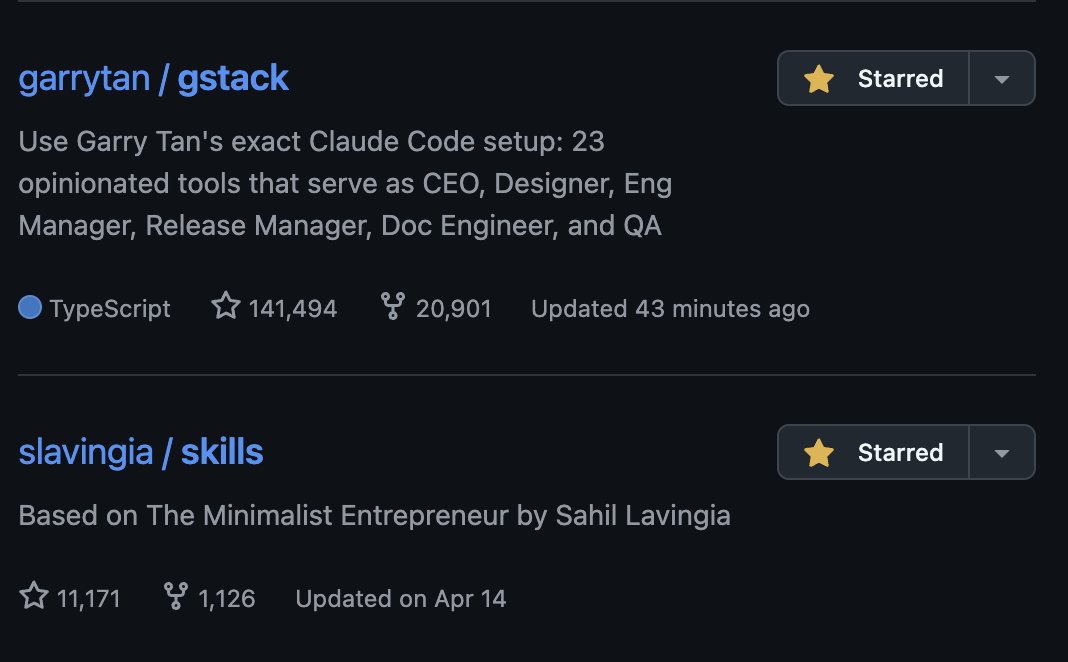
These days, anything that catches my eye during the week, a project or an agent skill, goes into a list called "Try it out!", and the weekend is when I actually sit down and play with them. Here's what's on it this weekend:
1. google/artemis → lets you automate Android apps just by describing what should happen.
2. NVIDIA/SkillSpector → checks an agent skill for hidden risks before you trust it.
3. cloudflare/security-audit-skill → lets your coding agent run a security audit on your code.
4. Open-Higgsfield-AI → lets you generate AI images and cinematic visuals on your own machine.
5. Claude-Red → turns Claude into a pen-testing partner.
6. garrytan/gstack → makes Claude Code act like a whole product team, from CEO to QA.
7. slavingia/skills → helps you think through building a small business, the 'Minimalist Entrepreneur' way.
Three of them are about skill security, and honestly that's because I keep installing more skills and reading fewer of them than I should.
I'll let you know which ones survive the weekend :)
Claude Code desktop finally gets custom themes, and you don't even have to touch a config file. Describe the look you want and Claude builds it as a mod.
Small updates like this are the ones I enjoy the most, because they make the tool you spend all day in feel a bit more like your own 👇
Microsoft'un 70'ten fazla ülkede Outlook, Teams ve Copilot'u 12 saatten uzun süre etkileyen kesintisi büyük ölçüde toparlanmış görünüyor.
Bu hatanın AI ile alakası olup olmadığını ben de merak ediyordum, çünkü ortada "rogue AI" teorileri dönüyordu. Microsoft açık açık yazmış, ne siber saldırı ne de AI veya agent'larla bir ilgisi var.
Sebep, daha önceki bir network kapasite yükseltmesinde kalan bir sorun. Bu sorun sessizce bekliyormuş ve yakın zamanda yapılan başka bir network değişikliğiyle ortaya çıkmış.
Postmortem yakında gelir, ben en çok o eski upgrade'de neyin gözden kaçtığını merak ediyorum 👇
OpenAI bugün ChatGPT Wallet'ı duyurdu. Visa, Mastercard ve Amex ile birlikte geliştirilmiş, agent kart bilgilerinizi hiç görmüyor ve merchant'a sadece o alışverişe özel bir network token gidiyor. Her siparişte onay için hâlâ Face ID ya da parmak izi isteniyor.
Bana öyle geliyor ki AI agent'ların en büyük sorunu hâlâ güvenilirlik ve ödeme adımını agent'a güvenilir bir şekilde teslim edebilmek bu sorunu çözmenin en kritik parçalarından biri. OpenAI bunu oturtabilirse IPO öncesinde ciddi bir avantaj elde edecek gibi görünüyor.
Outlook ve Microsoft 365, 15 saati aşkın süredir çalışmıyor. Dün Amerika'da Exchange Online'la başlayan sorun, Teams, SharePoint, Copilot ve Defender'ın Exchange'e bağlı özelliklerini de etkiledi.
Microsoft'un güncellemelerinde dikkatimi çeken şey trafiğin artmamış olması. Çok sayıda sunucu health check'lerden geçemeyip devre dışı kalmış, bu sunucularda secure connection kuran process aşırı yüklenmiş ve geri getirilen sunucular trafik döner dönmez yine yanıt vermez olmuş.
Henüz doğrulanmış bir root cause yok, AI'ın bunda bir etkisi olup olmadığı da belli değil. Postmortem'de ilk bakacağım şey, AI'ın yazdığı kodun ya da AI ile yapılmış bir değişikliğin işin içinde olup olmadığı olacak.
Microsoft stock dropped two days in a row after Anthropic launched "Claude Sheets" on Tuesday.
It fell nearly 3% during the day and closed 2.2% lower, then lost another 2.3% on Wednesday while most tech stocks were recovering. Today it's up around 1.4%, but it's still below where it was before the launch.
What surprises me is that Sheets is still in beta, and Anthropic itself says it only has simple spreadsheet features for now. So the market isn't reacting to what Sheets can do today, it's reacting to the idea that people may not need to open Excel when their work already starts inside Claude.