Our Restore Britain investigation has uncovered that the British taxpayer is funding condoms and lubricant for illegal migrants detained in immigration removal centres.
This is not a joke.
A Restore Britain Government will end the piss-take.
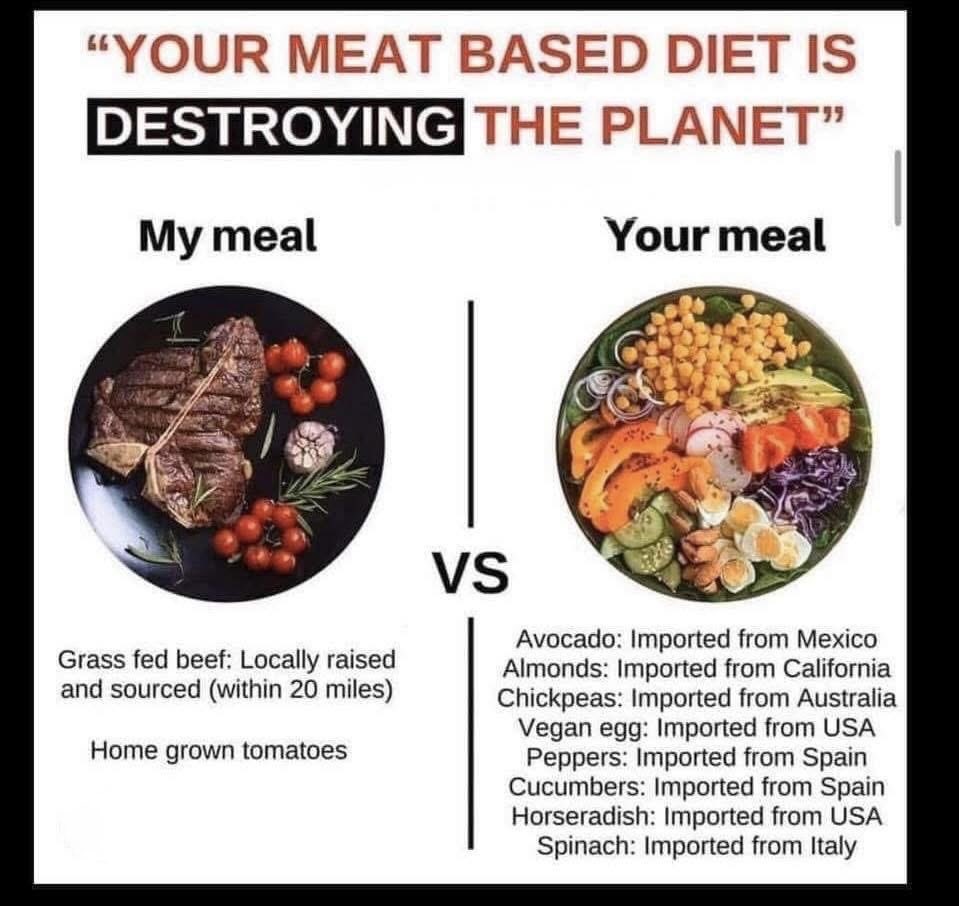
It’s absurd that Britain prioritises foreign food over what we can (and do) grow on our own soil.
Britain has some of the best farmland in Europe. We produce excellent wheat, potatoes, dairy, beef, lamb, apples, berries, brassicas and more. Our climate and soil are perfectly suited to a huge range of high-quality produce.
Yet year after year, supermarket shelves and government trade policy tilt toward imports — often at the direct expense of British farmers.
Cheap Spanish tomatoes, Dutch peppers, Polish chicken, New Zealand lamb and out-of-season fruit flown halfway around the world routinely undercut local growers.
Why? Lower production costs abroad, weaker environmental and animal-welfare standards in some cases, and a retail system that chases the lowest unit price above everything else.
The result: British producers face razor-thin margins, rising energy and labour costs, and the constant threat of being replaced by imports that would never meet the same rules if grown here.
This is not free trade in any meaningful sense. It’s a one-way preference for distance over quality, seasonality and national resilience.
Food security is treated as an afterthought until a supply shock hits. Carbon footprints from long-haul transport are waved away while British growers are lectured about sustainability. And rural communities that keep the countryside working are told to compete with subsidized or lower-standard overseas production while absorbing every new regulation.
Supporting what is grown here does not mean autarky or higher prices for everything. It means fair competition: applying the same standards to imports that we demand of our own farmers, prioritising seasonal British produce in public procurement and retail, and recognising that a country that cannot feed itself is strategically weak.
Preferring the imported option simply because it is slightly cheaper on the day is short-sighted policy dressed up as consumer choice.
Gerald is standing in green grass this August, and the field across the lane has gone the colour of a paper bag, and the only difference between the two of them is a plough.
You can see the line from the gateway. It runs along the hedge like somebody drew it with a ruler. One side is pale and cracked wide enough to put a finger in and it crunches when you walk on it. The other side gives underfoot, and it is green, and there is a nine hundred kilogram Hereford working across the middle of it at the speed of a man reading a newspaper he has already read.
The lane field was ploughed and reseeded four years ago. New ley, high yield, drilled for a heavy first cut, and it gave one, and it has given less every year since, because the roots on it stop about four inches down where the drill left them. Four inches of soil in a dry August holds nothing. The man who owns it has had the bowser out twice this week and is buying feed in the middle of summer, which is the thing no farmer wants a neighbour to watch him do.
Gerald's forty acres have not had a plough on them since some time in the eighteenth century. Nobody planted that sward. It arrived over two hundred years of being grazed and dunged and rained on and otherwise left alone, and it is about forty different things growing in among each other, half of which have no commercial name, several of which have gone down after water past two metres. There is no dry spell in the recorded history of this country that reaches two metres.
So the grass keeps coming in the worst month of the year, and the bull keeps eating it, and what he leaves behind goes back in and the beetles have it buried inside a week and the roots go down after it again.
He came down a ramp there at five months old, looked at the whole forty acres for about ninety seconds, and walked to the south corner. He has never revisited the decision. Not in a drought, not in a hailstorm, not in the eleven days of horizontal rain, not at minus six with the trough iced solid. Same corner, same hour, same pace, for four years, in a country where everything else has an opinion about the weather.
The south corner has seven wildflower species in it now, and a bumblebee count, and a dung beetle population, and none of that was anybody's project. It is just what happens to ground that has one animal standing on it who has never once been talked out of anything.
There is no scheme paying for any of this. No contractor, no invoice, no line in the paperwork, because in the paperwork this field is classified as unimproved land, which is the official term for ground nobody has got round to wrecking yet.
The hedge is thick. The wall stands because the bottom of it is grazed. The swallows are over the middle of the field at seven every evening working the flies that follow him about, and they are not over the lane field, because there is nothing over there to work.
Half the country is being told the animal in that field is the reason the weather has gone wrong.
The animal in that field is the reason it is still green.
Gerald has not been informed that he is unimproved. Gerald is in the south corner. The south corner is fine.
@AntiqSnapApp The valuations are fairytales! You could buy that blue and white plate at any car boot sale for 50p - and silver plate is virtually worthless.
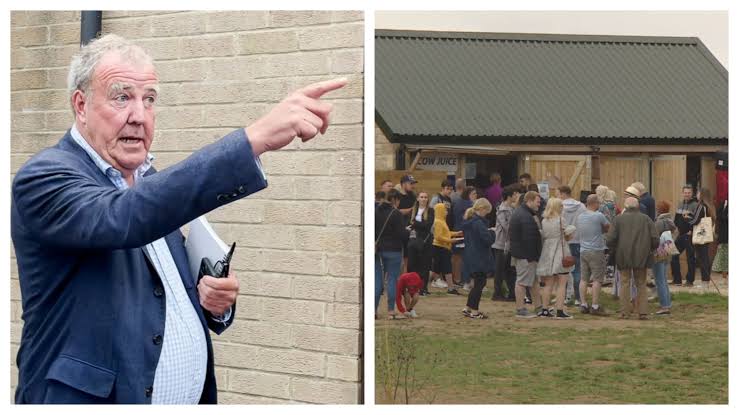
Jeremy Clarkson's farm shop was ruled by West Oxfordshire District Council to be incompatible with its countryside location. The countryside location is a farm.
Those are close to their own words. The nature, scale and siting of the operation was found to be unsustainable and incompatible with its countryside location within the Cotswold Area of Outstanding Natural Beauty.
The building at the centre of it was a lambing shed. Built for lambs. In a field. Next to other fields, which contain sheep, which is what the shed was for.
The council's other findings, over three years of this:
- A farm shop may not sell food grown more than sixteen miles away.
- A lambing shed may not become a restaurant.
- A car park for the people who come anyway was refused.
- Six weeks was judged ample to put the barn back the way it was.
Sixteen miles. Meanwhile the supermarket eleven miles down the road sells Peruvian asparagus, Kenyan beans and Brazilian beef, and no council has ever drawn a circle round it.
And consider what the Cotswolds actually are. Stone walls, stone barns, cropped green hills. It looks the way it looks because for a thousand years men kept animals on that ground and built things out of the rock underneath it. The beauty under protection here was manufactured, slowly, by farming. Every wall in the view was put there by somebody doing precisely what the council has now determined is out of keeping.
They are not protecting the countryside from industry. They are protecting a picture of the countryside from the countryside.
The shed offended nobody while it held sheep.
It became an eyesore the day somebody put a till in it.
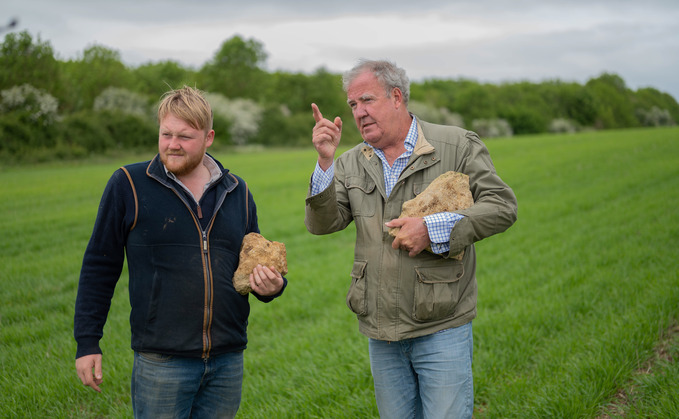
Two hundred of the thousand acres at Diddly Squat grew nothing at all this year. That was a decision taken in advance, on a spreadsheet. Wheat or barley on that ground was a guaranteed loss before the drill left the shed, so Jeremy Clarkson left it bare and explained why in his Sun column this week.
One line from it went everywhere. Farmers have reached the point where it is quite simply impossible to make money from growing food. Every paper carried that sentence, and every paper stopped there.
The list underneath it did not get printed anywhere.
Because he went on to set out what two hundred acres of good English ground could do instead of feeding anyone, and there were four items on it.
- Rent it to a global agri-company growing crops for anaerobic digesters.
- Cover it in solar panels.
- Put a data centre on it.
- Sell the farm to a Chinese company for a multistorey high-intensity piggery.
Every one of those pays. The only use of that land which reliably loses money is the one that puts food on a British plate. He added that he was not being ridiculous, and that anybody in 1926 would have laughed you out of the room for suggesting the factories would be gone by 2026.
Now the bit with a date on it.
From 1 January 2027 the UK's carbon border tax applies to imported fertiliser. The Treasury's own costings put the take at £140 million in 2027-28, rising to £180 million the year after. Estimates of the hit run from around £33 a tonne to £75, which is a fifth to a quarter added to the largest input bill an arable farm carries. The Central Association of Agricultural Valuers has warned that a typical 500 acre cereals farm could be down as much as £70,000 once fertiliser and fuel costs land.
So the fertiliser that grows the wheat gets taxed on a known date, in writing, by a government that says out loud it wants food security.
Nobody in Whitehall has ever signed a policy to stop Britain growing food. They have signed a great many that make every alternative pay better, which arrives at the same field.
And understand whose field this is. Diddly Squat has a television crew, a farm shop with a queue down the lane, a pub, a lager brand, a bestselling book every autumn and one of the best land agents in the country. It is the most commercially advantaged thousand acres in Britain, and two hundred of them were left bare this year because putting seed in them was the losing move.
Every arable farmer in England is doing that same sum this autumn. Almost none of them have a production company to cover the difference.
Those two hundred acres have not gone out of production. They are waiting to hear which industry wants them more than you do.