One of the hardest things during Step 1 prep is doing your Anki reviews, feeling you know the material, then opening UWorld and struggling to apply it to clinical vignettes. In this thread, I’ll discuss how I structured my cards to be exam driven #MedTwitter#usmle#Step1
One of the hardest things during Step 1 prep is doing your Anki reviews, feeling you know the material, then opening UWorld and struggling to apply it to clinical vignettes. In this thread, I’ll discuss how I structured my cards to be exam driven #MedTwitter#usmle#Step1
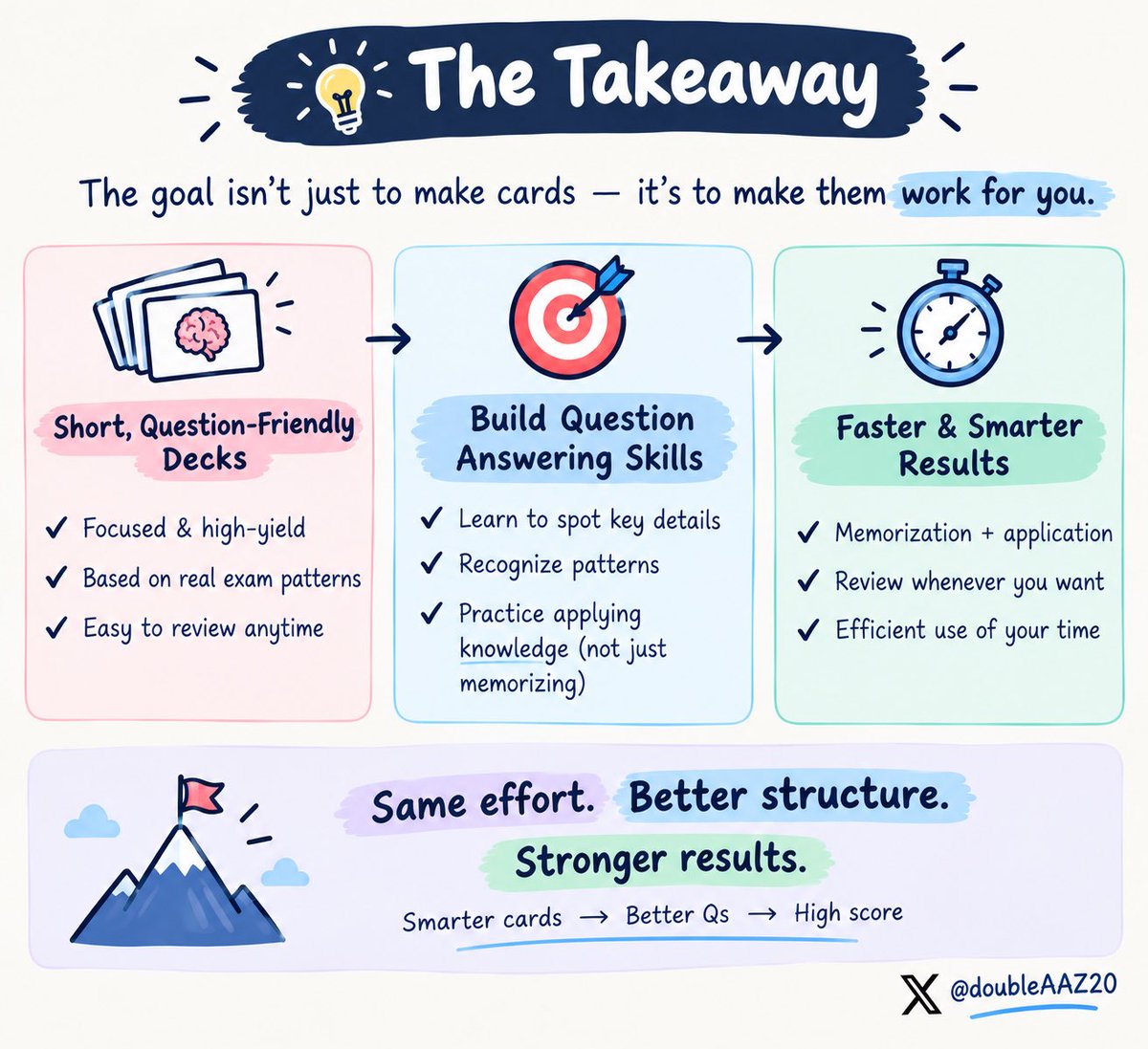
So To sum up,The aim of this process is to do a question-friendly short decks that you can review whenever you want and build the skill of answering questions along with memorization in the fastest time possible, Thanks for reading!
Notice in the video above that those are 2 bullet points which aren’t necessary to make vignettes for, and that I didn’t make 2 isolated cards but one card only to lessen the amount of overall cards and be easily reviewed.
I tried to show cards of different systems to point that there is a pattern on all systems, A final note on this type of cards is that there are some isolated points where you don’t need to force this approach hence Cloze cards is used , here is an example 👇🏻
With this approach, you gain experience of reading vignettes , lessen amount of cards reviewed, informations are arranged correctly all along in your brain and time spent making those cards don’t feel as wasted time in fact it builds a strong base.
found add important points , another addition I would make is to add a photo I liked showing Pathophysiology of the answer , a comparison table or a short note not worth making card for but I do it after I answer the card , here is an example 👇🏻
In the above photo as I explained I headlined a topic then wrote the subtopics below it and copied both to Claude where I sent a prompt to make a vignette-like question on each that covers all points asked on Uworld , then I copy the vignette , mark important points and if not —
The above photo mentions several topics that mostly appear on Qs and you have to differentiate between, the efficient way to make cards is to write for example Nephrotic Syndrome , its subtypes then add a vignette and write the answer on the back , here is a Renal Example 👇🏻
The USMLE exams are MCQS that are mostly dependent on you telling the differences between similar choices of a group of commons ,and Each system in general can be subdivided into choices or groups where you can choose and spot differences from , for example hematology 👇🏻
To begin with, Doing your own cards is better than reviewing an already made deck by far imo, An already made deck tends to be big that it exceeds 10k cards which if you even reviewed, you’ll face a problem with answering Qs as those decks tend to be more memorization based.
So let’s discuss Card Making, Most of my cards were of the Basic Type but not the typical card flipping style , they were vignette based cards with photo additions and table comparisons that cover the amount you can see in 20 cards but let’s see why this style is the best IMO.
The another problem is even if those cards are lesser in card number , by doing them directly after reading your 1st aid for example , your brain didn’t have the best method to analyze the informations you have just studied unlike doing the cards from scratch.
One of the hardest things during Step 1 prep is doing your Anki reviews, feeling you know the material, then opening UWorld and struggling to apply it to clinical vignettes. In this thread, I’ll discuss how I structured my cards to be exam driven #MedTwitter#usmle#Step1
A month ago , I passed Step 1 in the age of 20 , Starting from this thread every Wednesday I will discuss a certain topic that helped me pass the real deal and I will start with Anki Usage and how I made it an important part in my prep
#Step1#MedTwitter#Anki#USMLE
@ShahriyaarOvais For pharma , I didn’t study it in isolation I did it with each system normally , More talk about doing the cards themselves will be next week.
@ShahriyaarOvais For Micro I studied it parallel with the systems I took, I watched 2 sketchy videos per day and used the AnKing Micro Deck instead of creating my own cards, if I studied Brucellosis and Leptospirosis I browsed them in the Anking deck then copied them to a customized deck I made
@DrMohammadDeeb No after finishing the 13 day review in case of (150-300 cards) it stays in this preset till you finish all systems , so each day a 25 card will appear of this certain system until you finish your first pass.