Organoidist (trying to be) interested in using various tissues derived organoids with current focus on placenta organoids as microbial infection model.
I'm super exciting to share my first (maybe also the last) 1st author paper during my postdoc training process with @scienceCC , of course with our amazing team work from @eleanor_semmes@ChristinaMegli@SalliePermar.
https://t.co/LFH25wnSQ1
Check out this beautiful paper from our collaborator in UK reporting placental organoids can be derived from frozen cells isolated from term placenta.
Long-term culture and passaging of term trophoblast for the investigat... https://t.co/pwUOvgzOSR
Stay tuned for my full conversation with @valdi001 tomorrow in my Friday Message. We discuss the new name of the Department of Integrative Immunobiology. Watch a clip from our conversation. 👇
@ImmunologyDuke
Had a really enjoyable days @ Santa Fe, NM , it was a harvest meeting, I'm so glade to see so many excellent scientists in Maternal- fetal interface field.
Hats off to @LazearLab @DMAronoff and @scienceCC for organizing an outstanding @KeystoneSymp on Infections in Pregnancy. It was great to see everyone in Santa Fe this week; thank you for the opportunity to participate.
Organoids developed from human placental tissue can be developed as models to study vertically transmitted microbial infections. https://t.co/54VrImx8t9
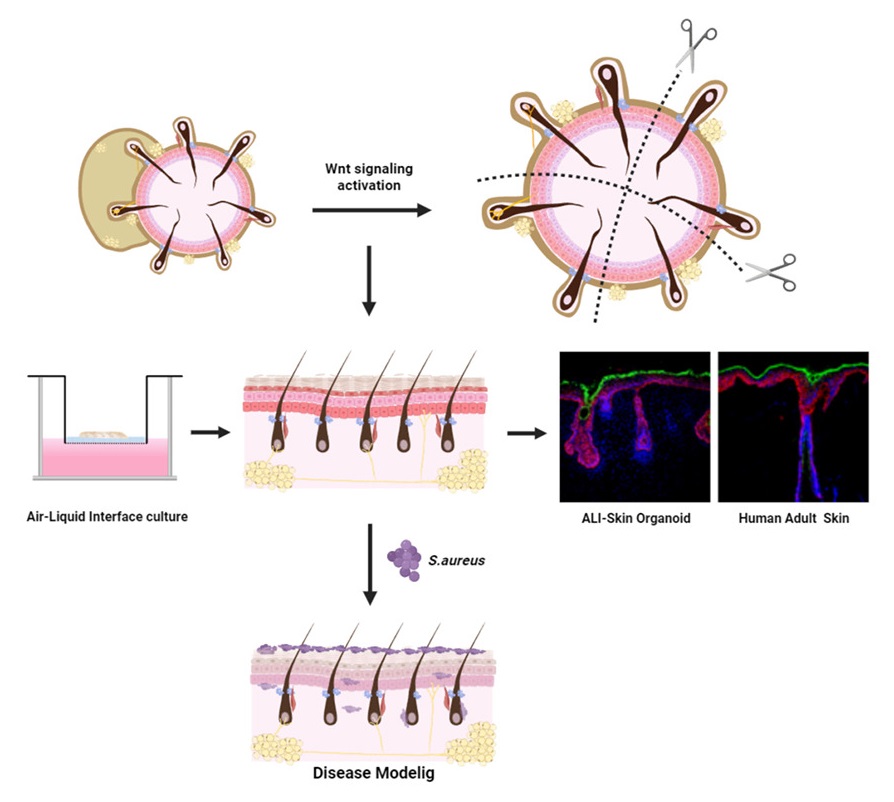
Check out this @iScience_CP paper! 👇
It presents a new air-liquid interface-#SkinOrganoid platform that may be a useful tool for modeling human #SkinDiseases and evaluating the efficacy of novel therapeutics.
Read more: https://t.co/WKQGM2tV75
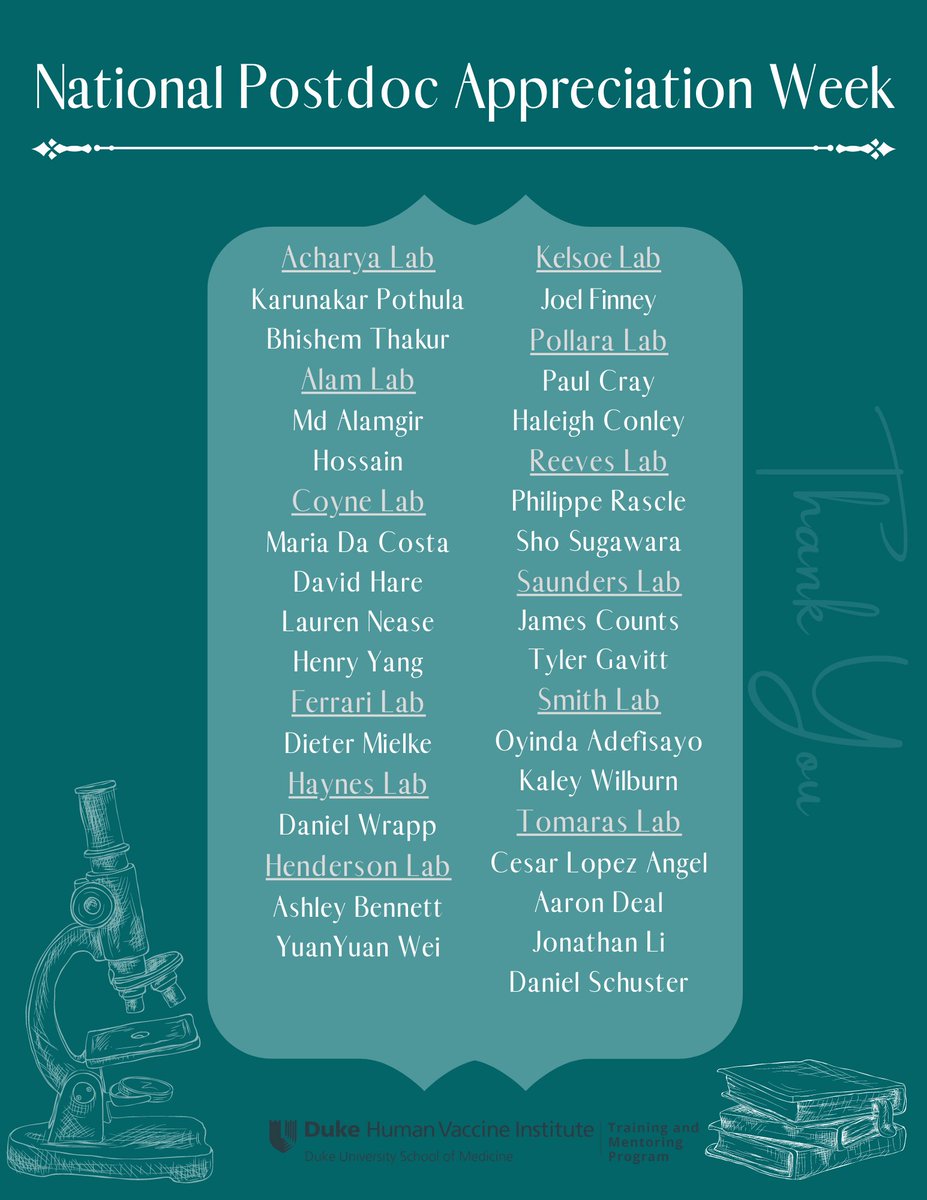
It's #NationalPostdocAppreciationWeek! We appreciate our Postdocs' significant contributions and dedication to science while advancing the mission of the Duke Human Vaccine Institute. We're excited to be a part of their journey!
Still remember my PI @scienceCC mentioned this virus leads the epidemic in the pediatric group with a every several years cycle pattern. As a 2-y old kid parents, hope this year is not the climbing stage given that we have pretty got used to masking than ever.
As @kmess44 has been saying, lots of respiratory illness out there right now, lots of #EVD68. The @CDCgov released an official health advisory about this today (linked). All pediatric providers need high clinical suspicion for #AFM in next few months.
https://t.co/hgI11cBaji
I'm super exciting to share my first (maybe also the last) 1st author paper during my postdoc training process with @scienceCC , of course with our amazing team work from @eleanor_semmes@ChristinaMegli@SalliePermar.
https://t.co/LFH25wnSQ1
@SalliePermar@scienceCC@eleanor_semmes@ChristinaMegli Yes, I think we already have some answers about your question that we believe the Type 3 IFNs play an important role in preventing the spread of HCMV at the maternal-fetal interface by using the Organoids models, the details can be found in Fig4, Fig7 & 8.
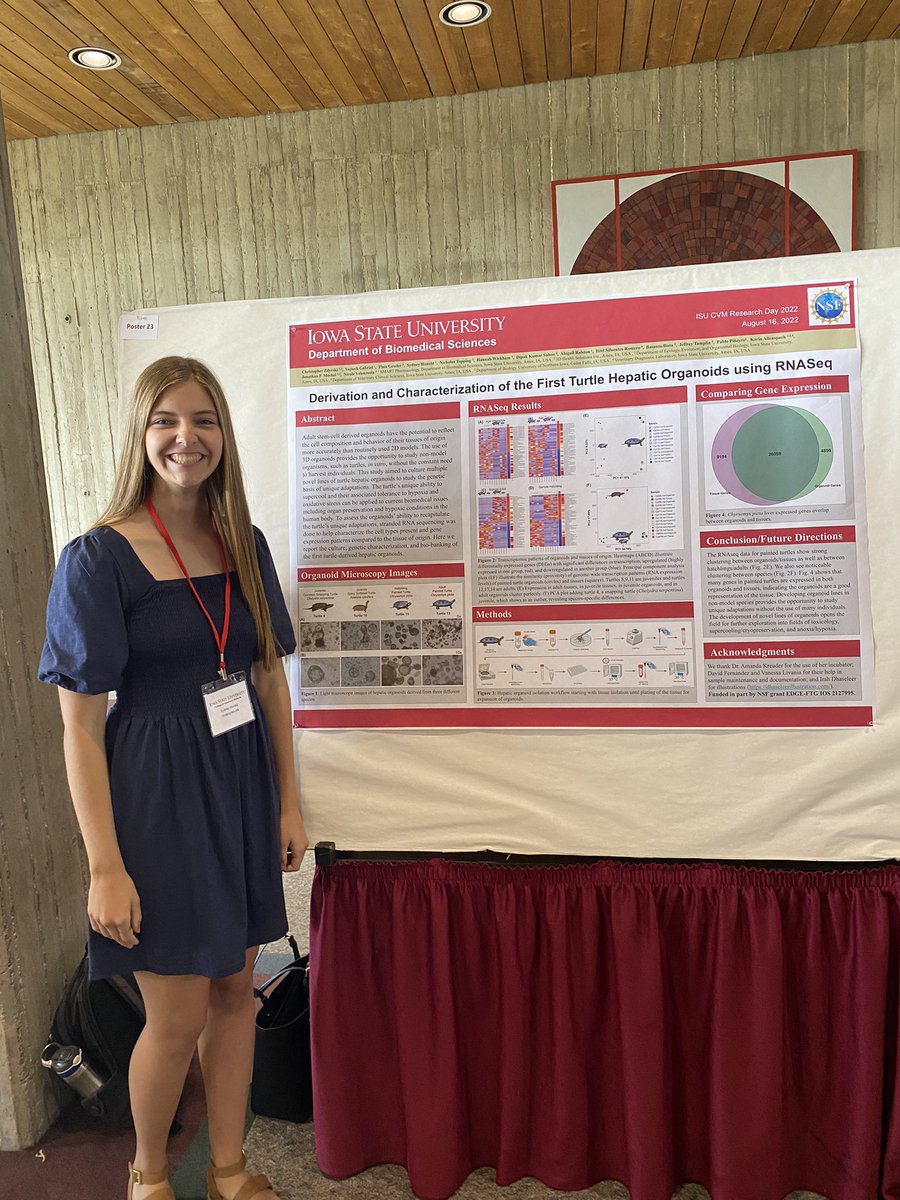
Participated in my first research symposium today with my poster on the derivation and characterization of the first turtle hepatic organoids! Huge thank you to everyone involved!🐢🧬
@AcademicChatter@ISU_GenMajors@ISUVetMed
@scienceCC Thanks for your highly praise, my Prof! I'm afraid I can't make it to the end without your strong support! Looking back I really appreciate your decision moving to Duke, which is a super great decision that lets me access much more tissues to pursue the success of this project.
Last point of this study I think it's worth to mentioned is we established the co-culture model of fetal derived Trophoblast organoids(TOs) and maternal decidua derived Decidual organoids, then use it to recapitulate viral infection at maternal-fetal interface in vivo.