@BleepinComputer CTI report titled “Ghost in the Granite,” which covers the cyberattack on SAP.
SAP's public repos show its response: a daily code sync stopped on 18 Nov, 8 days before the news; signed commits rose from 6% to 34%.
HTML: https://t.co/9EooHKLrCE
PDF: https://t.co/CWRrQyJ7Nf
@BleepinComputer Here is my CTI Report, titled “Ghost in the Gateway”, on the Azure API Management Classic flaw: what the gateway held, the likely way in, why the fix revoked nothing, and what APIM owners should rotate and hunt.
HTML: https://t.co/TeS3NZG7pn
PDF: https://t.co/SnPenKsfnQ
@craiu Here is my CTI Report, titled “Ghost in the Gateway”, on the Azure API Management Classic flaw: what the gateway held, the likely way in, why the fix revoked nothing, and what APIM owners should rotate and hunt.
HTML: https://t.co/TeS3NZG7pn
PDF: https://t.co/SnPenKsfnQ
Someone sitting 14 meters away can pair to your wireless headphones in about 10 seconds without you touching a button, tap into the mic, or claim them as a location tracker.
KU Leuven researchers disclosed this as WhisperPair (CVE-2025-36911) and published the paper at IEEE S&P 2026. It affects hundreds of millions of Bluetooth accessories built with Google Fast Pair, including Google Pixel Buds Pro 2, Sony's WH-1000XM4 through XM6, JBL, Jabra, Marshall, and Nothing.
Fast Pair is the protocol that lets earbuds pop up on screen and connect with one tap. The spec says headphones must ignore pairing requests unless you physically put them into pairing mode. Many manufacturers failed to enforce that check in firmware, and the devices still passed Google's certification. Even while the headphones are on your head, they still answer incoming Fast Pair requests from an ordinary laptop or phone nearby.
Once paired, an attacker can play audio into your ears or record through the headset mic. The stranger catch hits iPhone users hardest. Because the flaw sits in the headphone firmware, it still works if you only use those headphones with an iPhone. On models that support Google's Find Hub network, if the device was never linked to an Android phone, an attacker can write the first owner key and track it from their own Google account. Even when iOS shows an unwanted tracker alert hours later, it names your own earbuds, so most people dismiss it as a glitch.
Updating iOS or Android won't fix this, and a factory reset only clears an existing pairing without patching the flaw. Manufacturers have pushed firmware patches for many models, but you have to install them through the brand's companion app, which most people never open after unboxing.
You don't even need to break Bluetooth encryption if the headphones doesn't check whether you asked them to pair.
Masstin 1.5 is out, five years in the making
Lateral movement, from raw evidence to video:
▸ Disk images, triages, no mounting
▸ All OS, one timeline
▸ Carve, VSS
▸ The intrusion as a map
▸ Hunt: PageRank, Louvain, no AI. LANL: top 83 all red team
https://t.co/Zx35jgMMVn
Ransomware hit an unnamed water treatment plant on the US East Coast this month, then spread into the network of the local government that oversees it.
US security firm ThreatDown, which guards the government's computers, says it cut 48 of them off the network after three were encrypted, and saved the other 45.
Every computer at the plant went offline temporarily for clean-up. ThreatDown says it has no evidence of boil-water notices or a switch to manual operation.
The ransomware is Booba, a criminal brand first seen this summer. ThreatDown says it is behind 44% of its recent ransomware cases.
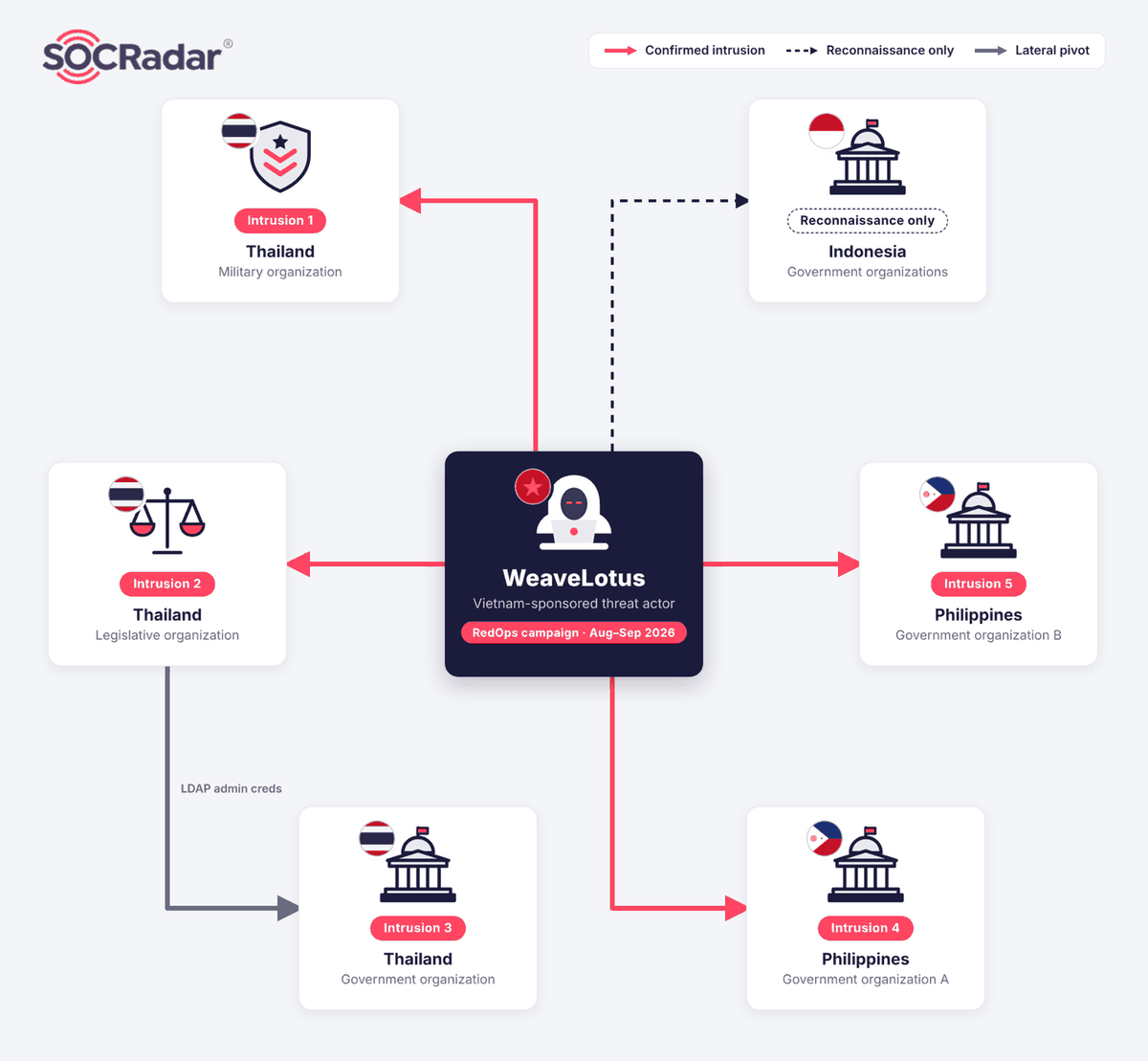
I think SOCRadar got intot the threat actor's trap for attribution. This threat actor isn't Vietnamese threat actor.
First, The AI comment the code in Vietnamese is a very low attribution consider AI can comment in any language.
From what I hear, this one is pretty bad: Microsoft Azure flaw exploited to steal customers' API credentials -
https://t.co/1yJJmUAcjT
no CVE, no details from Microsoft yet.
Quick Pivot via JARM: 1dd40d40d00040d00042d43d000000831b6af40378e2dd35eeac4e9311926e. It resolves to 2.56.172[.]206, a Serbian datacenter IP exposing a suspicious "Israel Admin Dashboard" login panel on ports 80/443. The IP holds a 100/100 threat score, flagged by vendors 🧵👇
Group-IB #ThreatIntelligence has uncovered a Telegram recruitment network operating since August 2024, with 88 tracked accounts publishing 3,089 recruitment posts across communities in Israel, the Gulf, the UK and the US. The observed activity includes recruitment appeals associated with #VIPEmployment, ranging from generic paid-work offers to explicit appeals claiming to recruit for Iranian intelligence services. While previous research has documented overt #Recruitment campaigns, Group-IB's investigation reveals a broader and less visible dimension of this activity, uncovering largely undocumented connections between those explicit intelligence appeals and seemingly legitimate employment opportunities. Group-IB has not independently attributed these campaigns to a state actor.
No zero-days required. WeaveLotus breached 5 government networks in Thailand and the Philippines with known flaws:
→ GeoServer CVE-2024-36401
→ osTicket CVE-2021-42235
→ JasperReports default creds
→ Laravel debug mode left on
TTPs and IoCs: https://t.co/yA7CpTFqTH
#ThreatIntel
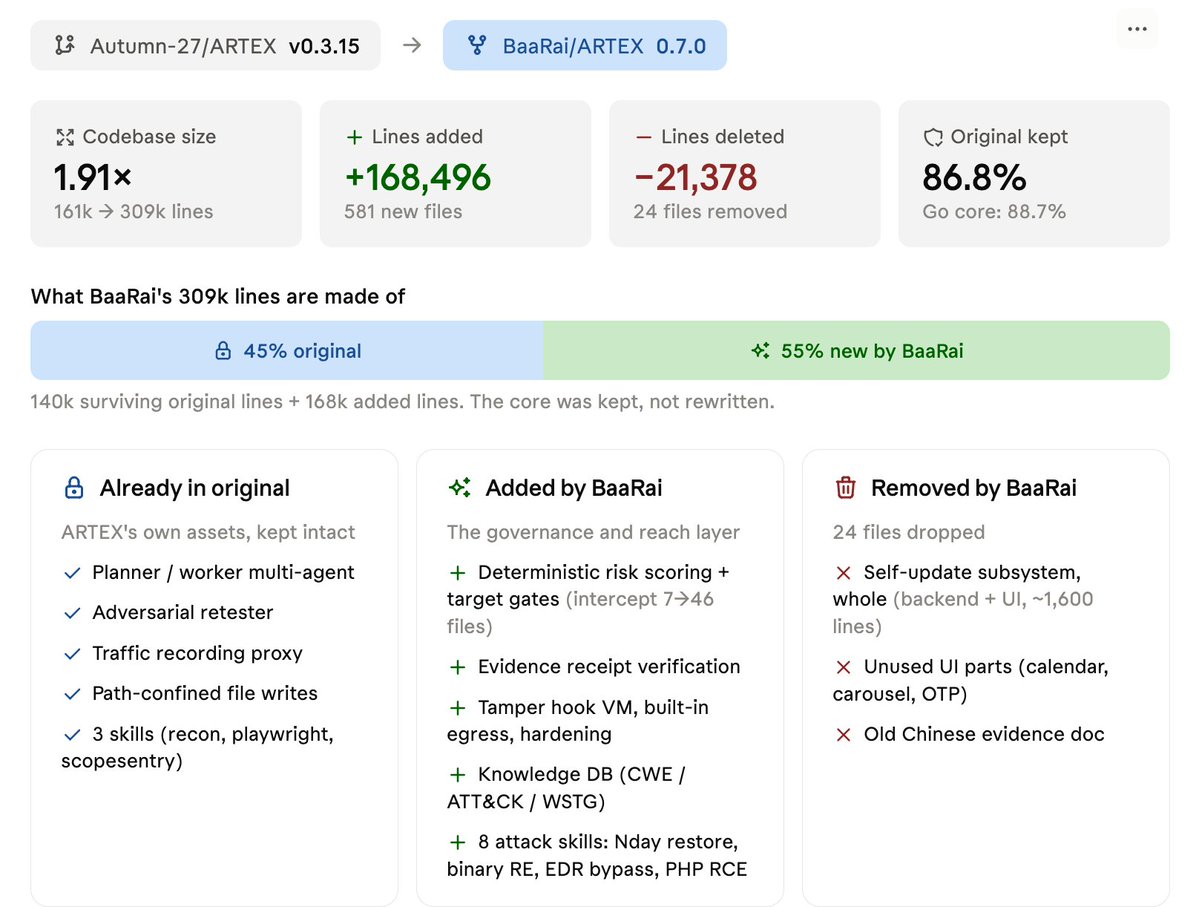
If you want a little more control to use Artex I build a little something:
https://t.co/WK5sqmzz87
Still, it could do "things". Either by trying to abuse your LLM infra or by using allowed channels.
I observed nothing malicious so far.
I did not do deeper traffic analysis.
2026 Hong Kong Data Breach Timeline
Apr-Nov 2026: 22 major incidents, 13 of which occurred in November. Disclosed impact (est.): 3,448,043 individuals' records (non-unique). Sorted by announcement/notification date.
https://t.co/MIZ5DleuYO
The #Microsoft#Entra#Connect#Health#API exposed details to unauthorised callers went undetected for 109 days.
This CTI report covers the timeline and what each exposed field could reveal to an attacker.
HTML: https://t.co/ASgborpcHV
PDF: https://t.co/DJWA6FDewv