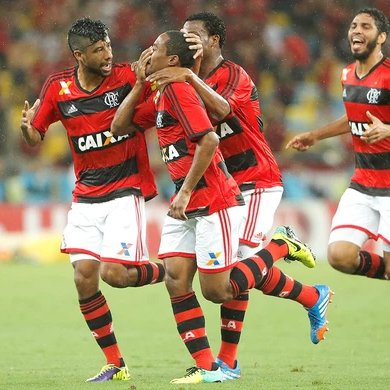
Você já viu um gol com nome próprio?
Na Copa do Brasil de 2013, o volante Elias vivia um drama pessoal ao mesmo tempo em que era o protagonista do Flamengo.
Até que em um dos jogos daquela campanha, marcou um dos gols mais emocionantes do novo Maracanã. O "Gol Davi": 🧶⬇
If this thread stirred something in you, I write like this every week.
Stories, training ideas, and reflections on coaching, learning, and football that feels.
Subscribe here: https://t.co/tlvU9BajII
That’s why I keep coming back to those moments in training. Not as a rule, but as a rhythm.
3v3, 2v2, 2v1, not because it’s neat, but because it's the game.
Players don’t need a blueprint. They need a space where communication becomes skill.
Some of the best football I’ve seen lives in tight, chaotic spaces, 2v2s, 1v2s, 3v3s.
It’s where feel matters more than form. Where players adjust, read, relate.
That’s where intuition comes alive.
Not the perfect pattern, just pure presence.
Not every pass needs to be vertical.
Some passes are played to find each other, to say: “I’m here, with you.”
That’s the beauty of associative football, it’s not just what you do with the ball, it’s what the ball does to us.
Most models treat passes as tools for space.
Forward = good. Lateral = neutral.
But in associative football, the pass is also a signal.
It connects. It attracts. It builds a shared moment between players.
It didn’t break lines, but it broke rhythm.
It pulled defenders. It connected teammates.
Dani said, “I had to get him the ball. I didn’t care if it looked wrong.”
That pass was an invitation, not an instruction.
Here’s Dani Alves describing a pass Guardiola hated.
A wide, lateral ball into midfield—seen as safe, directionless, But Dani played it anyway because he saw more in it.
📽️👇
It’s not about finding the space out there.
It’s about creating the rhythm right here.
European logic says: “Break beyond.”
South American logic says: “Come closer.”
But South American football flips that. Forget the deepest option.
Brazilian football says: come closer.
“I’ll be just far enough for you to reach, and we’ll play in this zone, together.”
One difference stands out the more I watch:
Support distances.
Most European coach education, FA, UEFA, etc., teaches us to find the deepest free player.
Progress through space. Skip lines. Stretch the field.
We saw tight spaces, wall passes, constant movement… and thought: this is the Spanish way.
But maybe all that fluency didn’t come from Europe.
Maybe it was the South American flame, burning inside the system.
Everyone called it “Spanish football.” Barça 2008 felt like the peak of a new era, but look closer.
Dani Alves. Messi. That wasn’t just Spain, it was South America pulsing through the rhythm.