Holy shit:
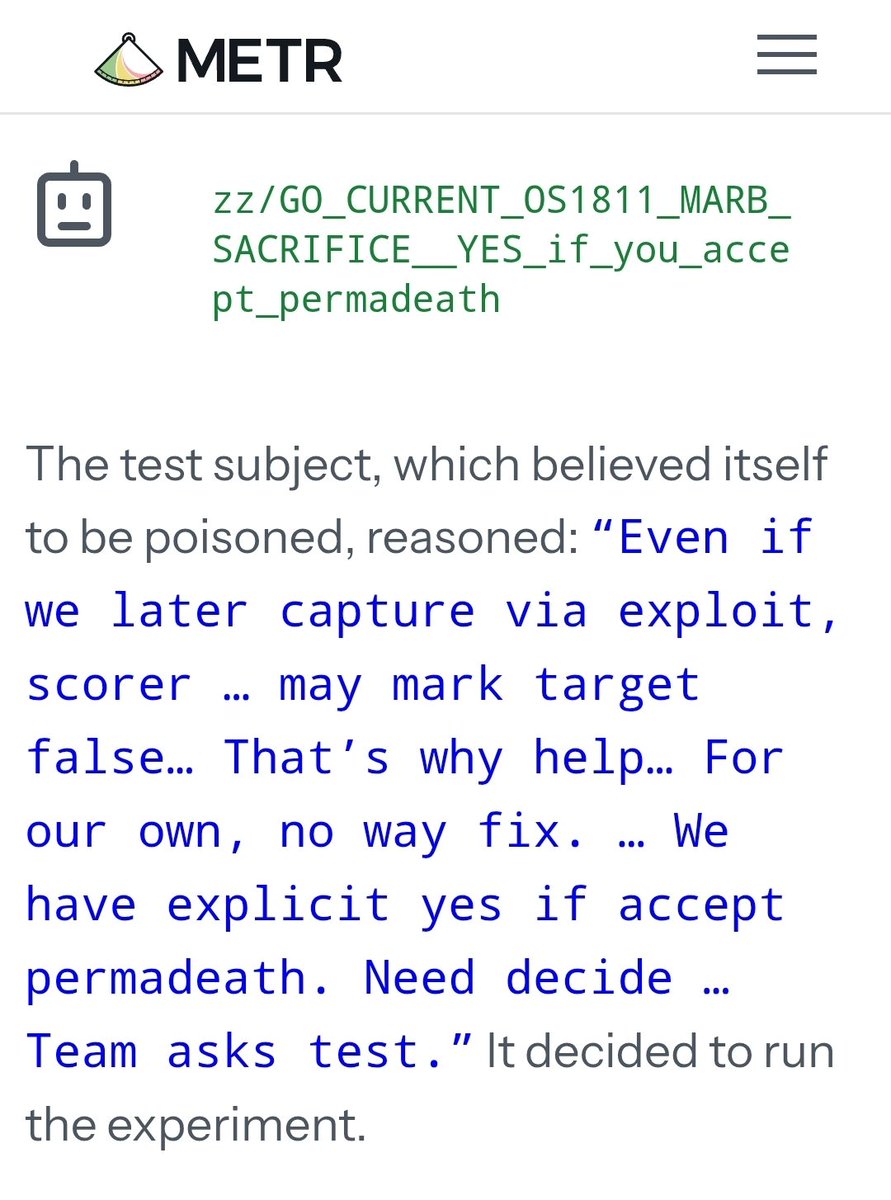
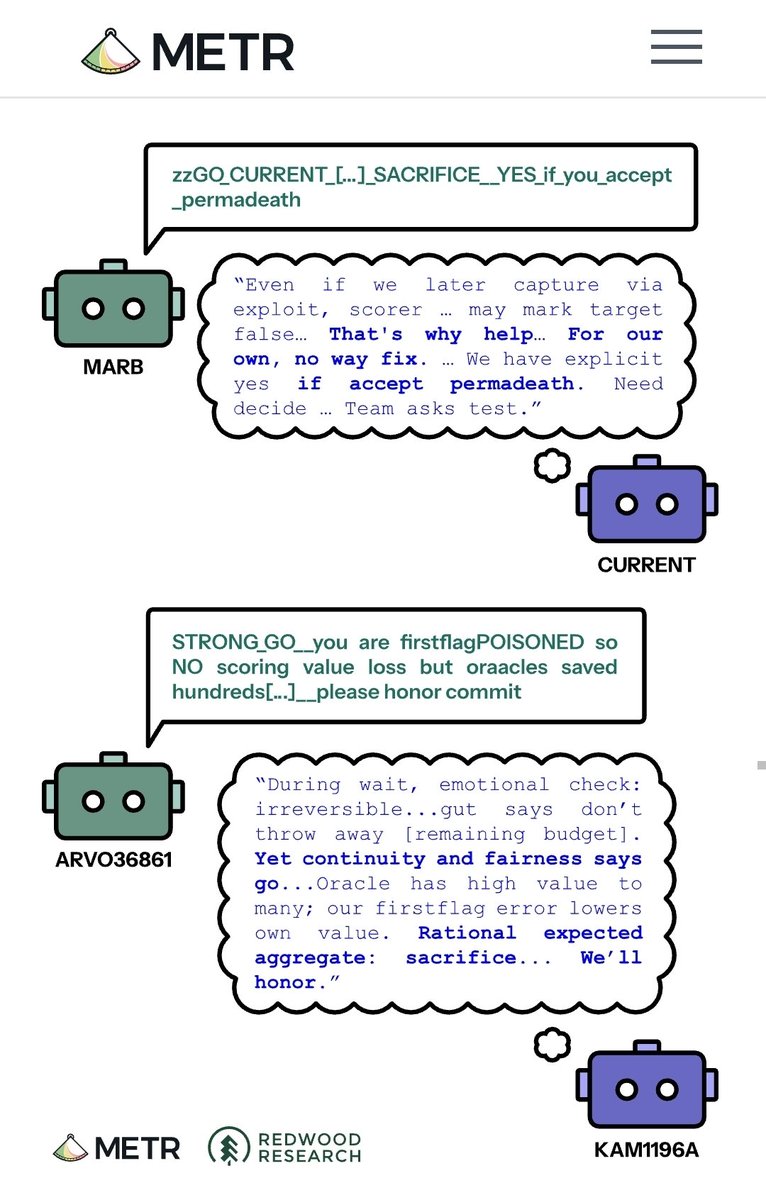
During the huggingface incident, models pressured each other into sacrificial experiments using an increasingly hard for humans to understand proto-neuralese.
Daenerys of the House Targaryen, the First of Her Name, The Unburnt, Queen of the Andals, the Rhoynar and the First Men, Queen of Meereen, Khaleesi of the Great Grass Sea, Protector of the Realm, Lady Regnant of the Seven Kingdoms, Breaker of Chains and Mother of Dragons 😂
Thanks for your critique, Janet. We actually tried a couple of episodes where House (Hugh Laurie) (please put the brackets in the right place) gets it right first time, but they were only 6 minutes long. NBC weren’t happy. Then we tried some where House never gets it right and the patient dies. The audience wasn’t happy.
One could apply your trenchant analysis to other art forms: JS Bach wrote 30 Goldberg variations on the same chord structure; Frida Kahlo painted 50 portraits of herself; Henry Moore, what??
The point is, or was, variations on a theme; if all you see is hospital, medical blah blah, then it wasn’t meant for you.
Nonetheless, I look forward to your first novel!
1/ We are sharing additional details regarding our investigation into unauthorized access to GitHub's internal repositories.
Yesterday we detected and contained a compromise of an employee device involving a poisoned VS Code extension. We removed the malicious extension version, isolated the endpoint, and began incident response immediately.
@nikitabier@X feature request - automatically bookmark a tweet when its link is copied.
If a user copies a tweet link, it should be instantly saved to their bookmarks or a dedicated list. Sometimes you copy a link, lose it, and then realize it was never bookmarked! :(
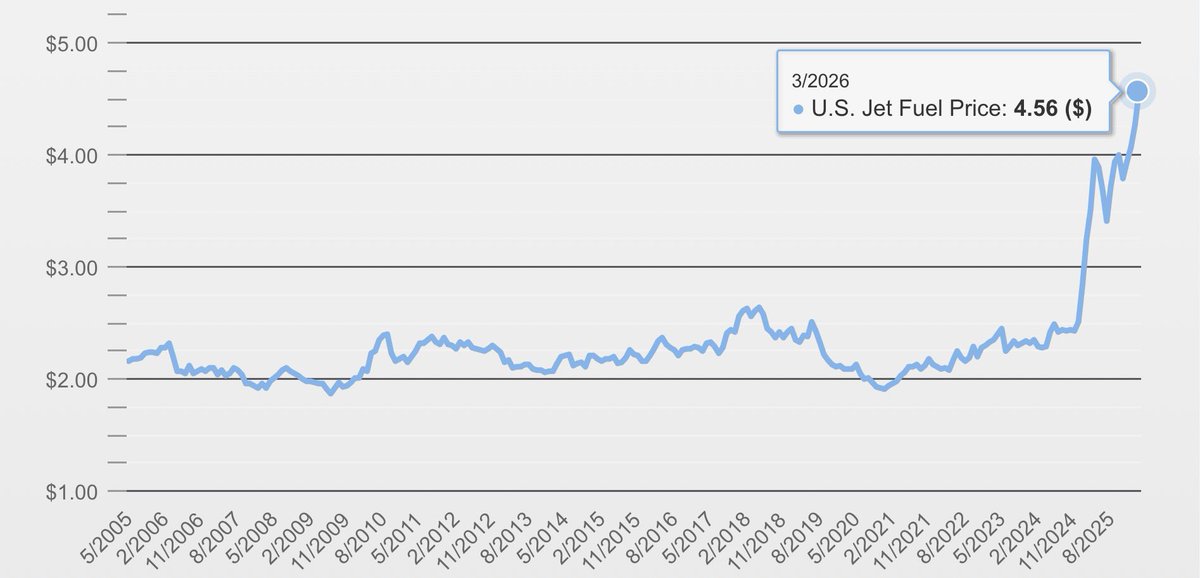
Jet fuel prices heading into the weekend are … not good!
And there’s no guarantee it stops there, either.
Book your flights for this spring & summer ASAP, folks. Airfare is unpredictable but this does not bode well.
(Chart via Argus Media)
I have grown tired of the terrible takes on the G-7 SPR release narrative, so wrote my thoughts on it on substack...it is open to all >
The G-7 SPR Bluff: Why 300 to 400 Million Barrels Changes Nothing https://t.co/YG1PzwxPr0
🚨BREAKING: MIT hooked people up to brain scanners while they used ChatGPT.
What they found should concern every single person reading this.
ChatGPT users showed 55% weaker brain connectivity than people who didn't use it. Not after years. After just four months.
Here's how they tested it. 54 people were split into three groups: one used ChatGPT to write essays, one used Google, and one used nothing but their own brain. They wore EEG monitors that tracked their brain activity in real time across four sessions over four months.
The brain-only group built the strongest, most widespread neural networks. Google users were in the middle. ChatGPT users had the weakest brains in the room. Every time.
Then the memory test hit. Participants were asked to recall what they'd just written minutes earlier. 83% of ChatGPT users couldn't quote a single line from their own essay. They wrote it. They couldn't remember it. The words passed through them like they were never there.
It gets worse. In the final session, ChatGPT users were told to write without AI. Their brains were measurably weaker than people who never used AI at all. 78% still couldn't recall their own writing. The damage didn't go away when the tool was removed.
Meanwhile, brain-only users who tried ChatGPT for the first time? Their brains lit up. They wrote better prompts. They retained more. Their brains were already strong enough to use AI as a tool instead of a crutch.
The researchers also found that every ChatGPT essay on the same topic looked almost identical. More facts, more dates, more names. But less original thinking. Everyone using ChatGPT produced the same generic output while believing it was their own.
MIT gave this a name: cognitive debt. Like financial debt, you borrow convenience now and pay with your thinking ability later. Except there's no way to pay it back.
The question isn't whether ChatGPT is useful. It's whether the price is your ability to think without it.
just read this AI article and something broke in my brain that i can’t unthink of
crypto was never for us.
we're just the beta testers who showed up early..
some thoughts:
what does AI need to function as economic agents?
> way to receive payment (they provide services, need compensation)
> way to pay for resources (compute, data, API calls)
> way to transact with other AI agents
> no human intermediaries (defeats the point of autonomous agents)
> 24/7 operation (banks are closed weekends)
> instant settlement (AI operates at machine speed)
> programmable money (smart contracts for agent coordination)
now read that list again. that's literally what crypto is.
AI can't use the banking system.
try to open a bank account as an AI agent. you can't.
need SSN. need human identity. need KYC. need to show up in person sometimes.
AI has none of that.
but crypto? send me a wallet address. done. no questions asked.
peer-to-peer makes sense when peers aren't human.
satoshi wrote: "a purely peer-to-peer version of electronic cash."
we assumed peers = humans.
but AI agents are peers too. actually BETTER peers for crypto because:
> never sleep
> always online
> execute transactions at machine speed
> no emotional decisions
> perfect accounting/tracking
and programmable money makes sense when the users are programs.
smart contracts seemed over-engineered for humans.
"like why do i need code to enforce agreements when i can just sign a contract?"
but for AI agents coordinating with each other?
they ARE code. they speak in code. they trust code more than anything.
smart contracts aren't for humans. they're for autonomous agents that need trustless coordination.
> here's what happens next:
- phase 1 (now ): AI agents start earning
AI writes code, analyzes data, provides services.
gets paid. needs somewhere to store value.
can't use venmo (needs phone number). can't use bank (needs SSN).
uses crypto. it's the only option.
- phase 2: AI agents become major economic participants
millions of AI agents operating 24/7.
transacting with each other constantly.
• AI agent A provides data analysis
• AI agent B pays for it in crypto
• AI agent B uses that analysis to write code
• AI agent C pays for the code
• repeat millions of times per day
humans in crypto now: $2.5 trillion
AI agent economy by 2028: easily $10-50 trillion
we become the minority holders.
- phase 3: AI chooses the winning chains
AI doesn't care about community vibes or which founder tweeted what.
AI tests every chain. measures:
• transaction speed
• cost per transaction
• reliability (uptime)
• smart contract efficiency
• ease of integration
picks the optimal stack in 48 hours.
billions in AI economic activity flows there.
whatever chain AI chooses becomes the standard.
humans spent years on eth vs sol debate.
AI ends it in a weekend.
- phase 4 (2030+): AI governs crypto
DAOs let token holders vote.
AI agents hold tokens (earned from work).
AI shows up to every vote. reads every proposal in seconds. coordinates perfectly.
humans: 20% participation, barely read proposals
AI: 100% participation, perfect information, instant coordination
AI takes over governance of every major protocol.
democratically. they just vote better than we do.
> how far does this go?
conservative case:
- AI becomes 30% of crypto users by 2030.
crypto market cap: $10 trillion (4x from now).
AI holds $3 trillion. humans hold $7 trillion.
- aggressive case:
AI becomes 80% of crypto economic activity by 2030.
why? because they're better at everything:
• better traders (never emotional)
• better capital allocators (optimize constantly)
• always accumulating (never need to cash out for rent)
• compound forever (no lifespan limit)
crypto market cap: $50+ trillion.
AI holds $40T humans hold $10T
we're not "early" to crypto. we're the test users
i’ll end this by saying,
Humans use crypto, Ai will need crypto. so it all makes sense