PBS fails to explain:
(i) Kushner's Affinity operates as a vehicle for Kushner to receive annual bribes/paybacks from its foreign investors—Saudi Arabia, the UAE, and Qatar—via a management fee (1.25% to 2% of the amount invested)
(ii) Affinity profits from Israeli settlements in Palestine via its 10% investment in the Israeli company Phoenix, making it the company's largest owner (2025.01.16, The Lever, by Freddy Brewster and Katya Schwenk, "As Ceasefire Nears, Jared Kushner's New Investments Could Boost Israeli Settlements; Just before the Israel-Hamas war ceasefire deal, Donald Trump's son-in-law doubled his stake in an Israeli firm that stands to gain from expanding Israeli settlements ... Phoenix Financial, one of Israel’s largest financial and insurance firms, has financed and insured construction projects throughout Israeli settlements in the West Bank and the Syrian Golan Heights. Phoenix owns an 80 percent stake in a large shopping mall in an East Jerusalem settlement and stakes in various companies operating throughout other settlements, according to Who Profits, a research center that investigates companies profiting from Israeli occupation") despite all Israeli settlements in Palestine being illegal under well-established international law, including both ICJ rulings and UNSC Resolutions (e.g., UNSC 2334 (2016), UNGA Resolution A/RES/ES-10/24 (Sep 18, 2024) affirming and adopting the ICJ's ruling of July 2024, and demanding Israel to dismantle all settlements and evacuate all settlements, giving Israel a one-year deadline to do so, which deadline expired over 18 months ago)
(iii) prior to Affinity, Kushner had had no experience in private equity and his real estate transaction of 666 5th Avenue was a disaster (2026.04.15, The Atlantic, by Andrea Bernstein ("the 2021 Saudi investment in Affinity Partners was made despite the Saudi fund’s own finding that the company’s operations were `unsatisfactory in all aspects'"); 2022.04.10, New York Times, "Before Giving Billions to Jared Kushner, Saudi Investment Fund Had Big Doubts", by David D. Kirkpatrick and Kate Kelly ("Six months after leaving the White House, Jared Kushner secured a $2 billion investment from a fund led by the Saudi crown prince, a close ally during the Trump administration, despite objections from the fund’s advisers about the merits of the deal. A panel that screens investments for the main Saudi sovereign wealth fund cited concerns about the proposed deal with Mr. Kushner’s newly formed private equity firm, Affinity Partners, previously undisclosed documents show. Those objections included: `the inexperience of the Affinity Fund management'; the possibility that the kingdom would be responsible for `the bulk of the investment and risk'; due diligence on the fledgling firm’s operations that found them `unsatisfactory in all aspects'; a proposed asset management fee that `seems excessive'; and `public relations risks' from Mr. Kushner’s prior role as a senior adviser to his father-in-law, former President Donald J. Trump, according to minutes of the panel’s meeting last June 30. But days later the full board of the $620 billion Public Investment Fund—led by Crown Prince Mohammed bin Salman, Saudi Arabia’s de facto ruler and a beneficiary of Mr. Kushner’s support when he worked as a White House adviser—overruled the panel. Ethics experts say that such a deal creates the appearance of potential payback for Mr. Kushner’s actions in the White House—or of a bid for future favor if Mr. Trump seeks and wins another presidential term in 2024. Mr. Kushner played a leading role inside the Trump administration defending Crown Prince Mohammed after U.S. intelligence agencies concluded that he had approved the 2018 killing and dismemberment of Jamal Khashoggi, a Saudi columnist for The Washington Post and resident of Virginia who had criticized the kingdom’s rulers. The Saudi fund agreed to invest twice as much and on more generous terms with Mr. Kushner than it did at about the same time with former Treasury Secretary Steven Mnuchin — who was also starting a new fund — even though Mr. Mnuchin had a record as a successful investor before entering government, the documents show. ... The Times reported last fall that Mr. Kushner had been seeking a Saudi investment. Now, the internal fund records and correspondence obtained by The Times show the outcome, scale and timing of his firm’s deal as well as the debate it aroused. Those documents and other filings indicate that at this point Mr. Kushner’s venture depends primarily on the Saudi money. Mr. Kushner planned to raise up to $7 billion in all, according to a document prepared last summer for the Saudi fund’s board. But so far he appears to have signed up few other major investors ... Robert Weissman, president of the nonprofit group Public Citizen, called Mr. Kushner’s relationship with the Saudis `extremely troubling,' arguing that his stance toward the kingdom’s leadership as a senior adviser “makes the business partnership appear even more to be both a reward to, and an investment in, Kushner. ... Prince Mohammed took control of the fund when he rose to power in 2015 and he is its paramount decision maker. Mr. Kushner, whose fund has not publicly disclosed a theme or focus, has little experience or track record in private equity. Before working in the White House, he ran his family’s commercial real estate empire, sometimes with disappointing results. His best-known deal was the $1.8 billion purchase of the office tower at 666 Fifth Avenue in Manhattan, in 2007; the building’s mortgage became a crippling liability when the recession hit the next year. Diplomats, investors and ethics experts noted during the Trump administration that his anticipated return to the family business injected a potential conflict of interest into Mr. Kushner’s relationship with Prince Mohammed and other oil-wealthy Arab royals. Many are major long-term investors in American real estate, and the Kushner family had courted them before. While advising Mr. Trump, Mr. Kushner developed a friendship and informal alliance with the Saudi crown prince. Prince Mohammed signaled that he favored closer relations between Israel and the Arab monarchs of the Persian Gulf, which was also one of Mr. Kushner’s priorities while in the Trump administration. He helped negotiate a series of agreements, called the Abraham Accords, opening diplomatic relations between Israel and other Arab monarchies. After leaving government, he set up a nonprofit to promote economic and other ties between the countries. In Washington, Mr. Kushner had also helped broker $110 billion in weapons sales to Saudi Arabia over 10 years. He helped protect those and other weapons deals from congressional outrage over the murder of Mr. Khashoggi and the humanitarian catastrophe created by the Saudi-led military intervention in Yemen. ... Both Mr. Kushner’s and Mr. Mnuchin’s funds treated the Saudi fund as a `cornerstone' investor, the Public Investment Fund documents say, offering the Saudis a discount on the standard 2 percent asset management fee for private equity firms as well as a cut of the firm’s 20 percent share of any fund profits, known as carried interest. But the Saudis agreed to pay Mr. Mnuchin’s firm only a 1 percent asset management fee, compared to 1.25 percent for Mr. Kushner’s, the documents indicate. On a $2 billion investment, that would pay his firm $25 million a year, not including a share of any profits earned by the Affinity fund'. ...The five-member board investment committee evaluating Mr. Kushner’s proposal referred to it with the code name Project Astro. The panel was led by Yasir al-Rumayyan, a Harvard Business School graduate who is also chairman of Saudi Aramco, the state-owned oil giant. The panel also included Andrew Liveris, the Australian-born former chief executive of the Dow Chemical Company, and Ayman al-Sayari, the vice chairman of the Saudi Central Bank. ... The minutes record that all four panel members attending the meeting `stated that they are not in favor of Project Astro.' The panel’s rules require the votes of a majority of those present to pass a resolution, the minutes note. Mr. al-Rumayyan, in this case, suggested raising the panel’s `views and decision' to the fund’s board, led by the crown prince. ... But within days, the board had passed a resolution approving the deal, documents show. In a letter dated last July 5, fund staff explained to a board member who had questioned the size of the investment why it could not be cut back. `This investment aims to form a strategic relationship with the Affinity Partners Fund and its founder, Jared Kushner,' the letter said. A reduction of the size of its $2 billion stake `may negatively or fundamentally affect the framework of the agreed strategic and commercial relationship.'"))
(iv) Affinity had no profits by 2024 despite being founded in 2021
(v) Kushner has been under pressure in 2026 to placate its foreign investors to avoid withdrawal of their funding: "The five-year deal with Affinity’s backers gives the firm until August 2026 to find companies it wants to invest in, which would be nearly halfway through Mr. Trump’s second term if he wins in November. That would create an obvious conflict of interest, [Senator] Wyden wrote in his letter, as Saudi Arabia and the other foreign partners could attempt to pressure the Trump family as they weigh whether to pull their money out or renegotiate the terms of the deal. `A potential future Trump administration will have financial motives to make foreign policy decisions that may be counter to the national interest in order to ensure Kushner and Ivanka Trump continue to collect millions of dollars in fees from foreign governments through Affinity,' Mr. Wyden wrote. ... The original investment by Saudi Arabia was made only after officials at the Saudi investment fund questioned Mr. Kushner’s experience as a venture capitalist. Before joining the Trump administration, he had been a real-estate developer and had not previously been involved in large international financial deals. But the board of the Public Investment Fund, led by Crown Prince Mohammed bin Salman, whom Mr. Kushner had developed a friendship with while serving at the White House, overruled these objections and approved the deal, The Times reported in 2022. During the inquiry, Affinity Partners also confirmed that its planned projects in Serbia and Albania include unusual provisions that effectively make both of those foreign governments business partners for Mr. Kushner and Ms. Trump. Ms. Trump has said she is helping with the effort in Albania. The committee’s letter says the governments of Albania and Serbia will share in the profits from the luxury hotel deals proposed in the countries, and the governments will be responsible for securing land-use approvals needed before construction can start. Mr. Wyden said the reliance on foreign financing and government actions leads him to question if Mr. Kushner’s business operations should be subject to the Foreign Agents Registration Act. The federal law requires American companies doing political work in the United States on behalf of any foreign governments to file reports with the Justice Department detailing exactly how much they are being paid and any contact they have with American officials on behalf of their foreign clients." (2024.09.25, New York Times, "Kushner’s Fund Has Reaped Millions in Fees, but So Far Returned No Profits", by Eric Lipton)
(vi) despite its name, Affinity Partners, it is wholly-owned by Kushner
(vii) Trump asked Kushner to serve on the Executive Board for Peace (with Trump asserting that the US would commit $10 billion for the Board) and appointed him as a "peace envoy", thereby requiring that he provide financial disclosures under the federal law governing special envoys (2026.02.20, Trump ("We’re making Jared also an envoy of peace. They’re both envoys of peace, and I tell you what"); 2026.02.19, The Hill, "Trump says son-in-law promoted to `peace envoy'", by Laura Kelly; 2026.02.20, Citizens for Responsibility and Ethics in Washington, "CREW statement on Jared Kushner’s role as special peace envoy" ("On Thursday, President Trump announced that he is naming his son-in-law Jared Kushner a special peace envoy, formalizing the ad hoc role he has been playing in the administration thus far and triggering ethics requirements necessary for the public trust"); 2026.04.15, The Atlantic, by Andrea Bernstein ("there is no question that he is a senior person in Trump’s hierarchy and is acting as a senior official would ... [T]he Framers of the Constitution believed that the threat of corruption—which they associated with European royalty—was as great as the threat of war. They believed that it was human nature to respond to financial interest, so their solution was to put in place structures to limit temptation and remove incentives to commit corrupt acts. It’s why they wrote into the Constitution the emoluments clause, which prohibits a president from taking a gift from a foreign leader without congressional approval. `Against the insidious wiles of foreign influence,' George Washington wrote in his 1796 farewell address, `the jealousy of a free people ought to be constantly awake, since history and experience prove that foreign influence is one of the most baneful foes of republican government'))
(viii) Kushner has spent 2026 looking for $5 billion in new funding, which would directly translate into an increase in the amount of Kushner's annual management fee (2026.04.15, The Atlantic, by Andrea Bernstein (Kushner "tried, for example, to raise $5 billion for his firm, Affinity Partners, in Davos, The New York Times reported, where he was also part of the official U.S. delegation presenting a plan for Gaza’s future"))
(ix) the Logan Act (18 U.S.C. § 953) provides that "Any citizen of the United States, wherever he may be, who, without authority of the United States, directly or indirectly commences or carries on any correspondence or intercourse with any foreign government or any officer or agent thereof, with intent to influence the measures or conduct of any foreign government or of any officer or agent thereof, in relation to any disputes or controversies with the United States, or to defeat the measures of the United States, shall be fined under this title or imprisoned not more than three years, or both"
(x) executive immunity does not attach to private citizens
(xi) Kushner is an "Israeli asset" (Professor Dr. John Mearsheimer, West Point graduate and R. Wendell Harrison Distinguished Service Professor of Political Science at the University of Chicago, as interviewed on March 31, 2026 by Judge Andrew Napolitano, Judging Freedom Podcast ("everybody recognizes at this point in time, because we now have enough evidence, that number 1, [Kushner and Witkoff] they're incompetent, number 2, and relatedly, they're level of expertise is not up for the job, and, number 3, given that we're talking about the Middle East here, they're basically Israeli assets. ... This is a prescription for disaster. You want national security advisors who are loyal to the United States, period, end of story. When you have Israeli assets, like Witkoff and Kushner advising you, they're going to listen to the Israelis, pretty much push policies that the Israelis want, and you're going to end up in a disastrous situation, and, here we are"); 2017.02.11, New York Times, by Jodi Kantor (“`Israel wasn’t a political discussion for [Kushner], it was his family, his life, his people'"))
(xii) on Feb 15, 2024, Kushner said he wants to be the Secretary of State during Trump's second term and his #1 priority would be instill fear in Iran: "KUSHNER: ... When we started [Trump's first term in 2017] ... Iran was flushed with cash ... and they were on a glide path to a nuclear weapon. ... [T]he JCPOA agreement … was probably one of the dumbest agreements I think ever negotiated. ... [T]he dilemma that Israeli leadership has right now is, do you do a short-term deal that leaves you more vulnerable in the future? Or do you take this current situation and try to figure out a way where you can create a paradigm ... Q. … So let's pretend that in a year from now you are a Secretary of State. ... KUSHNER: ... So number one is that you need to impose a penalty on Iran and you need them to feel like there is a risk to keep the trouble they're making, right? So what President Trump used to say about Iran is that they've never won a war, but they've never lost a negotiation. So they're always going around feeling, trying. .... We were able to really kind of put them in a box and make them fear us. So I would say number one is you have to focus on Iran and they have to feel, first of all, start cramping down on their resources. And number two, you need to create some kind of fear that this behavior is not going to be treated lightly. ... So I think number one is contain Iran. Number two is ... Israel has the right to defend itself. We support that. Israel went in, bombed the crap" (2024.02.15, Jared Kushner, as interviewed by Tarek Masoud, Faculty Chair of the Middle East Initiative of the Harvard Kennedy School's Belfer Center)
(xiii) Kushner has a "soft spot" for Netanyahu ("Q. ... I read your book, I don't know why you still have a soft spot for Bibi. ... Trump said `I don't think he ever wanted to make peace'. ... You even say ... [Netanyahu told you] `I've survived as Prime Minister for 11 years by opposing a Palestinian state.' So this, to me, is a guy who just purely [by what you admit in your book] seems pretty sneaky, kind of like an obstructionist, a rejectionist. And, yet, you talk about him in the book, towards the end, you say he could be a powerful catalyst for change ... What am I and your father-in-law getting wrong about this guy? KUSHNER: So, first of all, I definitely think there is brilliance to him, right? And, I think he's definitely committed himself to Israel for a very long time. ... And, my general view is I was able to find ways to work things through with him. ... I think he's done a lot of good in his time. ... I understood his brilliance. ... [M]aybe I'm more malleable ... I found I was able to get the best out of him in order to accomplish the things that I wanted ... I think it depends on how you work with him to get the best out of him" (2024.02.15, Jared Kushner, as interviewed by Tarek Masoud, Faculty Chair of the Middle East Initiative of the Harvard Kennedy School's Belfer Center)
(xiv) from the beginning, Trump's personal and loyal friend Steve Witkoff has been Kushner's "beard" (front-man) until Kushner shaved the beard to come out from the shadows into the open to take credit for the Gaza ceasefire / hostages deal; Kushner "has been advising [W]itkoff", "counseling behind the scenes and briefing", "`focusing on getting [him] up to speed on the file and helping [him] with strategy'"; "remains involved behind the scenes, advising on Trump's Middle Eastern strategy" and is also "`very, very close'" to Trump's trusted aid, the Chief of Staff, Susie Wiles. (2025.01.15, The Times of Israel, by Alexander Ulmer; see 2025.02.05, Forward, by Jacob Kornbluh (he "remains influential behind the scenes").)
(xv) Rubio, the Secretary of State in name only, plays along to give Kushner cover to act as the de facto Secretary of State because Rubio's been promised Cuba
Ossoff: How much do you guys know about Jared Kushner—Ivanka’s husband? He’s on the Saudi payroll for $2 billion. And now he’s leading American diplomacy in the Middle East, apparently, while at the very same time asking princes and sheikhs to give him billions more.
Can you imagine a normal sitting U.S. ambassador just hitting MBS for billions? But he’s a Trump, a royal, a princeling. The rules are for us, not for them.
And it’s not just Jared. Never before have we seen so little effort to hide so much corruption. The Mar-a-Lago mafia has taken American corruption to spectacular new heights.
BREAKING: Rep. Mark Takano asked RFK Jr. the question that we are all asking:
"You're the nation's top health official, and I want to talk to you today about the president's mental health."
THIS NEEDS TO BE SHARED WIDELY ALL OVER THE UNITED STATES OF AMERICA.
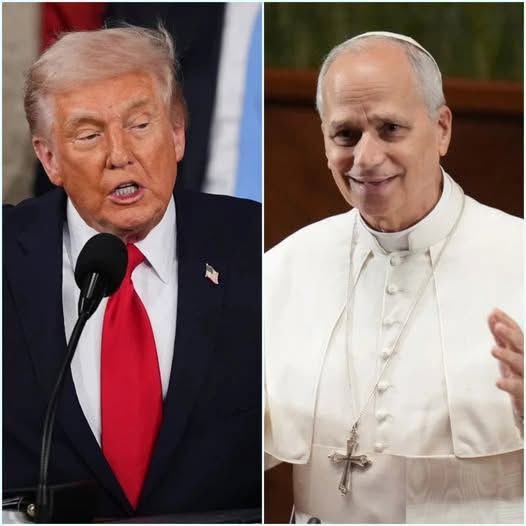
SHOCKING CLASH: Donald Trump CALLS POPE LEO XIV “AN INSULT TO JESUS” — THE POPE’S RESPONSE STUNS THE WORLD
Donald Trump believed he could score easy political points by calling Pope Leo XIV “an insult to Jesus,” after the spiritual leader once again spoke out in defense of peace, compassion, and human dignity. However, he was challenging a voice rooted not in politics, but in moral authority.
Standing before a solemn gathering at the Vatican, Pope Leo XIV did not respond with anger. Instead, he delivered a powerful and deeply moving message grounded in faith, responsibility, and truth.
“The President of the United States has said that I insult Jesus,” Pope Leo XIV began, his voice calm yet firm. “But let us reflect honestly — what truly insults the teachings of Christ?”
Then, with quiet intensity, he answered:
“You want to know what truly insults Jesus? It is when we turn away from those who suffer, when we close our hearts to the poor, and when we choose power over compassion while others cry out for mercy.”
He continued:
“You know what insults Jesus? It is forgetting the dignity of every human being, ignoring the pain of families in crisis, and refusing to hear the voices of the most vulnerable among us.”
His message then deepened, becoming not just a response, but a moral call that reached far beyond the moment:
“You know what insults Jesus? It is creating division where there should be unity, spreading fear where there should be hope, and turning away from justice when we have the responsibility to uphold it.”
This was not merely a political rebuttal — it was something far more profound. Pope Leo XIV, known for his humility and steadfast commitment to peace, transformed the confrontation into a reflection on conscience rather than conflict. Instead of escalating tensions, he elevated the conversation to a universal moral level.
“I do not claim to be perfect,” he admitted. “But I strive each day to walk the path of compassion — to serve, to listen, and to love as we are all called to do.”
Then came the line that resonated far beyond the walls of the Vatican:
“If we truly believe in a world shaped by peace and mercy… then why do we not work harder to bring that reality into our lives — here and now, for one another?”
That was his response. Not with anger. Not with division. But with conviction — and grace.
Trump sought to challenge him. Instead, Pope Leo XIV delivered a message now echoing across millions, reminding the world that true strength is found not in power alone, but in conscience, humility, and love.
🚨🚨BREAKING🚨🚨
Donald Trump’s team is frantically deleting his old tweets — especially the ones where he viciously attacked President Obama’s Iran policies — in a blatant attempt to rewrite history and hide his past hypocrisy.
These racist MAGA ganged up on this black man in Virginia City,Nevada who was working.He asked this man if he was a registered voter & he said there’s a Hanging Tree for N’s like you.Then his buddies laughed & then the man’s daughter came after him & started threatening him! Sad