BREAKING NEWS
The 2025 #NobelPrize in Literature is awarded to the Hungarian author László Krasznahorkai “for his compelling and visionary oeuvre that, in the midst of apocalyptic terror, reaffirms the power of art.”
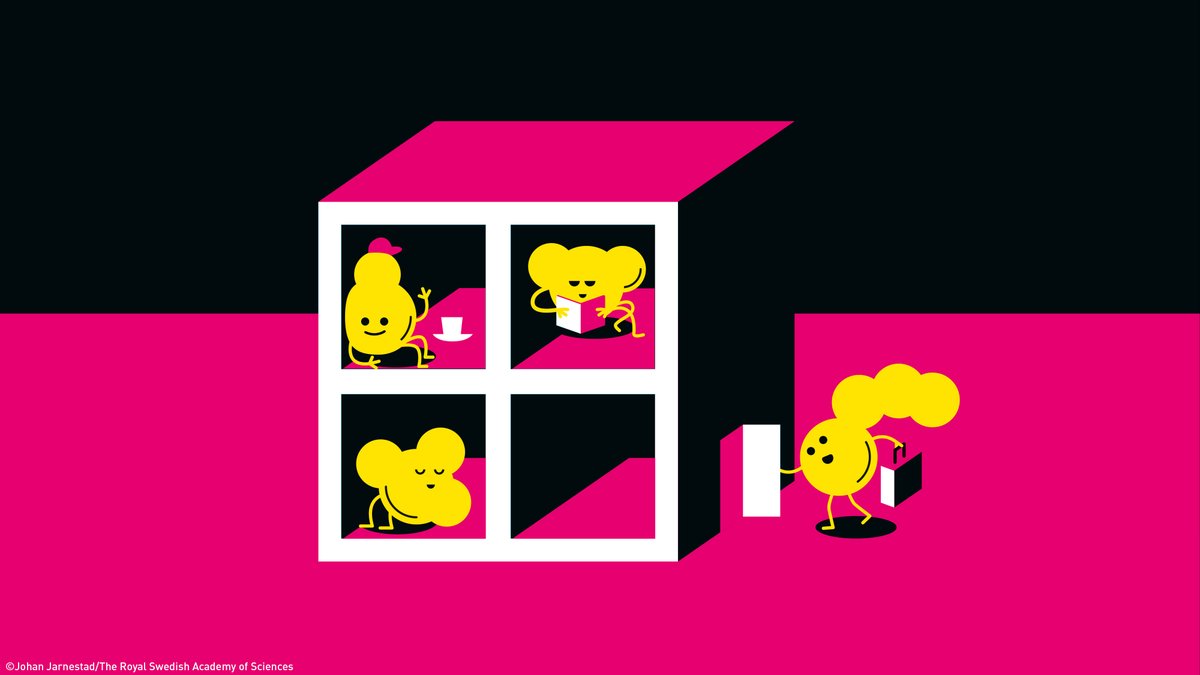
Susumu Kitagawa, Richard Robson and Omar Yaghi – awarded the 2025 Nobel Prize in Chemistry – have created new rooms for chemistry.
The #NobelPrize laureates have been awarded the chemistry prize for the development of a new type of molecular architecture. The constructions they created – metal–organic frameworks – contain large cavities in which molecules can flow in and out. Researchers have used them to harvest water from desert air, extract pollutants from water, capture carbon dioxide and store hydrogen.
BREAKING NEWS
The Royal Swedish Academy of Sciences has decided to award the 2025 #NobelPrize in Chemistry to Susumu Kitagawa, Richard Robson and Omar M. Yaghi “for the development of metal–organic frameworks.”
BREAKING NEWS
The Royal Swedish Academy of Sciences has decided to award the 2025 #NobelPrize in Physics to John Clarke, Michel H. Devoret and John M. Martinis “for the discovery of macroscopic quantum mechanical tunnelling and energy quantisation in an electric circuit.”
BREAKING NEWS
The 2025 #NobelPrize in Physiology or Medicine has been awarded to Mary E. Brunkow, Fred Ramsdell and Shimon Sakaguchi “for their discoveries concerning peripheral immune tolerance.”
#Machine learning enhances quantum chemistry simulations by improving the accuracy of exchange-correlation functionals in density functional theory, advancing materials and chemical research efficiency. @umich@ScienceAdvances https://t.co/tRHLYr6mtY https://t.co/uyWV12HImX
Did you know why the Golden Gate Bridge in San Francisco is red ?
It was purposely painted red in the 1930s to increase safety and visibility of the structure.
#goldengatebridge#SanFrancisco#USA
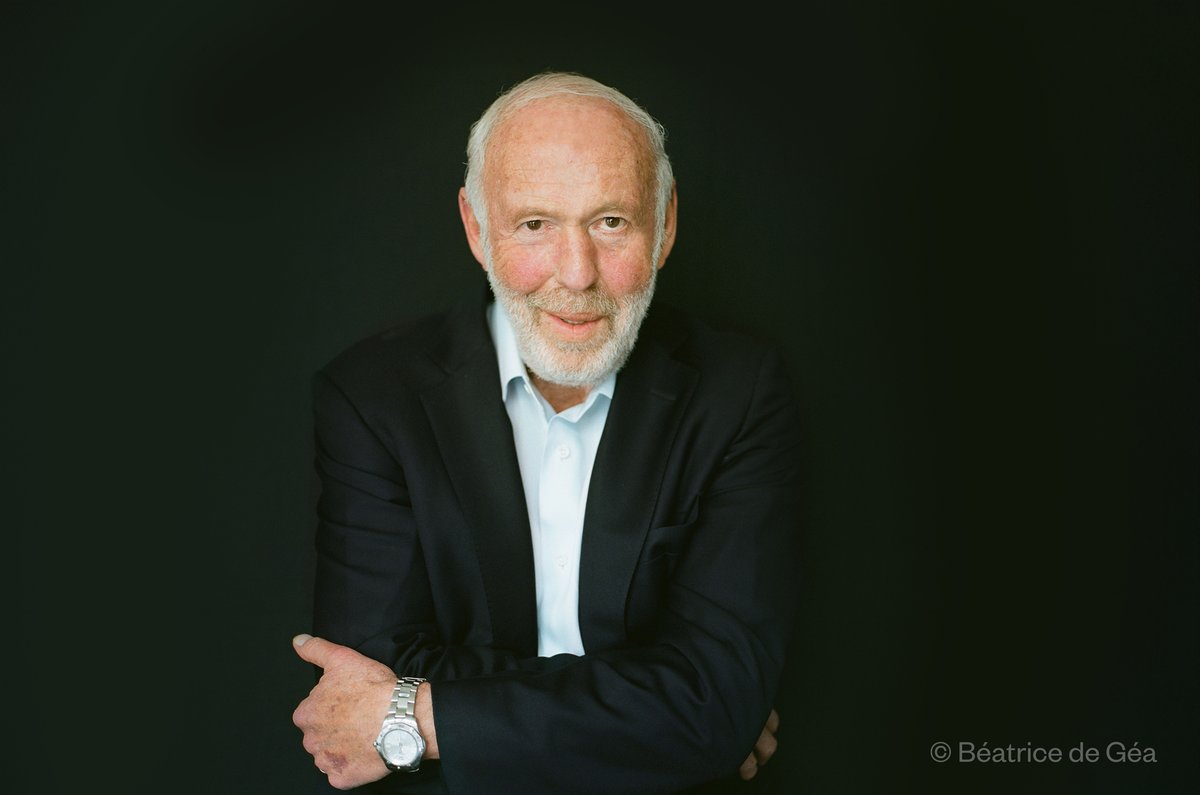
It is with great sadness that the Simons Foundation announces the death of its co-founder and chair emeritus, James Harris Simons. Jim was an award-winning mathematician, a legendary investor and a generous philanthropist. https://t.co/w48DhauUVj
Cells are fast and crowded places. Numbers help us make sense of them.
Here are five of my favorite "bionumbers."
1. ATP synthase spins 134 times/second. That is much faster than the propeller on most piston airplanes, and about half the r.p.m. of a Boeing 737 jet engine.
Erwin Schrödinger published his famous thought experiment, Schrödinger's cat #OTD in 1935.
It illustrates the problem of the Copenhagen interpretation of quantum mechanics. In 1933 Schrödinger was awarded the #NobelPrize in Physics.
Stupidity is important in scientific research.
This is a very important message.
Myself, I often say to students “You should know enough to start your research but never enough to know the outcome. Learn as you go.”
▫️
Prof. Martin Schwartz (Yale Univ.) discusses this in his paper.
The key messages are:
1️⃣ Science makes me feel stupid... I’ve gotten used to it. So used to it, in fact, that I actively seek out new opportunities to feel stupid. I wouldn’t know what to do without that feeling.
2️⃣ High-school and college science means taking courses, and doing well in courses means getting the right answers on TESTS. If you know those answers, you do well and get to feel smart.
3️⃣ A #PhD, in which you have to do a research project, is a whole different thing…
- How could I possibly frame the questions that would lead to significant discoveries? How to design and interpret an experiment so that the conclusions were absolutely convincing?
4️⃣ I remember the day when Henry Taube (who won the Nobel Prize two years later) told me he didn’t know how to solve the problem I was having in his area. I was a third-year graduate student and I figured that Taube knew about 1000 times MORE than I did.
If HE didn’t have the answer, nobody did.
5️⃣ That’s when it hit me: NOBODY did. That’s why it was a research problem. And being my research problem, it was up to me to solve.
6️⃣ I don’t think students are made [by our education] to understand how hard it is to do research. And how very HARD it is to do important research. It’s a lot harder than taking even very demanding courses.
7️⃣ What makes research difficult is that it is immersion in the unknown. We can’t be sure whether we’re asking the right question or doing the right experiment until we get the answer or the result.
8️⃣ The point of the PhD thesis exam is NOT to see if the student gets all the answers right.
The faculty committee pushes until the student starts getting the answers wrong or gives up and says, ‘I don’t know’.
9️⃣ Science allows us to bumble along, getting it wrong time after time, and feel perfectly fine as long as we learn something each time. No doubt, this can be difficult for students who are accustomed to getting the answers right.
▫️
Why "stupidity?"
We don’t do a good enough job of teaching our students how to be productively stupid.
If we don’t feel stupid it means we’re not really trying.
Science involves confronting our ‘absolute stupidity’.
The more comfortable we become with being stupid, the deeper we will wade into the unknown and the more likely we are to make big discoveries.
▫️
From my side:
This article nicely reflects on how DIFFERENT the coursework is from research.
❗ PhD is NOT about courses. NOT about grades.
It’s about a completely different type of education.
▫️
#AcademicTwitter #AcademicChatter
BREAKING NEWS
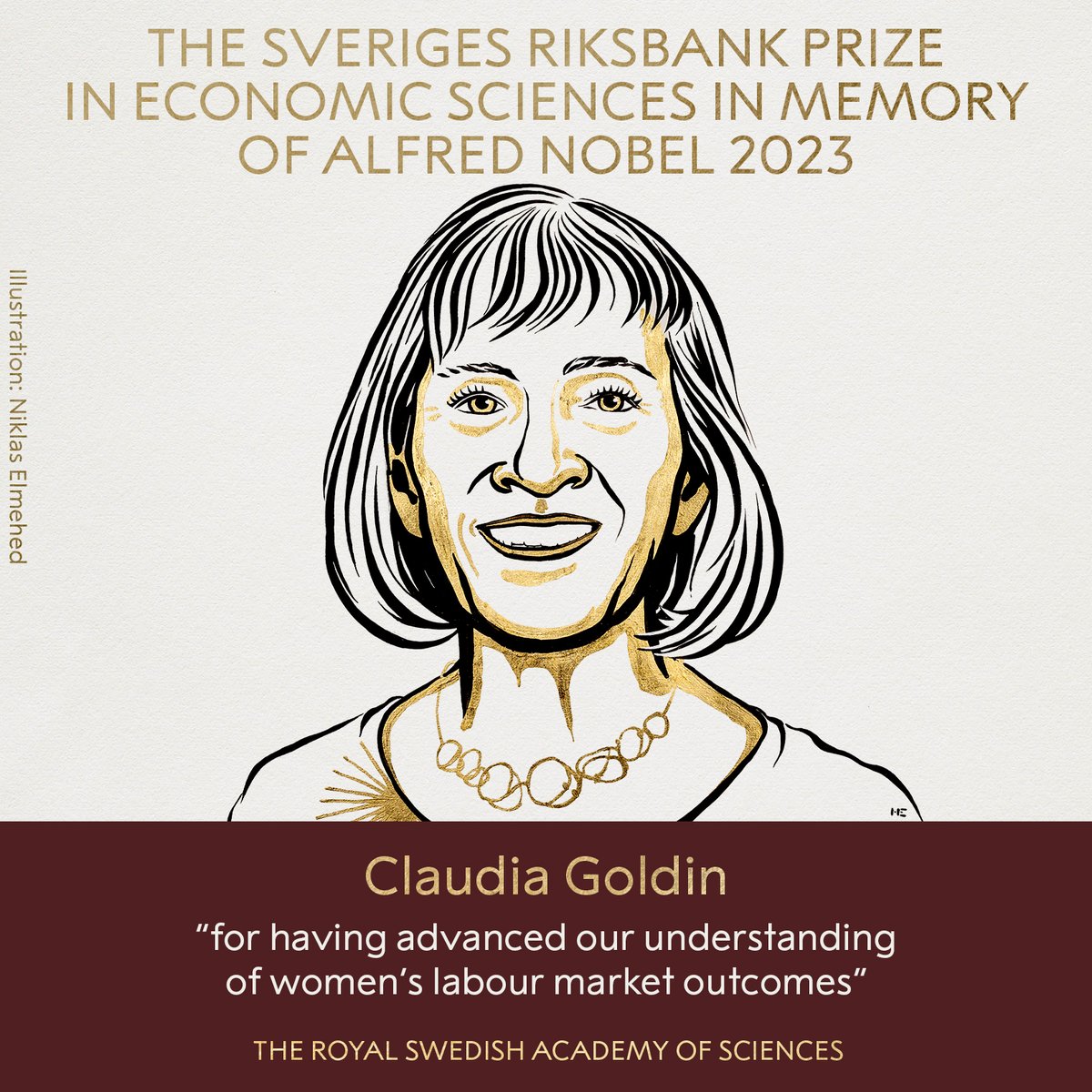
The Royal Swedish Academy of Sciences has decided to award the 2023 Sveriges Riksbank Prize in Economic Sciences in Memory of Alfred Nobel to Claudia Goldin “for having advanced our understanding of women’s labour market outcomes.”
#NobelPrize









![Andrew_Akbashev's tweet photo. Stupidity is important in scientific research.
This is a very important message.
Myself, I often say to students “You should know enough to start your research but never enough to know the outcome. Learn as you go.”
▫️
Prof. Martin Schwartz (Yale Univ.) discusses this in his paper.
The key messages are:
1️⃣ Science makes me feel stupid... I’ve gotten used to it. So used to it, in fact, that I actively seek out new opportunities to feel stupid. I wouldn’t know what to do without that feeling.
2️⃣ High-school and college science means taking courses, and doing well in courses means getting the right answers on TESTS. If you know those answers, you do well and get to feel smart.
3️⃣ A #PhD, in which you have to do a research project, is a whole different thing…
- How could I possibly frame the questions that would lead to significant discoveries? How to design and interpret an experiment so that the conclusions were absolutely convincing?
4️⃣ I remember the day when Henry Taube (who won the Nobel Prize two years later) told me he didn’t know how to solve the problem I was having in his area. I was a third-year graduate student and I figured that Taube knew about 1000 times MORE than I did.
If HE didn’t have the answer, nobody did.
5️⃣ That’s when it hit me: NOBODY did. That’s why it was a research problem. And being my research problem, it was up to me to solve.
6️⃣ I don’t think students are made [by our education] to understand how hard it is to do research. And how very HARD it is to do important research. It’s a lot harder than taking even very demanding courses.
7️⃣ What makes research difficult is that it is immersion in the unknown. We can’t be sure whether we’re asking the right question or doing the right experiment until we get the answer or the result.
8️⃣ The point of the PhD thesis exam is NOT to see if the student gets all the answers right.
The faculty committee pushes until the student starts getting the answers wrong or gives up and says, ‘I don’t know’.
9️⃣ Science allows us to bumble along, getting it wrong time after time, and feel perfectly fine as long as we learn something each time. No doubt, this can be difficult for students who are accustomed to getting the answers right.
▫️
Why "stupidity?"
We don’t do a good enough job of teaching our students how to be productively stupid.
If we don’t feel stupid it means we’re not really trying.
Science involves confronting our ‘absolute stupidity’.
The more comfortable we become with being stupid, the deeper we will wade into the unknown and the more likely we are to make big discoveries.
▫️
From my side:
This article nicely reflects on how DIFFERENT the coursework is from research.
❗ PhD is NOT about courses. NOT about grades.
It’s about a completely different type of education.
▫️
#AcademicTwitter #AcademicChatter](https://pbs.twimg.com/media/F9skT5MWkAA5ILD.jpg)