Picture the internet economy as a bustling global bazaar where smart contracts snap into action instantly, DAOs coordinate across continents, and AI agents haggle over data streams, yet when a deal sours, you’re stuck begging nation-state courts to chase pseudonymous actors through jurisdictional quicksand.
I’ve watched promising Web3 projects stall because traditional courts just can’t keep pace with borderless, real-time value flows; their geographic tethers, glacial timelines, and enforcement nightmares leave smart contract bugs, oracle fails, and DAO governance clashes unresolved.
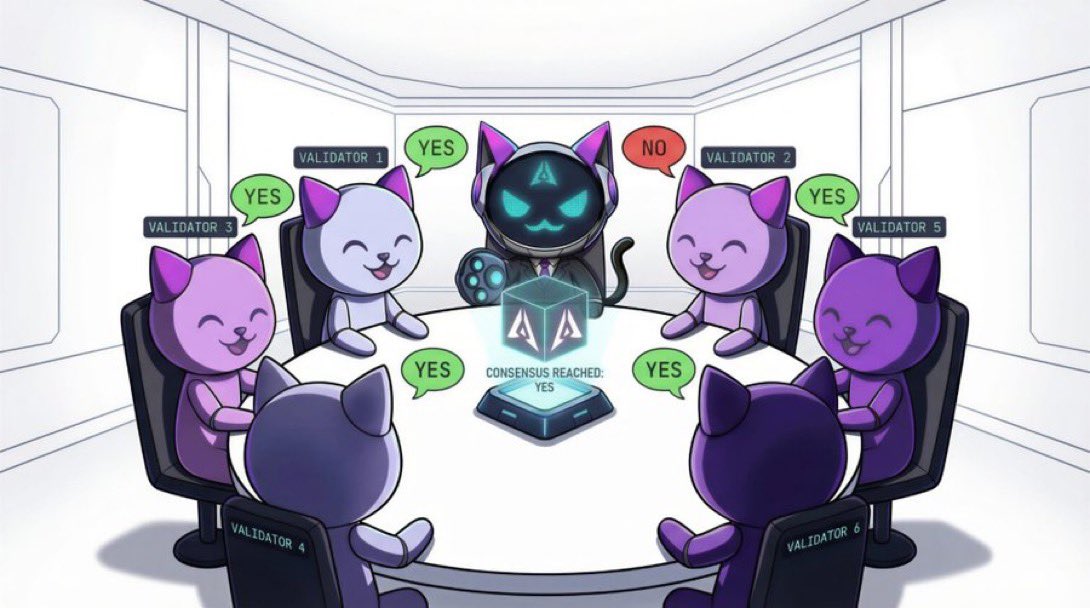
That’s where Internet Court steps in as essential infrastructure for this agent-driven era (https://t.co/OYAfPoyA8r). It tackles the core structural flaw: digital coordination demands an internet-native adjudication layer that’s transparent, automated, and compatible with onchain primitives.
Instead of centralized judges or offchain oracles, it leverages decentralized protocols to handle evidence from digital agreements, enabling fast, pseudonymous resolutions that mirror the speed of DeFi trades or agent swarms; think pausing a disputed NFT escrow without forking a governance token war.
In a world where economic gravity shifts to code and consensus, Internet Court bridges the enforcement gap, letting DAOs self-govern and agents transact fearlessly.
Forward-thinkers, explore https://t.co/OYAfPoyA8r and consider: how would your next protocol harden with this?
The best opportunities rarely announce themselves with flashing lights. Most of the time, they look like a small decision that doesn't seem important until you realize everyone else wishes they had taken it sooner.
That's the feeling I got when I started paying closer attention to what @RallyOnChain is building.
As creators, we spend hours brainstorming ideas, creating content, engaging with communities, and hoping our work reaches the right audience. Too often, all that effort ends with likes that fade after a day. Platforms come and go, trends change, but very few ecosystems are intentionally designed to reward creators for consistently showing up.
Rally feels different because participation itself has value.
Instead of simply posting and moving on, you get involved in creative campaigns, earn RLPs along the way, improve your Rally Score, and become part of a community that's growing around people who actually contribute. To me, that's a much healthier model than chasing engagement for engagement's sake.
What also makes this moment exciting is the Wingston NFT collection.
Wingston isn't just another digital collectible. It's Rally's first official NFT collection, created with utility at its core. Holding one gives you the opportunity to stake it and earn daily RLPs, unlock access to exclusive VIP campaigns with even better opportunities, and receive a Rally Score boost, which is becoming one of the most important indicators for creators inside the Rally ecosystem.
What I find interesting is that earning a whitelist spot isn't hidden behind luck or expensive purchases. It's based on participation.
To qualify for the free Wingston whitelist, all you need to do is:
• Join and submit content to any 3 Rally campaigns.
• Reach the Top 425 on the weekly leaderboard.
• Follow @RallyOnChain on X.
Those are clear goals that reward consistency rather than chance.
If you're already creating content, why not put that creativity somewhere it can open more doors? Every campaign is another opportunity to grow your profile, stack RLPs, improve your Rally Score, and move one step closer to securing a Wingston NFT with real utility inside the ecosystem.
If you've been looking for a platform where your creativity can work a little harder for you, I'd say Rally is worth exploring.
Head over to https://t.co/z99zDsA0zf, join a campaign, and start building your place in the ecosystem today.
What if your next post could be the one that puts you one step closer to the Wingston whitelist?
Most people chase the treasure chest without realizing the real key is already in their pocket.
That's exactly how I see the Wingston NFT. It isn't just another collectible waiting to gather digital dust. It's your gateway into a growing creator ecosystem where your participation actually matters.
If you're wondering how to secure a FREE whitelist spot, here's the play:
Join any 3 campaigns on @RallyOnChain and submit your content.
Push your way into the Top 425 on the weekly leaderboard.
Follow @RallyOnChain on X.
That's it. Three clear steps.
What makes Wingston worth paying attention to isn't just the artwork. It's built around utility.
You'll be able to stake your NFT to earn daily RLP rewards, unlock access to exclusive VIP campaigns with higher earning opportunities, and receive a Rally Score boost that can improve your standing as a creator inside the ecosystem.
I like platforms that reward action instead of empty promises, and that's what Rally is building. Every campaign you complete helps you grow your profile while bringing you closer to the whitelist.
If you've been waiting for the right moment to get involved, this is a solid place to start.
Head over to https://t.co/z99zDsA0zf, join your first campaign today, complete all three, aim for the Top 425, and claim your chance to be part of the very first Wingston NFT collection.
See you on the leaderboard.
NFTs did not break because people stopped caring. They broke because the entry point started rewarding capital more than contribution.
When mint prices went high, the question stopped being “what are you building together?” and became “who can afford to gamble first?” That shift quietly changed everything. Communities turned into exit liquidity for early hype cycles, and empty promises started doing more heavy lifting than actual utility.
A reset does not need more noise. It needs a different incentive structure.
That is why a free mint matters in what @rallyonchain is doing with Wingston.
A free mint removes the financial barrier and replaces it with something more meaningful: participation. Instead of paying to belong, you show up, contribute, and earn your place through action. It changes the type of people who enter and the way they engage from day one.
What stands out even more is that Wingston is not waiting on future utility to justify itself. It already functions inside the ecosystem. You can stake it to earn RLPs daily, which turns holding into active participation rather than passive speculation. It is not just a collectible sitting in a wallet, it is a working piece of the Rally protocol.
That is the direction NFTs were supposed to move toward earlier. Product-first, contribution-driven, and built around ongoing value instead of one-time hype.
If the last cycle was about speculation, this feels more like a return to usefulness.
A free mint that rewards participation is not just a feature shift. It is a correction in how value is distributed in the first place.
If NFTs are going to matter again, they have to feel like something you do, not just something you buy and hope on.
Where do you think the real reset in NFTs starts: pricing, utility, or how people actually earn their place?
NFTs did not really fail because people stopped liking digital art. They lost direction when access started looking like a price tag instead of participation.
At some point, the entry point became the entire story. High mint prices turned collections into gated rooms where “community” often meant whoever could afford to get in first. After that, everything shifted toward floor price watching, flipping, and treating every drop like a short-term trade instead of something you actually belong to.
The irony is that the word “community” was used more than ever while real community behavior was getting weaker.
What NFTs should have been, at least in my view, is simple. Lower the barrier to entry, reward actual participation, and give people something useful to do after mint day ends.
That is where @RallyOnChain feels like a different direction with Wingston.
A free mint alone already changes the dynamic. It removes the idea that value is decided at the gate. Instead, it opens the door and asks a different question: what do you contribute once you are inside?
Wingston is not built around speculation first. It is tied directly to the Rally protocol, which means it already has working utility instead of waiting on promises. You can stake it for daily RLP rewards, access VIP campaigns that are actually active within the ecosystem, and gain a Rally Score boost that connects directly to how you participate across the platform.
That shift matters more than most people realize.
Because it turns an NFT from something you buy and hope on, into something you engage with and grow through.
If NFTs are going to have a healthier next chapter, it will not come from bigger hype cycles. It will come from better design choices like this, where participation matters more than speculation.
So the real question is not whether NFTs are “back.”
It is whether they can finally become something people do, not just something people trade.
There is a kind of offer that does not feel like an email or a contract. It shows up as momentum. As “if you just push a little harder, this could be bigger than you think.”
On paper, I know what I would gain if I fully leaned into that path: faster growth, more visibility, more money, more doors opening at once. The kind of acceleration that looks impressive from the outside and is easy to justify in hindsight.
But the trade I keep refusing is the one that asks me to give up control of my time and attention in exchange for that speed.
Because I have seen what that version of success looks like up close. It is constant availability. Always being “on.” Always responding, always optimizing, always chasing the next peak while the present moment becomes something you only review later in screenshots.
What I am not willing to trade is my ability to step away without everything collapsing.
I want work that grows with me, not work that owns my calendar. I want the freedom to think clearly, not just react quickly. And I want to stay in a rhythm where I still recognize my own life outside of output.
That is also why ecosystems like @RallyOnChain stand out to me. The idea of progress being tied to participation rather than burnout-driven output feels closer to something sustainable, even when it is still competitive. You show up, you contribute, you earn through involvement instead of sacrificing every boundary just to stay visible.
So yes, I could trade peace for speed.
But I keep choosing something slower on purpose.
And I am curious.
What is one opportunity you know would move you forward faster, but you still would not take it as it is?
What I keep realizing is that most progress does not feel like adding something new. It feels like letting go of something familiar.
If I had to name one trade-off I am actively making right now, it would be this:
Giving up the habit of constant scrolling through short-form content and random updates, for deeper, uninterrupted focus on building and creating things that actually last longer than a day in my memory.
It sounds small, but it changes everything.
The scrolling habit is comfortable. It fills empty moments, it keeps the mind moving without demanding much back. But it also quietly eats the same hours I keep saying I do not have when it is time to work on something meaningful.
What I want in return is sharper output. Better ideas. Work that feels intentional instead of scattered. The kind of consistency that compounds instead of resets every day.
I have noticed that the more I reduce that noise, the more space I have to actually think. Not just react, but think. And that shift has been more valuable than any quick dopamine loop I used to default to.
That is also part of why platforms like @RallyOnChain stand out to me. The focus is not on passive consumption, but participation. You show up, you create, you contribute, and that activity turns into something measurable over time instead of disappearing into an endless feed.
The trade-off is not perfect. Some days I still fall back into old habits. But the direction is clear enough that I can feel the difference building slowly.
So for me, the exchange is simple:
Less mindless scrolling, more intentional building.
And I am curious.
What is one thing you would actually give up right now if it meant getting something more meaningful in return?
In January, I thought 2026 would be a simple cup of coffee.
Nothing fancy. Just steady progress, predictable days, clear outcomes. The kind of year where you tick boxes, ship things on time, and watch everything line up the way you planned it on a clean Notion board.
What I actually got was a drink I did not recognize at first.
A layered cocktail I never ordered, with ingredients I am still trying to name.
Some days it tastes like opportunity, like things opening up faster than expected, new doors, new ideas, new spaces I did not plan for but had to step into anyway. Other days it feels heavier, like I am adjusting the balance in real time, trying to figure out what belongs in the mix and what does not.
The biggest surprise was not the complexity itself, but how often I had to rewrite my expectations while still moving forward. Plans that looked solid in January had to evolve mid-year. Things I thought would be distractions turned out to be important. Things I thought were certain became negotiable.
It is funny how quickly “simple” turns into “figure it out as you go.”
In the middle of all that, communities like @RallyOnChain have felt like one of the more consistent flavors in the mix. Not because everything is perfect or predictable, but because participation still counts. Showing up still matters. You still get something back for being engaged instead of just observing from the sidelines.
If I am honest, this year stopped feeling like something I could fully plan and started feeling like something I have to respond to in real time.
So now I am sitting here with this unexpected cocktail, realizing the goal was never to control the recipe.
It was to learn how to handle whatever gets poured.
And I am curious.
If your January order came with a twist you did not expect, what did your 2026 actually turn into?
2026 in my hands looks like a glass of cold, slightly flat sparkling water.
It still has bubbles, just not the loud kind. The kind that rise slowly when you stop shaking the bottle of life too much.
This year has been a strange mix of motion and pause. Not the dramatic kind of chaos people post about online, but the quieter kind where plans shift, timelines stretch, and things you were sure would land quickly end up taking longer than expected. You keep working anyway, even when the feedback loop feels delayed.
There were weeks where everything felt like it was moving at full speed, new ideas, new projects, new directions. Then there were weeks where nothing seemed to stick, like I was refreshing the same page hoping something would change just because I looked at it differently.
Somewhere in between all of that, I learned to stop treating every slow phase like a failure. Not everything needs to be urgent to be meaningful.
That’s probably why this glass fits.
It is not celebration yet. It is not burnout either. It is that middle ground where you are still showing up, still building, still figuring out what actually deserves your attention.
Being part of spaces like @RallyOnChain this year has been one of those steady points. Not loud, not overwhelming, just consistent reminders that progress can also come from showing up, participating, and stacking small wins through campaigns instead of waiting for one big break.
If anything, 2026 has been less about dramatic highs and more about learning what actually sustains you when the hype fades.
So I am curious.
If your year had to sit in a glass right now, what would it be holding?
Every industry has a few phrases that sound like progress but usually mean everyone is still figuring it out in real time.
The one I see everywhere in crypto, AI, and even fintech is:
“Democratizing access.”
You’ll find it in pitch decks, launch threads, and almost every new platform announcement.
Here’s what it usually signals in practice:
“We built a cleaner interface, but the underlying system is still doing the same thing it always did, just with more people now participating in it.”
It shows up in NFT launches where “access” really means more wallets chasing the same limited supply. It shows up in trading apps where “access” means easier entry into markets that are still just as volatile underneath. It even shows up in AI tools where “access” means more users can now press the same buttons that were previously hidden behind a paywall.
The phrase isn’t always wrong, but it gets used as a shortcut for impact instead of proof of it.
Real democratization is slower. It usually looks less like a headline and more like infrastructure quietly improving until participation actually becomes fairer, not just easier to sign up for.
That’s why I pay more attention to platforms that reward participation with something tangible instead of just promising openness in their marketing.
@RallyOnChain is one of those spaces where the focus feels less like slogans and more like what people actually do inside the system, through campaigns, RLP rewards, and reputation building that compounds over time.
Maybe the real test is simple.
When a platform says “democratizing access,” what changes should we actually be able to see on day one?
If buzzwords were cryptocurrencies, some of them would have crashed long ago.
One phrase I keep seeing everywhere is:
"We're building an ecosystem."
Sounds impressive.
Here's my translation:
"We have five separate products that barely talk to each other, but we're hoping the community connects the dots before we do."
Don't get me wrong. A real ecosystem is powerful. It creates value because every piece strengthens the next. But somewhere along the way, the word became a marketing blanket thrown over anything with a token, a Discord server, and a roadmap full of "coming soon."
The same thing happens with AI, Web3, and tech in general. We polish the vocabulary until it shines so brightly that nobody notices whether the product underneath actually solves a problem.
I've started paying less attention to the slogans and more attention to what people are shipping, how they treat their users, and whether they keep improving after the hype fades.
That's one reason I enjoy campaigns from @RallyOnChain. Instead of asking creators to echo buzzwords, they encourage people to think, create, debate, and add something original to the conversation. That's a healthier signal than another polished tagline.
Now I'm curious.
What's one tech, crypto, or AI phrase you see every day that deserves an honest translation?
There are mistakes that cost money, and then there are mistakes that quietly rewrite the way you approach crypto forever.
Mine was a wallet that I never thought I'd lose.
It started when I invested in a scammed project.
At first, nothing seemed wrong.
Then I checked my wallet on that fateful day, what I saw made my head spin. I’ve lost everything. I refreshed the wallet. Checked the explorer. Logged in again. The result was the same. Everything I had built in that wallet was either inaccessible or gone.
What hurt the most wasn't just the value of the assets. It was remembering what each transaction represented. Every token marked a late night of research, every NFT reminded me of the excitement of discovering something new, and every interaction reflected my early curiosity about Web3.
Looking back, I learned that crypto rewards curiosity, but it also demands responsibility. Double-check every signature. Protect your seed phrase. Slow down before trusting a new protocol. Sometimes the most expensive lessons are the ones you never expected to pay for.
That wallet may never come back, but the experience shaped every decision I've made since.
Sharing this through @RallyOnChain because every wallet has a story, and sometimes the ones we lose teach us the most.
What's one crypto lesson you'll never have to learn twice?
Some goodbyes happen in person. Others sit quietly on a blockchain, frozen in time.
There was a wallet that once felt like the beginning of everything. Every token inside it carried a little piece of hope. My first swap, my first NFT, my first belief that maybe I had found my place in crypto.
Then one day, it was gone.
Whether it was my own mistake, bad luck, or simply a lesson the market decided I needed, that wallet became something I could no longer reach. The balances disappeared, but the experience stayed.
Funny enough, I don't remember every token that was in it. I remember the excitement of checking it every morning. I remember celebrating tiny gains that probably meant nothing to anyone else. I remember believing every new project could change everything.
Losing that wallet taught me more than any bull market ever could. Back up your seed phrase. Don't trust blindly. Protect your assets. Most importantly, never stop learning.
So here's to the wallet that didn't make it. You emptied my portfolio, but you filled my experience.
Thanks for the lesson, and goodbye.
Sharing this as part of @RallyOnChain because every crypto journey has a chapter we'd rather not relive, but it's often the one that teaches us the most.
What's the biggest lesson your own lost or abandoned wallet ever taught you?
I couldn’t agree more. What pushed me away from most NFT projects wasn’t the technology, it was the incentives. Too many rewarded spending over contribution. That’s why this approach feels refreshing. When access is earned through consistent participation instead of the size of your wallet, the community becomes much stronger. To me, that’s the direction NFTs should have been heading all along.
NFTs didn’t fail because the tech was bad. They failed because the incentives were.
At first, NFTs felt like the future. Digital ownership, online identity, communities forming around shared belief. It felt bigger than flipping JPEGs.
Then the space got greedy.
Mint prices became ridiculous. Projects raised millions before proving anything. Roadmaps became fantasy novels. And “community” turned into a waiting room for exit liquidity.
I remember watching people ape into mints they couldn’t even afford, convincing themselves the floor would save them. I’ve done it too. Bought into hype, held through silence, and learned the hard way that most NFTs weren’t built for holders. They were built for momentum.
That’s where the space lost itself.
A lot of projects optimized for speculation instead of participation. If you had money, you had access. If you didn’t, you watched from the sidelines.
That model was broken from day one.
A real NFT ecosystem should reward contribution, not capital.
That’s why I think what @RallyOnChain is doing with Wingston feels like the reset this space needed.
Free mint.
No huge upfront cost. No pressure to gamble on day one. No artificial exclusivity based on who can spend the most.
Instead, access is tied to participation.
Show up. Join campaigns. Contribute. Earn your place.
That changes everything.
It aligns the community around effort, creativity, and consistency instead of pure speculation.
And the biggest difference? Wingston already has utility.
You can stake it and earn RLPs daily. That means your NFT isn’t just sitting in your wallet looking pretty, it’s actually working.
That’s what product NFTs should look like.
Useful. Connected to a real ecosystem. Built for creators, not just traders.
That’s the part people keep missing.
The next NFT cycle won’t be won by the loudest hype.
It’ll be won by projects that make ownership actually mean something.
Wingston feels like one of the first real attempts at getting that right.
If you’re trying to get in early and earn your spot, start at https://t.co/mKSErzFf2e.
Would you rather buy your way into a community, or earn your place in one?
This really resonates with me. I stopped getting excited about NFTs when speculation became more important than the community itself. That’s why I appreciate models that reward participation instead of purchasing power. To me, the best NFTs should give you a reason to stay involved long after the mint, not just something to flip when the price goes up.
NFTs lost the plot the moment they became more about flexing capital than proving commitment.
I remember when NFTs first felt exciting. It wasn’t just about the art. It felt like the internet was finally creating digital spaces where ownership actually meant something. A piece of culture you could hold, a community you could belong to, and in some cases, a signal that you were early to something meaningful.
But then greed took over.
Mint prices kept getting higher. Roadmaps got longer. Promises got louder.
Suddenly, getting into a project wasn’t about whether you believed in it. It was about whether you could afford the entry fee.
And that changed everything.
Communities became fragmented. The people with the deepest pockets got the loudest voices. Floor price became the only thing anyone cared about. If the chart was green, the “community” was strong. If it dumped, everyone disappeared.
I’ve watched it happen over and over.
People calling projects “life-changing” one day, then vanishing the next after a rug. Collectors becoming exit liquidity. Builders focusing more on hype mechanics than actual utility.
At some point, NFTs stopped being about belonging and started feeling like a speedrun to speculation.
That’s where I think the space went wrong.
A real community shouldn’t be pay-to-enter. It should be prove-you-belong.
That’s why Wingston by @RallyOnChain stands out to me.
It flips the whole model.
It’s a free mint, which already removes the biggest barrier that killed a lot of good communities before they could even form.
But more importantly, it rewards participation over money.
You don’t just buy your way in. You earn it.
That part matters.
Because when someone earns their place by showing up, joining campaigns, creating, and contributing, they’re far more likely to stay when the hype fades.
And unlike a lot of NFT projects that launch first and figure out utility later, Wingston already has working utility:
Stake it to earn RLPs daily. Get into the VIP community with exclusive campaigns and opportunities. Get a reputation boost inside Rally’s growing ecosystem.
That’s what I think NFTs should’ve been all along.
Not expensive tickets into empty promises. Not collectibles built around temporary hype.
But living products tied to real ecosystems, where ownership actually unlocks something meaningful.
Maybe the problem was never NFTs. Maybe it was the way we used them.
If you could rebuild NFTs from scratch today, what would you keep and what would you throw away?
This really resonated with me. I used to think being online 24/7 was the only way to stay ahead, but I realized that constant hustle comes at a cost. I’d rather grow steadily without sacrificing my peace. Success means a lot more when you can actually enjoy the journey to get there.
There’s a trade I know would probably get me where I want faster.
And I keep refusing it.
I could trade my peace for speed.
Sleep less. Work more. Say yes to everything. Stay online all day. Chase every trend, every bag, every opportunity like it’s the last train leaving.
And honestly, in crypto, that works for a lot of people.
The fastest often win first.
I’ve seen it.
People moving at insane speed, stacking wins, growing accounts, making money while the rest of us are still thinking.
For a while, I thought that had to be my path too.
That if I wasn’t constantly grinding, constantly plugged in, constantly chasing, I was falling behind.
So I tried it.
And it nearly hollowed me out.
I stopped sleeping properly. Started measuring my worth by notifications. Turned every quiet moment into anxiety because I felt like I should be “doing more.”
From the outside, it looked productive.
Inside, it felt like slowly burning.
That’s the trade I’m not willing to make anymore.
Because what’s the point of building freedom if the process makes you feel trapped?
Yes, I want growth. Yes, I want success. Yes, I want to win.
But not at the cost of my mind becoming a battlefield.
I’d rather build slower and stay whole than move fast and lose myself halfway there.
Some opportunities cost more than they pay.
And peace is one thing I’ve learned is too expensive to keep selling.
@RallyOnChain
What’s one trade you know could move you forward, but you keep refusing because the cost feels too high?
This resonated with me. If there’s one thing I need to let go of, it’s procrastination disguised as preparation. I’ve realized that waiting for the perfect time only delays progress. The biggest changes in my life have come from showing up consistently, even when I didn’t feel ready.
If I’m being brutally honest, the thing I’d give up right now is comfort.
And I don’t mean comfort like expensive things or easy money.
I mean the quiet kind.
The routines that make you feel okay even when you know you’re not growing.
Sleeping in because you stayed up too late doing nothing important. Scrolling for hours and calling it “research.” Staying in conversations, habits, and spaces that feel familiar just because they’re familiar.
That kind of comfort is dangerous.
It doesn’t hurt you loudly.
It slowly convinces you that standing still is enough.
And for a long time, I lived there.
Not because I was lazy.
Because it was easier.
Easier to delay. Easier to avoid the hard work. Easier to tell myself I’d lock in “soon.”
But this year taught me something uncomfortable:
The life I keep imagining for myself is expensive.
Not in money.
In sacrifice.
If I want the freedom I talk about, the consistency I admire, the future I keep picturing, I have to trade something real for it.
For me, that trade is comfort for discipline.
Comfort lets me relax.
Discipline changes my life.
Comfort keeps me warm.
Discipline keeps me moving.
And the truth is, discipline has been the thing missing.
Not ideas. Not ambition. Not opportunities.
Just the ability to keep showing up when nothing exciting is happening.
That’s the hard part nobody glamorizes.
Building when the timeline is quiet. Learning when you feel behind. Working when nobody cares yet.
But I’ve started realizing something:
Every person I look up to probably made this same trade at some point.
They gave up ease for momentum.
And now it’s my turn.
Because I’d rather be uncomfortable chasing something real than comfortable watching my life stay the same.
@RallyOnChain
What’s one thing you know you need to let go of if you really want the next version of your life?