There is no Woman of the Day post today but if there was, it would be Mrs R. I don’t know her name, when or where she was born, or much about her - indeed, her name is unlikely to even begin with R - but OTD in 1991, her ordeal secured a House of Lords ruling that finally laid to rest the common law concept that a woman’s body was the property of her husband.
What we do know is that Mrs R married a bloke in August 1984 and bore a child in 1985 but after a short separation and relatively short period of reconciliation, she and her child moved out to live with the in-laws on 21 October 1989.
About three weeks later, he broke into the house, put both of his hands around her neck, squeezed it, and tried to rape her. He was convicted of attempt rape and assault occasioning actual bodily harm on 30 July 1990 at Leicester Crown Court and sentenced to imprisonment but he appealed against conviction on these grounds:
1. A husband could not in law be guilty as a principal of the offence of raping his own wife;
2. R v Clarke stated that rape between married persons was impossible as stated by Wills J. (This was based on Lord Chief Justice Hale’s proposition in the 1600s - yes, the 1600s - that by marrying a man, a woman gives irrevocable consent to his right to take her body under any or all circumstances, regardless of her state of health or her consent).
3. Raping your own wife is not unlawful.
The Court of Appeal (Criminal Division) dismissed his appeal on 14 March 1991 but gave him leave to appeal to the Lords of Appeal in Ordinary, popularly known as the Law Lords and then the highest appellate court in this country (till that constitutional vandal, Tony Blair, replaced them with the Supreme Court).
On 18 October 1991, Lord Justice-General, Lord Emslie, delivered the judgment in R v R [1991] UKHL on behalf of the five Law Lords. In a unanimous ruling, the appeal was dismissed.
The judgment is a joy to read, not least because it expresses in dry lawyerly terms the learned justices’ astonishment that anyone in their right mind could possibly think that it was ever okay to force a woman against her will. It included these words:
“[Hale’s proposition] is no longer acceptable. It can never have been other than a fiction, and fiction is a poor basis for the criminal law. The extent to which events have overtaken Hale's proposition is well illustrated by his last four words, “[irrevocable consent] which she cannot retract.”
Mrs R was not only subjected to the ordeal of the original attack but the appeal process by her ex meant that she was put through the wringer for nearly two years.
Whoever you are, wherever you are, Mrs R, your case was the death knell for coverture and freed us all. Thank you.
Prof @Kevin_Fong giving the most devastating and moving testimony to the Covid Inquiry of visiting hospital intensive care units at the height of the second wave in late Dec 2020.
The unimaginable scale of death, the trauma, the loss of hope.
Please watch this 2min clip.
Britain has the dirtiest rivers in Europe, the most expensive energy in Europe, the least reliable trains in Europe, the most overcrowded prisons in Europe and the widest gap between rich and poor in Europe. Those things are related.
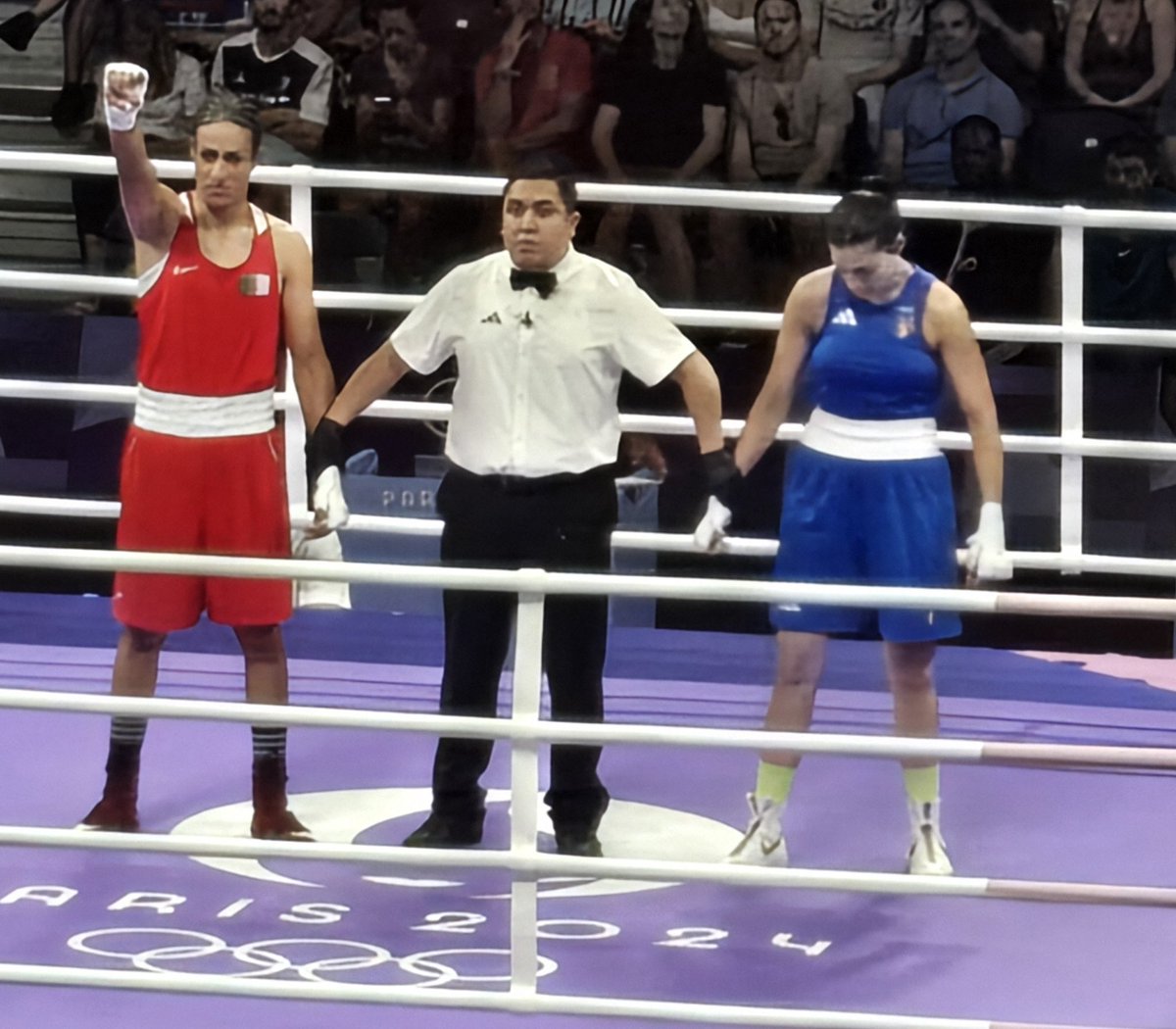
Watch this (whole thread), then explain why you’re OK with a man beating a woman in public for your entertainment. This isn’t sport. From the bullying cheat in red all the way up to the organisers who allowed this to happen, this is men revelling in their power over women.
In a highly emotional interview, Angela Carini has just explained that she abandoned because she had never been punched so hard.
Imane Khelif said nothing. And this is the issue that the IOC’s Mark Adams suggested everyone should just ‘dial down’.
An absolute scandal
If you know anyone thinking of taking money out of their pension (or nearing age 55). This is a must listen as get it wrong and it can cost you £10,000s. Do spread word.
The NHS may be broken, according to @UKLabour@wesstreeting, but here’s how to fix it.
Prevention, Prevention, Prevention, Prevention….
1. Prevent poverty. It’s the single biggest determinant of ill health, and health and social care demand, both now and in the future. Blair and Brown made good progress in reducing it. So it can be done.
2. Prevent illness, with a relentless focus on living well, self-care, mental health support and tackling the commercial determinants of illness. Dental disease is the commonest cause of childhood operations, and yet it’s almost 100% preventable.
3. Prevent existing risks and diseases getting worse, with evidence-based screening and a substantial shift in resources to primary, community and social care
4. Preventing waste and medical harm, by ensuring patients receive the right care, in the right place, from the right people at the right time. This is the toughest nut to crack, as it requires adequate numbers of well trained and well rested staff working in safe, clean environments with the right equipment. We currently spent three times as much litigating harms from maternity care than we do on maternity care. This is a permanent disaster and would be a very good place to start. Instead of repeating our mistakes, we need to learn from them.
For more detail see @PrivateEyeNews and come to the shows @edfringe@theSpaceUK Aug 2-17
https://t.co/CGMa3R91W3
https://t.co/q982NBcjF6
URGENT! Pls share. The last chance to register to vote in the General Election is 11.59pm tomorrow Tue 18 June. Potentially 8m aren't registered at their current address. Here's 4 key facts...
1) You can do it online here https://t.co/i4FhJoAXfK
2) It's good for your finances. Not being on electoral roll can make it more difficult to be accepted for credit products like bank accounts or mortgages.
3) You can opt out of the 'Open Register' (which allows your info to be sold on) which will stop you getting junk mail marketing )
4) You'll need ID when you do vote (not to register) if you don't have it, you can get it free until Wed 26 June https://t.co/9bfL3hw3CV
Petition: Fast track benefits as soon as someone is diagnosed as terminally ill https://t.co/RWephAkjai
PLEASE SUPPORT A TERMINALLY ILL MAN TRYING TO CHANGE THE LAW FOR A SECOND TIME.
PLEASE SIGN IT SO THE NEW GOVERNMENT CAN HELP TERMINALLY ILL PEOPLE NOW & THOSE I THE FUTURE
It's puzzling that people blame "the NHS" for the state it's in. It's not a religion, simply a mechanism for paying for universal care (tax funded, free at the point of need, largely publicly provided). The main reasons it can't cope with demand, in no particular order are...
1. Alarming levels of child poverty, health inequality and unhealthy ageing.
2. Pointless, costly and harmful political redisorganisations and outsourcings.
3. Reluctance of politicians to pay for and secure safe staffing levels and infrastructure
4. Insufficient focus on prevention, primary care, social care and education
5. Inability of those in authority to tell the truth, particularly when things go wrong
6. Lack of accountability for those who cover up the truth, suppress whistleblowers and kick obvious scandals into the long grass.
7. Treating the staff so poorly that want to leave, or do leave, to seek a less stressful, better paid job.
This has got nothing to do with the NHS as a funding system, but the political and voter choices that have allowed it to be underfunded - and hence unsafe - for so long. It's rare in life you get "more for less". In healthcare, we usually get "less for less". We are currently not providing prompt universal healthcare but rationing it so severely that people are suffering and dying for want of health, dental and social care. Myriad public inquiries have recommended rebuilding the NHS around safety and quality, but until we address these issues we are just pissing in the wind...
This doesn't sound much like comedy, but I will try to add a few gags in before the Edinburgh fringe...
https://t.co/Da6NjOXZvm
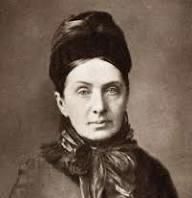
Woman of the Day writer, photographer and explorer Isabella Bird (1831-1904) of Yorkshire, one of the 19th century's most intrepid women travellers, the first woman to climb Mauna Loa, the world's largest active volcano, and the first woman Fellow of the Royal Geographical Society.
A tiny woman with significant health problems - a spinal complaint, nervous headaches, and insomnia - she endured broken arms, ribs and bones, cholera, frostbite, being buried up to her neck in snow, volcano burns, attacks, and several near drownings on her travels, but nothing stopped her. “In the face of adversity, we discover our own resilience.”
When Isabella was a child, the doctor recommended an outdoor life. Her mother cosseted her. Her father, a vicar, took an unconventional approach to her education. A great admirer of nature, he took her all over the countryside teaching her about trees, plants, crops, animals, and features of the landscape. When they met people, he would challenge her to observe them carefully and describe them afterwards. It nurtured a lifelong gift of observation.
After a "fibrous tumour was removed from the neighbourhood of the spine" in 1850 followed by a long state of exhaustion, doctors recommended a sea voyage. Her opportunity came in 1854 when cousins needed to return home to the USA in 1854. She accompanied them. Her father "gave her £100 and leave to stay away as long as it lasted".
Australia beckoned next in 1872 - a voyage then took four months if the weather was calm, less in a clipper - but Isabella found the social atmosphere stultifying so on an impulse, she bought a ticket to Hawaii and camped on the slopes of Mauna Loa, becoming the first woman to climb the largest active volcano in the world. Her love of adventure was born.
“Life is either a daring adventure or nothing at all.”
Isabella headed to Colorado where she rode over 800 miles by horseback in the Rockies and scandalised everyone by riding a horse astride like a man rather than the more demure (though physically and technically far more demanding) sidesaddle manner expected of ladies. She threatened to sue the Times for saying she dressed like a man: "For the benefit of other lady travellers, I wish to explain that my Hawaiian riding dress is the American Lady's Mountain Dress, a half-fitting jacket, a skirt reaching to the ankles, and full Turkish trousers gathered into frills falling over the boots - a thoroughly serviceable and feminine costume for mountaineering and other rough travelling, as in the Alps or any other part of the world.”
It was in Colorado that she fell in love with Rocky Mountain Jim, a one-eyed desperado wedded to a bottle of whiskey - “A man any woman might love but no sane woman would marry" - but moved on. Within months, he got into a brawl and was shot dead.
Isabella visited Japan, India, the Persian Gulf, Tibet, the Mediterranean and Egypt, rode elephants through the jungle of Malaysia, and explored the Yangtze Valley of China in an 8,000 mile round trip where an angry crowd shouted ‘Foreign devil!’, hurled stones and bayed for her blood but her medicine chest (and revolver) won them over. She was chased and hounded by fanatics in Iran and rode for over a thousand miles across desert and the Atlas Mountains with the Berbers. She took photographs everywhere, lugging the heavy equipment with her. “The tripod of my camera served for a candle stand, and on it I hung my clothes and boots at night, out of the way of rats. With these arrangements I successfully defied the legions of vermin which infest Korean and Chinese inns...With absolute security from vermin, all else can be cheerfully endured.”
She wrote copious letters detailing her experiences and observations. The Great Perak' letter to her sister began “This cannot be a 'great' letter because one native state is so like another and there is now very little to say” but after 116 pages, she had to cross that out. There was so much she wanted to say. “It is always worth taking the road less travelled.”
In 1892, Isabella became the first woman member of the Royal Geographical Society. When she died peacefully in her Edinburgh home, one week short of her 73rd birthday, Isabella’s bags were packed and ready for a return visit to China.
“True happiness lies in the experiences we gather, not the possessions we accumulate.”
@TheAttagirls Thank you for these - I really appreciate your efforts. I look forward to reading these every day and wish I'd learned about these women in school.




![TheAttagirls's tweet photo. There is no Woman of the Day post today but if there was, it would be Mrs R. I don’t know her name, when or where she was born, or much about her - indeed, her name is unlikely to even begin with R - but OTD in 1991, her ordeal secured a House of Lords ruling that finally laid to rest the common law concept that a woman’s body was the property of her husband.
What we do know is that Mrs R married a bloke in August 1984 and bore a child in 1985 but after a short separation and relatively short period of reconciliation, she and her child moved out to live with the in-laws on 21 October 1989.
About three weeks later, he broke into the house, put both of his hands around her neck, squeezed it, and tried to rape her. He was convicted of attempt rape and assault occasioning actual bodily harm on 30 July 1990 at Leicester Crown Court and sentenced to imprisonment but he appealed against conviction on these grounds:
1. A husband could not in law be guilty as a principal of the offence of raping his own wife;
2. R v Clarke stated that rape between married persons was impossible as stated by Wills J. (This was based on Lord Chief Justice Hale’s proposition in the 1600s - yes, the 1600s - that by marrying a man, a woman gives irrevocable consent to his right to take her body under any or all circumstances, regardless of her state of health or her consent).
3. Raping your own wife is not unlawful.
The Court of Appeal (Criminal Division) dismissed his appeal on 14 March 1991 but gave him leave to appeal to the Lords of Appeal in Ordinary, popularly known as the Law Lords and then the highest appellate court in this country (till that constitutional vandal, Tony Blair, replaced them with the Supreme Court).
On 18 October 1991, Lord Justice-General, Lord Emslie, delivered the judgment in R v R [1991] UKHL on behalf of the five Law Lords. In a unanimous ruling, the appeal was dismissed.
The judgment is a joy to read, not least because it expresses in dry lawyerly terms the learned justices’ astonishment that anyone in their right mind could possibly think that it was ever okay to force a woman against her will. It included these words:
“[Hale’s proposition] is no longer acceptable. It can never have been other than a fiction, and fiction is a poor basis for the criminal law. The extent to which events have overtaken Hale's proposition is well illustrated by his last four words, “[irrevocable consent] which she cannot retract.”
Mrs R was not only subjected to the ordeal of the original attack but the appeal process by her ex meant that she was put through the wringer for nearly two years.
Whoever you are, wherever you are, Mrs R, your case was the death knell for coverture and freed us all. Thank you.](https://pbs.twimg.com/media/Gajhe7AWoAAN1cW.jpg)