The Breakthrough Junior Challenge is a great way for our young scientists to showcase their talents. Good luck to Maxim who has made it through to the global final with their excellent video on gravitational waves: https://t.co/IM67OFTPZN
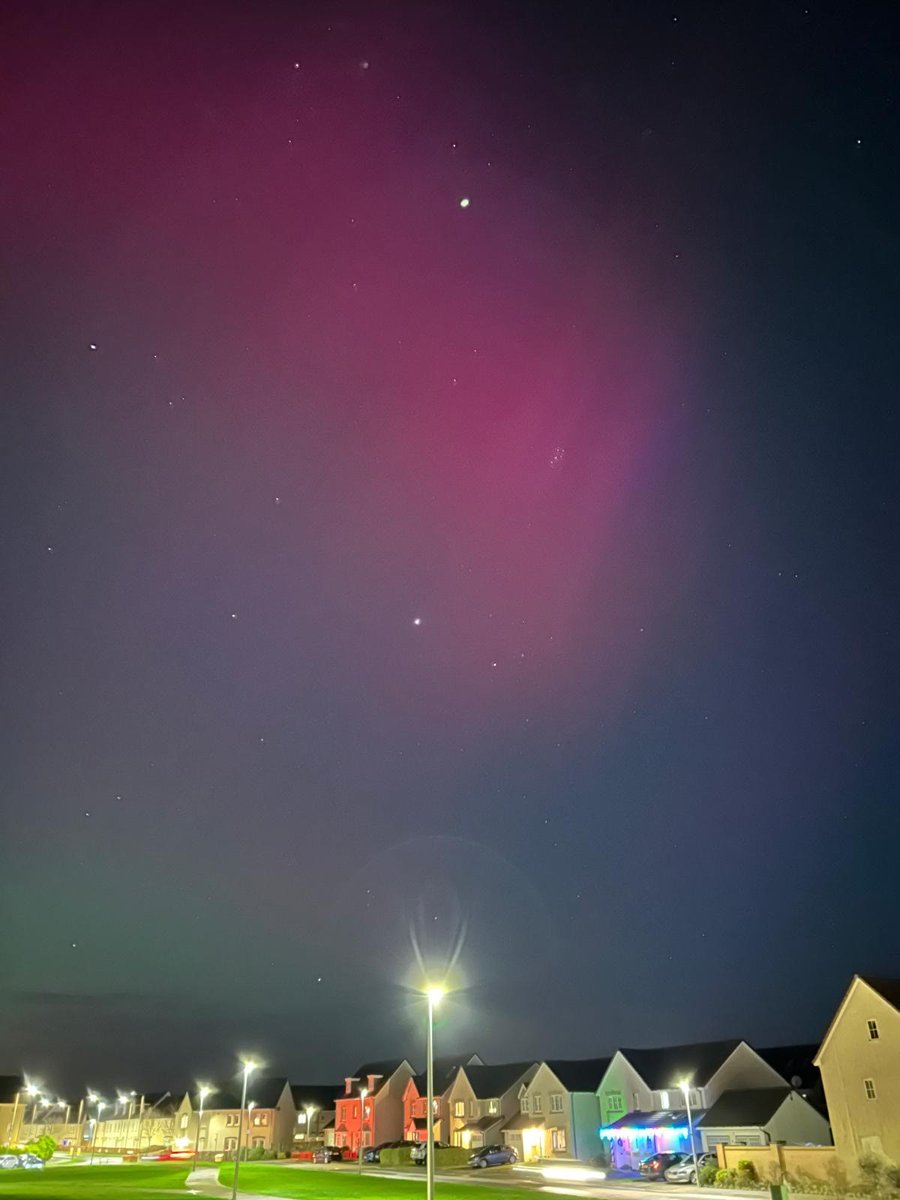
There are confirmed sightings of the aurora around the UK right now. If you have clear skies in your area then look up and you might just get a display of the Northern Lights to welcome in 2025!
Aurora activity update via:
https://t.co/kQ3xdmHb0g
📷: @mgs_geog
Recording of today's #AGU2024 press conference "Science from the Shadow: NASA's initial results from the 2024 eclipse": https://t.co/9B8cG1HHvM - comes with the press release https://t.co/YNLzHpSwzD #SolarEclipse
To see the solar corona - a million times fainter than the fiery solar disc - Proba-3 has to subtract the Sun from its view more completely than any coronagraph before it. Here's how 👉 https://t.co/qpbVjEifPv
🚀 #PROBA3 Launch Update! 🚀
The 2 satellites arrived in India! Final prep underway for the December 4 launch. The #PROBA3/#ASPIICS science team at #STCE/#SIDC@ORB_KSB is thrilled to see this mission take flight!
Stay tuned:
🔗https://t.co/Op9mHvlQaV
🛰️https://t.co/Q82sFmJC0C
Our PhD student, Julio, present his poster at European Space Weather Week 2024 @ESWWconf in Coimbra, Portugal. 🇵🇹
His work use machine learning model and CME catalogue to identify which active regions might produce CME in the future. ☀️
#ESWW2024
The 2025 ESA internship opportunities are open for applications! 🙌
Positions are available in a wide range of fields, including science, engineering, IT, business, economics, and administrative services.
Find out more 👉 https://t.co/DfmdavyuYm
#ESArecruits
The best solar event on 2024/10/29 was the big prominence eruption from the southwest limb. This became an extended CME based on the LASCO C3 image at 19:30 UT. At this time no coronagraph data are available between 12:53 (STEREO-A COR2) and 19:30 (C3).
PROBA-3, closer to launch!📅🚀
PROBA-3 is @esa – and the world’s – first precision formation flying mission. A pair of satellites, with Airbus-built platforms, will be loaded with their instruments - the Occulter and the Coronagraph - and fly together maintaining a fixed configuration in space, at 150 metres of distance. This way, they will create an artificial solar eclipse to study the Sun’s faint corona, undisturbed by Earth's atmosphere.
Stay tuned for its launch!☀️
Very surreal to see the Collin's #StargazersBible in the Christmas gift ideas window display at #Waterstones in #Oxford. I've seen my friends' pics of it in their local shops but seeing it for myself was awesome. A year ago I was working long hours writing my parts of the book!
Coronagraphs allow us to detect and characterise eruptions from the Sun, and are vital for space weather forecasting. Great to see CCOR, a new addition to space-based coronagraphs, working well!
NRL's Compact Coronagraph (CCOR) has successfully collected its first images of CMEs.
CMEs are powerful bursts of plasma that can disrupt Earth's magnetic field, leading to disruptions on earth. CCOR can observe and provide real-time data that will help scientists!
#NRL#NOAA
The Sun is more active than it's been in a decade, making now a great time to see the aurora.
Solar scientist Lucie Green (@Dr_Lucie) explains in Episode 3 of our 4-part podcast series about the northern lights.
Series sponsored by @Hurtigruten
https://t.co/nl8UPwCGYG
Congratulations to Dr @catherineregan0 @MSSLSpaceLab@uclmaps@WestVirginiaU on being awarded the Jocelyn Bell Burnell medal and prize for engaging thousands of school children in Mars exploration and for her research on Martian dust storms #IOPAwards24 https://t.co/65njZPHZuB
Congratulations to Dr @catherineregan0 @MSSLSpaceLab@uclmaps@WestVirginiaU on being awarded the Jocelyn Bell Burnell medal and prize for engaging thousands of school children in Mars exploration and for her research on Martian dust storms #IOPAwards24 https://t.co/65njZPHZuB