Run by Dr Sreeja PS, Fetal medicine Consultant | Aster Malabar Institute of Medical Sciences, Calicut, Kerala, India| For Fetal Ultrasound lovers| Views my own.
@qatarairways@qatarairways my flight QR 536 (Doha–Calicut) on 13/14 June has been cancelled, leaving me stranded on a connecting ticket from Barcelona. I need written confirmation of the cancellation and a refund. The cancelled leg isn't even showing in my agent's app. Please help — happy to share booking details via DM.
2025 Are we headed towards an IRS derivative bubble collapse?
US Economy
Monthly
- 409 Billion Income ( 88 billion interest alone monthly ) (21.6% of income )
- 562 Billion Expense
- 152 Billion Deficit
- 766 Billion Bonds to be renewed ( 9000 billion maturity wall /12 )
Accumulated
- 37200 Billion Debt
- 72000 Billion Pension Medicare Obligations
- 729000 Billion in OTT Derivatives in circulation as per bank of international settlements
( Out of which
Interest Rate Derivatives ~ 579000 Billion )
( Out of which
interest Rate Swaps ~ 465000 Billion )
What are these Swaps ?
The 2008 bubble was triggered by the Credit Default Swaps ( around 63000 billion ) which became the foundational reason for the exponential growth in Mortgage backed Securities )
This time the number is at 465000 billlion dollar worth of notional value in interest rate swaps.
The most common IRS types include fixed-for-floating swaps, where one party pays a fixed rate and receives a floating rate
Who are holding these swaps ?
JPMorgan Chase, Citigroup, Goldman Sachs, Morgan Stanley, Bank of America (US): Holding around 45% ( Around 200,000 Billion - Notional Value )
For a comparison the cumulative profits of all these banks combined is just 126 Billion
Other major holders:
Deutsche Bank, Barclays, HSBC, UBS (Europe): , Mizuho, Nomura (Japan), LCH (London Clearing House), CME Group, Bridgewater Associates, PIMCO, BlackRock
What are the risks ?
1. Mark-to-Market Losses for Fixed-Rate Payers
In a typical fixed-for-floating IRS, one party pays a fixed rate and receives a floating rate (e.g., SOFR). If long-term rates rise, the value of the fixed-rate leg decreases relative to the floating-rate leg, causing mark-to-market (MtM) losses for the fixed-rate payer (e.g., banks or corporations hedging fixed-rate debt).
2. Increased Collateral and Margin Calls
Most IRS are cleared through CCPs (e.g., LCH, CME) or collateralized bilaterally. Rising rates increase MtM volatility, triggering higher margin calls for parties with losing positions (typically fixed-rate payers).
Previous incident 1: During the 2013 “taper tantrum,” a ~1% rise in US 10-year yields led to significant margin calls in derivatives markets, illustrating the potential scale.
Previous Incident 2: 2022 gilt crisis where the LDI ( Liquidity driven investments ) by the pension funds utilising these swaps to amplify the returns ended up in margin calls and huge losses for the pension funds.
3. Counterparty Credit Risk
• Description: In uncleared IRS (bilateral trades), a rate spike increases the risk that a counterparty (e.g., a smaller bank or corporation) cannot meet margin calls or payment obligations, especially if they face MtM losses.
4. Systemic Risks to Financial Stability
A rapid, sustained rise in long-term rates could stress the broader financial system, particularly if combined with economic slowdown or inflation. IRS, due to their massive notional size, amplify these risks.
During 1940s to 1980s interest rate as went up from almost 0 to 20%
From 1980 to 2008 rates went down to 0%
The only way to stimulate economy was QE 1, 2, 3 and exponential infinite QE 4 ( To the extend that 80% of M1 supply of dollar is after 2020 ) which resulted in inflation of 9.1% on june 2023
Rates had to be raised to 5.25% to mitigate inflation.
If further QE is done it will result in further inflation /hyperinflation leading to higher interest rates meaning that the monthly payment of interest component alone will rise from 20% to higher levels of the total revenue in due course making it unsustainable.
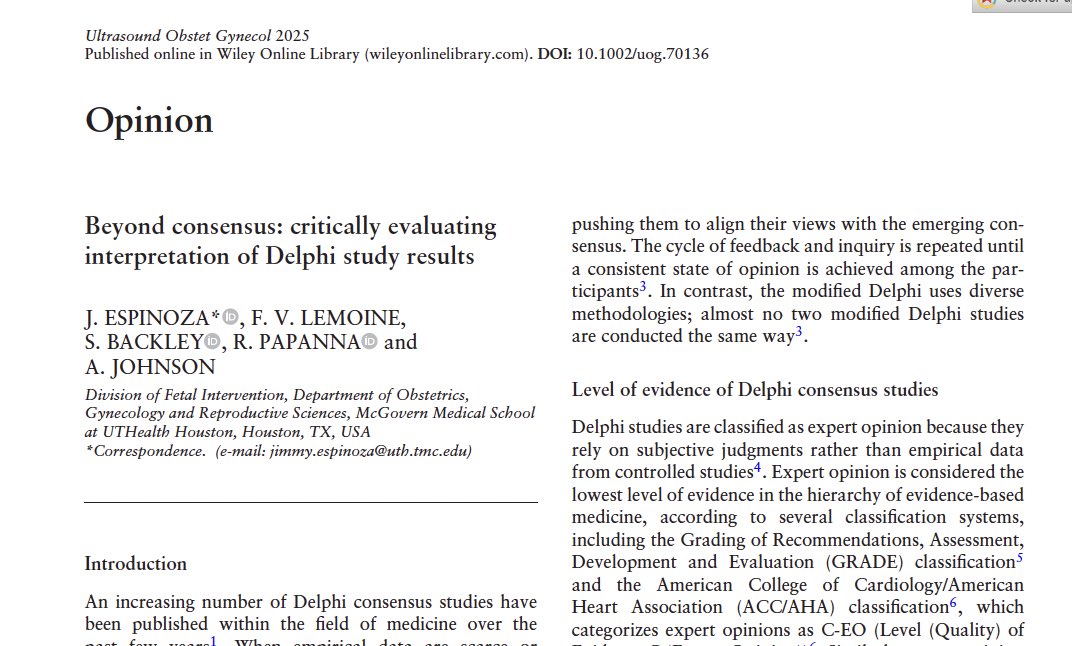
This is a must read on the utility/futility of Delphi studies, which has infected our specialty of Fetal Medicine.
Journals need to stop calling these “studies”. These are opinion papers. Calling them studies elevates their significance.
@theRealKiyosaki@theRealKiyosaki … I did everything you said from 2021 onwards. And still buying silver coins . I don’t know how to express my gratitude. I wish to click a picture with you… is it possible? It’s one among my bucket lists.
@xashesofthewake It’s possible that these calcifications are old scars (we don’t know what caused them in the first place )and may not signify any ongoing medical issues. So that’s probably why all the investigations are coming normal. I think you can relax .
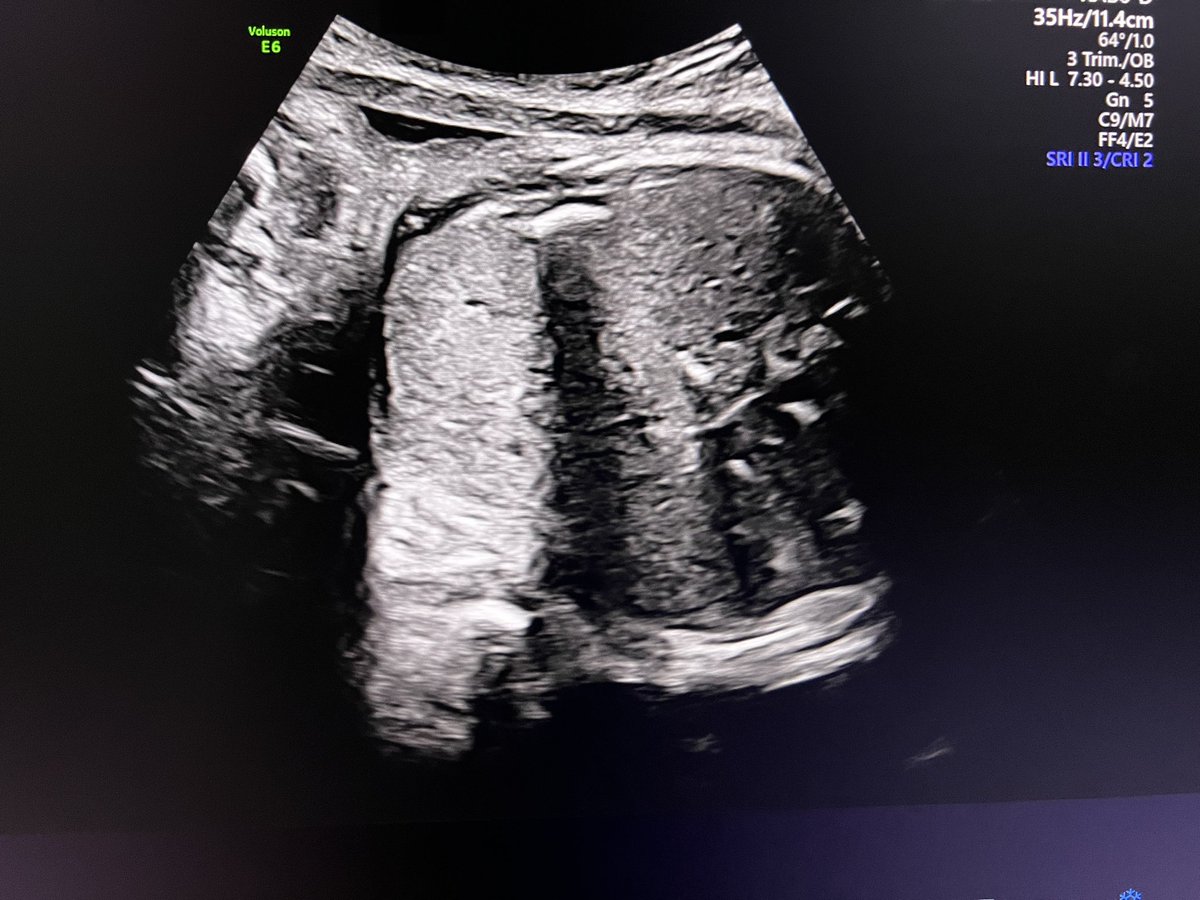
The afferents and efferrents of the Fetal Liver in one frame.
This is a 31 weeker and that makes it easier than attempting a photography in a 20 weeker. Unlike other organs, the portal system of Fetal Liver has many normal anatomical variations. Understanding all the variations will help us differentiate normal from abnormal.
The picture below is however an attempt to showcase both the afferents and efferents in a single frame with clarity. It doesn’t show the entire portal system. What you can see is a slightly oblique view through the Fetal liver demonstrating the Umbilical vein(UV) ,continuing as the Left Portal Vein(LPV). The first(inferior )branch of the LPV i.e, LPVi marks the beginning of the Portal sinus which is classically described as L shaped. I think it’s more C shaped . The next small branch of the LPV is the superior branch (LPVs).Both these branches are to its left . There is a third branch for the LPV on to the right side - LPVm. m stands for medial. Portal sinus ends or meets the right portal vein (RPV) which further divides into two branches anterior and posterior- ARPV and PRPV.
The efferents are the hepatic veins , Right(RHV),Left(LHV) and the middle (MHV). All of them drains ultimately to the heart .
What’s not described here is the Ductus venous and the Main portal vein. The variations of the venous system however are importantly confined to the DV and the rest of the portal system!
.
#fetalimaging #fetalmedicine #MedTwitter #medX #fetalheart #anomaly #anomalyscan #sonography #fetalsonography
I’m thrilled to share a happy news… our team at Aster MIMS Kozhikode successfully performed our first Fetal aortic balloon valvuloplasty on a 26-weeker with critical aortic stenosis.#fetalbav#aorticstenosis#fetalecho#fetalcardiacintervention#fci#bav https://t.co/Rwih9BJ8HR
As we enter @drmohitshahsfm tenure , my feeling - Entire @drBimalSahani tenure was quite fascinating and full of great ideas/ events . Congratulations Outgoing President for spectacular performance and outreach concept @Socfetmed @P2Iyer@theashokkhurana