ISRO provided marvellous coverage but failed to show viewers the magical landing because instead of the velocity/distance screen with moon camera feed, it showed Modi's feed with an animated lander. Indians never got to "see" the magical moment when the counter hit 0.0. Tragic.
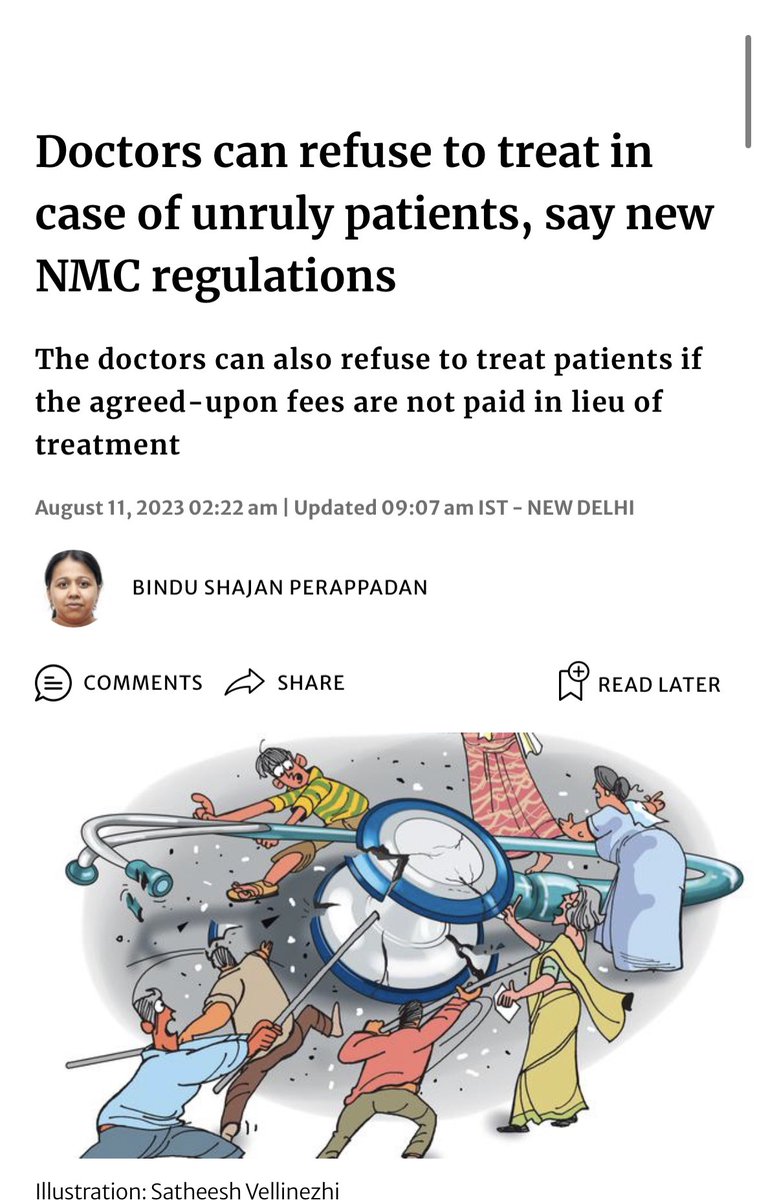
A historic decision by @NMC_IND
We at @FAIMA_INDIA_ welcome this move. @mansukhmandviya
I have personally observed tht some patients are chronic offenders who enjoys disrespecting the docs and hospital protocol.
Now we have d ryt to choose our patient.
This is a grt move agnst VIOLENCE .
I fully support this initiative and we docs should be united and make sure that if someone misbehaves with any docs such patients shd be identified.
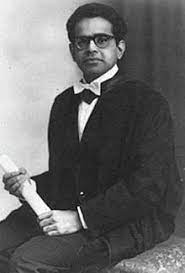
Bengal has always been home to some of India’s greatest intellectuals. None, however, had a more tragic fate than Dr Subhas Mukhopadhyay. His is a tale of genius and betrayal, like no other.
Born in Hazaribagh in 1931, D Mukhopadhyay was a hardworking student. It wasn’t uncommon do BSc before MBBS in those days and Dr Mukhopadhyay finished his BSc in Physiology. The inner workings of the human body fascinated him and propelled him to do MBBS. There was no turning back. Armed with his background in physiology and a keen eye for research, he got his PhD in Reproductive Physiology in 1958. Amazingly he went on to get his *second* PhD in Reproductive Endocrinology from University of Edinburgh in 1967.
He joined as lecturer in physiology in the NRS Medical college, Calcutta - where he would go on to create history. Like most Indian researchers, he didn’t have access to costly equipment or dedicated lab. His weapon was his passion. He told his wife,Namita, that they would delay starting a family, since he had to focus on his work on creating a test tube baby.
He created India’s first and the world’s second test tube baby “Durga”, a mere 67 days after the first test tube baby was born in the UK.While the British doctors Patrick Steptoe and Robert Edwards enjoyed institutional support, Dr Subhas had to swim against the current.
His achievement created jealousy among colleagues and social ostracism - perhaps he was too ahead of his times. The then CPIM government harassed him - he was a straightforward man, unwilling to bend to bureaucratic whims and fancies. This would later prove to be his undoing.
The govt appointed committee had the gall to call his work bogus.He was quickly transferred to Ophthalmology department, thus curtailing his ability to work. He sought help from the Indian government to present his work in Tokyo. He was denied and his wings were clipped. Everywhere he turned, the doors were slammed shut.
On 19th June 1981, Namita Mukhopadhyay walked into their apartment, only to find her husband’s hanging body. His suicide note read “ I can’t wait everyday for a heart attack to kill me”.
Ignominy and suicide were the reward for the double PhD who had delayed starting his own family, so that he could offer hope to others with infertility.
If a tree falls in a forest and no one is around to hear it, does it make a sound?
Dr Mukhopadhyay could have been relegated to the footnote of history, had it not been for another doctor T.C. Anandkumar, who years later, produced India’s second test tube baby in Mumbai. He gave Dr Subhas the much deserved credit as he understood the enormity of Dr Mukhopadhyay’s achievement better than anyone else.
The wheels of history started turning in Dr Mukhopadhyay’s favour, twenty years after his death. In true “Indian style”, a statue was erected in Hazaribagh to honor him. His life was made into a movie - Ek Doctor ki Maut (Tapan Sinha). The reproductive endocrinology department of NRS Medical College was named after him. In an IVF conference, “Durga”, the first test tube baby came out and revealed her identity at the age of 25 ,as Kanupriya Agarwal.
However, nothing could replace Namita Mukhopadhyay’s lost husband and life. When, they told the news of his delayed recognition, she wasn’t in a state to smile - she was paralyzed, the final blow after a lifetime of neglect.
While Dr Mukhopadhyay’s success against all odds is unique, the animosity and apathy he faced isn’t.The Indian crab mentality of “If I can’t have it, you can’t have it too” continues to plague our science. Bureaucratic interference and nepotism are sadly the norm.
Justice delayed is justice denied. Unless we solve the issues that led to Dr Subhash’s death, we can’t even claim delayed justice. And we will continue to lose such great minds.
It was the late 1860s. A young boy was sent to live in a village in Bengal called Nethra, away from the modest home in which he was born. His father was poor, but he wanted to spare the little one, one of the gravest misfortunes that can befall a child - the death of his mother. No one knew why his mother died young, but his relatives thought it could be cancer. Cancer shows it wrath to princes and paupers alike. Fate struck an early blow in Nilratan Sircar’s life. However, it sealed and steeled his resolve.
He decided to become a doctor.
Nilratan Sircar studied hard. His laser like focus on education, caught the eye of a kind Englishman who sponsored his study. Sircar entered the Campbell medical college in Calcutta and got his vernacular diploma in medicine in 1879. His academic hunger wasn’t quenched. Like a comet blazing through the cosmos, he added degree after degree to his name - MB, ML and went on to do medicine in English as well.
He started his practice in Calcutta and quickly became popular with patients for his kind nature and attention to detail.Dr Sircar finally took head on, the emperor of all maladies(and assorted courtiers) - with all his knowledge. His soaring success took him to foreign shores and many state heads of neighboring countries became his patients. His success was noted by the British, who knighted him in 1918 - making him Sir Nilratan Sircar. From the abject poverty of Jessore, Sircar had lifted himself, through sheer hardwork to the heady heights of British knighthood, the highest civilian honor for a colonial subject. He represented the Calcutta University in the Empire Universities conference in England - where he was conferred the Doctorate in Civil Law by the Oxford University and Doctorate in Legislative law, by the Edinburgh University. As if medicine and law weren’t enough, he was instrumental in the creation of College of Engineering and Technology in Jadavpur, which stands today as a deemed university.
He wasn’t intoxicated by success. His own meteoric rise didn’t satisfy him - he wanted the same rise for his motherland. His close friend Rabindranath Tagore inspired him, to join the Swadeshi movement. Sircar believed that arts, sciences and humanities must develop simultaneously. He became a Swadeshi entrepreneur and started scientific societies and factories - soap, tanneries and boot and equipment, thus promoting national trade.
Dr Sircar had earned a lot, but also spent much of it for the sake of his fellowmen, trying hard to instill a sense of self respect. He remained poor at the end of his life. The loss of his beloved wife was the final blow, and he died , poor, within a year. Life had come a full circle. He last wish remained unfulfilled - to walk as a free citizen in Indepedent India.
Our alma mater holds a special place in our hearts. The intellectual nourishment is often one way - and the “umbilical cord” is cut when we graduate. Some give back, through alumni associations. Few, will ever grow to such heights, to place their alma mater on the nation’s map. Nilratan Sircar was such a man - and after his death ,his alma mater was renamed after him. In many ways, this is the highest honor anyone can achieve, even more soul satisfying than a British knighthood.
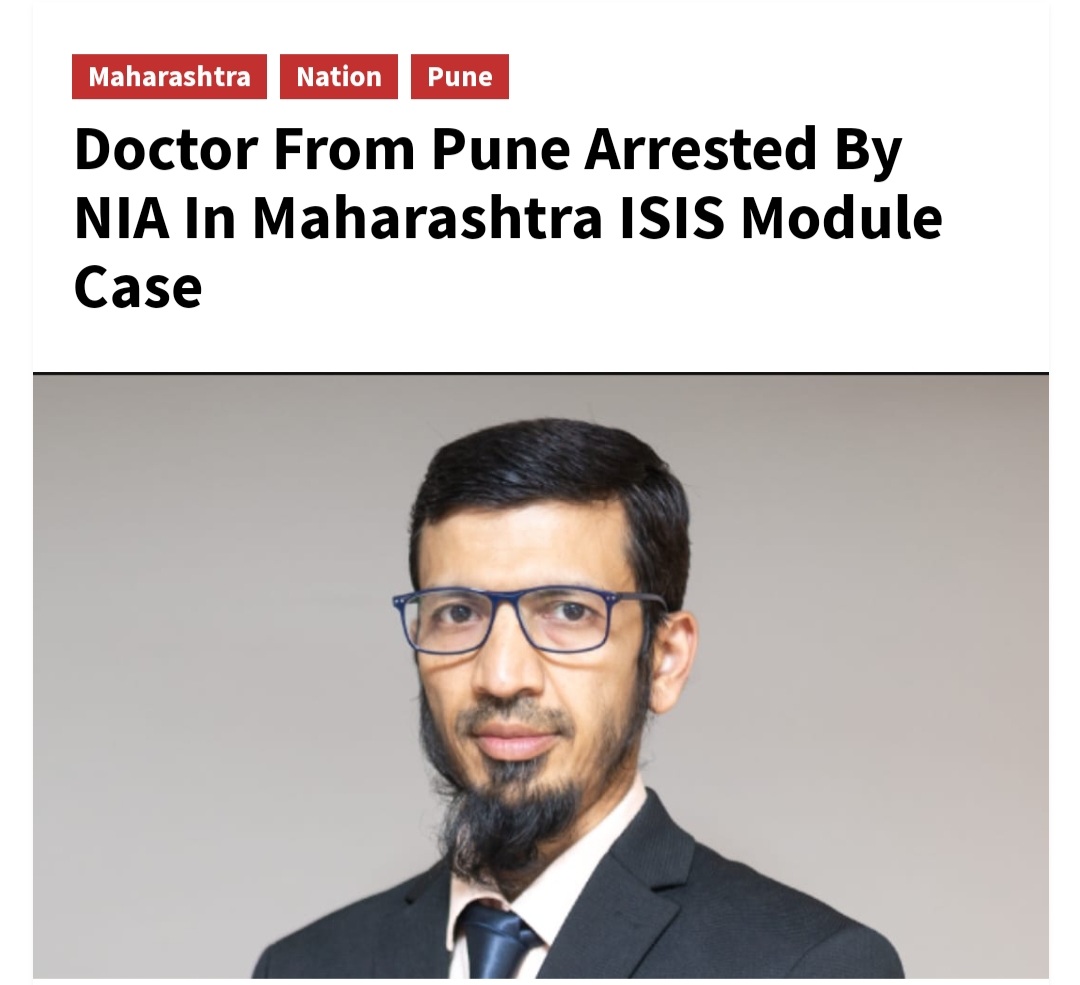
This country did not discriminate you when you got a MBBS degree, then a MD degree, then reputed medical positions across top hospitals in Pune. The people trusted you and respected you. You instead chose terror. What a tragedy and what a dangerous betrayal!
🧵 What made this medical doctor lead an #ISIS module? Lack of education and poverty isn’t the problem.
He did his schooling among Hindus and non-Muslims.
He did his college and medical studies.
He worked and gained reputation among non-Muslims Doctors.
Did his country not give him equal chance and opportunity? Then what happened?