For anyone who started with a home lab: what was the first thing you actually tested once Kali was up and running? Looking for ideas on where to point this thing first.
Day 20/30 w/ @VAInitiatives. SSRF doesn't break into your server. It convinces your server to attack itself from the inside. Also spun up my first Kali Linux lab today. Less reading, more doing. Great lesson from @VictorAkinode#KaliLinux#VACyberMentorship
Built my first lab today. VirtualBox runs a full isolated computer inside your own. Break it, infect it, blow it up, then delete and start fresh. Your real system never feels it. Snapshots let you roll back instantly. A controlled blast radius for learning.
SSRF is brutal in the cloud. Point the server at a metadata endpoint, steal temporary credentials, and full infrastructure compromise is on the table. Root cause is almost always the same: a server blindly trusting a user supplied URL.
SSRF in one line: the attacker doesn't breach your server, they trick your server into making requests on their behalf. Since the server is already trusted inside your network, it reaches internal systems the public internet never could. Borrowed trust.
Honest question. What's harder to defend against in your experience, a technical exploit or a well executed social engineering attack? Curious whether people trust their processes or their tools more.
The #1 risk on the OWASP Top 10 isn't exotic. It's broken access control. Users reaching data or actions they were never authorized for. The most damaging web risk is also one of the most basic to get wrong.
Remote work made social engineering easier. When you can't see who you're talking to, a confident voice or a well written email is often all it takes. Verification procedures that don't bend for "urgent" requests are the real defense.
Social engineering tactics are disturbingly low tech. Pretexting is a believable fake story. Baiting is an infected USB labeled "Payroll." Tailgating is walking through a secure door behind you. None need a single line of malicious code. They just need you to act normal.
Want a high paying cyber security career? Here's how to leverage online training with @TryHackMe to get there. Read the blog https://t.co/GKhA4Nlg3H #tryhackme#cybercareers via @tryhackme
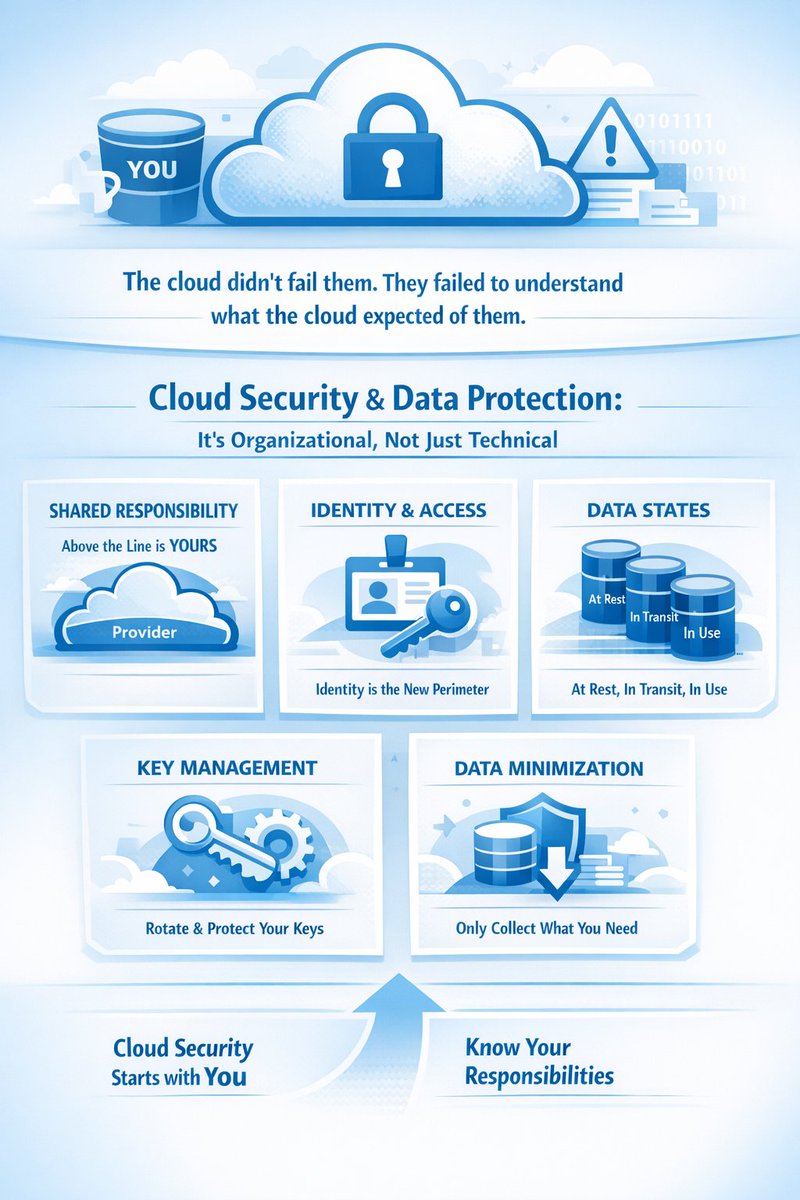
Is the shared responsibility model genuinely misunderstood, or do organizations understand it and just deprioritize it? Curious what people actually see on the ground.
Every piece of sensitive data you hold is a piece you have to protect and account for. Collecting more than you need doesn't just cost storage, it creates liability. Less data held means a smaller surface to defend.
Encrypting stored data but sending it unencrypted is a false sense of security. All three states need protection, at rest, in transit, in use. And encryption is only as strong as how you manage the keys. Rotate them. Never hardcode them.
Cloud provider secures the infrastructure. You secure everything on top, data, identities, configs, access. Assuming they watch all of that is exactly how a public S3 bucket sits exposed for months.
For developers in security, what's the most common insecure coding pattern you still see in production today? Hardcoded credentials, missing input validation, or something else entirely?
Vulnerability management isn't a scan you run once a quarter.
It's a cycle, discover, assess, prioritize, remediate, verify, repeat. Vulnerabilities appear in your code, your dependencies, and your configurations constantly.
Shift left security, the most important ideas in software development and one of the most ignored.
It means catching security issues during design & development, not after deployment. A vulnerability found in a code review costs a fraction of what it costs to fix after a breach.