Update - I've changed to using a custom domain handle. So it's now https://t.co/bII5hQAPyJ instead.
I'm going to be more active there instead of here moving forward. Seems to have really gained traction with the developer community recently.
Happening next week: Microsoft Build 2026
Livestreaming June 2–3, 2026
Go deep on real code, real systems, and real workflows with the teams building and scaling AI. Hands-on sessions. No fluff.
The keynote kicks off at 9:30AM. Set your reminder now: https://t.co/dZ7dwAV51I
The new @github app has a feature that lets you set up scripts on worktree creation and archive / removal. I've been using this with @aspiredotdev --isolated mode to work on multiple features in parallel without port conflicts!
https://t.co/CuzIVSsvG1
Coming to C# file-based apps (FBAs) in .NET 11:
- transitive directives, i.e. honor directives from #:include'd files
- #:include ../libs/Assembly.dll
- `#:ref app.cs` for references between FBAs (useful for tests, class libs, etc.)
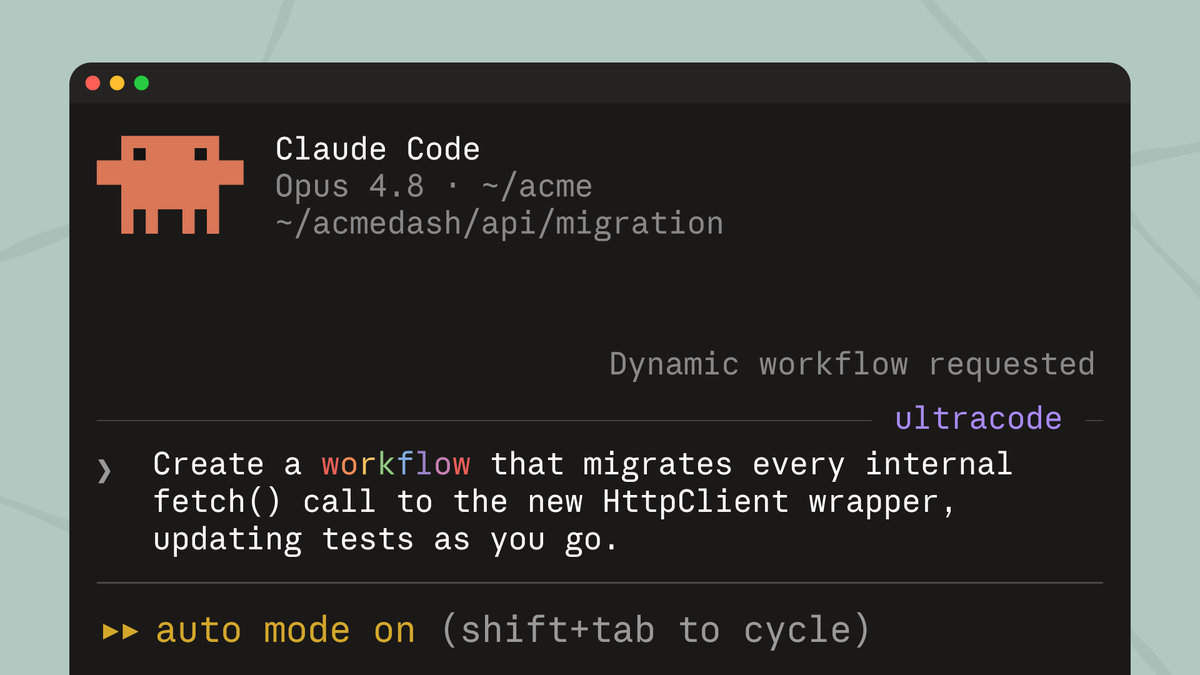
New in Claude Code (research preview): dynamic workflows.
Claude writes an orchestration script on the fly, then spins up a large fleet of coordinated subagents in parallel to take on your most complex tasks.
Use the word "workflow" in a prompt to get started.
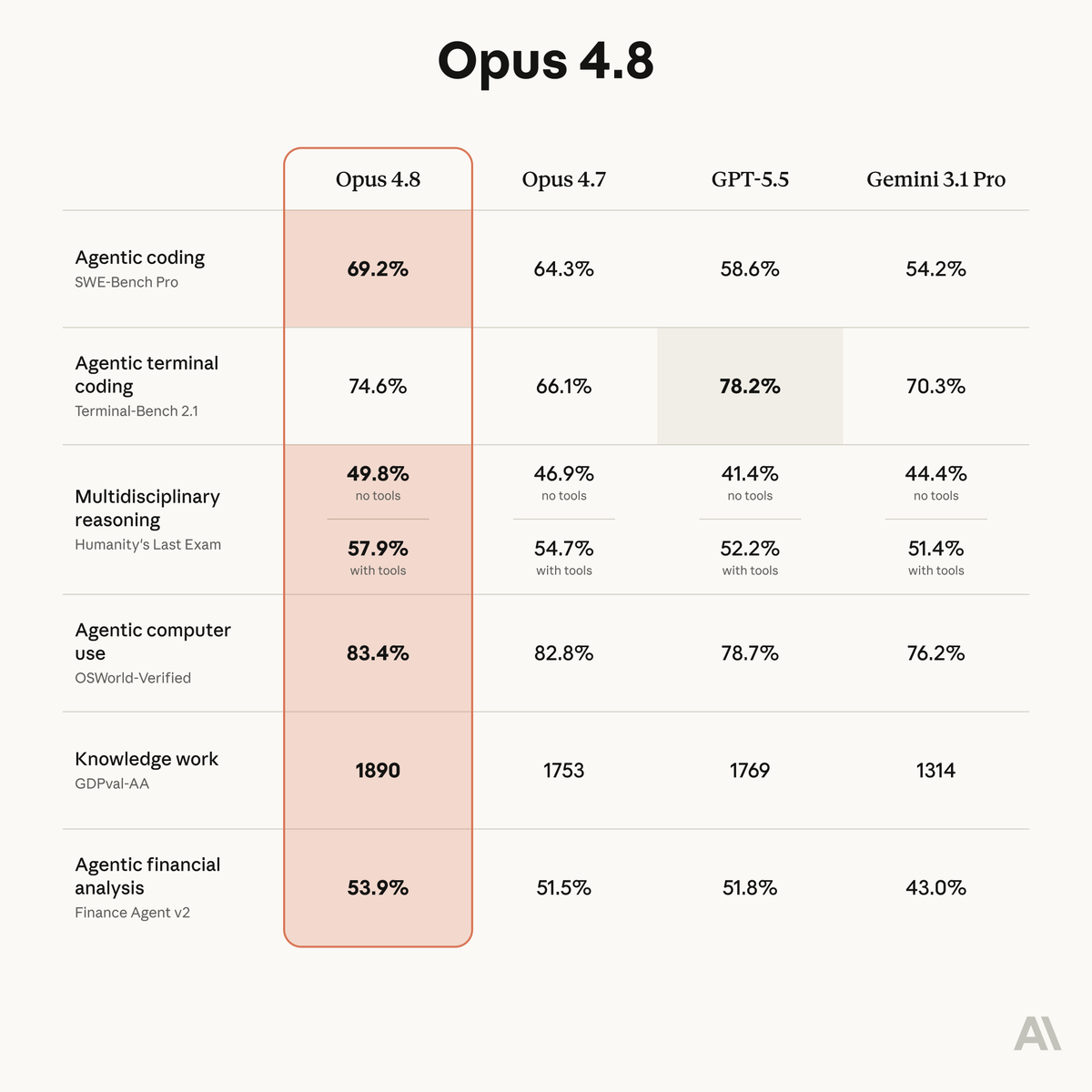
Claude Opus 4.8 is out today. It's our strongest coding model yet: up on SWE-bench Pro (from 64.3 to 69.2) and noticeably more honest about its own work. It tells you when it's unsure and catches its own bugs instead of declaring victory early. Same price as 4.7.
Introducing Claude Opus 4.8: it builds on Opus 4.7 with sharper judgment, more honesty about its own progress, and the ability to work independently for longer than its predecessors.
Available today at the same price.
We’ve shipped a security-guidance plugin for Claude Code that helps identify and fix vulnerabilities as you’re writing code.
Available for all Claude Code users. Install from the plugin marketplace (/plugins).
People often ask what my biggest tip is for getting the most out of Claude Code.
These days my #1 tip is: use auto mode
Auto mode means no more permission prompts. It is the key building block for multi-clauding: start a session, then while it runs, work on another session in parallel.
Last month we launched Project Glasswing, our collaborative AI cybersecurity initiative. Since then, we and our partners have found more than ten thousand high- or critical-severity vulnerabilities in essential software.
That's why I built waza — a Go CLI that benchmarks agent skills with A/B baselines, pairwise judging, and auto discovery. Scores, not gut feeling.
https://t.co/BeHptuwPIh