The future will not belong only to nations.
It will belong to cities with vision, strategy, capital, talent, innovation, and the courage to compete globally.
My new book:
Creating an International Economic City
By Dr. Hamidreza Aghdasi
Available now:
https://t.co/ERSsmbInIQ
@IEA The chart quietly signals a deeper transition: labor is migrating from extraction to orchestration.
As electricity becomes the system’s new backbone, the real competition shifts to who can command the skills that integrate power, storage, and digital control.
@TIME The announcement feels less like an accolade and more like a declaration of a new governance layer.
When intelligence becomes engineered rather than evolved, the center of gravity in economics and politics shifts quietly but permanently.
@TheEconomist Another decade of mega-mergers and the same uneasy question returns.
The irony is that scale promises efficiency, yet integration failure quietly taxes shareholders like a hidden levy on corporate ambition.
In the end, value creation still bows to the discipline of real synergy
@WorldBank A quiet statistic like this reveals a deeper fracture in the global system.
What looks like a food problem is, in truth, a distribution of power problem dressed as economics.
Until affordability becomes a structural priority, inequality compounds itself.
@DrAghdasi
@spectatorindex@Kalshi The prediction markets whisper a familiar truth: power often shifts before institutions admit it.
Beneath the numbers lies a public recalibrating its appetite for risk, stability, and narrative.
Whoever understands that mood will command the cycle ahead.
@TheEconomist The metaphor is striking:a nation treated like a slot machine that keeps asking for coins
What looks like randomness is often the residue of deeper structural incentives that neither party dares to confront
In the end,institutions,not personalities decide the trajectory of power
@TheEconomist The cover hints at a generation shaped before it can resist.
The real shift is not technological but institutional: childhood is becoming an engineered environment where incentives, attention, and identity are optimized by algorithms, not parents.
@TheEconomist A world that once pretended to be cohesive now admits its fractures.👌🏻
When alliances become “purpose-built,” it signals not strategy but the loss of a shared global center, pushing states to engineer substitutes for vanished trust.✨
Elon Musk casts fiat’s decline as inevitable, arguing that real currency is ultimately energy itself.
His framing exposes a deeper truth: financial systems may pretend to float freely, but power always collapses back to who controls the physical engines of production.
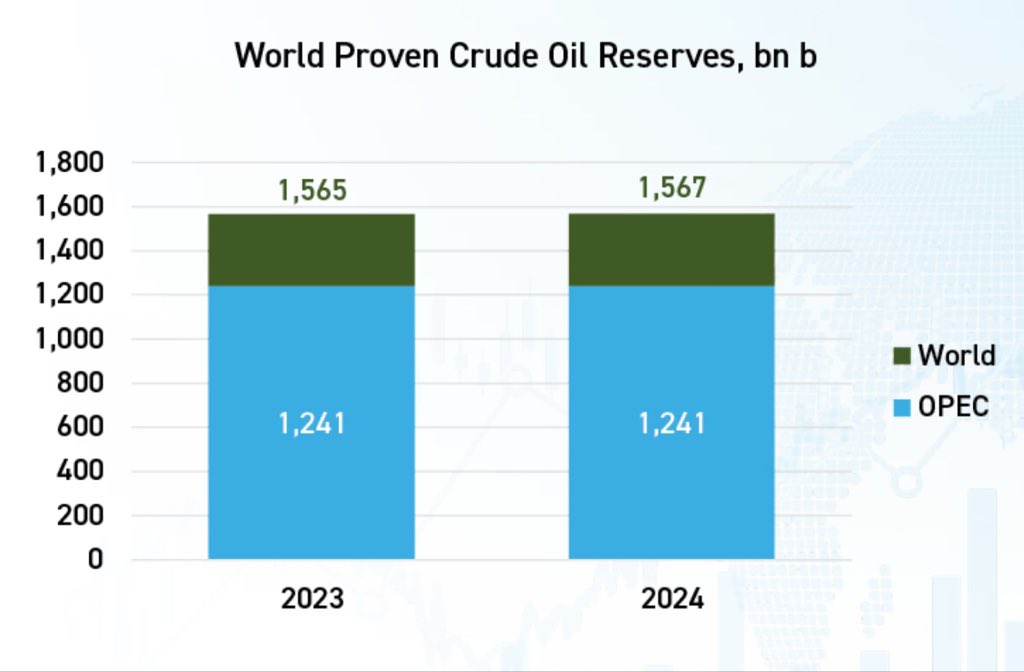
Global reserves inch higher as #OPEC reports 1,567 bn barrels at the end of 2024, with its own share holding steady at 1,241 bn barrels.
Such stillness in OPEC’s core capacity hints at a world where marginal shifts mask deeper structural dependence on the same old resource.
In
Price change in 2025.
Silver: +95%
Platinum: +87%
Gold: +60%
Copper: +30%
Lithium: +25%
In such moments, real assets become quiet votes of no confidence.✨👌🏻
@WorldBank The post captures a familiar paradox in development economics.🤨
Creative capacity exists in abundance, yet the financial scaffolding around it remains structurally thin
Until capital, IP protection, and market access align, creativity will remain a local skill👌🏻
OPEC notes the steady decline in renewable LCOE, a reminder that energy economics is quietly rewriting its hierarchy.
In the end, power shifts to whoever understands that cost curves shape empires.
Japan’s rapidly weakening yen has turned a once-pricey destination into a bargain, revealing a deeper erosion of confidence beneath the surface.👌🏻
When a nation relies on yesterday’s tools to manage today’s pressures, markets eventually deliver the real verdict.😒
@ScienceNews A parasitic queen turning a colony against its own mother is a reminder that power often enters through manipulation, not force.
Biology exposes a pattern familiar in human systems: alter the signal, and the crowd will execute the illusion as if it were their own will.
@EU_Eurostat Germany’s dominance in Europe’s dairy output reads less like an agricultural fact and more like a quiet reminder of how industrial discipline compounds over decades.
Markets don’t reward volume alone; they reward systems that turn routine production into strategic advantage.
@TheEconomist A system that turns even crime into a cost-efficiency contest reveals more about global incentives than about China itself.
When illicit finance scales like an industry, it mirrors the same structural pressures that push formal markets toward ruthless optimization.
@IEA The IEA calls it the Age of Electricity, but the subtext is a world reorganizing around new bottlenecks and new dependencies.✨
As electrons replace molecules, control shifts from resource extraction to infrastructure, grids, minerals, and data-heavy demand.👌🏻
@IMFNews@NigelClarkeJa@CLMannEcon@AdamPosen The IMF’s forum closes on a note that reminds us how fragile our interconnected world truly is.
Beneath the models and linkages lies a simple truth: cross-border flows are shaped less by statistics and more by shifting power, incentives, and silent constraints.