The intelligent Ethereum ecosystem — learn, earn, grow. A daily market compass, weekly research, and the metrics that matter for long-term ETH stakers.
The Fed doesn't need to crash anything to slow ETH down.
It just needs to keep its options open.
Every meeting it holds rather than cuts, it's choosing to stay the most powerful actor in the room. Easing surrenders that leverage. Hawkish patience doesn't.
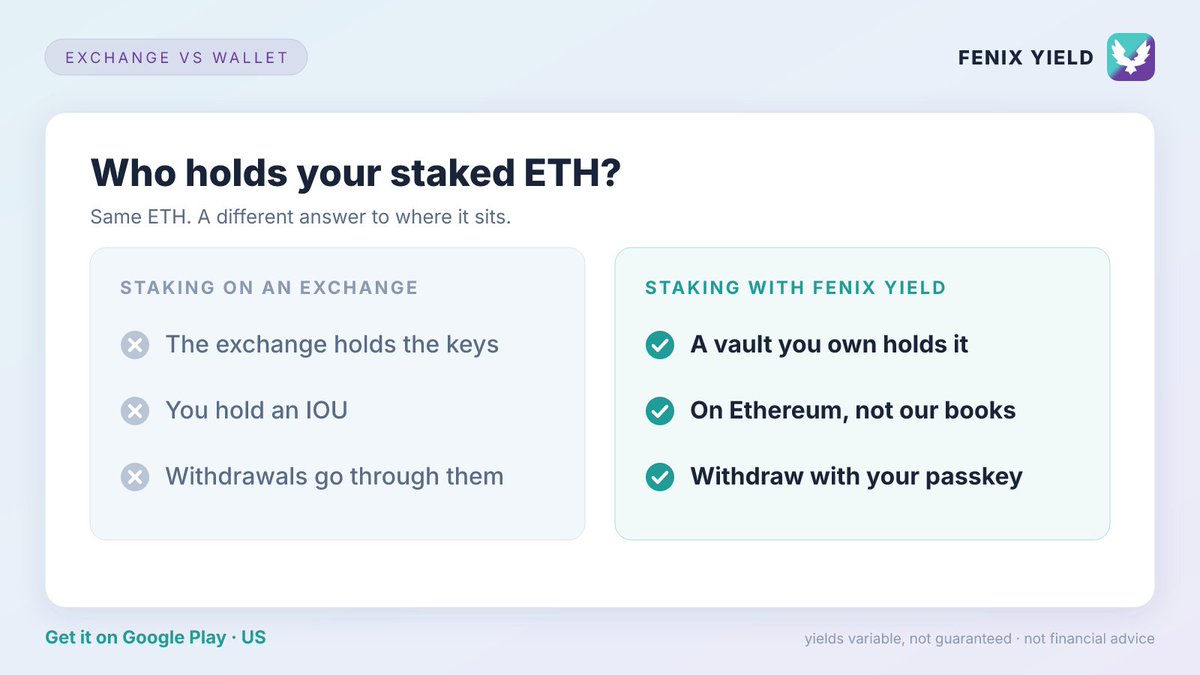
ETH staking on an exchange means the exchange holds your ETH. You hold an IOU.
With Fenix Yield, the staked position sits in a smart-contract vault you own, not on our books. Different counterparty risk.
https://t.co/gRFWZVPOmp
230 ETH burned in 7 days.
That's the whole week's fee burn, while 44.4M ETH sits staked earning issuance. Burn this low means net supply is likely growing right now, not shrinking.
The "ultrasound money" story needs activity. Quiet chains just print.
People see a 0-day validator exit queue and assume they can get liquid ETH out in minutes.
Most stakers aren't in the beacon chain queue at all. They're holding stETH or rETH, and that exits at whatever price the market's willing to pay, queue or no queue.
Net read: validators reportedly stayed put, ETFs saw outflows, leverage got flushed. Three different signals worth tracking separately — not one clean narrative.
A bank doesn't need to believe in Ethereum to offer ETH staking. It just needs the compliance paperwork done once.
Interactive Brokers didn't make a call on the asset. It made a call on plumbing.
Once the rails exist, the next broker's decision gets cheaper, not braver.
@shanaka86 Every asian semiconductor factory had 2 lines of assembly, one for china and another for us with no safe guard in place. This is a political hunt, she is not a spy just an excuse. Jen Huang stupidly fell into it.
Running your own validator takes 32 ETH and a machine that never goes down.
ETH staking through a pool doesn't. With Fenix Yield, start with a fraction of that, from a vault you own, on your phone.
https://t.co/gRFWZVPOmp