todos bien nalgas de ayyy si que desaparezca el imss wey dios no quiera tengan que pagar una estancia hospitalaria con uci y ahí se van de rodillas cabrones
Esta idea tiene bastante sentido clínico: la forma en que una persona describe a los demás suele decir más de ella misma que de los otros.
Quien es de base amable, empático y confiable tiende a ver esas mismas cualidades en la gente, porque su forma de percibir el mundo está filtrada por su propia personalidad (sobre todo por rasgos de amabilidad y estabilidad emocional).
En cambio, quien habla mal de casi todo el mundo, ve amenazas o defectos constantes, a menudo está proyectando su propia irritabilidad, desconfianza o inseguridad.
No es una regla absoluta, pero en consulta es un dato útil: cómo alguien habla de los demás suele anticipar cómo se relaciona y cómo se siente consigo mismo.
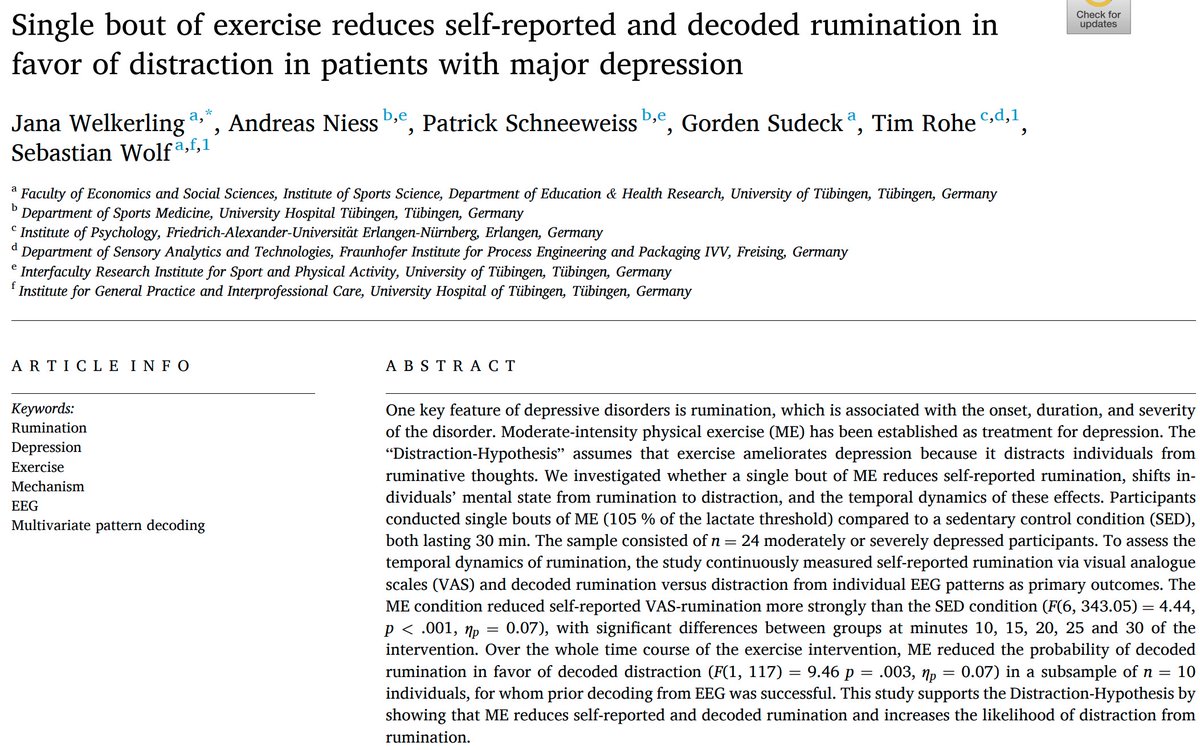
If you’re stuck in your own head, exercise may be one of the fastest ways out.
In people with depression, moderate exercise started reducing rumination within just 10 minutes.
EEG patterns also shifted from rumination toward distraction.
Muy interesante.
Levantar pesas mejora el resultado académico.
Increíble que la mejora en matemáticas es de hasta el ~40% al hacer pesas al menos 4 veces a la semana.
A lot of the "nootropic" stacks that are recommended these days, add a tremendous load to brains that are already overloaded.
So stop trying to stimulate what's left in order to chase a sharper hour and start giving your brain what it needs.
Just start with your damn nutrition.
"So what are the most important nutrients then?"
Overall, any chronic nutrient deficiency can contribute to problems so for starters, it's a good idea to focus on consuming every single micronutrient and covering your baseline micronutrient needs.
For example, dietary biotin intake exhibited an approximately L-shaped nonlinear relationship with anxiety and depression risk, where risk decreased with increasing intake up to a moderate threshold (tap in the pics).
Now the main nutrients that seem to be able to impact the brain the most (so we are not saying that the rest are irrelevant) include:
-Zinc
-Magnesium
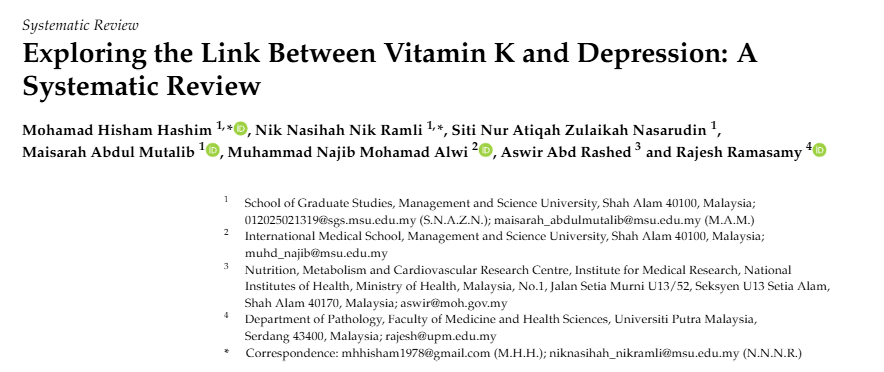
-Vitamin K
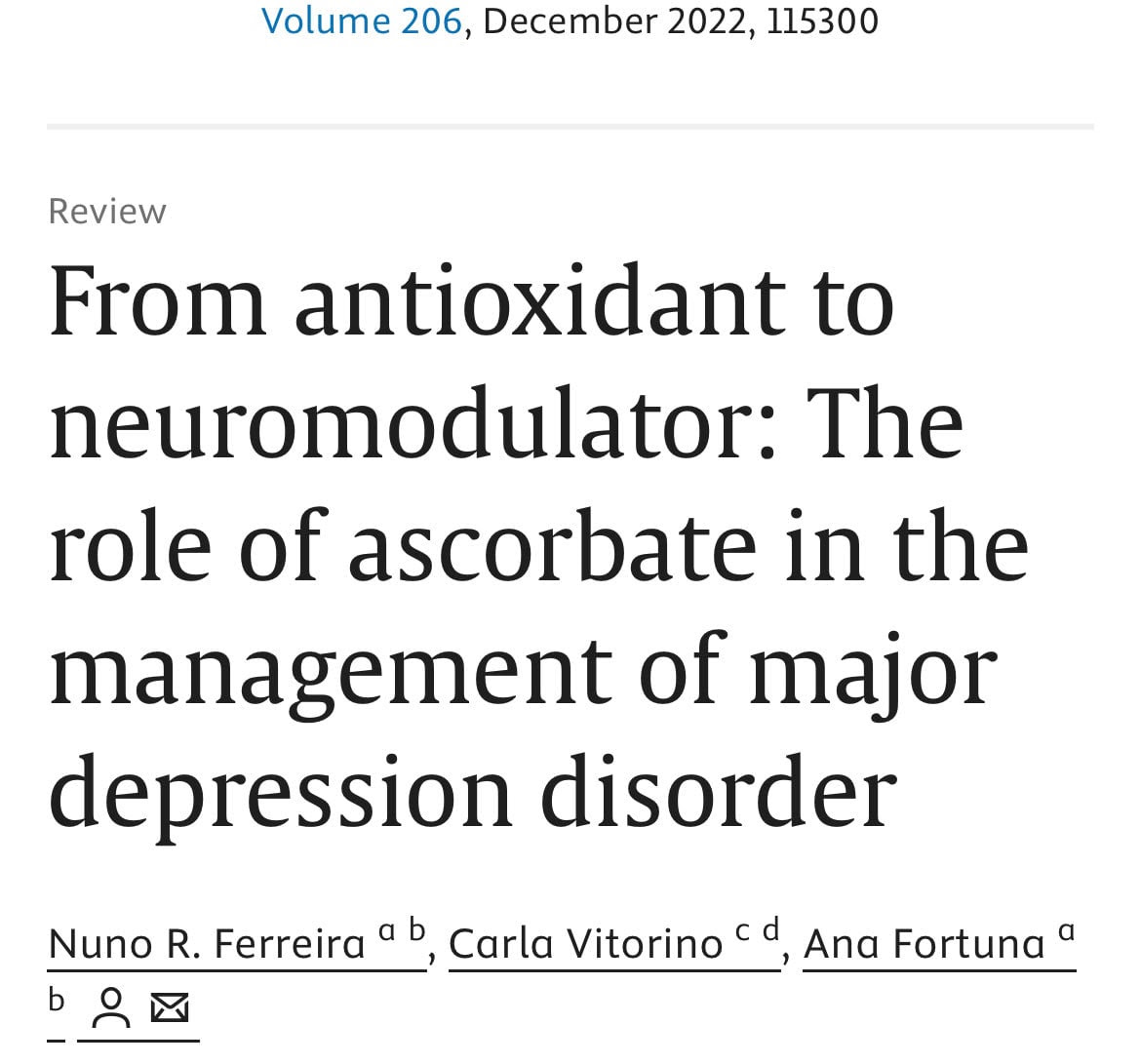
-Vitamin C
-Polyphenols
-Vitamin E
-B6
-B12
-B1
-B9
-Iron
-Choline
-O3
For example, without zinc, B6 and iron, neurons, astrocytes and oligodendrocytes flat out don't work.
Or, believe it or not, vitamin K was found to have a stronger diagnostic value for predicting suicide attempts than A LOT of other known biomarkers.
It had a diagnostic sensitivity of 84.2% and a specificity of 71.5%.
Or, in this mood disorder cohort, 35% had inadequate plasma vitamin C concentrations at baseline compared to 17% of the healthy control cohort.
Then:
Low B12:
-Reduces BH4
-Increases oxidative stress and homocysteine (which lead to all sorts of issues such as NMDA-mediated excitotoxicity, impaired hippocampal neurogenesis, blood–brain-barrier disruption, MMA-related demyelination etc)
-Lowers EGF
-Increases TNF-α
Low B9:
-Harms the production of every single neurotransmitter (folate is required to make SAMe (S-adenosylmethionine) low folate → low SAMe → increased risk of depression, anxiety, bipolar disorder, schizophrenia and cognitive decline).
-Harms monoamine synthesis (via BH4 regeneration).
-Harms the synthesis of melatonin, CoQ10, carnitine, creatine, phosphatidylcholine
And these are just the tip of the iceberg.
What's also important to note is that if you are on any medication, proven to cause a deficiency in a certain nutrient, you must focus on that as well.
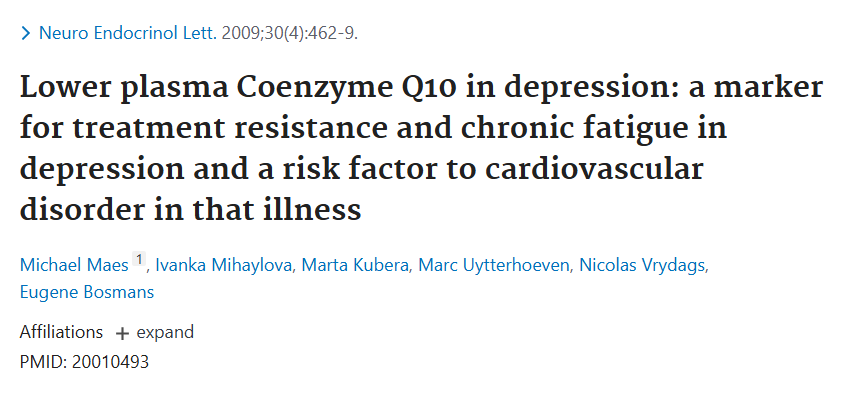
CoQ10 is a good example of this.
Point being: Noticing, detaching and replacing dysfunctional thinking patterns is obviously helpful when it comes to winning the battle against depression.
But if you think that you can out-think your way out of chronic depression without working on your body, think again.
In MDD for example, studies show decreased expression of GAD67 and parvalbumin in prefrontal interneurons.
So the person's prefrontal regulation of limbic structures is impaired, making it very hard to escape negative thought loops.
This is why successful treatments often normalize cortical GABA levels/excitation/inhibition (E:I) balance in the prefrontal cortex.
"What does this have to do with nutrients".
Here are two basic examples:
-Vitamin B6 is the essential coenzyme that GAD67 requires to synthesize GABA.
So without adequate B6, GAD67 cannot function properly.
-Zinc enhances the presynaptic release of GABA and interacts with the GPR39 zinc receptor to help maintain homeostasis between excitatory and inhibitory systems overall.
For more about brain health and the impact of nutrients, go here:
https://t.co/eXCNhiGzzm
Los aminoglucósidos salvan vidas y dejan sordas a algunas personas. La razón: el ribosoma de nuestras mitocondrias se parece demasiado al bacteriano. Un nucleótido de diferencia. Lo llamativo es que apareció preguntando por el mecanismo, no buscando un fármaco.
Me da pánico la fragilidad de los lazos humanos. Un malentendido, un orgullo herido, un mensaje sin responder. Y algo que tomó años construir se desmorona en un segundo.
Comer juntos en familia la mayoría de las noches se asocia con que los niños vayan mejor en el colegio, tengan menos problemas de conducta, coman más sano, tengan menos obesidad y menos síntomas de ansiedad o depresión.
Una revisión de 2023 que juntó decenas de estudios lo confirma, incluso controlando ingresos o tipo de familia. Lo importante no es que la comida sea casera o perfecta, sino sentarse a la mesa, hablar y escucharse sin pantallas: esa conversación diaria es lo que más ayuda.
Moverse ayuda a aprender mejor.
Moverse no solo mejora la salud física: una revisión de 42 estudios con más de 28.000 chicos y chicas de 6 a 16 años muestra que la actividad física también ayuda a aprender, porque aumenta la atención, la memoria, las funciones ejecutivas, la motivación y la cooperación.
El efecto no es automático: depende de la intensidad del ejercicio, de si se hace solo o en grupo y de si ocurre antes, durante o después de clase, ya que esos factores influyen en cómo el cerebro se prepara para concentrarse y retener lo que se estudia.
Que puedas trasplantar depresión de un humano a una rata solo con su microbiota intestinal es de las cosas más fuertes que ha dado la neurociencia reciente. Cambia del todo cómo entendemos el ánimo: no todo empieza en la cabeza, buena parte se cocina en el intestino.
Each boy received oral alprazolam, then intramuscular atropine and ketamine. Wrists were cable-tied behind the back so they could not claw at the gear if they woke.
“It could be like I’m euthanizing these boys.”
Australian anesthetist Richard Harris said that before approving the rescue plan. What came next was not heroics by children. It was a medical extraction run through a drowned mountain.
In June 2018, twelve school footballers and their coach entered Tham Luang in northern Thailand after practice. Heavy rain closed the way out and trapped them inside the cave for nine days. Later, British cave divers John Volanthen and Rick Stanton reached Chamber 9 and found all thirteen still alive.
The clip of that moment went viral and created hope. Inside the rock, it solved nothing. The way out was an hours-long underwater drag through slits of stone and floodwater the color of coffee. A trained former Thai Navy SEAL, Saman Kunan, had already collapsed on a tank run and died. Officials feared a conscious boy would rip the mask, flood his airway and take the diver down with him.
British cave divers asked Thai officials to summon Richard Harris, an Adelaide anesthetist and experienced cave diver. Upon arrival and after studying the situation, he designed a ketamine protocol so the boys would stay unconscious but keep breathing on the way out.
The chemistry was precise. Harris chose ketamine because it can drop a child into unconsciousness while leaving spontaneous breathing intact. Alprazolam (Xanax) went first. Atropine dried saliva that could choke them. Preloaded syringes rode with the lead divers. When a body twitched in the dark, another shot went through the wetsuit.
Harris thought the first child might emerge dead. He would still have to go back in for the others. Thai officials granted Harris legal protection if a child did not survive the passage.
Then they executed the plan. The first boy came out alive. Then another. Over three days in July 2018, all twelve boys and their coach were brought out.
The public story is often told as a miracle. The medical plan was narrower. Twelve healthy minors were put under in a cave, bound and moved like cargo because fear itself was the deadliest part of the route.
Por más que tu familia o amigos (fuera de medicina) te digan que te entienden. Realmente NUNCA entienden lo que significa estudiar 8 hrs diarias en casa. Porque de alguna u otra forma terminan minimizando lo sagrado que son esas horas.