Who remembers the old Sinclair service stations with the big dinosaur on top? When I was young, I always loved to see it when my father stopped at Sinclair for gasoline and a quart of oil for the old Rambler station wagon.
There is no sound on this earth like a wooden screen door slapping shut behind you. 🚪
That long rusted spring stretched out with a groan, then let go all at once, and the door cracked against the frame like a rifle shot. Mamaw hollered every single time not to let it slam. Every single time it slammed anyway. Nobody in the history of these mountains has ever closed a screen door quietly, and I do not believe it can be done.
But here is the thing about that sound. It meant somebody was coming home. It meant kids running in for supper with grass stains on their knees. It meant a neighbor was on the porch. It was the sound of a house that was full and busy and lived in, and you never once thought to be grateful for it while you were hearing it a hundred times a day.
I would give a good deal to hear it one more time coming from a kitchen that still had her standing in it. Some houses had a doorbell. Ours had that door. 💛
#FromUpTheHoller #HollerLife #AppalachianNostalgia #FrontPorchLiving #MountainMemories
Papaw would drive twenty miles down a backroad and not say one word to me the entire way. But he spoke to every single truck we passed. 👋
Not a real wave. Never a real wave. Just that one index finger lifting up off the top of the steering wheel, maybe an inch, maybe two. Eyes forward the whole time. And the other fellow would lift his finger right back, and the two of them had themselves a complete conversation without either one turning his head.
I asked him once who that was. He said he did not know him. I asked why he waved then. He looked at me the way you would look at somebody who had just asked why water is wet, and he said, because he waved at me.
That is the whole thing right there. You did not have to know a man to acknowledge him. You just had to be on the same road. I still catch myself doing it out of pure habit on any road narrow enough to deserve it, and it stings a little when nobody lifts a finger back. Does the wave still work where you are? 🚙
#FromUpTheHoller #HollerLife #AppalachianHumor #BackroadLife #CountryRoads
In December 1909, at a teachers’ conference in Columbia, South Carolina, a government speaker stood proudly explaining a new federal program for boys.
Young farm boys across the South were receiving seed, land, and agricultural training. Their crops were producing harvests far larger than their fathers had ever managed. Newspapers called it progress. Officials called it a success.
At the back of the room sat a 27-year-old schoolteacher named Marie Cromer.
She taught in a one-room schoolhouse in rural Aiken County. She was the teacher, the principal, the administrator, and often the only educated adult many children saw all week.
She listened quietly.
Then she raised her hand.
“What are we doing for the farm girls?”
That single question — recorded in the meeting notes — would eventually help create one of the largest youth organizations in American history.
Marie knew exactly what life looked like for the girls she taught.
Every spring, many disappeared from school because their families needed them in the fields. Some walked barefoot through summer because shoes cost too much. Most were expected to marry young, raise children young, and depend financially on husbands for the rest of their lives.
Their brothers might inherit land someday.
They would not.
Marie came home from that conference and decided to build something herself.
Without waiting for permission, she organized the Aiken County Girls’ Tomato Club — the first organization of its kind in the United States.
Each girl received tomato seeds, a small one-tenth-acre plot on her family’s land, and something even more revolutionary:
The right to keep every dollar she earned.
Marie also taught them bookkeeping, budgeting, record keeping, crop management, and food preservation. These girls were not being trained to “help” on farms.
They were being trained to run businesses.
In the spring of 1910, forty-seven girls joined.
They planted. Watered. Weeded. Harvested. Canned. Sold.
And for many of them, it was the first money they had ever controlled themselves.
Marie wanted the top student to attend Winthrop College, but she didn’t have the $140 scholarship money needed. So she wrote letters until she found a wealthy winter visitor willing to fund it.
That first year, a girl named Katie Gunter canned 512 jars of tomatoes from her tiny plot and earned a $40 profit — an enormous amount for a rural Southern teenager in 1910.
She won the scholarship.
Within a few years, some girls were earning $70 or $80 from a tenth of an acre — more than many grown men earned sharecropping cotton for an entire year.
Parents who had once dismissed their daughters’ education suddenly began paying attention.
The movement exploded.
Tomato clubs spread across Virginia, Georgia, Alabama, Mississippi, Tennessee, and beyond. By 1913, more than 20,000 girls across fifteen Southern states were enrolled in similar programs.
The federal government noticed.
The U.S. Department of Agriculture appointed Marie Cromer as one of the first women ever assigned to agricultural field work in federal service.
And the girls themselves understood what was changing.
One participant wrote in 1915:
“The work was long and sometimes tiresome. But I now have a bank account of sixty dollars.”
A teenage farm girl in rural South Carolina.
A bank account.
In her own name.
This was five years before women could even vote nationwide.
In 1914, Congress passed the Smith-Lever Act, combining the tomato clubs, boys’ corn clubs, and related youth programs into a national cooperative extension system.
A decade later, that movement received a new name.
4-H.
Today, nearly six million young people participate in 4-H programs across the United States. Agriculture. Science. Leadership. Public speaking. Entrepreneurship. Community service.
An entire century of opportunity traces back to one teacher sitting quietly in the back of a room asking why girls had been left out.
Marie Cromer never became nationally famous.
She didn’t seek political office. She didn’t tour lecture halls. She didn’t write bestselling books.
She simply saw girls being overlooked and decided that was unacceptable.
In 1953, President Dwight D. Eisenhower formally recognized her as one of the founders of 4-H.
She died in 1964 at the age of eighty-one.
There is a small historical marker in South Carolina that carries her name.
But her real memorial isn’t a plaque.
It’s every young person who learned they were capable of building something for themselves.
Every child who discovered confidence through leadership.
Every girl who realized earning money, owning skills, and having choices could change the direction of an entire life.
Marie Cromer changed America with one question.
Not shouted from a podium.
Simply raised from the back of the room.
And more than a hundred years later, the country is still answering it.
Before 4-H became a household name, it began with one woman who believed rural girls deserved the same opportunities as boys. This forgotten story is truly unforgettable.
In 1928
Vilhjalmur Stefansson spent years living almost entirely on meat with the Inuit in the Arctic.
He came back healthy. Nobody believed him.
Doctors said it was impossible. Said meat alone causes scurvy, kidney damage, an early death.
So Stefansson checked into Bellevue Hospital with a colleague, on purpose, so doctors could watch. Blood tests. Kidney function. No excuses, no self reporting.
A year of nothing but meat and water.
Blood pressure normal.
Kidneys normal.
No scurvy, the entire twelve months.
The only time either man got sick was cutting the fat too low. Fat back in, illness gone within days.
The medical establishment set the test themselves. The result proved them wrong, in their own hospital, with their own doctors.
Why did that never make it into a textbook?
LIFE HACKS NOBODY TAUGHT YOU BUT SHOULD HAVE:
1. Cold water stops bleeding faster than warm.
2. Yawning cools your brain — it’s not boredom, it’s survival.
3. Humming reduces anxiety faster than deep breathing.
4. Your tongue pressed to the roof of your mouth stops a sneeze.
5. Sleeping on your left side protects your heart and aids digestion.
6. Drinking water before meals reduces overeating by 30%.
7. Walking backwards improves memory and focus — science confirmed.
8. Honey never expires — it was found edible in Egyptian tombs.
9. Chewing gum while cutting onions stops the tears.
10. A dead phone can still call 911 — no service needed.
11. Sitting up straight instantly boosts your confidence level.
12. The “20-20-20 rule” saves your eyesight — look 20 feet away every 20 mins for 20 seconds.
13. Napping 10–20 mins recharges better than an hour-long sleep.
14. Cold showers after a workout cut soreness by half.
15. Writing your worries down shrinks them — proven by research.
16. Your body heals faster when you believe it will — that’s not hope, that’s neuroscience.
We may be old but…
A man reaches a certain age where he doesn't want any drama.
He doesn't want to fight anyone - and if forced to, he will not fight fair.
He will not quit and there are no weapons he will not use.
It's best to leave him alone with his coffee and whiskey.
Don't poke the old men.
They will hurt you.
Doctor: "Your blood pressure's a touch high. We'll call it hypertension."
Patient: "It was fine last year."
Doctor: "The threshold changed."
Patient: "My blood pressure changed?"
Doctor: "No. The number we call high changed. Used to be one-forty. Now it's one-thirty."
Patient: "So the same reading that was healthy in 2016 is a disease now."
Doctor: "That's the current guidance."
Patient: "Who moved the line?"
Doctor: "A panel."
Patient: "And what happens the day I cross it?"
Doctor: "We'd start you on something."
Patient: "Forever?"
Doctor: "Typically, yes."
Patient: "So a committee lowered a number, and now I'm a customer for life."
Doctor: "I wouldn't put it like that."
Patient: "How would you put it?"
Being a bit shy used to be a personality. Now it's a diagnosis with a pill.
A daydreaming child used to be a daydreaming child. Now it's a prescription.
Grief used to be something you moved through with people around you. Now it's a prescription.
A bad week's sleep used to be a bad week. Now it's a disorder with a repeat.
Getting older used to be getting older. Now it's low testosterone, a clinic, and a prescription.
A woman's menopause used to be a passage. Now it's a lifelong regimen.
Sadness after a hard year used to be the year. Now it's a chemical imbalance you'll be managing for a decade.
Every ordinary weather of a human life has been reclassified as a condition with a treatment, because a condition can be billed and a life cannot.
Somewhere along the way, simply being a person became a pre-existing one.
Scoot back from that television, you are going to ruin your eyes. 📺
If you grew up in these hills, you heard it a hundred times. You would be sitting cross legged about six inches from the screen, lost in your Saturday cartoons, and here it came from the kitchen like clockwork. Move back. You will go blind sitting that close. 👀
Turns out it was never quite true, but try telling that to a mamaw who was sure of it down to her bones. So we would scoot back a foot, wait till she left the room, and creep right back up to the screen again the second she was gone.
Did you get the sit too close and ruin your eyes warning growing up, and did you scoot back or sneak right back up?
#HollerLife #AppalachianHumor #GrewUpInThe70s #SaturdayCartoons #ThingsMamaSaid
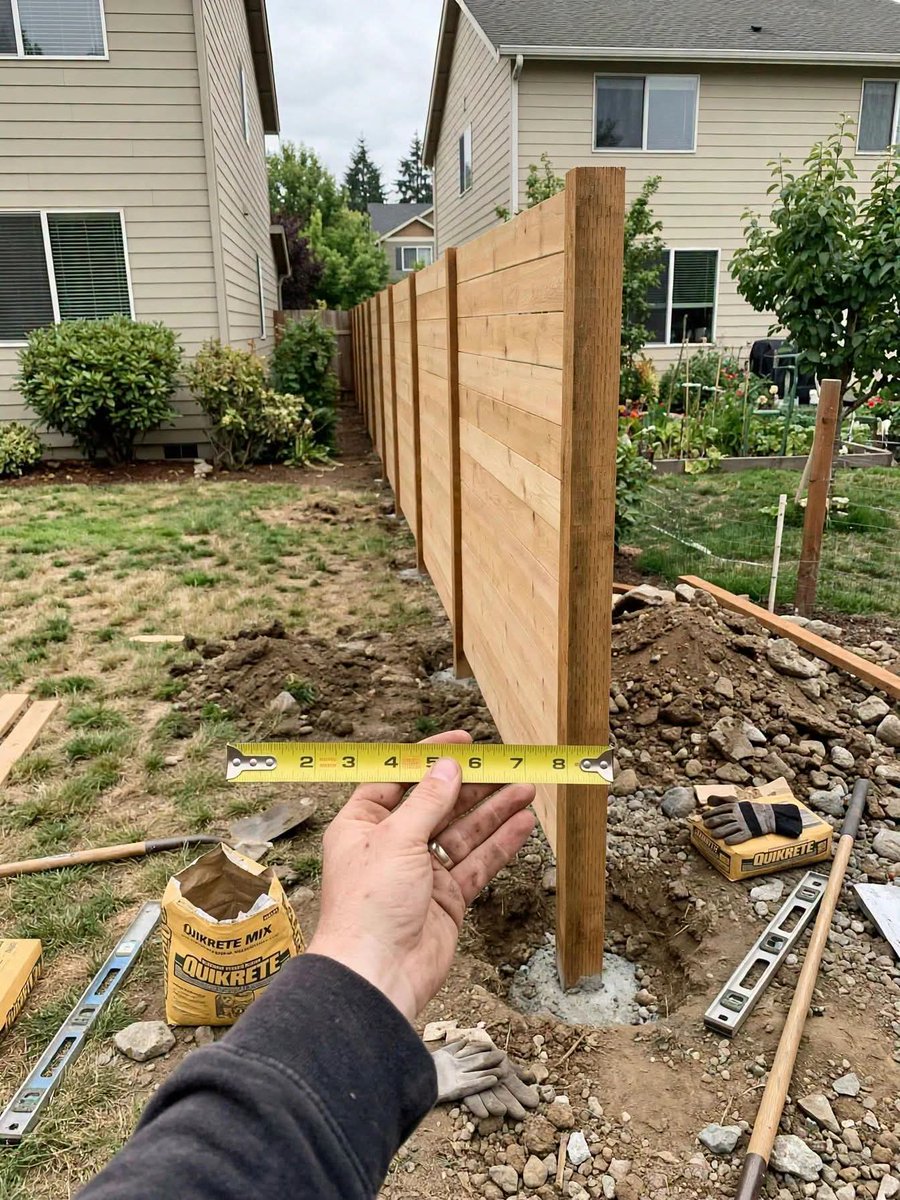
My neighbor had this fence put in yesterday and something felt off…
So I measured it this morning — turns out it’s about 7 inches inside my property.
When I brought it up, he literally said:
“7 inches is basically nothing, it’s not a big deal.”
Now I’m stuck here wondering…
Am I being petty for caring about a few inches,
or is this the kind of thing that turns into a bigger problem later?
🚨WHAT ON EARTH??!!!!
The National Guard has just SUSPENDED all 8 pilots of the Apache helicopters that flew on the "Salute to the Shore" flyover across the South Carolina coast.
No reason has been given for their suspension.
A source says as soon as the pilots landed, they got a message saying they were suspended pending an investigation.
Before a Western town had a hospital, a bank, or sometimes even a church, it had a general store, and that single building held the whole community together. 🪔
The shelves were a wonder of everything at once: coffee and calico, rifles and ribbon, castor oil, seed, boots, candy, and tools, much of it hauled in by wagon over rough trails. For families living miles out on isolated homesteads, a trip to the store was a rare event, part shopping and part social lifeline.
The storekeeper was often the closest thing a town had to a banker and a news service. He extended credit through hard winters, held the mail, settled small debts in his ledger, and passed along the gossip and headlines that a warm stove and a few chairs seemed to invite. Deals were sealed with a handshake, and a man's word in that ledger was as good as cash.
If your nearest store was a full day's wagon ride away, what is the one thing you would never let yourself run out of?
#OldWest #FrontierLife #WildWest #GeneralStore #AmericanHistory
Customer: "Oat milk, please. Trying to lower my footprint."
Barista: "Course. Happy with the rapeseed oil in it?"
Customer: "Rapeseed oil? In milk?"
Barista: "It's not milk. It's oats, water, and a good glug of seed oil for the creaminess."
Customer: "I avoid seed oils."
Barista: "You're about to wear a moustache of one."
Customer: "...Almond, then?"
Barista: "Lovely. How do you feel about draining California?"
Customer: "The soy?"
Barista: "Comes with a complimentary top-up of oestrogen. On the house."
Customer: "...Coconut?"
Barista: "Flown across an ocean, and more saturated fat than lard."
Customer: "What's the little carton at the back?"
Barista: "That one's just milk. Cow, field, grass, done. No factory, no solvent, no asterisk."
Customer: "And the footprint on that?"
Barista: "She made it out of rain. Yours is the taxi you took here to ask."
The ruminant family, and the one job each member does that nothing else can:
Cattle: turn a wet hillside into milk and beef, and build the soil while they stand on it
Sheep: grow a fireproof, compostable fibre every year on grass and rain
Goats: eat the scrub, bramble and invasive weed that chokes everything else out
Water buffalo: make the milk that becomes real mozzarella, on marshland a cow would sink in
Yak: live and give milk at altitudes that would kill any lowland animal
Reindeer: feed and clothe whole peoples above the Arctic Circle, on lichen and moss
Bison: engineer an entire prairie ecosystem simply by grazing across it
Seven animals, one gift each, none of them replaceable by a machine or a crop.
Every one of them classed, this decade, as a liability.
Now that I'm older and wiser, here's what I've discovered:
1. I started out with nothing, and I still have most of it.
2. My wild oats have turned into prunes and all-bran.
3. I finally got my head together, and now my body is falling apart.
4. Funny, I don't remember being absent-minded.
5. Funny, I don't remember being absent-minded.
6. If all is not lost, where is it?
7. It is easier to get older than it is to get wiser.
8. Some days, you're the dog; some days you're the lamp post.
9. I wish the buck stopped here; I sure could use a few.
10. Kids in the back seat cause accidents.
11. Accidents in the back seat cause kids.
12. It's hard to make a comeback when you haven't been anywhere.
13. The only time the world beats a path to your door is when you're in the bathroom.
14. If God wanted me to touch my toes, he'd have put them on my knees.
15. When I'm finally holding all the cards, why does everyone want to play chess?
16. Its not hard to meet expenses . . . they're everywhere.
17. The only difference between a rut and a grave is the depth.
18. These days, I spend a lot of time thinking about the hereafter. . . I go somewhere to get something, and then wonder what I'm hereafter
19. Funny, I don't remember being absent-minded.
20.DID I POST THIS ON HERE BEFORE..........??????
🤣🤣🤣