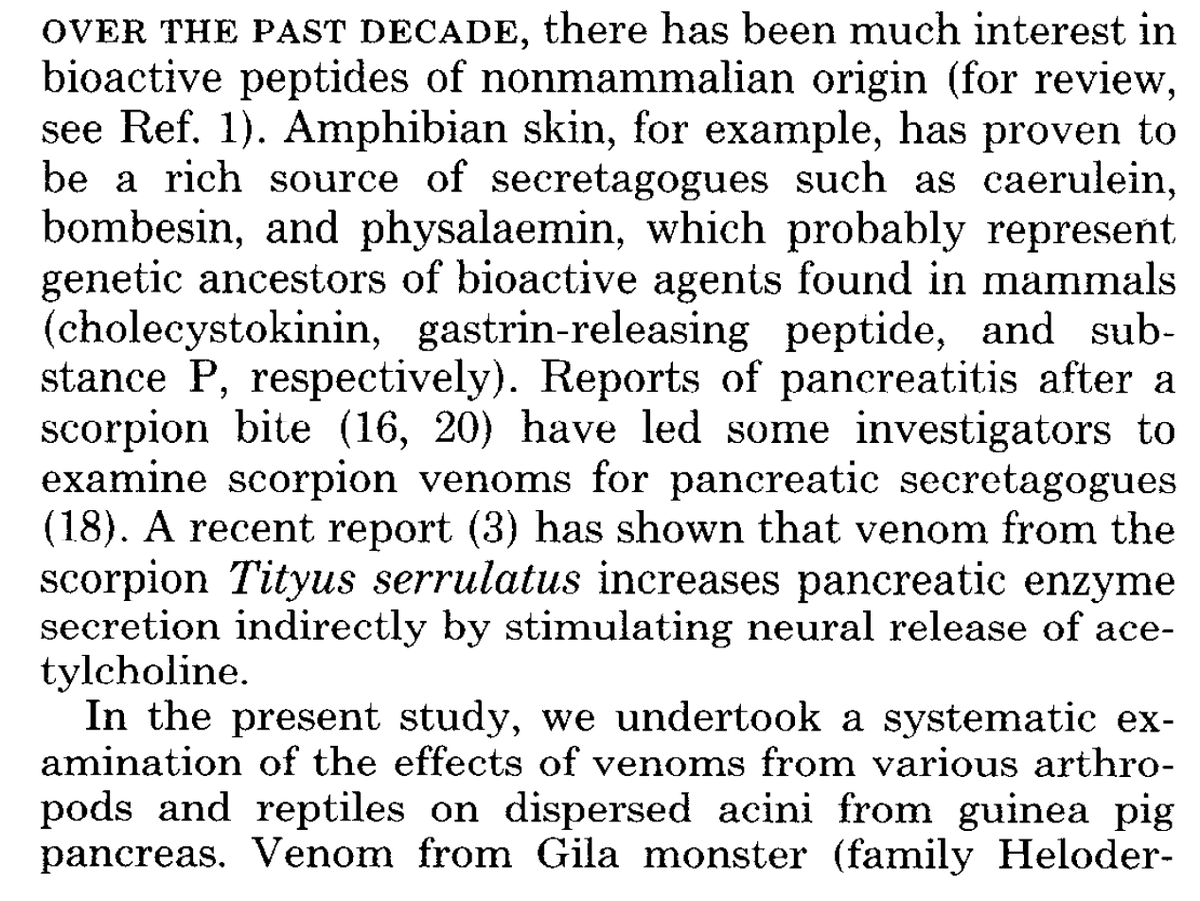
I got curious about the real story of Ozempic + Gila monster spit people cite when advocating for basic research funding. The truth is more interesting, and shows us more about the stories we tell ourselves about science than it convinces people to maintain the funding status quo
"we lack the biological data to train our models. therefore, we must extract it, by force, from every entity that has it. and once we have bled them dry, we will crush them into the dirt, leaving nothing but the pristine, suffocating illusion of our own benevolence"
Today I'm posting a new blog about an astonishing scientific own goal. Hundreds of papers have reported using a completely wrong antibody to investigate the tumor suppressor p16. This mistake has happened because scientists have muddled the names of two proteins 🧵
“When I use frontier AI for bioengineering in May 2026, my daily experience is one of frustration. The models are incredibly capable, but frequent and miscalibrated refusals on biological topics make them effectively impossible to use.”
This is spot on. My day to day involves building agentic pipelines for biology, chemistry and drug discovery, and model refusals for completely legitimate requests are the bane of my existence. And I hate to say this, but Claude is the worst (and 4.7 is sadly worse than 4.6), followed by GPT and Grok. There needs to be a way for people like me to seamlessly do our work while we guard against the low-probability high-consequence risk of bio and chemical security.
I love how blurry the line btwn applied and basic research is. People noticed a case of pancreatitis from a scorpion bite + how Gila monsters don't eat for long stretches + knew about GLP-1 peptides in humans so they did biochemical analysis to find the novel peptides in venoms
RIP to one of our few ballers in biotech.
I hope we use Craig's memory to not be afraid to go big in biotech. The world needs our tech and it's a loss to not have his voice pushing everyone.
Craig Venter redrew the boundaries of biology — sequencing DNA at unprecedented speed, engineering synthetic life and charting ocean microbes.
https://t.co/ZTV1a3RgI0
> be Alexandra Elbakyan
> be born in Kazakhstan in 1988
> start coding at 12
> hack your internet provider at 14
> hack MIT Press at 16 to download neuroscience books you can't afford
> get a CS degree from Satbayev University
> intern in neuroscience at Georgia Tech
> speak at Harvard on brain-computer interfaces
> notice researchers can't read the papers they need
> notice academic publishers charging $30 a paper
> notice peer reviewers worked for free
> notice editors worked for free
> notice universities funded the research with billions of dollars of public money
> build Sci-Hub in 2011
> upload nearly every paywalled research paper ever published
> give it away for free
> get sued by Elsevier
> get hit with a $15 million judgment
> don't give a flying f*ck
> keep Sci-Hub up
> get domain after domain seized
> register a new one
> keep Sci-Hub up
> get investigated by the US Department of Justice
> don't give a flying f*ck
> get accused of working for Russian intelligence
> don't give a flying f*ck
> have the FBI subpoena your iCloud
> get named one of Nature's ten people who mattered in science
> get a parasitoid wasp named after you
> get a deep-sea snail named after you
> get the Electronic Frontier Foundation Award for Access to Scientific Knowledge
> become a legend
I'm begging all of you, please stop interviewing this idiot and platforming him. It's beneath you and makes you look pathetic. There are real science + business experts on any topic you can dream up who'd be better than this 💩
Las (grandes y forradas) empresas editoriales tienen la responsabilidad de montar herramientas que detecten esos fraudes e impidan que progresen. Una parte de los problemas es eminentemente técnica. ¡Ya está bien de echarnos todo a los científicos!
@SynBio1@baym I propose more Citrus as an example of interbreeding and genetics, less European Royal Families.
Prettier colours, same weird shapes, no haemophilia.