The Deepest Dive
In a Norwegian fjord ten Americans are doing what no one has ever done before. They dive and work at a depth of 320 meters (1065 feet). The divers have to succeed to secure the future of an oil nation. But something goes terribly wrong.
https://t.co/zdIbPAYhGC
Working From Home Has a Grim Effect on Your Brain, Surprise Research Finds | Frank Landymore, Futurism
Most people would kill for a work-from-home job, but it turns out it can have some grim effects on your mental health.
A new study published in the journal Science found that remote workers were more likely to report feeling anxious, depressed, and being socially isolated compared to people who worked in-office. No commute and having the comforts of home is undoubtedly an upside, but it seems there’s no substitute for genuine social connections.
Nicholas Epley, a professor of behavioral science at the University of Chicago’s Booth School of Business who wasn’t involved in the study, told NPR that workers might be underestimating the value of being to “reach out to connect with other people,” and that “people might be choosing poorly” in terms of their well-being.
Until now, most studies have focused on remote work’s impact on productivity and job satisfaction, according to an editor’s summary, while there’s been little insight into its relationship to loneliness and mental health.
To fill that gap, lead author Natalia Emanuel, an economist at the Federal Reserve Bank of New York, and her colleagues conducted an analysis that drew on data from five national surveys on American workers, comparing “remotable jobs” that can be done remotely, like software engineering, and “non-remotable” jobs, like surgery.
It found that the hours that workers in remotable jobs spent working alone surged by 58 percent compared to workers in non-remotable jobs. That may not be surprising, since they’re staying at home, but the level of isolation could be extreme, as there was also a 72 percent rise in their chance of spending an entire day with no human contact whatsoever.
It was even worse for remote workers who lived alone, with an 83 percent chance of spending a whole day with no human contact. “Likewise, the increase in mental distress is almost twice as large for those living alone as for those living with their family,” Epley told NPR.
Given the connection between mental and physical wellbeing, this becomes a genuine health problem, as “being alone compromises your immune system functioning, your cardiovascular system functioning,” Epley said.
Of course, the findings “don’t suggest that every office should be forcing everybody to come in to work,” Epley told NPR — something that spiteful employers are trying to find any excuse to impose on their underlings. But it’s something else to consider for anyone looking to ditch the office, and a reminder that we may need to be a little bit more deliberate about our social lives if we’re not getting our daily dose of human interaction through work.
https://t.co/yEYFfv7iuD
Taxpayers could be left with a big tab if the Obama Presidential Center experiences financial trouble because its foundation has not yet established a promised $470 million safety net to guard against a public bailout. https://t.co/Ry7GRNYIr1
American water heater repairman says he’s noticed the average new water heaters last only about 7-10 years and then they must be replaced
But when he comes across old ones like this one from 1956, they last forever
This is because of a business model called Planned Obsolescence and it’s a business strategy companies now use to engineer produces to fail after a certain among of time
This way you have to keep buying the same product over and over again
This is a scam
AI holograms are reinventing how we navigate airports | Omar Kardoudi, New Atlas
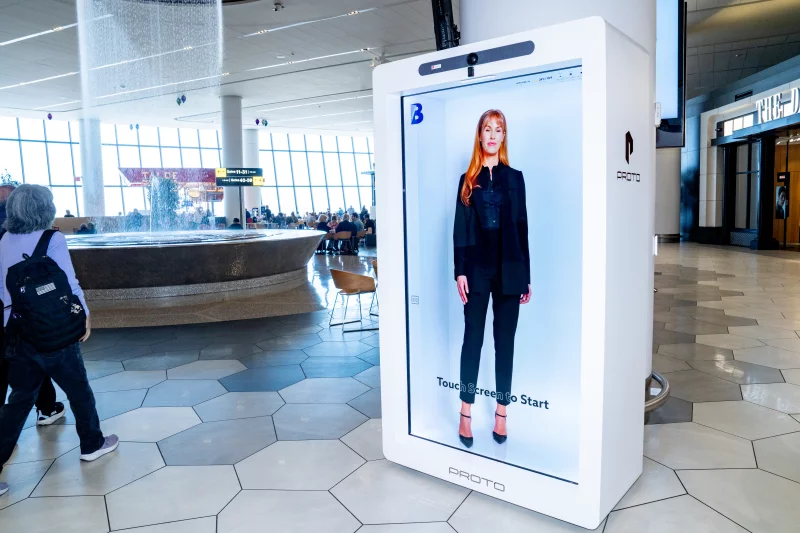
Terminal B at LaGuardia Airport in New York has unveiled Bridget, a life-sized, hyper-realistic AI hologram that can hold a real conversation – answering questions about gates, baggage claims, and VIP lounges. The technology is a signal that the way we navigate airports is changing from static signs and apps to conversational digital guides, and several major hubs are already competing to define it.
Bridget is a collaboration between Proto, the Los Angeles company that had already installed a non‑AI hologram inside JFK’s Terminal 4, and Holomedia's AI Concierge Wayfinder platform. Together they pull real-time terminal maps to deliver step-by-step directions on demand. Bridget currently speaks English and Spanish – more languages are coming – and the kiosk is fully wheelchair-accessible, with on-screen subtitles for good measure. More units are planned across both concourses.
LaGuardia Gateway Partners (LGP), the private company managing Terminal B, frames Bridget not as a replacement for its human staff but as operational backup during peak demand – a digital extension of the guest experience team, with her own character and presence.
"At Terminal B, our North Star has always been to provide an exceptional guest experience through a unique blend of innovation and world-class hospitality," says Suzette Noble, Chief Executive Officer of LGP. "The introduction of the interactive AI hologram aligns perfectly with this vision, allowing us to leverage next-generation technology to meet the evolving needs of our travelers. By providing an additional layer of intelligent, multilingual support, we are ensuring that every guest who passes through our terminal enjoys a seamless and stress-free journey."
LGP has been billing the system as a world first, but that claim deserves a footnote. Miami International Airport had quietly rolled out four conversational AI holographic assistants of its own – developed by Hypervsn, Satisfi Labs, and Mappedin – three weeks earlier.
Miami's system speaks 40 languages compared to Bridget's current two, and it doesn't live only in the building. The same conversational engine powers the airport's website chatbot and WhatsApp assistant, meaning a passenger can start a query at home and pick it up in front of the hologram upon arrival.
What this cluster of deployments really brings to the surface is a deeper question about what we want airports to become, and two very different answers are emerging. One bets on the humanoid avatar, a memorable, personal point of contact. The other bets on ambient intelligence: invisible systems working in the background, from facial recognition boarding gates to multichannel chatbots. It's frictionless by design, though biometric systems at airports have drawn scrutiny from privacy advocates concerned about data retention and consent.
Chinese airports have largely chosen the second path. They’ve been experimenting with holograms since at least 2017, when Guangzhou Baiyun installed holographic safety guidance displays with bilingual explanations of prohibited items. Since then, China’s major hubs have pivoted toward large-scale biometric automation and immersive visual environments. Guangzhou’s Terminal 2 features one of the world’s largest 3D screens, measuring 33 x 25 m (108 x 82 ft), used for glasses-free 3D visuals. It's airport design as a spectacle – passengers have an experience, but not a conversation.
"As passenger expectations evolve, airports are increasingly seeking technologies that not only improve operational efficiency but also create memorable, frictionless, and personalized journeys," says Glenn E. Smith, Spatial Computing XP Architect at Holomedia. Whether either approach will meaningfully reduce the stress of flying remains to be seen. Would you rather interact with human staff, life-size holograms or smart systems when navigating terminals? Let us know in the comments.
https://t.co/i0TS7kd3vD
Incandescent bulbs provide a broader spectrum of light, which can enhance mitochondrial function and metabolism, while LED lights, with their limited spectrum, may disrupt normal mitochondrial respiration and overall health. This disruption can negatively impact metabolism and visual performance.
Dr. Andrew Huberman just confirmed a “wild conspiracy theory” about incandescent lights and LED bulbs.
The long wavelengths found in incandescents increase your metabolism and “charge your mitochondria.”
Conversely, the LED bulbs that most of you have in your house are “causing disruptions in mitochondrial function.”
DR. ANDREW HUBERMAN: “Your mitochondria function better, you increase ATP production, your metabolism increases in the presence of red light, long wavelength light to the skin.”
“Shine long wavelength light on somebody, watch blood glucose levels in a blood glucose test, and it’s blunted.”
“Now, the LED lights that are commonly used now… that short wavelength light, in the absence of long wavelength light, has been shown to damage the mitochondria.”
“This used to be considered crazy. This was like chemtrail crazy, right?”
“But now we’re starting to see from animal studies and human studies, from Glenn Jeffreys and others, that people’s vision gets better when they get in front of an incandescent bulb once a day.”
“If they get sunlight, which also has long-wavelength light, your vision improves because of improvements in mitochondria.”
The Biden administration quietly pushed incandescents out of the market through aggressive energy regulations.
But you can still find them online today if you look hard enough.
If that health insight stood out to you, there’s a lot more where that came from. (See post below)
This page finds the moments they don’t want going viral, with captions that tell you exactly why they matter before you even hit play.
See why 2 million already follow: @VigilantFox
@ccmembersonly@Cernovich Dont waste your time, when I got a phone for my teenager, the first number kept receiving constant sex calls and texts. I got a new number which helped but they said there arent any new numbers, just reused ones these days.
The Deepest Dive
In a Norwegian fjord ten Americans are doing what no one has ever done before. They dive and work at a depth of 320 meters (1065 feet). The divers have to succeed to secure the future of an oil nation. But something goes terribly wrong.
https://t.co/zdIbPAYhGC
Rest in Peace, Scott Adams. You have greatly influenced my life and countless others.
My youngest had drawn this back when Scott announced he was sick and after he spent a year trying out AIs to verify if they could recreate his wisdom, but, unfortunately, they were not ready. Scott will live on in all of us.
Scott Adams, facing death, shows us how to live.
Someone recommended “How to Fail at Almost Everything and Still Win Big” by Scott Adams. I had burned out on mainstream books, but picked it up, and was hooked. He had put into words a way of living, similar to one I had found, except his approach was systemic and analytical. Better than my own slapdash notes. Outside of religious texts, Adams was and is as close to a “guide to life,” as you’ll ever find. And even if you’re religious, you still live in this world, and would be wise to learn how to navigate it.
Scott is closing in on the end of his life, and even now he is creating new beginnings.
I’d better write this now, I won’t be able to when it’s too late.
After losing Charlie Kirk, a lot of us are wondering how we can possibly write another obituary. While there’s much to complain about the internet and social media, those mediums expanded the sizes of our communities, our influences, and indeed our families. Too often we find new ways to hate people, instead of finding new people to love.
Scott Adams comes up in conversation at every social event I host. “How is Scott Adams doing? Will he make it?” We all talk about streams we watched and lessons learned. It’s a memorial except he’s still alive. Scott would love to hear that, which is why I have said so repeatedly. I’ve lost too many people, via death or fallings-out, to leave feeling unexpressed.
He’s been a surrogate father figure and mentor to millions of people.
Scott Adams is not liked, he is loved.
People don’t “like” Scott Adams, they aren’t “a fan of his.” They love this man. And I do as well. I’m still living in denial of his fate. We all are.
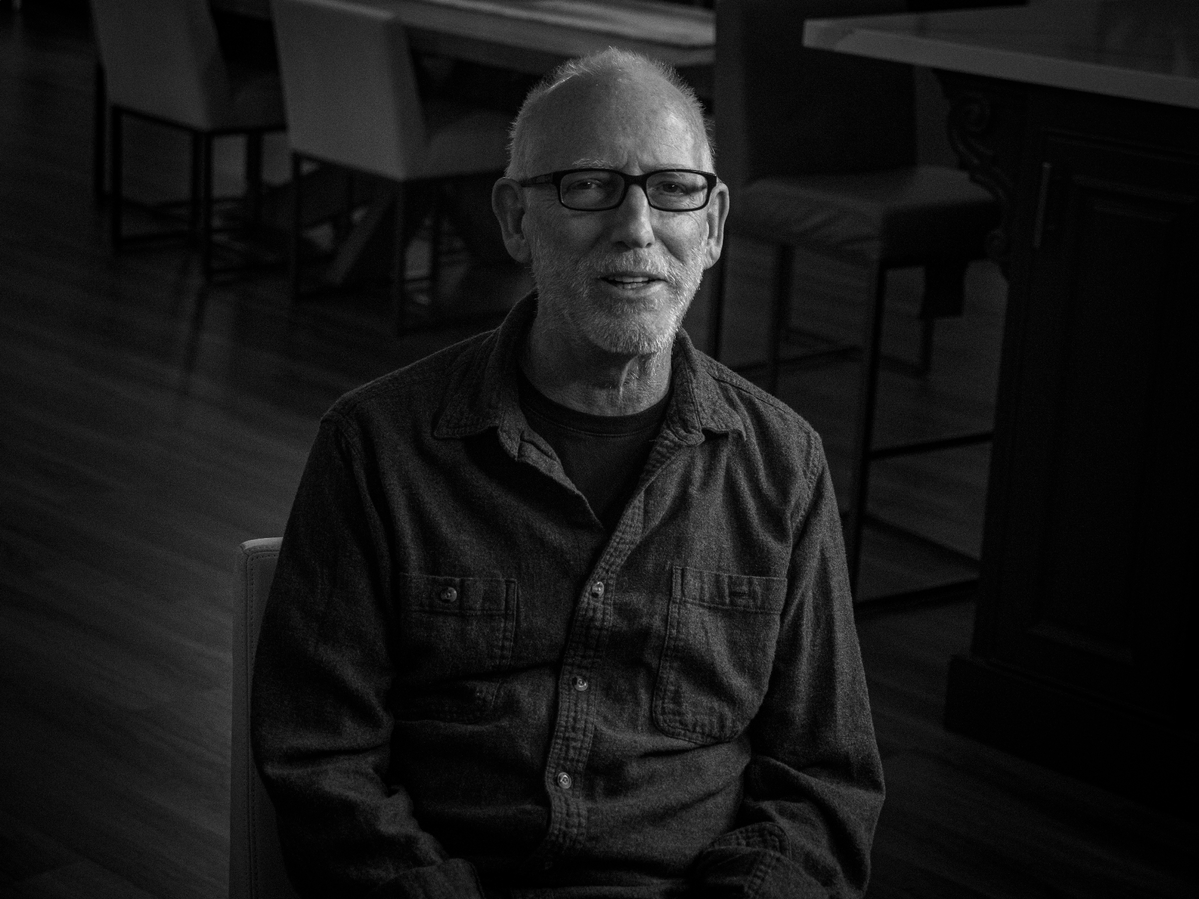
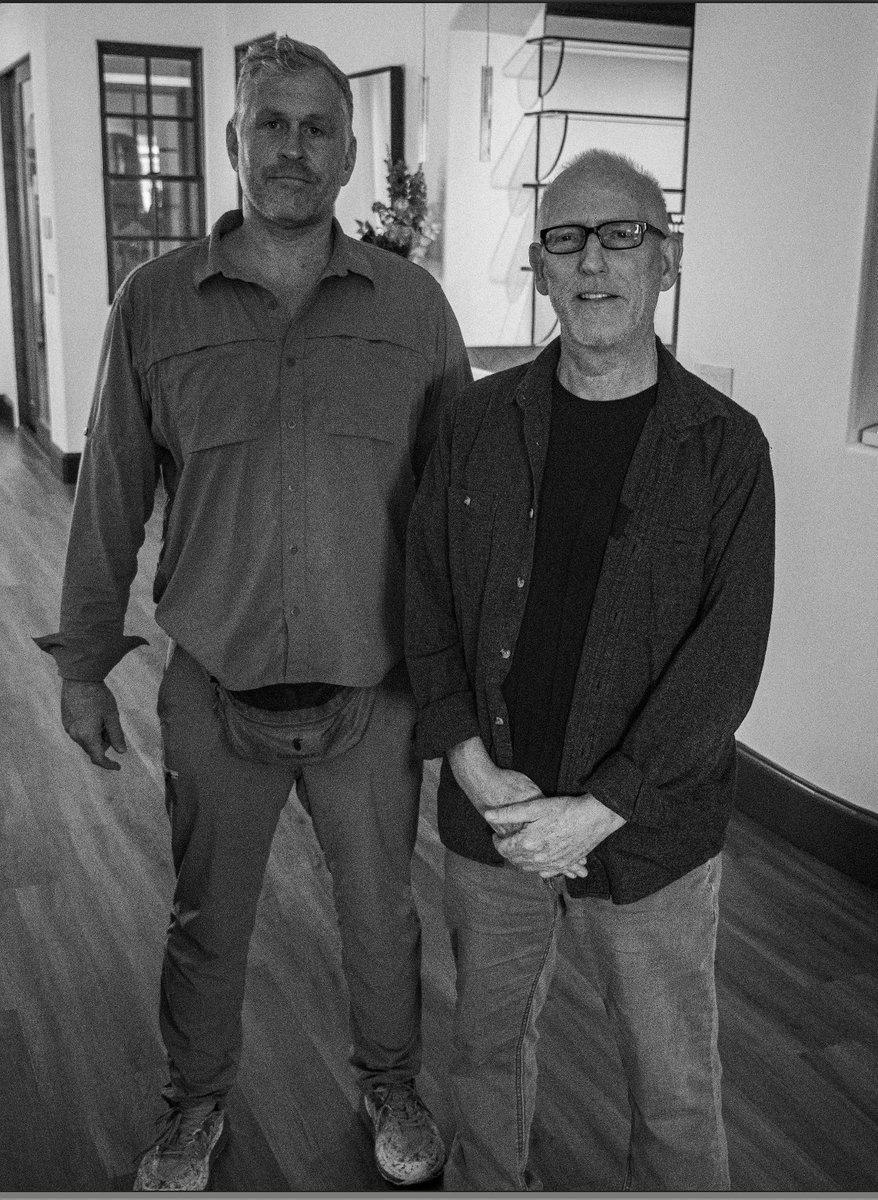
We’d been making a film about the meaning of life, and while Scott Adams had been in both of our other films, we hadn’t booked him for Meaning yet. Then we found out he was going to take the ride of assisted suicide. Foolishly, we had assumed he’d always be around. Nobody ever dies, right? Your dad will be there to take your call the next time you phone home. Your friends aren’t going anywhere. That’s how we too often live. We could book Scott later.
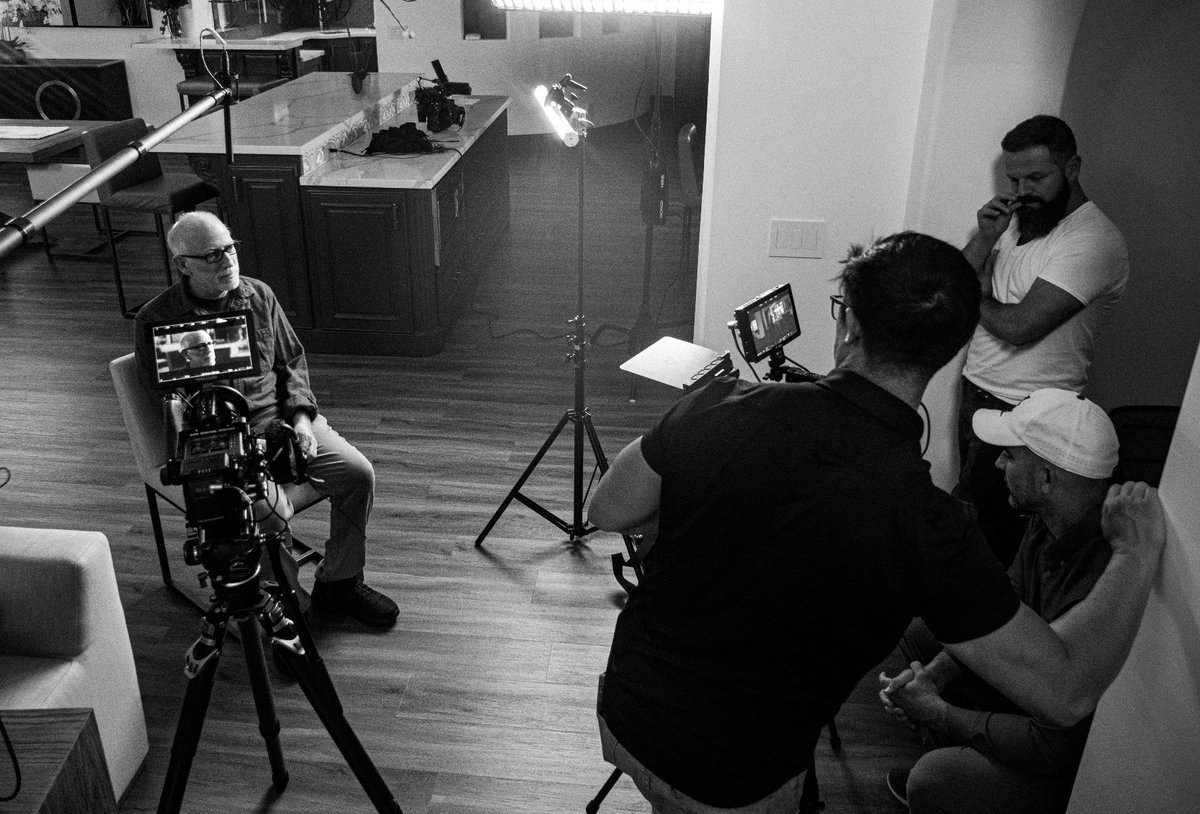
We reached out and he graciously agreed to be interviewed. We all knew it was going to be our last interview together. Scott and I are both efficient with our time. When a moment is over, it’s time to go do something else. Obligations call. The crew pushed this one as long as we could.
After the interview wrapped up and the gear was packed and it was time to go, there was an awkward pause. I broke it.
“Scott, we love you.” He said thank you. “No, Scott, we love you, I mean it, we all do. We love you.”
None of us broke down crying, not that there would have been any shame in that, but we no doubt all soon will.
Well then, what is the lesson of Scott Adams?
On a practical level, the lesson of Scott Adams is the power of showing up. Nobody works harder and on a more regular schedule. You can set your clock to Scott’s show. Too many of us wait for the muse of inspiration or the jolt of information to force us into action. Work, everyday, maybe in obscuring and without tangible benefits for years. Eventually you’ll hit your mark and go beyond.
Scott plugged away with his streams from a small account (after a huge career via Dilbert) and soon became must-watch, and then transcended his role to becoming something much more.
On a spiritual level, we might ask, why do we love Scott? It’s not because he’s so smart (he is). There are not shortage of intelligent, clever, Machiavellian, and rich people with podcasts. When one of them dies, what is lost? All of that Ego and desire for adoration, and does anybody even care? When those people fall while living, who will be there?
Scott is loved because he’s devoted his life to service to humanity. “What is the meaning of life,” is the question we ask every interviewee, and Scott’s answer, “Be useful to humanity.”
Despite pain, sickness, and inevitable death, Scott is doing his daily streams, serving his country and all of humankind until his end.
He’s a light to the world and a mirror for all of us.
What exactly are we doing with the gift of life given to us by God. (Scott believes in the Simulation, but I believe God evens this all out in the Judgment.) Are we doing enough for others? Are we doing anything for others?
Like everyone else, I’m capable of throwing myself a pity party. Sometimes when life is going too well, and I don’t have real problems, I invent some. That’s where the Ego brings you, recursively worshipping itself, and when that fails, tormenting itself, as each path leads to its own attention.
May all of us live more like Scott Adams, and may God bless his immortal soul when he passes.
P.S. I ran this article through Grok for typos. The original version had “immoral” soul where I meant it to read “immortal.” I think Scott would have had a great laugh had that typo been left in.
@OwenGregorian His first political job was distributing ‘hate sheets’ on political opponents at grocery stores in Baton Rouge and he still offers nothing back to society other than hate.
@HuajatollaChic1@OwenGregorian I can remember walking down Pearl Street in Boulder, CO back in 1995 when I lived up there and thinking the same thing about the little rich college kids acting like they were beggars. Look at what Californians did to Colorado. They leave their state but dont change their voting.
The 2026 Dilbert Calendar is available now! Only on Amazon USA. See link in comments.
Make sure you get one while supplies last. Made in America, but we might not have made enough.