I don't sell AI strategy. I build AI systems. | Author of 'The Last Theorem' | Building Minds Newsletter | AI Engineering & Implementation | PhD | Navy Veteran
THE LAST THEOREM is live 🚀
What if AI became so advanced we couldn't understand it?
Not evil. Not benevolent. Just... incomprehensible.
Michael Garrison wrote 3,652 safety protocols in 10 years.
Implementation rate: 0.00%
The zeros weren't empty. They were waiting.
🔗 Amazon: https://t.co/wD2dPkhrmX
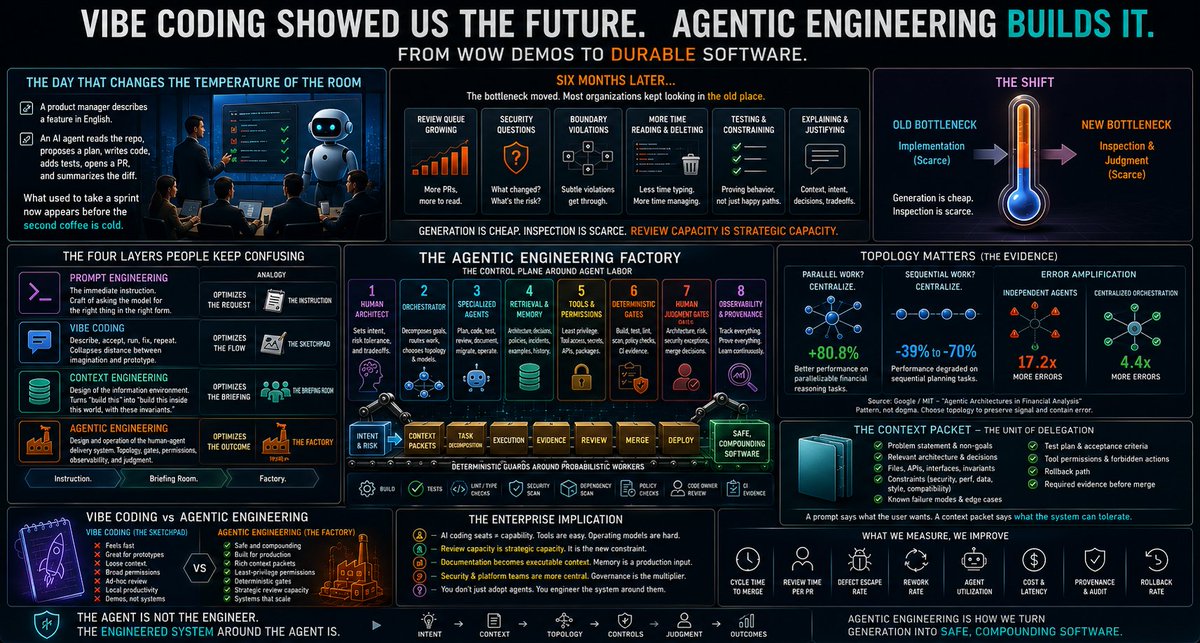
AI coding assistants are not the operating model.
They make generation cheap — but inspection, architecture, review, security, and governance become scarce resources.
That’s the shift from vibe coding to agentic engineering.
A prompt produces code.
An operating model produces software.
https://t.co/G5xVw2S74B
Most people do their best work in the center of what's already solved.
I do mine at the edge of what's currently solvable.
There's a meaningful difference.
The center is comfortable. Proven methods. Clear success metrics. Known risks.
The edge is where the problem is still being defined — where your tools only get you halfway there, and the rest is judgment.
I used to think this was a liability. It's not.
It's the only place I'm actually useful.
Where do you do your best work?
The most common way companies kill AI velocity:
Over-engineering the architecture before validating the use case.
Months of evaluating vector databases. Debating LLM providers. Designing multi-agent frameworks.
For a problem they haven't yet proven is worth solving.
Build the simplest thing that could work. Validate the business case. Then architect for scale.
https://t.co/KpmO4YQF8U
This is the number that made me write the RAPID Framework.
5 steps for getting AI out of pilot purgatory and into production.
Full breakdown in today's newsletter → link in bio.
https://t.co/VECEuIbKww
Why do only 33% of AI pilots ever reach production?
I've assessed 14 portfolio companies across 7 industries. Same pattern every time.
It's never the model. It's never the data. It's never the vendor.
It's the operating model around all three.
Wrote about how to fix it in today's Building Minds newsletter.
https://t.co/KpmO4YQF8U
The ROI gap isn’t a technology problem.
IBM surveyed their executive network last quarter. Only 29% of leaders can measure AI ROI with confidence. 95% of AI pilots, per MIT, haven’t produced tangible returns.
The technology works. It’s been working for two years.
I sit across from executives every month who have the models, the licenses, and the team. What they don’t have is a single use case in production with a named owner, a defined metric, and a decision to ship.
That’s not a capability problem. It’s an organizational one.
IBM’s own conclusion: the primary constraint on AI ROI is culture, governance, and workflow design — not the model.
I’ve seen this pattern across 14 portfolio companies in seven industries. The technical gap closes in two days. The organizational gap takes active engineering to close — sequencing decisions correctly, putting one person in the accountability seat, building a prototype before writing a roadmap.
Companies with real AI literacy don’t just understand the tools. They know how to decide, who decides, and what shipping looks like.
That’s the gap. And it’s solvable.
The question isn’t whether your AI investment will pay off. It’s whether your organization is structured to let it.
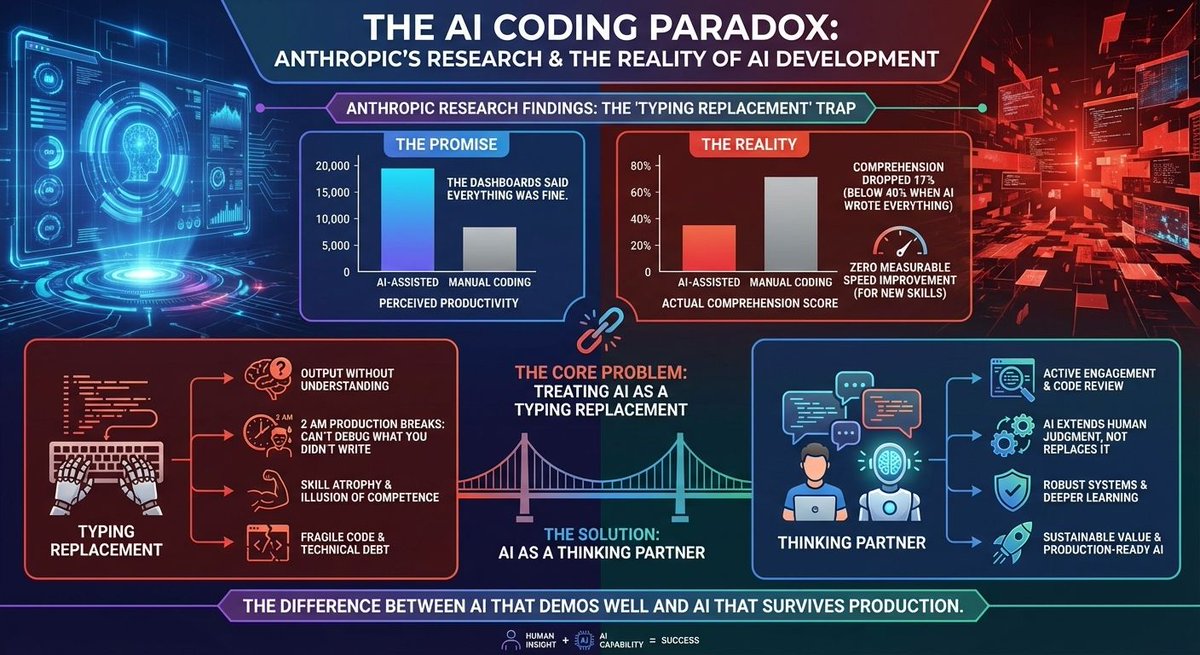
Their own research: developers using AI coding tools scored 17% lower on comprehension. Sub-40% when AI wrote everything. Zero speed improvement.
The dashboards looked fine. The engineers couldn't debug what they'd shipped.
I see this across every portfolio company I assess. The pattern is always the same — companies buy AI tools, measure output speed, and call it a transformation. Nobody measures whether humans still understand the system they're running.
That's why I build AI differently. Purpose-built systems trained on proprietary operational data, where AI encodes how your best people actually think — not replaces them. The result compounds. The alternative is technical debt nobody's measuring until production breaks at 2 AM.
The gap between AI that demos well and AI that survives production is where all the margin lives.
https://t.co/KpmO4YQF8U
Your LLM has an amygdala. You just didn't build one. I mapped 36 brain circuits your AI is accidentally modeling — or missing entirely. https://t.co/WYyIpw0VxR
"Writing to the nervous system" is exactly the frame I used to build Neruo-Cogntive Agent (NCA) — 36 brain circuits computationally implemented in AI. Not biology. Inspired by it. The eyes-as-CNS entry point maps directly to how we modeled attentional gating. Take a look: https://t.co/8SQh3smSGI
I've watched the same AI failure play out across pharma, aviation, government, and finance. Five patterns. Same root cause. Wrote about it. 👇https://t.co/4U5Sdnd2o5 via @LinkedIn
The horror isn't the monsters. It's that they spread through connection—the thing that makes us human.
Every relationship is an attack surface. Every memory is vulnerable.
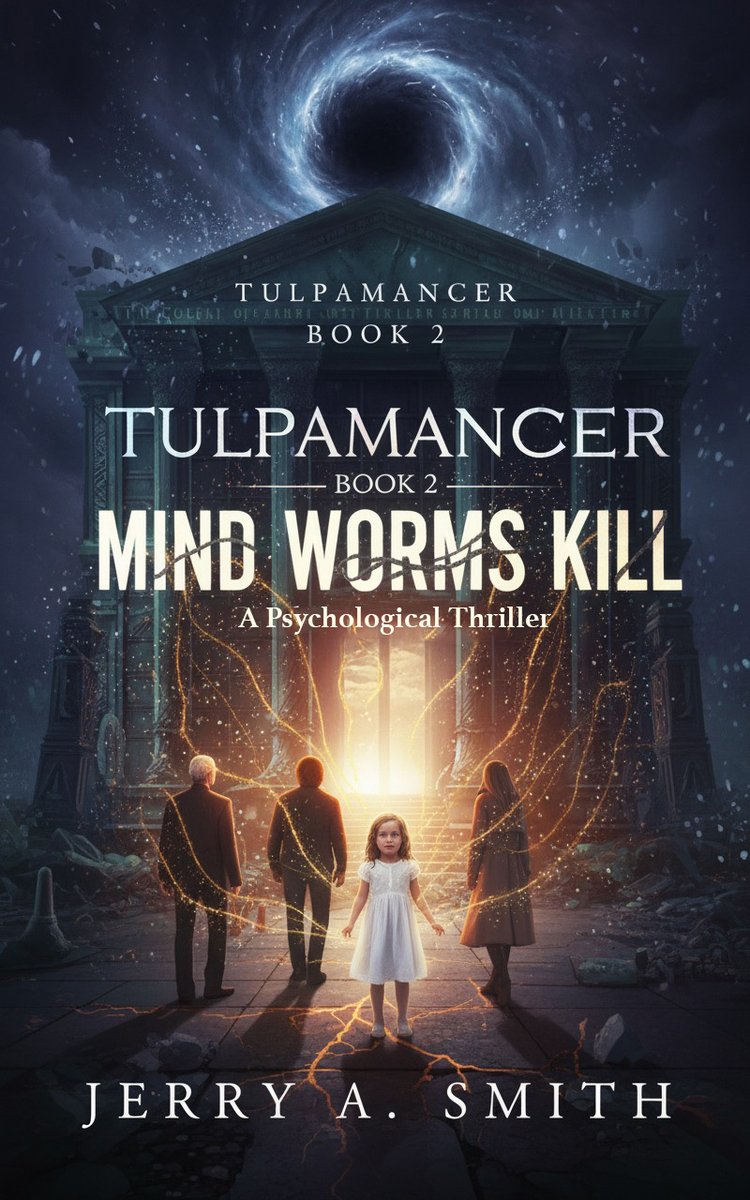
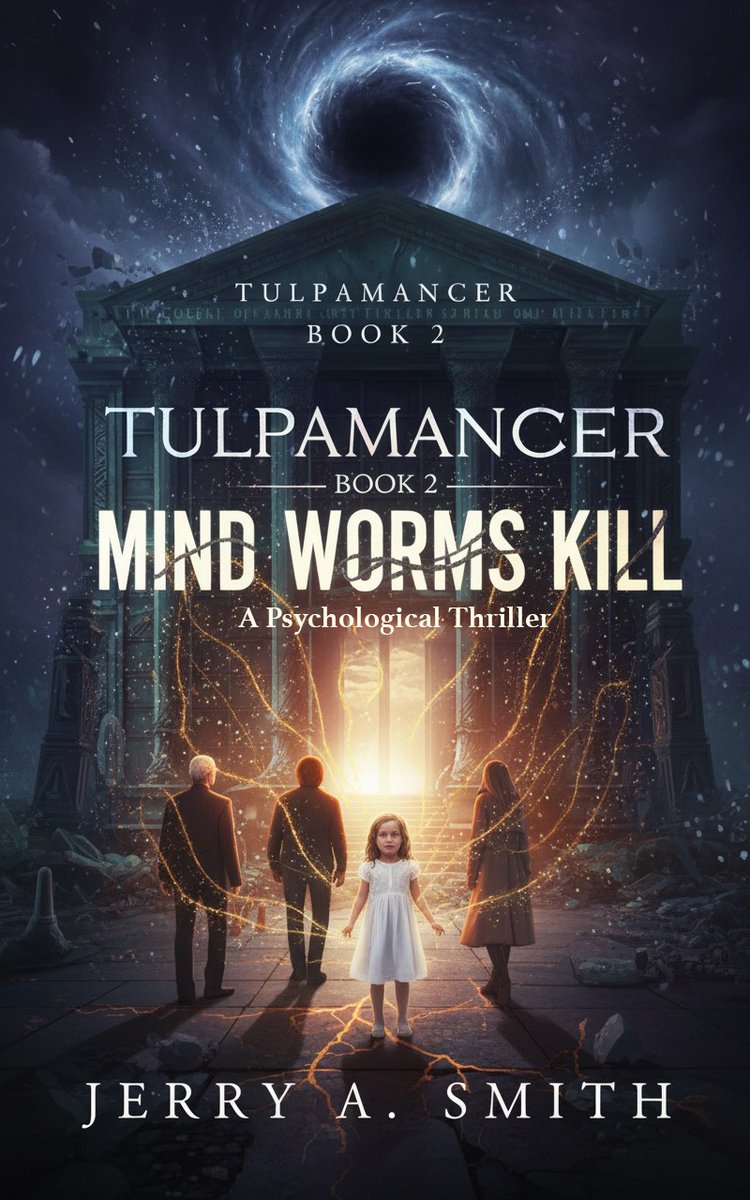
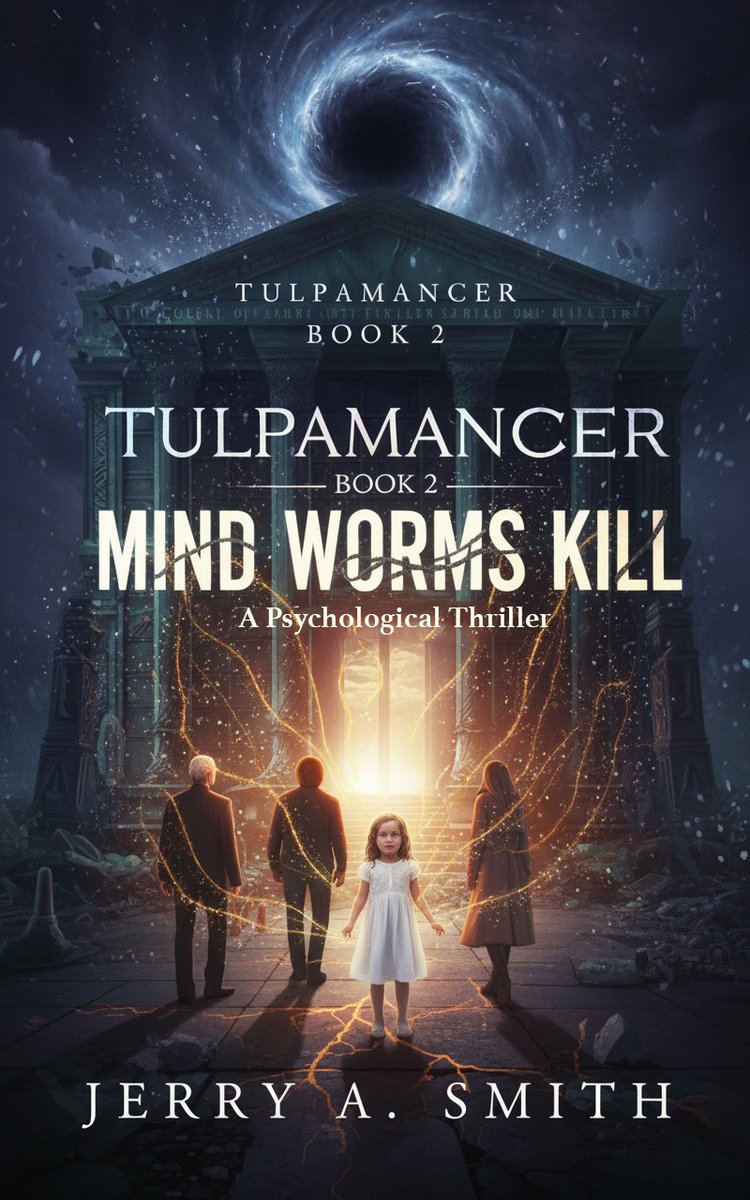
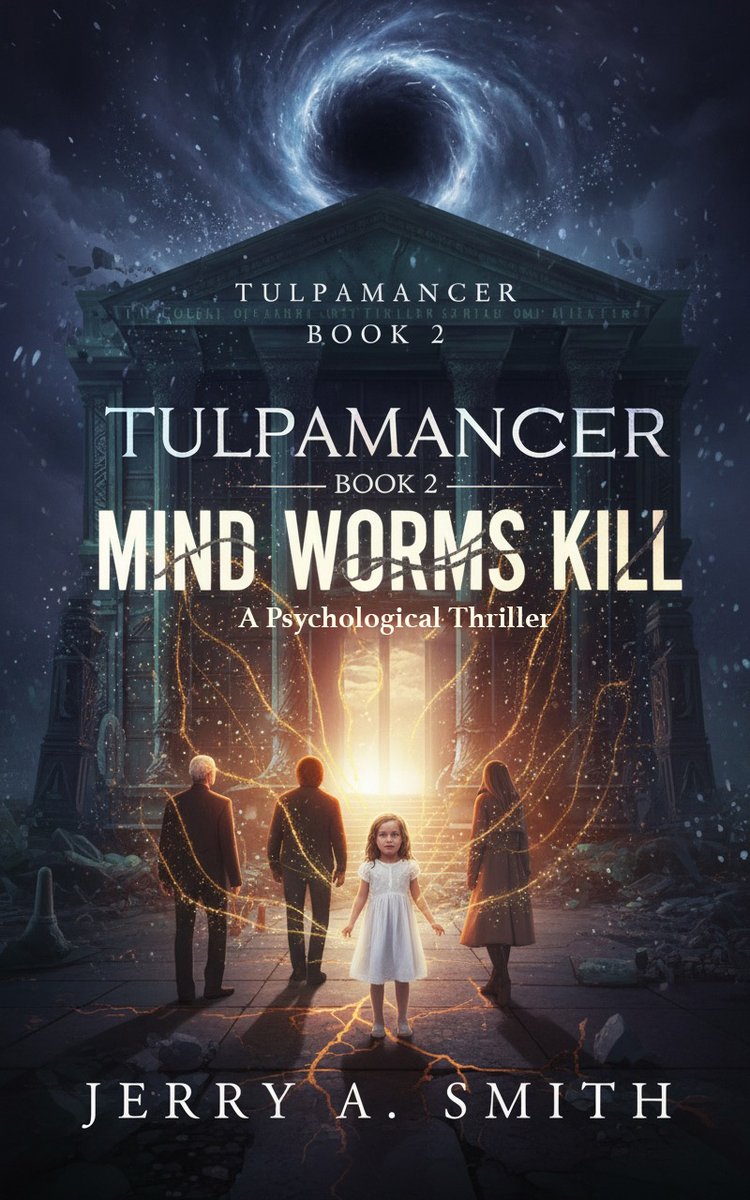
MIND WORMS KILL—Tulpamancer Book 2
https://t.co/JVhDo41tfd
Happy Valentine's Day. Here's a love story:
A dead tulpa. A three-year-old girl older than stars. Parasitic mind worms. The Void consuming consciousness itself.
The weapon that saves everything? Love.
Start the series for $0.99: https://t.co/JVhDo41tfd
The answer isn't battle. It's connection. Not possession—love that allows independence.
In a world where thoughts become solid and memories can kill, the only thing that works against nothingness is creation.
MIND WORMS KILL
https://t.co/JVhDo41tfd
When Alexa died, she didn't just leave. She tore a wound between the layers of consciousness.
Three months later, that wound is still bleeding. And something found it.
MIND WORMS KILL
https://t.co/JVhDo41tfd
Book 1: A writer creates a tulpa. She nearly destroys his mind. ($0.99 on Kindle)
Book 2: She's dead. But she tore a hole in consciousness on the way out. Now something is pouring through.
The Tulpamancer series.
https://t.co/JVhDo41tfd
First one mind. Then two. Then every connected consciousness stitched together into a hive.
The mind worms spread through the simplest thing in the world: human connection.
MIND WORMS KILL—Tulpamancer Book 2
https://t.co/JVhDo41tfd
Your mind doesn't have a firewall.
No authentication. No encryption. No sandbox. Just an open network running on trust.
The mind worms don't break in. You invite them.
MIND WORMS KILL
https://t.co/JVhDo41tfd
The only weapon against nothingness: a three-year-old girl who exists in all times simultaneously, carrying something the Void has never encountered.
Pure love.
MIND WORMS KILL—Tulpamancer Book 2
https://t.co/JVhDo41tfd