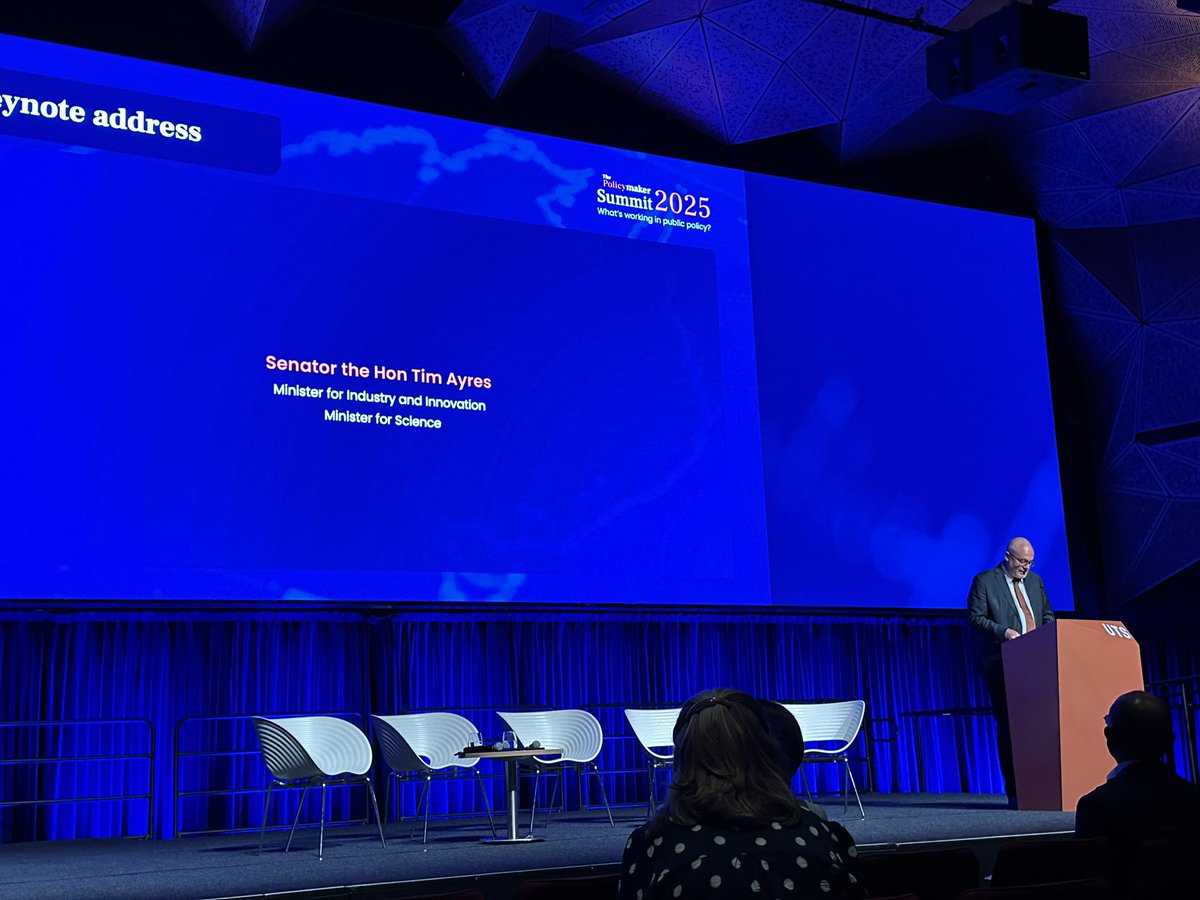
@incprodmon Thanks Roy. Excellent. Totally agree. That’s why my book is about. I’m planning to get it out soon. Are you still able to write a foreword. I’ll send the near complete version a bit later on. John
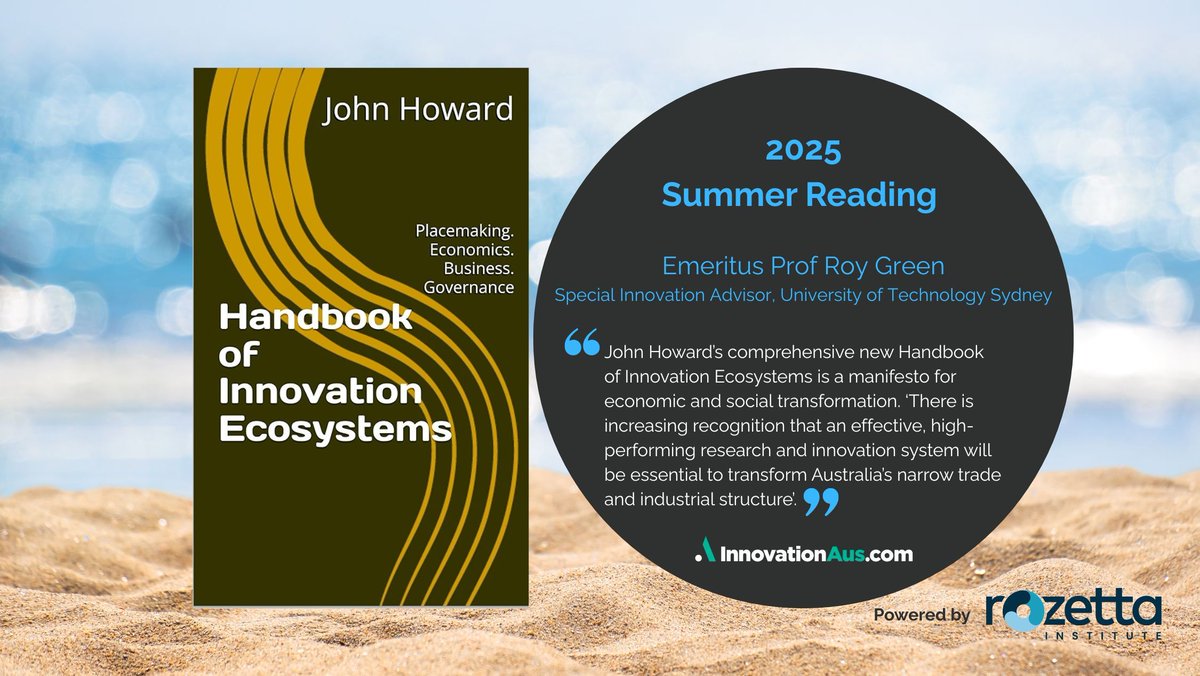
Must-Read on Innovation Ecosystems!
Fantastic 750+ page deep dive into #innovation ecosystems—from national systems to innovation districts by @drjohnhoward
Essential reading for #policy & #ecosystem leaders
https://t.co/XHQSwvbBnY
As the Summer Reading List 2025 continues, we’re featuring a bold and forward-looking recommendation from Professor Roy Green, Special Innovation Advisor at the University of Technology Sydney.
Roy highlights Handbook of Innovation Ecosystems.
#IASummerReads
We think a lot about "innovation ecosystems," but often just see buzzwords.
A new Handbook offers a 'four-domain framework' to build them properly. It is a practical guide for integrating Placemaking, Economics, Business, & Governance into policy: https://t.co/SVvQGDYwIr
The 2025 Nobel Prize for Innovation marks a 'paradigm capture' by neoclassical economics. But what does this mean for the field of Innovation Studies, and which pioneers (like Christopher Freeman) were overlooked?: https://t.co/DJI2Eit8ql #NobelPrize#ParadigmCapture#Innovation
Is innovation the missing piece in your productivity strategy? Find out how boards can set strategy, define risk appetite, and build critical technology transfer skills to drive success. A must-read for directors and executives: https://t.co/9t5ijiFvV3 #Innovation#Productivity
Are fragmented initiatives hindering innovation in Australia? Learn how a unified ecosystem perspective can lead to a strategically integrated R&D framework. Read more: https://t.co/zcLr5T3DFD #Innovation#R&D #Australia
Innovation is political. Australian policy machinery lacks the tools to govern technological change strategically. It's time to recover political economy thinking. New article from @ActonInstitute by Rajesh Gopalakrishnan Nair & John H Howard: https://t.co/kmz4IGtaEV #Innovation
My Handbook of Innovation Ecosystems is out! This comprehensive resource explores how these systems work and flourish, with emphasis on their relationship to industrial strategy. Aimed at business strategists, innovation practitioners and policymakers. : https://t.co/1F0moyFLi4
Economists must take seriously the transformative implications of AI for the economy:
-economic growth
-science and innovation
-inequality
-concentration of power
-geo-economics
-information and knowledge flows
-catastrophic risk
-new measures of well-being and
-transition dynamics.
This paper, with @professor_ajay and @akorinek, proposes a research agenda.
RMIT’s Enabling Impact Platforms (EIPs) connect researchers, industry, and government to accelerate research translation. EIPs act as system integrators—breaking down silos, seeding collaborations, and aligning research with outcomes: https://t.co/nTWInIABa2 #Impact#Integration
RMIT’s Enabling Impact Platforms (EIPs) connect researchers, industry, and government to accelerate research translation. EIPs act as system integrators—breaking down silos, seeding collaborations, and aligning research with outcomes: https://t.co/nTWInIABa2 #Impact#Integration
“More than any other place on earth, we have most to gain from a low-carbon global economy thanks to our vast solar & wind resources, mineral wealth, proximity to growing markets & strategic partnerships” @ayrestim@JMIPublicPolicy https://t.co/sdmsxbxCe7 @AlboMP@OECDinnovation
Australia tracks productivity & R&D, yet lacks data on business investment in skills. Innovation won’t come from subsidies alone—employers must fund training in AI, Quantum, and workforce development: https://t.co/nOGcCdccfP #Innovation#AI#Quantum#Productivity#DigitalSkills
Universities aren’t businesses ... but it’s complicated. They compete for students, run companies, invest in property, yet serve a public mission. This article calls for clearer reporting of public benefit and commercial activities https://t.co/6zqCFaC3TF #UniversityFinance
Australian universities face impossible choice: maintain academic excellence or meet corporate financial targets. When cross-subsidies between disciplines are seen as "inefficiencies," we lose intellectual diversity: https://t.co/vxm39d8X3u #CorporateValues#UniversityReform
Exploring what makes innovation districts thrive: relationships and capabilities over buildings. Discover how Australian policymakers can benefit from global insights while steering clear of common pitfalls. More details here: https://t.co/qLhLjf6jqy #Innovation#Policy
Australia’s search for an industrial policy has been long and contested. Centralised models drawn from unitary states do not fit the realities of a vast federation with diverse regional economies. The way forward is mission-oriented and place-based: https://t.co/fhhG9EBich