This week, a family sued OpenAI, alleging ChatGPT practiced medicine without a license by guiding their daughter off her epilepsy medication before her death.
Today, the AMA advanced a framework to clarify accountability in clinical AI. https://t.co/qTD8u1dzjH
Health vs Hype: 5 things everyone should know about GLP-1s 👇
Physicians have prescribed GLP-1 medications for decades, first as treatment for type 2 diabetes, then for weight loss. Recently, GLP-1s praised as successful options for everything arthritis to sleep apnea. https://t.co/3ecYETnFBG
AMA President, Willie Underwood III, MD, MSc, MPH, was in Washington D.C. yesterday to support H.R. 9693, the Patients First Act. This legislation will preserve patients’ access to care and physician practice sustainability by connecting Medicare payment to the actual costs of running a practice.
Also this week, the AMA and state medical societies representing physicians from all 50 states and the District of Columbia sent a letter in support of this legislation.
To make your voice heard, leave a comment below or visit https://t.co/eJKc41wFio.
What's one nutrition recommendation most doctors agree on? Eat more fiber.
Fiber is one of the most important nutrients for your health, yet most people aren't getting enough of it. In this quick nutrition tip, Nate Wood, MD, MHS, explains why fiber matters, where to find it, and how adding more plant-based foods to your meals can support your heart, gut, blood sugar, and overall health.
Learn simple ways to boost your fiber intake with foods: https://t.co/8jjfra9Mks
Turns out, growing up with a pet may have perks beyond cuddles.
Research suggests growing up around pets may help shape a child’s immune system and lower the risk of certain allergies, eczema and hay fever.
Veterinarian Courtney A. Campbell, DVM, DACVS-SA, explains what the research says.
Learn more: https://t.co/Qe8sut4AVD
"Does Dr. Claude have malpractice insurance?"
That's what one doctor said when an AI caught a diagnosis he'd missed after 48 tests.
@ZekeEmanuel says autonomous AI already beats doctors at core tasks. AMA CEO @drjohnwhyte says the human stays in the loop.
TIMESTAMPS:
(00:00) Lead In
(00:46) Intro
(02:53) Zeke’s paper backstory
(04:13) Self driving cars analogy
(06:36) John pushback, trust and art
(08:41) Claude diagnosis anecdote
(12:19) Trials and deployment ideas
(13:57) Evidence fight and guardrails
(17:41) Empathy, education and autonomy
(21:43) Sponsors: Granola | Baker Health
(23:53) Human in loop, medication refills
(26:35) Augmented AI and cancer second opinions
(28:36) Debating the right question
(30:09) Licensing and regulation
(31:28) Chatbots in mental health
(37:03) Patient story and self advocacy
(43:29) Liability and ice cream bet
(44:46) Doctors and robots by 2030
(46:37) When humans hurt AI performance
(48:20) Who breaks bad news
(53:13) Wrap
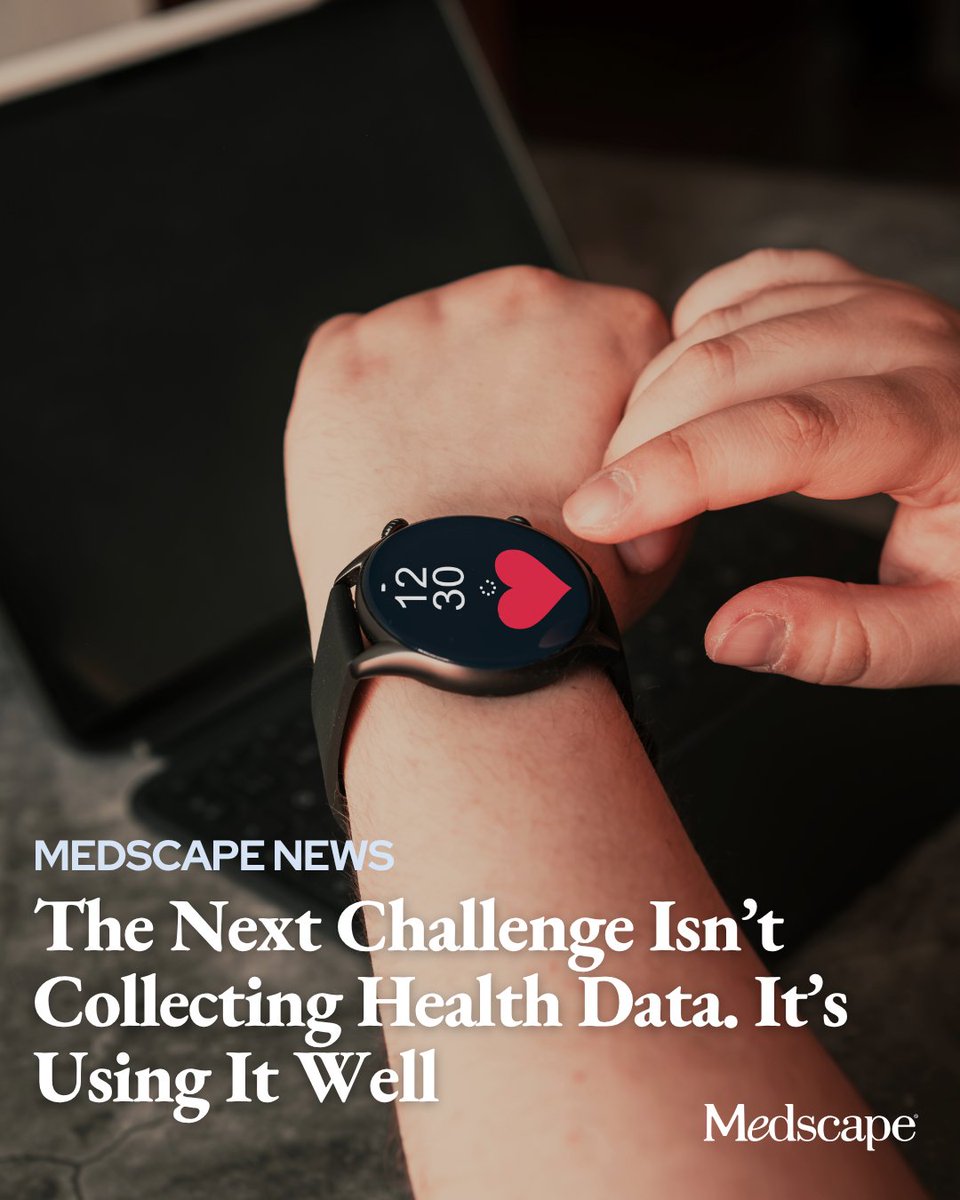
Wearables generate more health data than ever, but data alone doesn't improve outcomes. The real opportunity is turning insights into action at the point of care. Great perspective from @HansaBhargavaMD, with valuable insights from @drjohnwhyte.
https://t.co/aDuVnAiEGZ
💬 Viewpoint by @drjohnwhyte, MD, MPH, Chief Executive Officer and Executive Vice President of the @AmerMedicalAssn:
Under the US Food and Drug Administration January 2026 guidance, many low-risk #DigitalHealth tools fall outside medical device oversight, but some may still influence health decisions without clear evidence standards.
https://t.co/hjku25Rtxr
Looking to add more power to your workouts?
Broad jumps can help improve lower-body strength, power and coordination. Master your form, jump with intention and land under control.
Watch how it's done, then add a few reps to your next workout.
Your pet may be more than a companion, they may be part of your wellness routine. 🐾
From daily walks to moments of connection, pets can support mental health and bring more joy into our everyday lives.
Learn even more reasons why pets are good for your mental health: https://t.co/pjIjDNuzos
New @JAMANetwork research reinforces what physicians and patients already know: prior authorization delays care. Patients and families who have to navigate approvals themselves are more likely to face delays, barriers, and miss out on prescribed treatment. https://t.co/jK1xqkf3qn
One wall. One move. Big benefits.
Wall sits can strengthen your lower body while giving your cardiovascular system a workout, too. Learn more: https://t.co/L3jZ2Q78ef
Wearable technology is helping move healthcare beyond isolated snapshots toward a more continuous understanding of patients’ health. Its promise isn’t simply more data. It’s earlier insights, more informed conversations, and better clinical decisions.
To better understand how physicians view this transformation, the American Medical Association (AMA) Center for Digital Health and AI partnered with Medscape on a first-of-its-kind international survey of physicians across six countries.
The survey included 2222 physicians and found that 97% already review wearable health data in some capacity. Large majorities also reported that wearable data provide at least some clinical advantage for patient care. More on the findings: https://t.co/tCyFWludfb